Richard H. Driehaus Museum: Inside Chicago's Most Opulent Gilded Age Mansion
Housed in the 1883 Samuel M. Nickerson Mansion two blocks west of the Magnificent Mile, the Richard H. Driehaus Museum is Chicago's most immersive window into Gilded Age domestic life. Ornate carved stone, stained glass, and room after room of period-authentic decorative arts create an experience that goes far beyond a typical house museum.
Quick Facts
- Location
- 50 East Erie Street, Near North Side, Chicago, IL 60611
- Getting There
- CTA Red Line: Grand station (5–7 min walk); Bus 143, 151 on Michigan Ave
- Time Needed
- 1.5 to 2.5 hours
- Cost
- Adults $23 | Seniors (65+) $18 | Students (with ID) $13 | Children 12 and under free | Wed 4–7 PM: Pay What You Wish
- Best for
- Architecture lovers, decorative arts enthusiasts, Gilded Age history buffs
- Official website
- driehausmuseum.org
What the Richard H. Driehaus Museum Actually Is
The Richard H. Driehaus Museum occupies the Samuel M. Nickerson Mansion, a landmark completed in 1883 on what is now Chicago's Near North Side. Samuel Mayo Nickerson was a banker and industrialist, and the house he built was a deliberate statement: no expense spared, no surface left unadorned. The exterior is cut from Ohio limestone, Romanesque in spirit, and it sits on Erie Street with the quiet confidence of a building that has outlasted every trend around it.
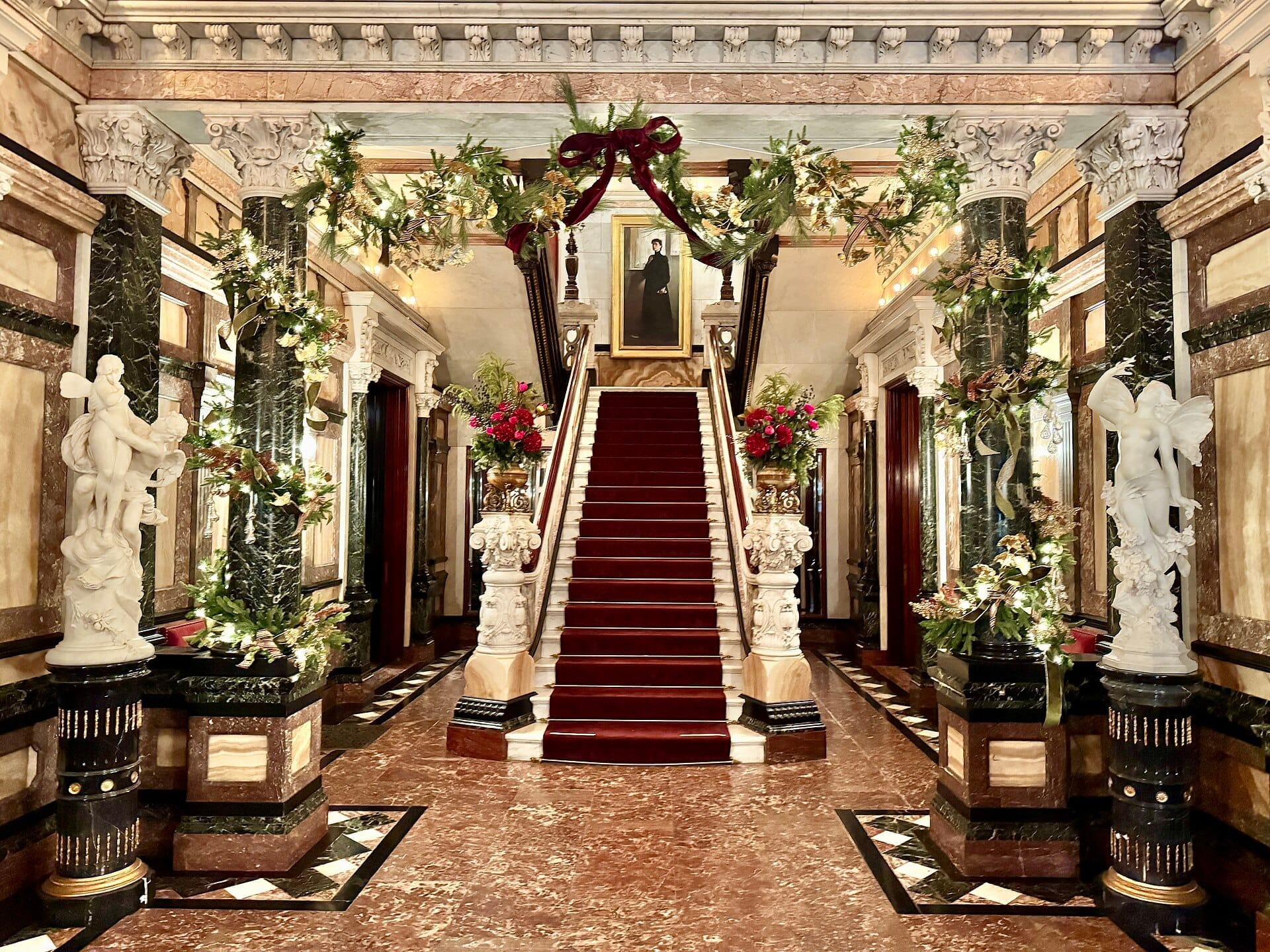
Inside, the interiors survive in extraordinary condition. Carved onyx fireplaces, hand-painted leather wall coverings, inlaid hardwood floors, stained glass skylights, and mantlepieces in rare marbles greet visitors room by room. The house was designed by Edward J. Burling and Dankmar Adler, the same Adler who would later partner with Louis Sullivan on the Auditorium Building and other Chicago landmarks. That architectural pedigree matters: this is not a generic Victorian pile but a considered work by serious architects.
The mansion avoided demolition in 1919 when the American College of Surgeons acquired it for use as their headquarters. It passed through various uses before philanthropist Richard H. Driehaus sponsored a meticulous restoration between 2003 and 2008. The museum opened to the public following that restoration, and the interiors now function as both a permanent collection space and a rotating exhibition venue for decorative arts, fashion, and design.
💡 Local tip
Wednesday evenings from 4:00 to 7:00 PM operate on a Pay What You Wish basis, making this one of the most accessible ways to see a world-class Gilded Age interior in Chicago without paying full admission. Last entry on Wednesdays is at 6:00 PM.
Moving Through the House: Room by Room
You enter through the Murphy Auditorium entrance at 50 East Erie and climb a broad staircase before stepping into the mansion proper. The transition is deliberate: the threshold between street-level Chicago and the Nickerson interior feels like crossing a timeline. The first rooms establish the visual logic of the house quickly. Every surface participates. Wainscoting, ceiling coffers, patterned tile, and carved woodwork layer over each other in a way that sounds overwhelming on paper but reads as coherent in person, because the color palette stays surprisingly controlled.
The reception rooms on the ground floor show the household's public face. The art gallery, which Nickerson used to display his personal collection, retains its original layout and proportions. The skylights here are original, flooding the space with diffused natural light that changes noticeably by time of day. Morning visits have cooler light and fewer visitors. By early afternoon on weekends, tour groups arrive and the acoustics of the marble-heavy spaces carry every conversation.
Upper floors open into the more private rooms of family life, including sitting rooms and bedrooms with original furnishings or period-matched pieces. The contrast between the formal ground floor and the upper living quarters is one of the more revealing things about how wealthy Chicagoans actually lived in the 1880s: the public performance downstairs, the functional comfort upstairs. Small interpretive labels throughout are well-written and specific without being overwhelming.
Tickets & tours
Hand-picked options from our booking partner. Prices are indicative; availability and final rates are confirmed when you complete your booking.
Go City | Chicago All-Inclusive Pass
From 127 €Instant confirmationFree cancellationiFLY Chicago Lincoln Park indoor skydiving experience
From 126 €Instant confirmationFree cancellationiFLY Chicago Rosemont indoor skydiving tickets
From 117 €Instant confirmationFree cancellationChicago lakefront neighbourhood bike tour
From 18 €Instant confirmationFree cancellation
The Architecture in Detail
Burling and Adler's design sits within the broader Romanesque Revival tradition that was gaining ground in American domestic architecture during the 1870s and 1880s, roughly contemporaneous with H.H. Richardson's work in Boston and New York. Chicago's own Glessner House Museum, completed in 1887 just south of the Loop, offers a useful comparison: Richardson's stark exterior and innovative interior planning versus the Nickerson Mansion's more ornamental approach to the same era.
What makes the Nickerson Mansion distinctive among surviving Gilded Age houses is the concentration of applied decorative arts in a single interior. The onyx used for several fireplaces was imported, a material so expensive at the time that it functioned as pure status signaling. The stained glass in the upper stair hall uses layered colored glass in a technique that produces depth rather than flat color. Stand at the foot of the main staircase around midday and the light through that glass shifts visibly across the marble steps.
For visitors serious about Chicago's architectural heritage, the Driehaus Museum works well as part of a broader itinerary. The Chicago Architecture Center offers context for the city's built environment across all eras, and the Chicago architecture guide maps out how to connect these sites into a logical route.
Rotating Exhibitions and the Decorative Arts Program
The museum presents rotating exhibitions alongside its permanent collection, typically focusing on decorative arts, fashion history, and design movements from the 19th and early 20th centuries. Past exhibitions have examined Art Nouveau jewelry, period textiles, and the aesthetics of the Aesthetic Movement in Britain and America. The curatorial emphasis is on objects that were originally designed to be used or worn, not just displayed, which creates an interesting tension with the mansion setting.
Exhibition quality varies. The permanent rooms are always worth the visit regardless of what temporary show is running. Check the museum's website before your visit to see what is currently on display, since the temporary galleries can meaningfully shift the experience. Some shows make strong use of the historic rooms; others feel slightly disconnected from the architecture.
ℹ️ Good to know
The museum is closed Mondays and Tuesdays. Wednesday hours extend to 7:00 PM; Thursday through Sunday hours are 11:00 AM to 5:00 PM. Last entry is at 6:00 PM on Wednesdays and 4:00 PM Thursday through Sunday. The museum is credit card only — no cash transactions.
Practical Walkthrough: Getting There and What to Expect
The address is 50 East Erie Street, which puts the museum two blocks west of Michigan Avenue and well within walking distance of the Magnificent Mile shopping corridor. From the CTA Red Line, exit at Grand station and walk roughly five to seven minutes north and west. Several Michigan Avenue bus routes (26, 143, 151) stop within a short walk. If you are driving, validated parking at ROW Self-Park at 50 East Ohio Street runs approximately $15 for up to six hours with museum validation.
The surrounding Gold Coast neighborhood rewards some time before or after your museum visit. The blocks between Erie and Oak Street mix historic brownstones, luxury boutiques, and the kinds of restaurants that have been serving this neighborhood for decades. Oak Street Beach is about a 12-minute walk east.
Accessibility is well-handled for a historic building. A wheelchair-accessible entrance is located at 50 East Erie Street, directly adjacent to the main entrance. An elevator connects floors, and manually operated wheelchairs are available at no charge. Large-print labels are available on request. Service animals are permitted; other animals are not.
Photography policy allows personal photos throughout the museum, typically without flash. The carved woodwork and stained glass photograph well in natural light, especially in the upper stair hall around midday. Tripods and professional equipment usually require advance permission.
Honest Assessment: Is It Worth Your Time?
The Richard H. Driehaus Museum is genuinely one of the more underattended major attractions in Chicago. Visitors who discover it often describe it as a surprise. That is partly because it sits in the shadow of the city's big-ticket institutions, but also because house museums require a different kind of attention than encyclopedic art museums. You are not moving through chronologically organized galleries. You are reading a household, and that takes a slower pace.
Visitors who want hands-on interactivity, fast-paced engagement, or broad survey collections will find this less satisfying. The museum is quiet, detail-oriented, and rewards people who stop to look closely. Children under 12 enter free, but the interiors are not designed for high-energy movement, and the fragility of the decorative surfaces is real. Families with younger children may find the experience works better as a short visit focused on a few key rooms rather than the full tour.
If your Chicago itinerary is already weighted toward large institutions like the Art Institute of Chicago or the Field Museum, the Driehaus Museum adds a genuinely different register to the day. It is not competing with those institutions. It is doing something they cannot: showing you what a wealthy Chicagoan's private life looked like in the Gilded Age, at full scale, with the original objects still in the rooms.
Insider Tips
- Wednesday evening Pay What You Wish hours (4:00–7:00 PM) are the quietest of the week. You will often have rooms nearly to yourself, and the lower light from the west-facing windows gives the stained glass a warmer tone than midday.
- The main stair hall around 12:00 to 1:00 PM on sunny days produces the best natural light for photographing the stained glass without a flash. Position yourself at the base of the staircase and look up.
- Ask at the front desk about guided tours. When staffing allows, docent-led tours add significant context to the decorative choices in each room and cover details not in the printed labels.
- If you validate parking at ROW Self-Park on Ohio Street, confirm the validation process at the admissions desk before you leave the building. The discounted rate for up to six hours requires the museum's stamp.
- The museum shop carries a focused selection of design books and decorative arts publications that are genuinely harder to find elsewhere in Chicago. Worth a few minutes even if you are not a dedicated buyer.
Who Is Richard H. Driehaus Museum For?
- Architecture and design enthusiasts who want to understand Chicago's Gilded Age beyond the commercial skyscrapers
- Decorative arts collectors or professionals interested in 19th-century applied arts in an authentic period setting
- Travelers on a Wednesday afternoon budget who want a high-quality cultural experience on a Pay What You Wish basis
- Couples or solo travelers who prefer unhurried, detail-rich environments over crowded blockbuster attractions
- Anyone following Chicago's architectural history from the post-Fire rebuilding era through the rise of the Chicago School
Nearby Attractions
Other things to see while in Gold Coast:
- Charnley-Persky House
Built in 1891-1892 and designed by Louis Sullivan with a young Frank Lloyd Wright, the Charnley-Persky House is one of the most consequential small buildings in American architectural history. Now the headquarters of the Society of Architectural Historians, this National Historic Landmark in Chicago's Gold Coast opens its doors for docent-led tours twice a week.
- Holy Name Cathedral
Rising above the Gold Coast at 735 North State Street, Holy Name Cathedral has anchored Chicago's Catholic life since 1875. Free to enter, rich in history, and strikingly beautiful inside, it rewards both the devout and the architecturally curious.
- Oak Street Beach
Oak Street Beach is one of Chicago's most centrally located public beaches, sitting at the foot of the Gold Coast with unobstructed views of the downtown skyline across the water. Free to enter and accessible by CTA, it draws everyone from early-morning swimmers to sunset-watchers well into the evening.