Oak Street Beach: Where Chicago's Skyline Meets Lake Michigan
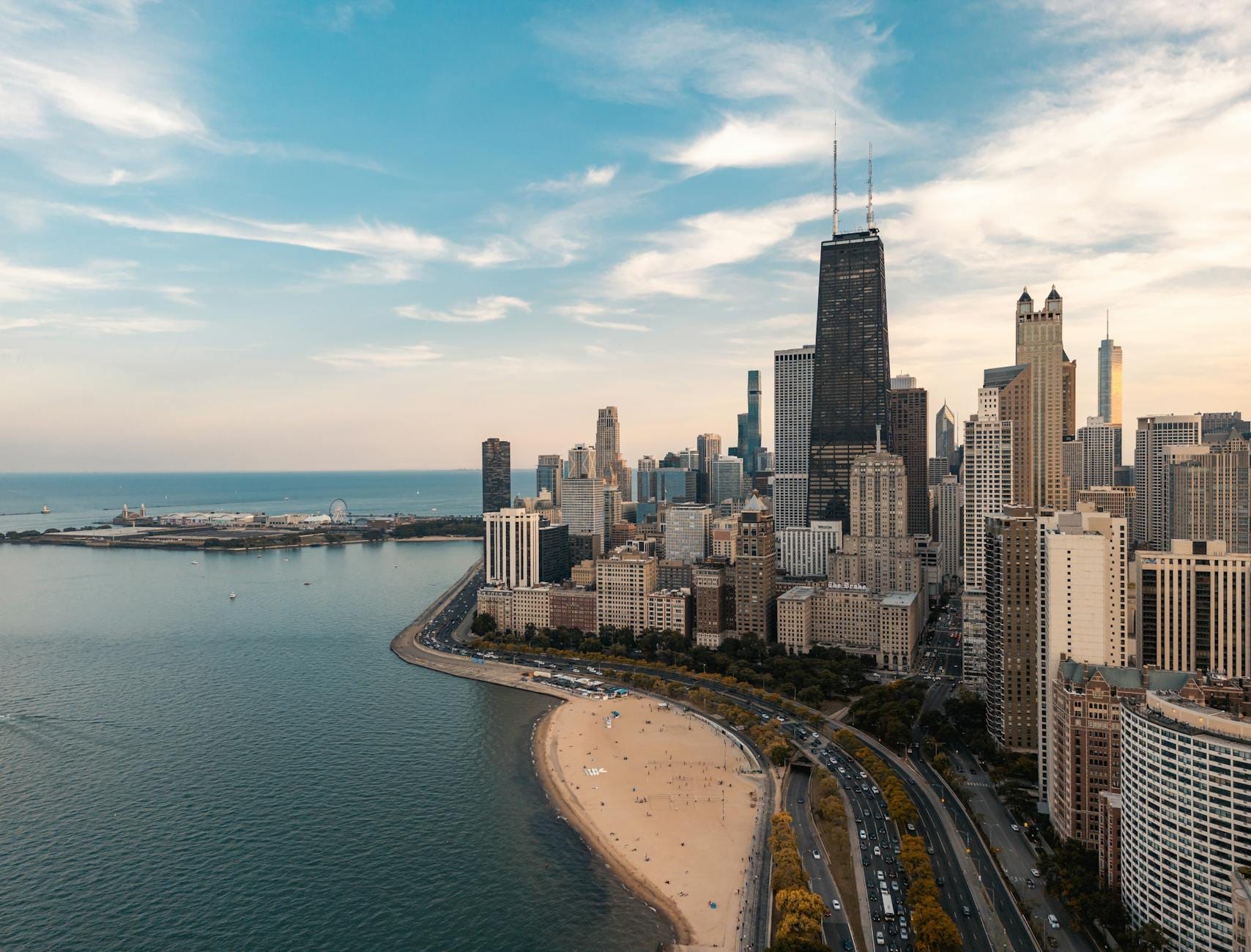
Oak Street Beach is one of Chicago's most centrally located public beaches, sitting at the foot of the Gold Coast with unobstructed views of the downtown skyline across the water. Free to enter and accessible by CTA, it draws everyone from early-morning swimmers to sunset-watchers well into the evening.
Quick Facts
- Location
- 1000 N. Lake Shore Drive at Oak Street, Gold Coast, Chicago, IL
- Getting There
- CTA Red Line: Clark/Division; Bus 22, 36, or 151
- Time Needed
- 1–3 hours depending on activities
- Cost
- Free admission; no tickets required
- Best for
- Skyline photography, summer swimming, lakefront walks
- Official website
- www.chicagoparkdistrict.com/parks-facilities/oak-street-beach
What Oak Street Beach Actually Is
Oak Street Beach is a Chicago Park District public beach located at 1000 N. Lake Shore Drive, where Oak Street meets the lakefront at the northern end of the Streeterville neighborhood, adjacent to the Gold Coast. It is one of roughly two dozen public beaches along Chicago's lakefront, but its position, less than a mile north of the Magnificent Mile and directly accessible from one of the city's most affluent residential corridors, gives it a particular energy that other beaches on the system simply do not have.
The beach dates to the late 1800s, when Chicago's lakefront was still being shaped by the combination of landfill projects and civic planning that would eventually produce the uninterrupted public shoreline the city is known for today. That long-standing public commitment to lakefront access is why a stretch of sand this close to downtown has never been privatized or fenced off. You can walk from the Mag Mile to the water's edge without paying a cent.
The beach connects directly to the broader Lakefront Trail, the multi-use path that runs roughly 18 miles along Chicago's lakefront. Walking north from Oak Street brings you quickly into Lincoln Park territory; heading south puts you near Navy Pier within minutes.
The Experience by Time of Day
The beach is open from 6:00 am to 11:00 pm, and those early and late hours are genuinely different experiences from the midday peak. Between 6:00 and 8:00 am, the sand belongs almost entirely to joggers, dog walkers (before restrictions kick in), and open-water swimmers who prefer calm water and cool air. The lake surface is often glassy at this hour, and the downtown skyline to the south is backlit by morning light in a way that no other Chicago vantage point quite replicates. The smell of the lake, faintly mineral and clean, is sharpest in the morning before the crowd and food vendors alter the atmosphere.
By late morning, lifeguards take their posts for supervised swimming, which runs from 11:00 am to 7:00 pm during the beach season. Confirm exact hours with the Chicago Park District before visiting, as seasonal staffing schedules can vary year to year. Midday in July and August brings the highest density of visitors: volleyball nets fill up, the path behind the beach gets crowded with cyclists and pedestrians, and the concession area hums with activity. The sand can get genuinely hot underfoot, and the lake breeze, while welcome, is not always enough to offset afternoon heat when temperatures push into the upper 80s Fahrenheit.
Late afternoon and early evening are the sweet spot for most purposes. The crowd thins slightly after 5:00 pm, the light on the water turns golden, and the skyline transition from day to dusk is slow and photogenic. People linger on towels, food from nearby Gold Coast restaurants appears in picnic bags, and the atmosphere shifts from active recreation toward relaxed sociability. By 9:00 pm the beach is quiet but not empty, with the city lights reflected in the lake creating a scene that most visitors do not expect from a public beach.
💡 Local tip
For the best skyline photography, face south from the waterline between 6:30 and 8:00 am in summer. The sun rises roughly east-northeast, catching the glass towers at a low angle with soft light. A wide-angle lens or a phone in landscape mode captures both the beach foreground and the full downtown profile.
Tickets & tours
Hand-picked options from our booking partner. Prices are indicative; availability and final rates are confirmed when you complete your booking.
Go City | Chicago All-Inclusive Pass
From 127 €Instant confirmationFree cancellationiFLY Chicago Lincoln Park indoor skydiving experience
From 126 €Instant confirmationFree cancellationiFLY Chicago Rosemont indoor skydiving tickets
From 117 €Instant confirmationFree cancellationChicago lakefront neighbourhood bike tour
From 18 €Instant confirmationFree cancellation
The Water and the Setting
Lake Michigan at Oak Street Beach is a large, cold, freshwater lake, not an ocean, and it behaves accordingly. Water temperatures in June are often still in the low to mid 60s Fahrenheit, which surprises visitors expecting warm summer swimming. By mid-July the surface temperature can reach the low to mid 70s, which is genuinely comfortable for most swimmers. The lake floor drops gradually from the shore, and the water is typically clear enough to see several feet down on calm days.
Rip currents and sudden wave action from passing storms are real hazards on Lake Michigan. The Chicago Park District posts colored flag warnings at the beach: yellow for moderate conditions, red for high hazard, and purple for dangerous water conditions related to bacteria or other hazards. Pay attention to these flags. Lifeguards are present during supervised hours, but the lake can change quickly, and conditions that look calm from the shore can become challenging in the water.
⚠️ What to skip
Swimming outside of lifeguarded hours (outside the lifeguarded hours of 11:00 am to 7:00 pm in beach season) is at your own risk. Lake Michigan has strong and unpredictable currents, particularly during or after storms. Check the flag system before entering the water.
The beach itself is a crescent of pale sand, wider at the northern end and narrowing as it curves south toward the underpass beneath Lake Shore Drive. The surrounding landscape is low-maintenance urban parkland, with the eight-lane Lake Shore Drive as a physical boundary between the beach and the residential towers of the Gold Coast to the west. The sound of that traffic is a constant ambient presence, though it recedes once you are on the sand and facing the water.
Getting There and Getting Around
The most straightforward transit option is the CTA Red Line to Clark/Division, which puts you about a 10–15 minute walk from the beach via Division Street heading east. Bus routes 22 (Clark), 36 (Broadway), and 151 (Sheridan) also serve the area and deposit riders closer to the lakefront depending on your boarding point. Verify current CTA fares and schedules at transitchicago.com before traveling.
Driving is possible but rarely practical in summer. Lake Shore Drive is a limited-access highway without convenient beach parking directly adjacent, and street parking in the surrounding Gold Coast blocks is metered, competitive, and often unavailable on hot summer weekends. Rideshare drop-off is feasible; designate the corner of Oak Street and Lake Shore Drive as your destination.
Cyclists can arrive via the Lakefront Trail, which passes directly behind the beach. Divvy bike-share stations are located near the intersection of Oak and Michigan Avenue, making this one of the most bikeable beaches in the city.
The Chicago Park District lists an ADA-accessible beach walk at Oak Street Beach, making it more navigable for visitors with mobility considerations than some of the city's less-maintained lakefront access points. Confirm current accessibility features directly with the Park District before planning a visit around specific needs.
The Gold Coast Context: What Surrounds the Beach
Oak Street Beach sits at the intersection of two very different Chicago experiences. To the west is the Gold Coast, one of the city's most expensive residential neighborhoods, lined with limestone-facade mansions, high-rise condominiums, and upscale boutiques along Oak Street itself. Walk one block inland and the contrast with the democratic public beach behind you is immediate and significant.
To the south, Oak Street connects to the upper end of the Magnificent Mile shopping corridor along Michigan Avenue. This proximity means the beach is easily combined with a morning on the lakefront followed by lunch or shopping in either direction, making it a practical stop on a broader itinerary rather than a standalone destination.
The architectural backdrop from the water is one of the more underrated viewpoints in Chicago. Looking south from the waterline, the skyline reads as a dense cluster of towers with no suburban sprawl in sight, giving a compressed impression of the city's vertical ambition. The John Hancock Center (now officially called 875 North Michigan Avenue) dominates the middle ground from this angle, its tapered form and X-bracing visible above the beach vegetation.
Honest Assessment: Who This Beach Is and Isn't For
Oak Street Beach is genuinely good at a few things: it delivers lakefront access with a dramatic skyline backdrop, it is free, and it is easy to reach without a car. On a clear summer afternoon with comfortable water temperatures, it offers an experience that few urban beaches in any American city can match for sheer setting.
It is less good as a quiet retreat. The proximity to Lake Shore Drive means road noise is ever-present. On summer weekends, the beach is crowded in a way that leaves little personal space on the sand, and the facilities, while functional, are not elaborate. If you are looking for expansive shoreline, more natural surroundings, or a quieter lakefront experience, beaches further north, such as Montrose Beach, offer more space and a different character.
Travelers who find crowds stressful, who prioritize natural scenery over urban drama, or who are visiting outside the June through August window will find the experience considerably reduced. In autumn and spring the beach is pleasant for walking but often too cold for swimming, and in winter it is simply a windswept strip of sand beside a gray lake. If you are trying to optimize a short Chicago visit, the beach works well as part of a lakefront walk or combined with other Gold Coast stops, rather than as a primary destination.
What to Bring and Practical Preparation
Sunscreen is essential and often more necessary than visitors expect. The combination of direct sun and reflected light off the water accelerates burning, and the lake breeze masks how much heat you are actually absorbing. A water bottle is worth carrying since concession prices at popular urban beaches tend toward the high end.
On windy days, sand moves. Securing towels and covering food is a practical necessity rather than an abundance of caution. Chicago's lake-effect wind can shift quickly, and what was a pleasant 72-degree afternoon can feel significantly cooler if a northerly comes in off the water.
The beach has restroom facilities and seasonal concessions. For full meals, the Gold Coast blocks immediately west have a concentrated selection of cafes and restaurants. The area around Oak and Rush Streets offers options at various price points within a short walk.
Insider Tips
- The underpass tunnel beneath Lake Shore Drive connecting the beach to Oak Street can get disorienting the first time. When heading back toward the city, look for the clearly marked pedestrian crossing signs rather than trying to cross the highway at grade.
- Weekday mornings before 10:00 am in June and early September often offer relatively quiet sand with amenities operating. These shoulder-season weekday windows are consistently the calmest times at the beach.
- The northern end of the beach, where the sand widens, is consistently less crowded than the central section directly below the main pedestrian access point. Walking an extra 200 feet north almost always means finding a less packed stretch of shoreline.
- If the lake flags show red or purple, the beach is worth visiting just for the visual drama. Storm-light over Lake Michigan from Oak Street is exceptional, with waves occasionally reaching several feet, and most of the crowd disappears, leaving the shoreline unusually quiet.
- Combining Oak Street Beach with the nearby Chicago Architecture Foundation River Cruise makes for a well-rounded half-day: lakefront in the morning, river tour in the afternoon, with the contrast between the open lake and the canyon of the Chicago River giving a fuller sense of the city's relationship with water.
Who Is Oak Street Beach For?
- Visitors wanting free lakefront access within walking distance of the Magnificent Mile
- Early-morning photographers seeking the best downtown skyline compositions
- Families looking for supervised summer swimming close to public transit
- Runners and cyclists using the Lakefront Trail who want a scenic rest stop
- Travelers combining a beach visit with Gold Coast neighborhood exploration
Nearby Attractions
Other things to see while in Gold Coast:
- Charnley-Persky House
Built in 1891-1892 and designed by Louis Sullivan with a young Frank Lloyd Wright, the Charnley-Persky House is one of the most consequential small buildings in American architectural history. Now the headquarters of the Society of Architectural Historians, this National Historic Landmark in Chicago's Gold Coast opens its doors for docent-led tours twice a week.
- Holy Name Cathedral
Rising above the Gold Coast at 735 North State Street, Holy Name Cathedral has anchored Chicago's Catholic life since 1875. Free to enter, rich in history, and strikingly beautiful inside, it rewards both the devout and the architecturally curious.
- Richard H. Driehaus Museum
Housed in the 1883 Samuel M. Nickerson Mansion two blocks west of the Magnificent Mile, the Richard H. Driehaus Museum is Chicago's most immersive window into Gilded Age domestic life. Ornate carved stone, stained glass, and room after room of period-authentic decorative arts create an experience that goes far beyond a typical house museum.