Prison Island (Changuu Island): Giant Tortoises, Colonial History, and a Short Boat Ride from Stone Town
Prison Island, known in Swahili as Kisiwa cha Changuu, sits roughly 25 minutes by boat from Stone Town's waterfront. The island is best known for its colony of Aldabra giant tortoises and a prison building that was never actually used to hold prisoners. It is a compact half-day trip that rewards curious travelers without demanding a full day.
Quick Facts
- Location
- Off the coast of Stone Town, Zanzibar (Unguja island); boat departs from Stone Town waterfront
- Getting There
- Boats depart from Stone Town harbour; crossing takes approximately 25–30 minutes. Arrange through guesthouses, tour operators, or waterfront boat operators.
- Time Needed
- 2–3 hours including boat transit
- Cost
- Boat hire plus an entry fee (reported as approximately US$12, though prices should be confirmed locally before travel)
- Best for
- Families with children, history buffs, wildlife enthusiasts, snorkelers, Stone Town day-trippers
- Official website
- prisonislandzanzibar.com/category/tour-information
What Prison Island Actually Is
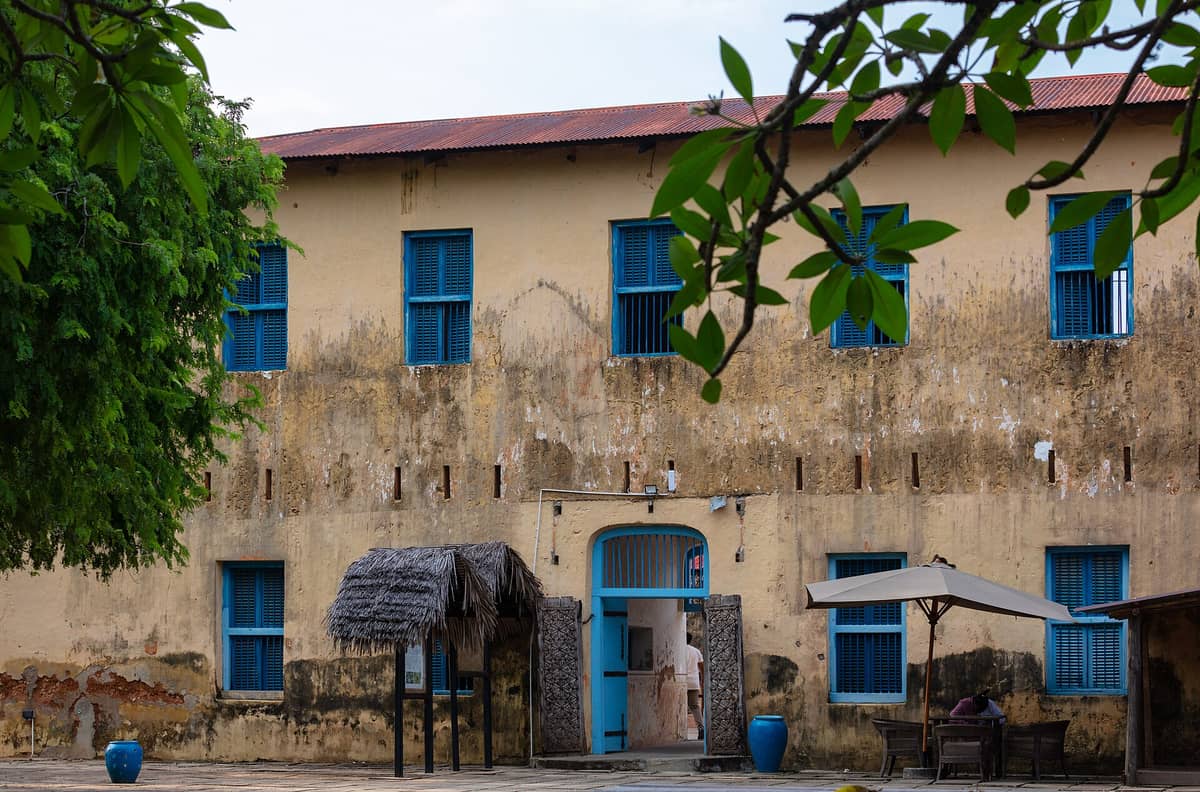
Prison Island, the common English name for Kisiwa cha Changuu, is a small coral island measuring roughly 800 metres long and 230 metres wide. It sits in the Zanzibar Channel, visible from Stone Town's seafront on clear days. Despite its dramatic name, no one was ever imprisoned here. The original plan, to use the island as a detention facility, was abandoned after construction; the building later served as a quarantine station for mainland East Africa.
Today, the island draws visitors for two quite different reasons: the colony of Aldabra giant tortoises that roam a fenced sanctuary, and the quietly atmospheric ruins of a colonial-era building slowly being reclaimed by tropical vegetation. There is also a beach and reasonable snorkeling in the shallow water around the island, which makes it appealing for travelers who want to combine wildlife, history, and water in a single morning or afternoon.
ℹ️ Good to know
The entry fee has been reported at around US$12, but tourism pricing in Zanzibar can change. Confirm the current figure with your boat operator or directly at the island before you travel.
A Brief and Honest History
In 1893, a British officer named Lloyd Mathews purchased Changuu Island and oversaw construction of a prison complex. Construction proceeded, but the facility was never put to its intended use. Instead, the island became a quarantine station serving the East African coast, where people arriving by ship who showed signs of illness were isolated before being permitted to enter Zanzibar or the mainland. Construction on the prison building proceeded, but the facility was never put to its intended use. Instead, the island became a quarantine station serving the East African coast, where people arriving by ship who showed signs of illness were isolated before being permitted to enter Zanzibar or the mainland.
This layered colonial history places Prison Island within a broader and darker chapter of Zanzibar's past. Visitors interested in that history more deeply will find context in the Slave Trade Museum in Stone Town and the Mangapwani slave caves on the island's west coast. Prison Island itself does not offer extensive interpretive signage, so arriving with background knowledge adds considerably to the experience.
The tortoises came later. Aldabra giant tortoises, native to the Aldabra Atoll in the Seychelles, were brought to Changuu Island in 1919 as a gift from the British governor of the Seychelles. The colony has grown over the decades and now contains individuals of varying ages, including some that are well over a century old. The tortoises are managed within a fenced sanctuary area rather than roaming the entire island.
Tickets & tours
Live prices and dates from our booking partner. If you book, we may earn a commission at no extra cost to you.
The Tortoise Sanctuary: What to Expect Up Close
The tortoise enclosure is the first thing most visitors head toward after disembarking. The animals range from palm-sized juveniles to enormous elders with shells over a metre long. Moving slowly and with apparent indifference to human presence, the larger tortoises create an oddly calming atmosphere. In the morning, before the midday heat sets in, they tend to be more active, grazing and moving between patches of shade. By mid-afternoon, many have settled and are considerably less animated.
Visitors are generally permitted to interact with the tortoises and feeding is typically allowed, though this is managed by sanctuary staff. The enclosure surface is uneven, with patches of grass, bare earth, and tree roots, so closed-toe shoes or sturdy sandals are more practical than flip-flops. Children respond strongly to the experience; a tortoise that may be 150 years old and still walking around is a genuinely rare thing to be near.
💡 Local tip
Arrive in the morning if possible. The tortoises are more active, the light is better for photography, and you will likely have the enclosure to yourself before tour groups from Stone Town arrive mid-morning.
The Prison Ruins and the Island on Foot
Beyond the tortoise enclosure, the colonial prison building stands in partial ruin. Thick coral stone walls, arched doorways, and barred windows remain largely intact, but the interior has deteriorated significantly. The structure communicates its original function even in decay: the layout is institutional, the walls are thick enough to muffle sound, and small window openings face away from the mainland. There is no museum, no curated exhibition, and minimal explanatory signage. What you get is atmosphere, not information, which suits some travelers and frustrates others.
The rest of the island is walkable in under an hour. A path leads around much of the perimeter, passing through patches of coastal scrub and offering views back toward Stone Town's skyline across the channel. The water clarity around Changuu is good, and the sandy beach on the western side of the island is calm and clean. A small restaurant and bar operates on the island, which is useful given there is no food otherwise available.
Prison Island works well as part of a broader Stone Town day. The Forodhani Gardens night food market and the House of Wonders are easy to combine in the same day, since all are within the Stone Town area and the boat returns you to the same waterfront.
Getting There: Boats, Costs, and Timing
All access to Prison Island is by boat from Stone Town's waterfront. There is no scheduled ferry service; instead, visitors arrange passage through their guesthouse, a tour operator, or directly with boat operators working the harbour. The crossing takes approximately 25 to 30 minutes each way in normal sea conditions. Boat costs vary and are separate from the island entry fee, so confirm both before agreeing to a trip.
The sea between Stone Town and Changuu Island is sheltered and generally calm, but conditions can pick up in the late afternoon. Travelers prone to seasickness will usually find the morning crossing smoother. Booking through a guesthouse or established operator offers more predictability than negotiating independently on the waterfront, though the latter is common and generally fine if you are comfortable agreeing a price in advance.
⚠️ What to skip
Always agree on the total cost, including boat hire, return trip, and island entry, before departing. Unexpected charges at the island itself can occur when fees are not clarified upfront.
For broader transport context around Unguja, the getting around Zanzibar guide covers ferry, taxi, and dala-dala options in useful detail.
Photography, Weather, and Practical Notes
The island photographs well in morning light, when the angle of the sun catches the texture of the prison walls and the tortoises cast long shadows across the grass. By midday the light is flat and the heat is significant; the vegetation provides some shade but the open areas around the tortoise enclosure offer little shelter. Bring water, sunscreen, and a hat regardless of when you visit.
Zanzibar's tropical climate means that between March and May, heavy rains can affect sea conditions and visibility. The dry season from June through October offers the most reliable conditions for the boat crossing and the clearest light for photography. December through February is generally good as well, though occasional rainfall is possible.
If you are planning a broader trip around this period, the best time to visit Zanzibar guide covers seasonal considerations in detail.
Accessibility is a limitation worth noting honestly. The boat journey, uneven ground in the tortoise enclosure, and absence of paved paths make Prison Island difficult for visitors with significant mobility impairments. There is no verified information about accessible boat options or step-free routes on the island. Travelers with specific accessibility needs should contact operators in advance to understand what, if any, accommodations are available.
Is Prison Island Worth Your Time? An Honest Assessment
Prison Island delivers a specific kind of half-day: low effort, genuinely memorable if you are interested in wildlife or colonial history, and over quickly enough that it fits into almost any Stone Town itinerary without sacrificing an entire day. The tortoises alone are worth the trip for families with children or anyone who finds rare animals more compelling than another museum visit.
It is worth being clear about what the island does not offer. It is not an immersive historical site with curated exhibits. It is not a pristine, deserted island escape. The facilities are basic, the signage is minimal, and in peak season, tour groups arrive in overlapping waves. Travelers expecting deep historical interpretation, complete solitude, or a high-end experience may find the trip underwhelming relative to its cost and travel time.
Travelers who want to understand Zanzibar's history more fully should also make time for Zanzibar's slave trade history, which provides the larger context that Prison Island only partially gestures toward.
Insider Tips
- Book a morning departure, ideally before 9 AM. Tour groups typically arrive between 10 AM and noon, and the island's small size means the tortoise enclosure becomes noticeably crowded when several groups overlap.
- The small beach on the island is often overlooked by visitors who spend all their time at the tortoise enclosure and ruins. It is worth at least 20 minutes if you have the time.
- If you plan to snorkel, bring your own mask and fins from Stone Town. Rental equipment on the island is available but inconsistent in quality and fit.
- Older tortoises near the far end of the enclosure tend to be calmer and less approached by visitors, since most people concentrate near the entrance. Spend a few minutes walking past the crowd for a quieter interaction.
- The island restaurant is functional rather than special, but it serves cold drinks and simple food. If you plan to stay through lunch, it is useful to know it exists rather than returning to Stone Town hungry after a longer-than-expected visit.
Who Is Prison Island (Changuu Island) For?
- Families with young children who will remember meeting a 150-year-old tortoise
- Travelers based in Stone Town looking for a focused half-day trip that does not require a full-island journey
- History-curious visitors who want to see the physical remnants of Zanzibar's colonial-era infrastructure
- Snorkelers and swimmers who want calm, clear water without traveling to the north or east coast
- Wildlife enthusiasts interested in Aldabra giant tortoises outside of the Seychelles
Nearby Attractions
Combine your visit with:
- Bwejuu Beach
Bwejuu Beach sits on Unguja's southeast coast, about 50 km from Stone Town, and delivers something increasingly rare on Zanzibar: a long stretch of sand without the resort crowds. The water is calm, the village is small, and the pace is slow. It suits travelers who want a beach day that feels like an escape rather than a performance.
- Cheetah's Rock Wildlife Sanctuary
Cheetah's Rock Wildlife Sanctuary is a small, guided wildlife experience on Unguja where visitors walk alongside rescued cheetahs, interact with servals, and meet a rotating cast of African species in semi-natural enclosures. It is expensive, deliberately exclusive, and unlike anything else on the island.
- Chumbe Island Coral Park
Chumbe Island Coral Park sits off Zanzibar's southwest coast and protects one of the Indian Ocean's most intact coral reef ecosystems. Reaching it requires advance planning, a boat transfer, and a genuine interest in marine conservation — but for the right traveler, nothing on the island compares.
- Kidichi Spice Farm & Persian Baths
A few kilometers inland from Zanzibar's northern coast road, the Kidichi Persian Baths preserve a rare piece of Omani sultanate architecture, complete with decorative plasterwork and domed ceilings. Paired with a working spice farm, this site offers a quieter, more considered alternative to the busier spice tours closer to Stone Town.
Planning a trip? Discover personalized activities with the Nomado app.