The Battery (Battery Park): NYC's Historic Harbor Gateway
Perched at the southernmost tip of Manhattan, The Battery is a free waterfront park offering sweeping views of New York Harbor, access to the Statue of Liberty and Ellis Island ferries, and nearly four centuries of layered history. It works well at any hour, but rewards those who arrive early.
Quick Facts
- Location
- Southern tip of Manhattan, New York, NY 10004
- Getting There
- Multiple subway lines serve Lower Manhattan; check MTA maps for current service to Whitehall St, South Ferry, and Bowling Green stations
- Time Needed
- 45 minutes to 2 hours (longer if catching a ferry)
- Cost
- Free to enter; separate fees apply for SeaGlass Carousel and Statue of Liberty/Ellis Island ferries
- Best for
- Harbor views, historic context, ferry departures, morning walks, families
- Official website
- www.thebattery.org
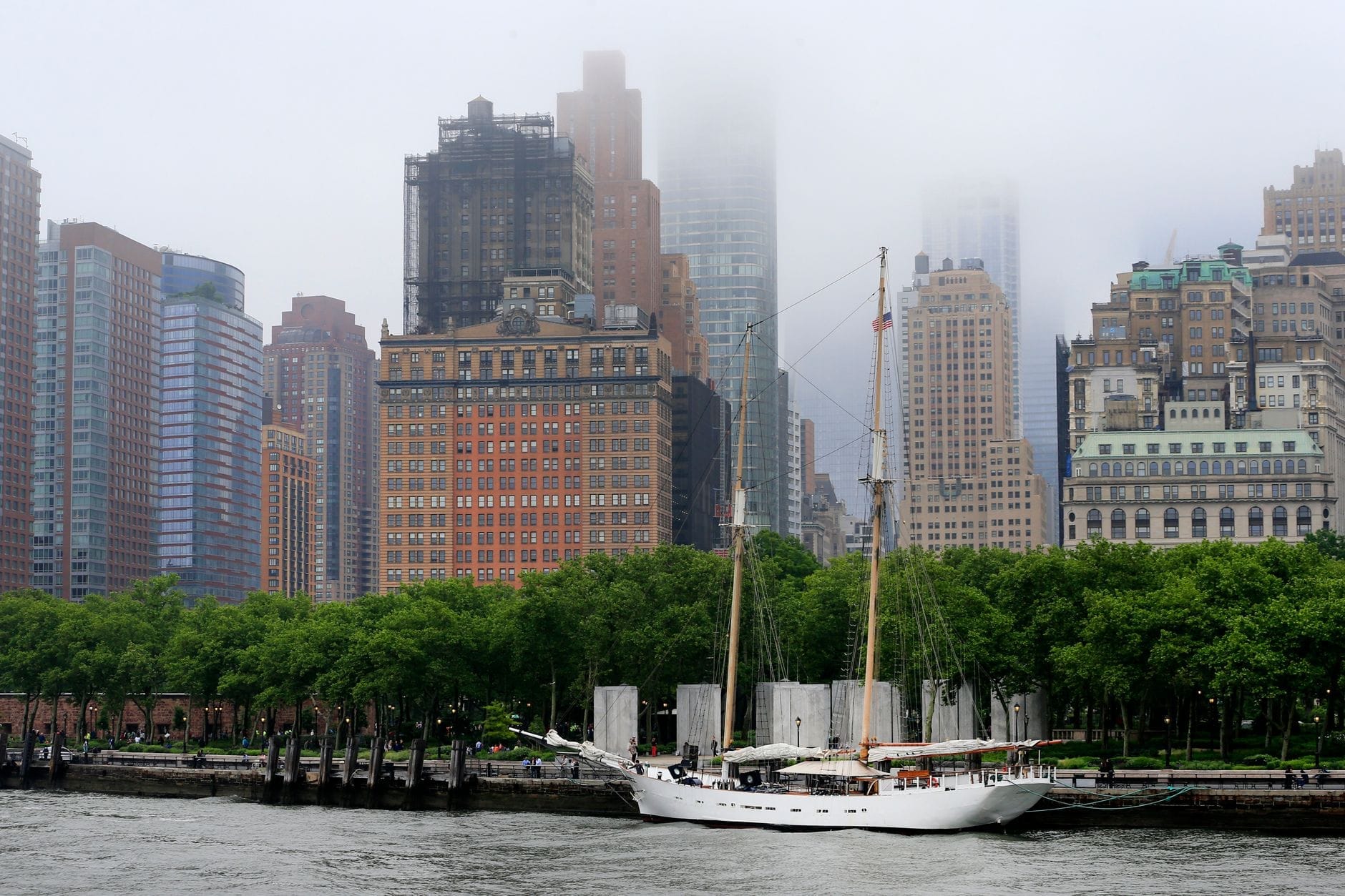
What Is The Battery, Exactly?
Most visitors still call it Battery Park, but the official name has been The Battery since 2015, when the park reverted to its original colonial-era designation. That small distinction matters, because it points to something larger: this is not a decorative green space added as an afterthought to Lower Manhattan's financial district. It is the founding ground of New York itself, a 25-acre waterfront park that has been a public gathering place since the early 18th century.
The park sits at the absolute southern tip of Manhattan, where the Hudson River meets New York Harbor. On a clear day, the Statue of Liberty is plainly visible across the water without a zoom lens. The New Jersey shoreline stretches to the west, Governors Island floats directly south, and the water traffic — container ships, ferries, tugboats, sailboats — gives the view constant motion. This is the kind of waterfront that reminds you Manhattan is, in fact, an island.
💡 Local tip
If you plan to catch the Statue of Liberty or Ellis Island ferry, buy tickets in advance directly from Statue City Cruises (the official operator). The ferry terminal is inside the park at Castle Clinton, and same-day queues in summer can be substantial.
A Layered History at the Water's Edge
The site's history stretches back further than most visitors realize. Before Dutch settlers arrived, the Lenape people knew this rocky shoreline as Kapsee, a term for the ledge of rock at the harbor's edge. The Dutch West India Company established New Amsterdam nearby in 1625, and the southern tip of the island quickly became the colony's defensive front.
The name "Battery" comes directly from the artillery batteries once installed here to defend the harbor. That fortification evolved over time into what is now Castle Clinton, a circular sandstone fort completed around 1811 and renamed in 1815. By 1823, the structure had been ceded to the City of New York, and it went on to serve as a concert venue, an immigration depot (before Ellis Island), and eventually an aquarium before becoming a National Monument. Today it functions as the ticket and boarding hub for Statue of Liberty and Ellis Island ferry departures.
Castle Clinton itself is worth a few minutes of close attention. The rough-cut sandstone walls, about 8 feet thick at the base, give a clear sense of how seriously this harbor was once defended. Entry to the fort's interior is free. For broader context on Lower Manhattan's historical layers, the National Museum of the American Indian is a short walk north, housed in the former U.S. Custom House on Bowling Green.
Tickets & tours
Hand-picked options from our booking partner. Prices are indicative; availability and final rates are confirmed when you complete your booking.
Battery Park, Statue of Liberty Museum and Grounds Guided Tour
From 50 €Instant confirmationFree cancellationVIP Access: Ellis Island, Statue Liberty and Battery Park Walking Tour
From 66 €Instant confirmationFree cancellationSkip-the-Line Statue of Liberty, Ellis Island, and Battery Park
From 43 €Instant confirmationFree cancellationBattery Park and Statue of Liberty self-guided walking audio tour
From 7 €Instant confirmationFree cancellation
The Park at Different Hours
The Battery behaves differently depending on when you arrive. Early mornings, roughly 7 to 9am, are the quietest. The harbor light at that hour is low and soft, particularly effective for photography. Joggers and dog walkers move through, and the financial district workers cutting across are already in transit mode, heads down. The air smells of salt and diesel from the early ferry runs. It is genuinely calm.
By mid-morning, the park shifts into tourist mode. Tour groups assemble near Castle Clinton, ferry queues form, and the promenade fills with people reading the harbor monuments and angling for photos of the Statue of Liberty. Midday in summer can feel overcrowded, particularly near the ferry terminal. The lawns further west, along the promenade toward the Hudson River, stay noticeably quieter even at peak hours.
Late afternoon brings a different crowd: office workers from the surrounding financial district using the benches and lawns for lunch breaks that have stretched into the 5pm hour, couples watching the harbor light turn gold, and photographers who know that the Statue of Liberty faces east and catches the best light in the morning rather than at sunset. If you are hoping for a dramatic lit-up statue at dusk, you will be disappointed from this vantage point.
ℹ️ Good to know
The Battery's grounds are open daily from 7am to 6pm, though the park is not fully enclosed and perimeter areas are accessible outside these hours. Hours for the SeaGlass Carousel and other facilities vary seasonally. Verify current hours at thebattery.org before visiting.
What to See and Do Inside the Park
The promenade along the harbor edge is the park's spine. Walking it from end to end takes roughly 15 minutes at a comfortable pace, with harbor views the entire way. Several memorial sculptures and installations are placed throughout the park, including the Sphere, a bronze sculpture that originally stood in the World Trade Center Plaza and was moved here after September 11, 2001. It still bears the dents and burns from that day, making it an unexpectedly moving object in an otherwise breezy waterfront setting.
The SeaGlass Carousel, located in a glass pavilion near the center of the park, is one of the more original small attractions in Lower Manhattan. Instead of horses, riders sit inside illuminated fiberglass fish that orbit and spin to an underwater soundscape. It is imaginative enough to hold adult attention, not just children's. Tickets are priced separately and hours vary seasonally. The Statue of Liberty and Ellis Island ferries depart from Castle Clinton, making The Battery the natural starting point for those iconic excursions.
The Battery also maintains an urban farm and demonstration gardens toward the park's interior, tended by the Battery Urban Farm program. These are low-key but worth pausing at if you wander off the main promenade. The plantings change seasonally, and on weekday afternoons you can sometimes watch the farm in active operation.
Getting There and Getting Around
The park is straightforward to reach by subway. Several lines stop within a few minutes' walk: the 1 train at South Ferry, the R and W trains at Whitehall Street–South Ferry, and the 4 and 5 trains at Bowling Green. The walk from Bowling Green is about three minutes south. If you are coming from Midtown, the 1 train to South Ferry is the most direct option and deposits you almost at the park's edge.
The Staten Island Ferry terminal at Whitehall Street is also adjacent to the park, and the Staten Island Ferry is free in both directions, offering one of the best unobstructed views of the harbor and the Statue of Liberty from the water without paying ferry tour prices. It is a practical transit connection and a worthwhile activity in its own right.
The park is stroller-friendly and largely flat across its main areas. The promenade surface is paved, and most of the central lawns and pathways are accessible. Visitors with specific mobility or accessibility requirements should contact NYC Parks or The Battery Conservancy directly for current facility details.
How This Fits Into a Lower Manhattan Day
The Battery pairs naturally with the rest of Lower Manhattan's concentrated cluster of significant sites. The 9/11 Memorial is about a 10-minute walk north, and the Wall Street area is equally close. A well-paced half-day can take in The Battery, Castle Clinton, a free look around the National Museum of the American Indian, and still leave time to walk the length of the 9/11 Memorial plaza.
If you are building a full day downtown, the first-time visitor guide to New York City has a practical Lower Manhattan sequence worth consulting before you go. The neighborhood rewards walking, but the distances between sites are longer than they look on a map, particularly if you are factoring in a ferry trip.
⚠️ What to skip
Wind off the harbor can be sharp even on warm days, especially in spring and autumn. A light layer is worth packing even when the forecast looks mild. In winter, exposed sections of the promenade are genuinely cold and often empty.
Insider Tips
- For the clearest view of the Statue of Liberty, position yourself along the western promenade rather than the southern point — the angle is better and the crowds are thinner.
- The SeaGlass Carousel is considerably less crowded on weekday mornings than on weekends. If you have kids and want a shorter wait, Tuesday or Wednesday before noon is consistently better.
- The park's bench seating along the harbor fills quickly on lunch breaks (roughly 12–2pm) on weekdays. If you want a quiet spot to sit and look at the water, come before 11am or after 3pm.
- The Sphere sculpture is easy to walk past quickly, but it is worth slowing down: the placard explains what it is and why it bears the damage it does. Most visitors pass it without reading, which is a missed moment.
- If catching the Statue of Liberty ferry, arrive at Castle Clinton at least 30 minutes before your booked departure. Security screening takes time, and the queuing area gets tight in summer.
Who Is Battery Park For?
- First-time visitors to NYC wanting harbor and Statue of Liberty views without a ferry ticket
- Families with children combining a park visit with the SeaGlass Carousel or Ellis Island ferry
- History-focused travelers interested in colonial New York and Castle Clinton
- Early-morning walkers looking for calm waterfront space before the financial district wakes up
- Anyone beginning or ending a Lower Manhattan walking itinerary
Nearby Attractions
Other things to see while in Lower Manhattan:
- National September 11 Memorial
The National September 11 Memorial occupies the original footprints of the Twin Towers in Lower Manhattan. The outdoor reflecting pools are free and open daily from 8:00 a.m. to 8:00 p.m. This page covers the memorial plaza; for the underground museum, see our separate museum guide.
- National September 11 Museum
The National September 11 Museum sits beneath the World Trade Center memorial plaza in Lower Manhattan. The 110,000-square-foot underground museum documents the attacks of September 11, 2001, and February 26, 1993, and is one of the most emotionally significant museum experiences in the United States. The outdoor memorial pools are free; museum admission requires a timed ticket.
- Ellis Island National Museum of Immigration
Ellis Island National Museum of Immigration sits in New York Harbor on ground that shaped American history more than almost any other. Reached only by ferry, it offers a deeply affecting look at the 12 million immigrants who passed through between 1892 and 1954, housed in a landmark Beaux-Arts building that has been meticulously restored.
- Governors Island
Governors Island sits just 800 yards off the tip of Lower Manhattan, yet feels worlds apart from the city. A former military post turned public park, its 172 acres offer sweeping harbor views, fort ruins, art installations, cycling paths, and some of the most relaxed open space in New York.