Statue of Liberty: What to Expect Before You Go
The Statue of Liberty is one of the most recognized monuments on earth, rising 305 feet above New York Harbor on Liberty Island. Getting the most from a visit requires planning: ferry timing, ticket tiers, and crowd patterns all shape the experience significantly.
Quick Facts
- Location
- Liberty Island, New York Harbor (ferries depart from Battery Park, Manhattan or Liberty State Park, NJ)
- Getting There
- Subway to Bowling Green (4/5) or Whitehall St (R/W), then walk to Battery Park ferry terminal
- Time Needed
- Half day minimum; full day if combining with Ellis Island
- Cost
- Ferry + grounds tickets sold via Statue City Cruises; pedestal and crown access cost more and require advance booking. Verify current prices at cityexperiences.com.
- Best for
- First-time visitors, history enthusiasts, photographers, families with older children
- Official website
- www.nps.gov/stli
What the Statue of Liberty Actually Is (and Isn't)
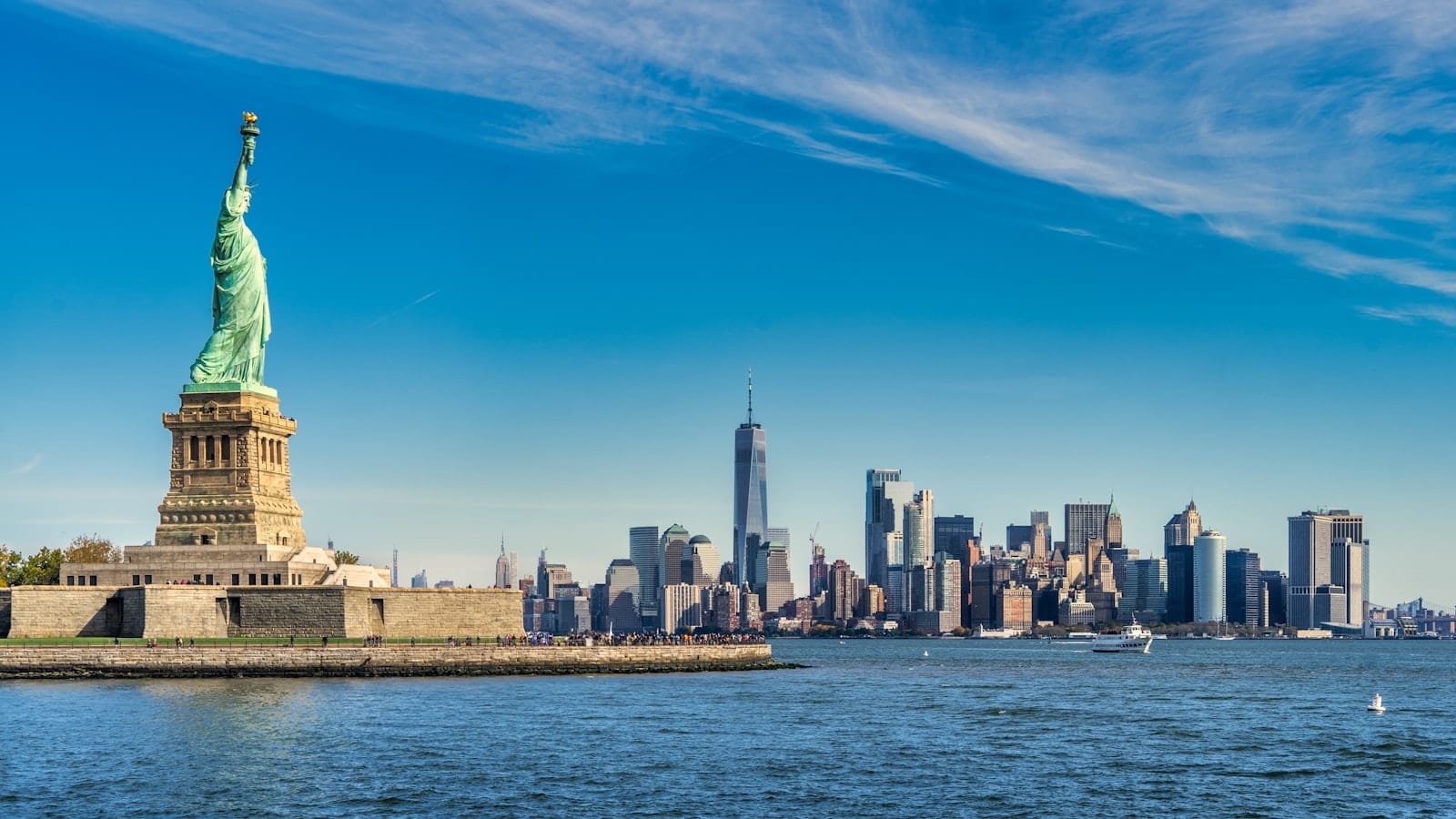
The Statue of Liberty National Monument is a colossal neoclassical sculpture on Liberty Island in New York Harbor, officially named La Liberté éclairant le monde, or 'Liberty Enlightening the World.' Dedicated on October 28, 1886, it was a gift from France to the United States, conceived by French political thinker Édouard de Laboulaye and designed by sculptor Frédéric Auguste Bartholdi. The internal iron pylon framework was designed by Gustave Eiffel, whose later tower in Paris would carry his name into history. The statue stands 151 feet 1 inch (46.05 m) tall; including the pedestal, the total height reaches 305 feet 1 inch (92.9894 m).
As a UNESCO World Heritage Site, Liberty Island draws millions of visitors each year. That scale is worth sitting with before you book tickets: this is a major, well-organized tourist operation, not a quiet heritage site. The monument itself is genuinely impressive and historically significant, but the visit is structured around ferry schedules, timed entry, and crowd management. Going in with realistic expectations makes the difference between frustration and a rewarding half-day.
⚠️ What to skip
Crown access is strictly limited, requires climbing 377 steps, and often books out weeks or months in advance. If crown access is your priority, check availability at Statue City Cruises well before your travel dates. The crown is also not accessible by elevator.
Getting There: The Ferry Is the Only Way
Liberty Island is only reachable by ferry. The official ferry service is operated by Statue City Cruises, departing from two locations: Battery Park in lower Manhattan, and Liberty State Park in Jersey City, New Jersey. Most visitors use the Battery Park terminal, which is walkable from the Bowling Green subway station (4 and 5 trains) or Whitehall Street station (R and W trains). The ferry crossing takes roughly 15 to 20 minutes.
Battery Park itself is worth arriving at early. The park occupies the southern tip of Manhattan, overlooking the harbor, and the early morning light across the water toward the statue is among the better skyline-adjacent views in the city. For context on the surrounding area, the Battery Park section covers what else to see before or after your ferry departure.
Ferry schedules are seasonal and subject to change. The National Park Service and Statue City Cruises publish current departure times on their official pages. Arrive at the terminal well before your ticketed departure, as security screening (bag x-ray and metal detector) is required before boarding, similar to an airport checkpoint. Lines at this stage can add 20 to 40 minutes on busy days.
💡 Local tip
The first ferry of the day consistently has the smallest crowds on the island. If you book the earliest available departure, you will have the grounds nearly to yourself for the first hour before the mid-morning rush arrives.
Tickets & tours
Hand-picked options from our booking partner. Prices are indicative; availability and final rates are confirmed when you complete your booking.
Statue of Liberty, Ellis Island, and Brooklyn Bridge Happy Hour Cruise
From 49 €Instant confirmationFree cancellationNew York Statue of Liberty and Ellis Island tour by ferry
From 55 €Instant confirmation911 Memorial Museum and Lady Liberty Cruise of NYC
From 69 €Instant confirmationFree cancellationSkip the Line: 9-11 Memorial and Museum with Statue of Liberty cruise
From 103 €Instant confirmationFree cancellation
Ticket Tiers: Grounds, Pedestal, or Crown
There are three main access levels, and choosing between them shapes the entire visit. The base-tier ticket covers the round-trip ferry and access to the Liberty Island grounds. You can walk around the statue, view it from below, and visit the outdoor areas. This is a legitimate experience: the sheer scale of the monument is most visceral from ground level, where you can see the green patina of the copper skin and the texture of Bartholdi's craftsmanship up close.
Pedestal access adds entry into the monument's museum galleries and the outdoor pedestal observation area, which sits roughly halfway up the full height. The museum covers the statue's construction, the relationship between France and the United States, and the symbolism of the monument. It is genuinely well-curated and well worth the upgrade from grounds-only. The pedestal deck offers a closer view of the statue's torch arm and face than most visitors realize is possible.
Crown access is the most limited tier. Only a small number of visitors per day are permitted inside the crown, which requires climbing 354 narrow stairs from the pedestal. There is no elevator to the crown. The view from inside is modest: small portholes rather than open panoramic windows. The appeal is historical and experiential rather than scenic. If dramatic harbor views are what you are after, the pedestal observation deck or the ferry ride itself deliver more visually.
ℹ️ Good to know
All ticket prices are set by Statue City Cruises and are subject to change. The National Park Service fee page and the Statue City Cruises booking site (cityexperiences.com) carry current verified prices. New York CityPASS and similar pass products sometimes include ferry tickets; check the current pass guide for inclusions.
On the Island: What the Experience Actually Feels Like
Stepping off the ferry onto Liberty Island, the first thing most visitors notice is the scale. Photographs do not prepare you for standing at the base and looking up 151 feet at a copper face. The statue's color, that distinctive blue-green patina, is the result of natural weathering of the copper cladding over decades. Up close, you can see where individual copper sheets meet, the rivets along the seams, and the way the robes fold and catch shadow.
The grounds are landscaped and relatively uncrowded in the early morning. By mid-morning, ferry loads stack up and the main viewing plaza around the statue fills significantly. The smell of salt air off the harbor is constant, and on clear days the wind is noticeable. Bring a layer even in summer, as the harbor creates a wind chill effect that the Battery Park terminal does not prepare you for.
Most visitors spend 45 minutes to 1 hour 30 minutes on Liberty Island before boarding the ferry onward to Ellis Island, which is included with standard ferry tickets. The two sites pair naturally: the Statue of Liberty represents the aspiration of arrival, while Ellis Island holds the immigration processing records of more than 12 million people who passed through between 1892 and 1954.
The nearby Ellis Island stop is included on the same ferry circuit and takes roughly 90 minutes to two hours to explore properly. Factor this into your planning if you intend to do both in a single day.
Photography: What Works and What Doesn't
The most useful photography advice for the Statue of Liberty is to think about where you want to photograph it from, not just at it. On the island itself, wide-angle lenses struggle to capture the full statue without significant distortion from below. A standard or short telephoto focal length works better for detail shots of the face, crown, and torch.
The ferry ride itself offers some of the best angles, particularly departing from Battery Park in the morning when the light comes from the east and catches the statue's face directly. On the return journey in late afternoon, the sun moves behind the statue from Manhattan's perspective, creating a silhouette effect that can be striking. Smartphone cameras perform adequately, but a camera with optical zoom significantly improves detail shots from the boat.
For those prioritizing skyline and harbor photography over the monument itself, the Brooklyn Heights Promenade and the Staten Island Ferry both offer views of the statue from a distance, with the Manhattan skyline as context, and neither requires a ferry ticket to Liberty Island.
Practical Details and Accessibility
The ferry terminals, Liberty Island grounds, and the pedestal museum are accessible for visitors with mobility limitations. The National Park Service provides detailed accessibility information on its official pages, including details on accessible ferry boarding and island facilities. The crown is not accessible by elevator and involves 377 steps in a confined spiral staircase, which also precludes those with claustrophobia.
There are food concessions on Liberty Island, but the selection is limited and prices reflect the captive-audience context. Bringing snacks and water is sensible if you plan to spend the full day doing Liberty Island and Ellis Island. Lockers are available at the Battery Park terminal if you need to store bags that exceed security size limits.
For a broader orientation to lower Manhattan before or after your visit, the lower Manhattan neighborhood guide covers nearby sites including the 9/11 Memorial, Wall Street, and the South Street Seaport, all within walking distance of Battery Park.
Who Should Reconsider
Visitors who dislike structured, time-stamped tourist operations may find the experience frustrating. You are working within ferry schedules, security lines, timed-entry windows, and crowd bottlenecks. The monument does not offer spontaneous access. If you are short on time in New York City and primarily interested in views of the statue rather than the island experience, the Staten Island Ferry provides a free ride through the harbor with clear views of Liberty Island, and it requires zero advance planning.
Young children who tire quickly on outdoor walks or have difficulty with heat and wind may find the half-day commitment challenging. The grounds have limited shade. Those visiting on overcast or rainy days should also calibrate expectations: the harbor experience is considerably less pleasant in poor weather, and the views from the pedestal deck are substantially diminished.
Insider Tips
- Crown tickets release in two batches: some months in advance, and some closer to the date. If crown access is sold out for your target date, check back regularly as cancellations do open up.
- The New Jersey departure point at Liberty State Park is often less congested than Battery Park. If you are coming from Newark or Jersey City, this terminal can save significant time and stress.
- Audio tours are included with pedestal tickets and are worth using inside the museum. They provide context that the exhibits alone do not fully convey, particularly around the construction engineering challenges.
- Afternoons are the busiest period on the island, as the mid-morning ferry loads have accumulated and tour groups are at peak. If your ticket allows flexibility, aim for the first or second ferry of the day.
- The pedestal museum includes a full-scale replica of the original torch and a glass-floor viewing area looking up into the statue's interior structure. These details are easy to miss if you move through the museum quickly.
Who Is Statue of Liberty For?
- First-time visitors to New York City for whom seeing the statue up close is a meaningful milestone
- History and immigration enthusiasts, particularly when combined with the Ellis Island museum
- Photographers willing to plan around morning light and ferry departure angles
- Families with children old enough to handle a half-day of walking, ferry travel, and outdoor exposure
- International visitors for whom the monument carries particular symbolic significance
Nearby Attractions
Other things to see while in Lower Manhattan:
- National September 11 Memorial
The National September 11 Memorial occupies the original footprints of the Twin Towers in Lower Manhattan. The outdoor reflecting pools are free and open daily from 8:00 a.m. to 8:00 p.m. This page covers the memorial plaza; for the underground museum, see our separate museum guide.
- National September 11 Museum
The National September 11 Museum sits beneath the World Trade Center memorial plaza in Lower Manhattan. The 110,000-square-foot underground museum documents the attacks of September 11, 2001, and February 26, 1993, and is one of the most emotionally significant museum experiences in the United States. The outdoor memorial pools are free; museum admission requires a timed ticket.
- Battery Park
Perched at the southernmost tip of Manhattan, The Battery is a free waterfront park offering sweeping views of New York Harbor, access to the Statue of Liberty and Ellis Island ferries, and nearly four centuries of layered history. It works well at any hour, but rewards those who arrive early.
- Ellis Island National Museum of Immigration
Ellis Island National Museum of Immigration sits in New York Harbor on ground that shaped American history more than almost any other. Reached only by ferry, it offers a deeply affecting look at the 12 million immigrants who passed through between 1892 and 1954, housed in a landmark Beaux-Arts building that has been meticulously restored.