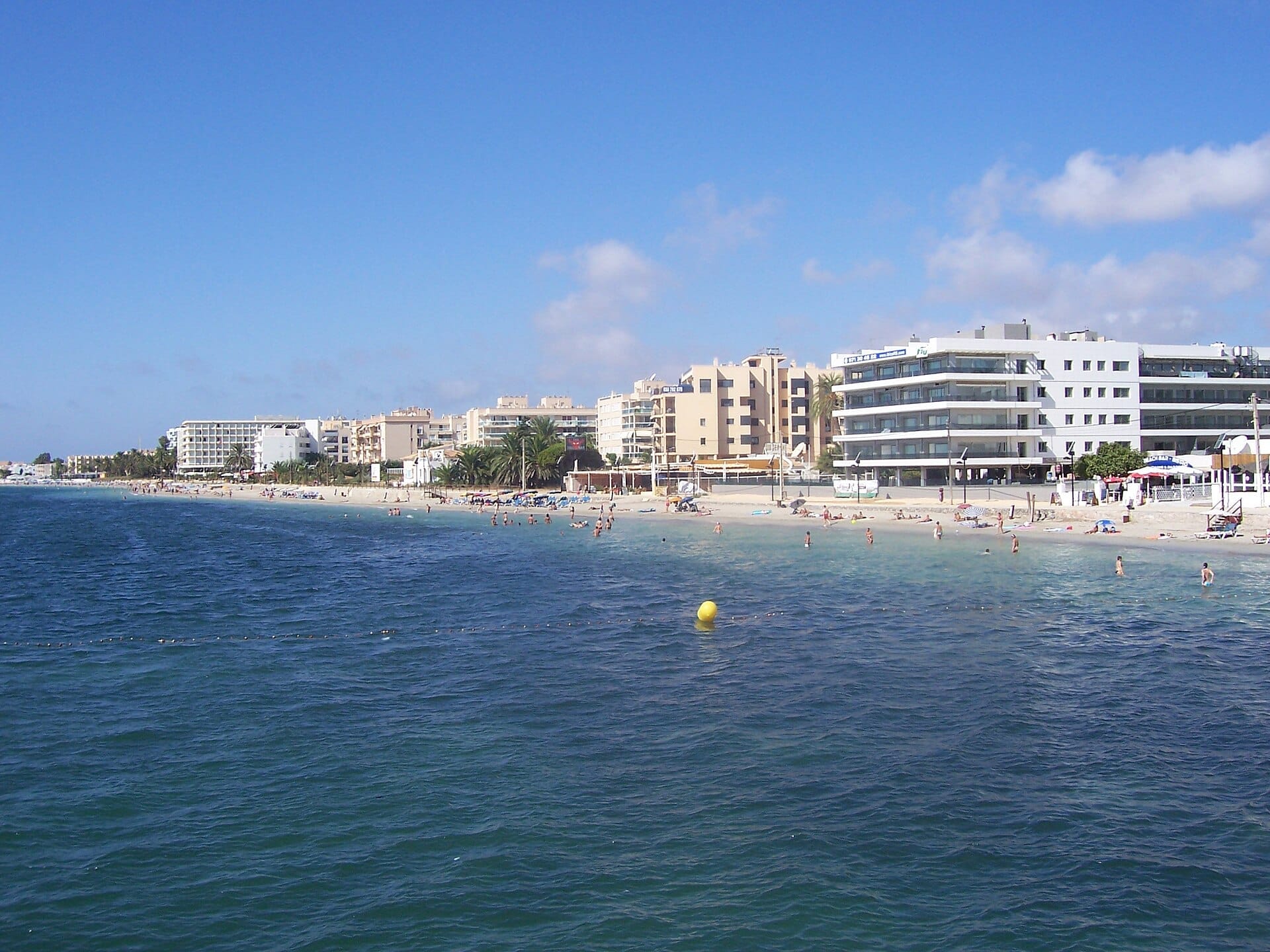
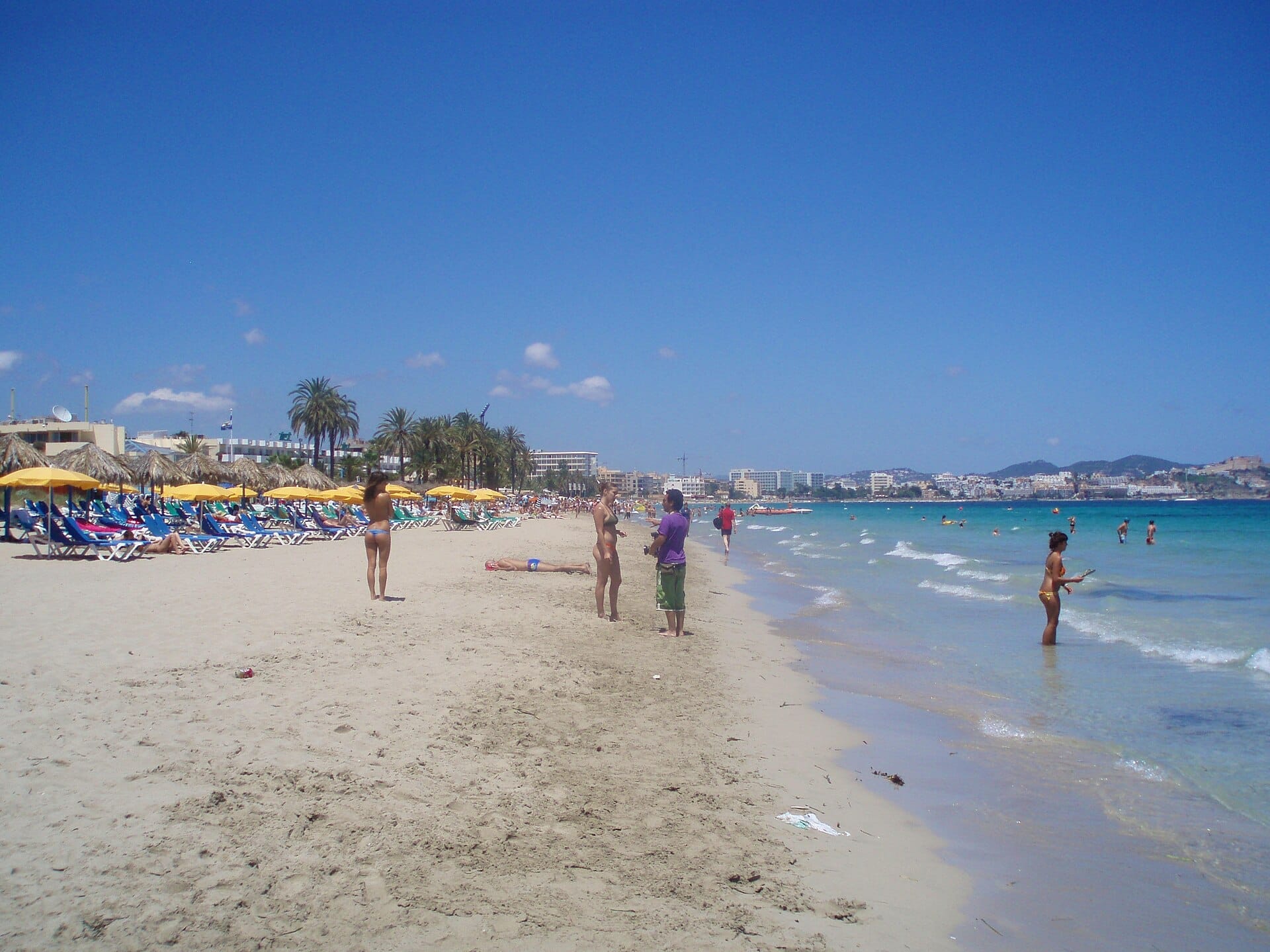
Playa d'en Bossa is Ibiza's longest beach and its most intense resort strip, stretching nearly 3 kilometres of fine sand along the island's south-east coast. It runs the full spectrum from morning swimmers to all-night club crowds, all within a few minutes of Ibiza Town and the airport. If you want beach, clubs, and convenience in one place, this is the neighbourhood that delivers all three.
Playa d'en Bossa is Ibiza's longest beach and its most unapologetically party-focused resort strip, running nearly 3 kilometres of golden sand between Ibiza Town and the airport. It is home to two of the world's most famous clubs, a string of beach bars that blur the line between afternoon and evening, and enough hotels to house a small city. Come here knowing exactly what you want from Ibiza, and it will give you all of it.
Orientation
Playa d'en Bossa, known locally as Platja d'en Bossa, sits on the south-east coast of Ibiza, in the municipality of Sant Josep de sa Talaia. It occupies a near-perfect position on the map: roughly 3 kilometres south of Ibiza Town (Eivissa) and just minutes from Ibiza's main port, with the airport sitting almost directly to the west. This triangle of proximity, between town, airport, and beach, is a big part of why the area has developed into the resort it is today.
The beach itself stretches for approximately 2.5 to 3 kilometres, making it one of the longest sandy beaches on the island. The main resort strip runs parallel to the shore, a single concentrated spine of hotels, apartments, restaurants, bars, and clubs. At the northern end, the strip edges toward the neighbourhood of Figueretes and begins to feel more residential. At the southern end, the beach softens into the dune-backed approaches of Ses Salines, where the character shifts dramatically toward natural coastline.
The nearby settlements of Sant Jordi de ses Salines and Sant Francesc de s'Estany sit just inland, largely invisible from the beach strip but worth knowing about if you need supermarkets, pharmacies, or the Sant Jordi flea market, which takes place on Saturday mornings in Sant Jordi's football stadium car park. Understanding this geography matters: Playa d'en Bossa is not a village with a beach attached. It is a beach with a resort built alongside it, and almost everything within the strip exists to serve the people on that beach.
ℹ️ Good to know
Playa d'en Bossa falls within the municipality of Sant Josep de sa Talaia, not Eivissa municipality. This matters for things like local bus routes and official addresses, but in practice the strip functions as an extension of Ibiza Town's tourist zone.
Character and Atmosphere
The rhythm of Playa d'en Bossa is unlike almost anywhere else on the island. In the early morning, the beach is genuinely pleasant: the sand is raked clean overnight, the water catches the light at a low angle, and the only people out are joggers and the occasional early swimmer. The cafes on the strip open for breakfast, and for an hour or two, it almost resembles a normal Mediterranean resort.
By mid-morning, the sunbeds fill up fast. The beach is wide enough to absorb the crowds, but Playa d'en Bossa at peak season in July and August operates at a volume that is simply loud. Music starts early from the beach clubs, cocktails arrive before noon, and the dress code is minimal throughout. This is a place where people arrive with a week-long agenda that involves as much sleep deprivation as sun exposure.
Afternoons stretch into evenings without a clear break. The beach clubs transition from daytime sessions into pre-party atmospheres, and by nine or ten at night the clubs are opening their doors. The strip stays lit and loud until well after sunrise. If you are staying in Playa d'en Bossa and not part of the club scene, the noise is a genuine issue, particularly in the central section of the strip closest to the main venues. The northern end of the beach, nearer to Figueretes, is noticeably quieter.
It would be wrong to suggest the area has nothing for families or non-clubbers. The beach itself is excellent: fine sand, a gradual slope into calm water, and good accessibility infrastructure including amphibious wheelchairs, adapted showers, and trained staff during the summer season. Lifeguards are present throughout the supervised months. But you are sharing that beach with people who arrived from a club at 7am, and the overall atmosphere is weighted heavily toward young adult party tourism.
⚠️ What to skip
Noise levels in the central section of Playa d'en Bossa are high from mid-morning until at least 6am. If you need quiet sleep, book at the northern end near Figueretes, or choose a different part of the island entirely.
What to See and Do
The beach is the primary attraction, and it earns its reputation. Nearly 3 kilometres of sand with generally calm, clear water makes it one of the most functional beach experiences on the island in terms of pure logistics: space, facilities, water quality, and accessibility. The southern end of the beach gradually gives way to the protected zone of Ses Salines Natural Park, which you can reach on foot or by bike for a completely different atmosphere.
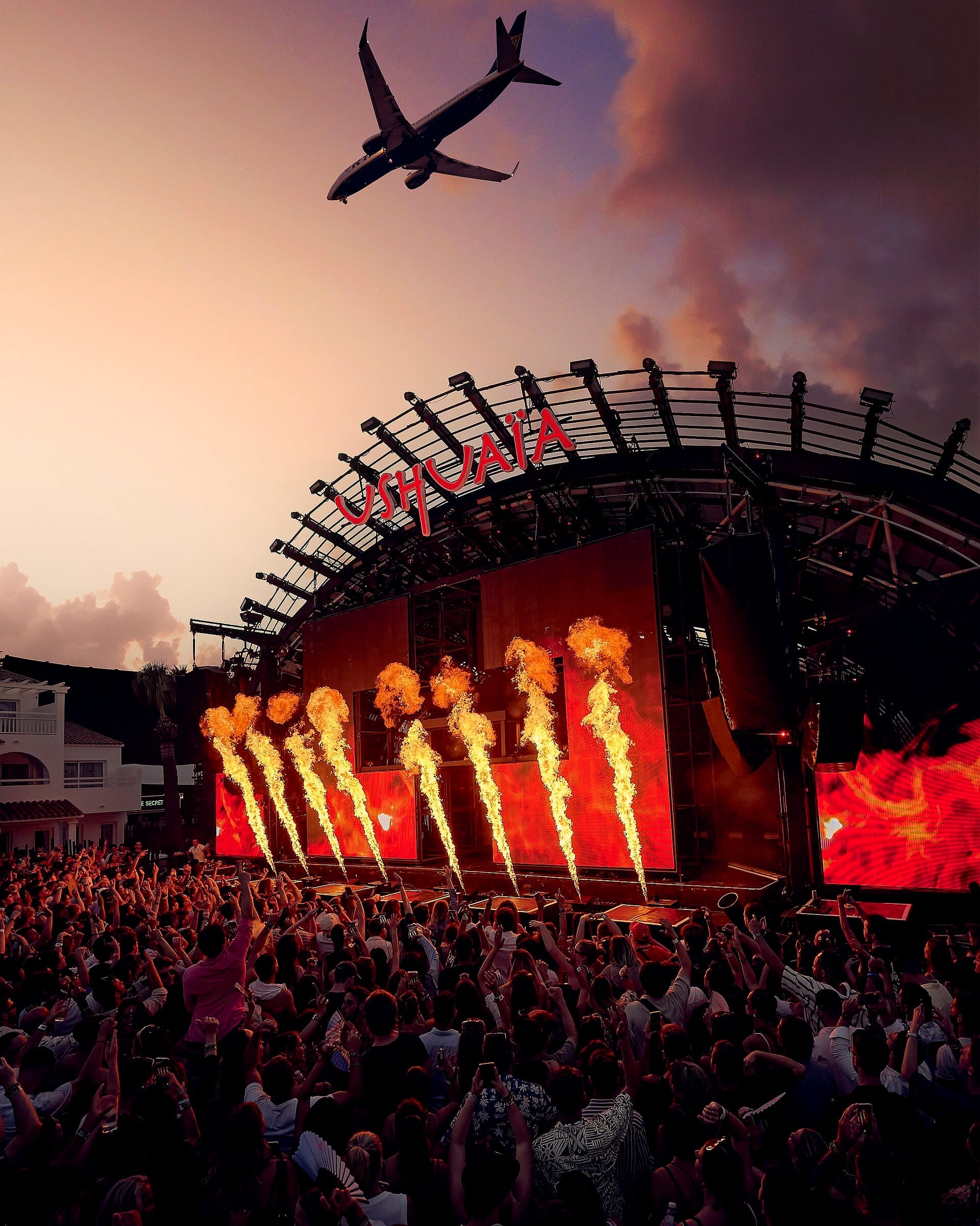
The two clubs that define Playa d'en Bossa internationally are Ushuaïa Ibiza and Hï Ibiza. Ushuaïa operates as an open-air daytime and evening venue with a pool, making it one of the few places where the party happens in daylight with a stage visible from the beach road. Hï Ibiza, which sits on the site of the former Space club, operates as a more traditional large-format nightclub. Both venues attract internationally recognised DJs throughout the summer season, which typically runs from May to late September or early October.
Water sports are widely available along the beach: jet ski rental, paddleboard hire, parasailing, and boat trips are offered by multiple operators stationed on the sand. None of this is cheap, and prices should be confirmed directly with operators as they vary considerably by season and demand.
For day trips, Playa d'en Bossa's location makes it easy to reach the salt flats and nature reserve of Ses Salines, or to take a short drive to Es Cavallet beach, which sits just south of the natural park and has a very different, more relaxed character. Ibiza Town itself, with the UNESCO-listed Dalt Vila walled city, is only about 3 kilometres away and easily reachable by bus or taxi.
The beach itself: up to 3km of fine sand with good facilities and calm water
Ushuaïa Ibiza: open-air pool and concert venue, daytime and early evening
Hï Ibiza: large-format nightclub, formerly Space, one of Ibiza's most storied venues
Former Bora Bora Beach Club site: directly on the sand, once known for dancing from mid-afternoon
Water sports: jet skis, paddleboards, boat trips along the strip
Day trips to Ses Salines Natural Park and Es Cavallet beach, both within 15 minutes
Eating and Drinking
The food scene in Playa d'en Bossa is calibrated to a specific kind of tourist: someone who wants calories between sessions, not a quiet dinner with local wine. That said, the strip has evolved over the past decade and now includes a wider range of options than the purely functional burger-and-pizza model that once dominated.
The beach clubs lead the food offering in terms of quality and presentation. Several of the larger hotels have restaurants that are genuinely good, with proper menus and reasonable cooking. Ushuaïa in particular has invested in its food and beverage offering. Outside the club and hotel ecosystem, the strip has a predictable selection of Mediterranean restaurants, burger joints, Italian places, and sushi bars targeting the international crowd. Prices are high by Spanish mainland standards across the board.
For budget eating, the best strategy is to move slightly inland toward Sant Jordi, where there are supermarkets and a handful of local cafes and bars serving food at more realistic prices. The strip itself operates on resort pricing: expect to pay significantly more for a meal here than you would in Ibiza Town's local neighbourhoods, and considerably more than anywhere on the mainland.
Drinking is, of course, the strip's primary industry. Cocktail bars open from noon, beach clubs serve from mid-morning, and the clubs themselves run full bar operations through the night. Pre-loading at a supermarket before the clubs is standard practice and makes a meaningful difference to the overall cost of a night out. Spirits and mixers from the large supermarkets in Sant Jordi are a fraction of the club price.
💡 Local tip
The Saturday morning flea market at Mercadillo de Sant Jordi at Sant Jordi's stadium car park, about 2 kilometres inland, is one of the island's best markets for second-hand goods, vintage clothing, and locally made items. It starts early and winds down by early afternoon, making it a good reason to be up before noon.
Getting There and Around
From Ibiza Town, the Empresa Municipal de Transports (EMT) bus line 14 connects the town centre to Playa d'en Bossa, with services running seasonally. Schedules increase in frequency during summer and should be checked on the official transport operator's website before travel, as they change year to year. The journey takes roughly 15 to 20 minutes depending on traffic. For broader context on getting around the island, the getting around Ibiza guide covers all transport options in detail.
Taxis are readily available from the rank on the main strip, and the fare to Ibiza Town is short and relatively inexpensive compared to longer island transfers. The airport sits even closer, around 10 minutes by car, which makes Playa d'en Bossa a logical choice for travellers arriving on late flights or departing on early ones. Note that taxi fares at peak hours and during club closing times can be difficult: demand dramatically exceeds supply between 6am and 8am when clubs empty.
A seasonal ferry service connects Playa d'en Bossa with the port of Ibiza Town and with Figueretes, offering an alternative to road transport and a pleasant short crossing. Ferry schedules are seasonal and should be verified locally. Cycling along the coastal path toward Figueretes and eventually into the lower part of Ibiza Town is feasible and pleasant in the early morning or evening.
For reaching beaches further afield, such as Cala Jondal to the south-west or Las Salinas beach near the natural park, a rental car or scooter is the most practical option. The beach strip itself is walkable end to end in under 40 minutes, and most of the main venues are concentrated in the central kilometre of the strip.
Where to Stay
Playa d'en Bossa has one of the highest concentrations of accommodation on the island, ranging from large all-inclusive resorts to small apartment complexes. For a full picture of options across Ibiza, the where to stay in Ibiza guide provides a useful comparison of neighbourhoods. Within Playa d'en Bossa specifically, location within the strip matters more than almost anywhere else on the island.
The central section of the strip, closest to Ushuaïa and Hï Ibiza, is ideal if your trip is built around those venues. You can walk back after a night out, which is a genuine advantage. The trade-off is that the noise is constant and the environment is relentlessly commercial. Boutique or design-led hotels have established themselves in this zone over the past decade, targeting a slightly older club tourist who wants comfort alongside convenience.
The northern end of the strip, where Playa d'en Bossa transitions into the Figueretes area, is noticeably calmer. Hotels here tend to be older and less flashy, but you gain quieter nights and an easier walk or bus ride into Ibiza Town's actual restaurants and bars. Families and couples who want beach access without full immersion in the party scene tend to fare better at this end.
The southern end of the strip, approaching Ses Salines, has fewer accommodation options but is the most peaceful part of the beach. The natural park boundary limits development here, which keeps the area from becoming as densely built as the central section. Staying here means being further from both the clubs and from Ibiza Town, so a rental vehicle becomes more useful.
ℹ️ Good to know
Playa d'en Bossa is best suited to travellers whose primary goal is the club scene, the beach, or both. It is not a good base for exploring the quieter, more rural parts of the island unless you have your own transport. For that kind of trip, north Ibiza or Santa Eulalia make more sense.
Is Playa d'en Bossa Right for You?
Playa d'en Bossa does one thing better than anywhere else on the island: it puts you directly in the centre of Ibiza's internationally famous club and beach scene with maximum convenience. If that is what you came for, it is hard to argue with the logic. If you came for quieter corners of the island or the kind of slow Mediterranean evening that ends at a reasonable hour, you will find the strip exhausting rather than exciting.
The best version of a trip to Playa d'en Bossa uses the strip as a base and reaches outward: a morning at Ses Salines Natural Park, an afternoon in Ibiza Town's old city, and an evening at Ushuaïa before the night properly begins. The beach itself is genuinely good and, especially toward the southern end, can be peaceful in the early morning. The infrastructure is comprehensive. The location is hard to beat for pure logistical convenience. What it lacks is any sense of local Ibizan life, authentic neighbourhood character, or escape from the commercial machine that the strip has become. Know what you are buying, and Playa d'en Bossa delivers exactly that.
TL;DR
Ibiza's longest beach at up to 3 kilometres, with fine sand, calm water, and good accessibility facilities including amphibious chairs and adapted walkways.
Home to Ushuaïa Ibiza and Hï Ibiza, two of the island's biggest clubs, plus a dense strip of beach bars, hotels, and restaurants.
About 3 kilometres from Ibiza Town and a short hop from the airport, making it one of the most convenient locations on the island for transport.
Noise levels are high throughout the strip, especially in the central section: not suitable for anyone wanting peaceful nights.
Best for: club-focused travellers, beach holiday crowds, and anyone wanting maximum convenience. Not ideal for: families seeking quiet, travellers wanting authentic local atmosphere, or anyone planning to explore rural Ibiza without a car.
Ibiza's 210 kilometres of coastline hide many beaches, from party-ready stretches to remote pine-fringed coves. This guide covers the island's finest, organised by character so you can find exactly the beach you're looking for.
Ibiza rewards visitors differently depending on when you arrive. This guide breaks down every season on the island: weather, crowd levels, pricing, nightlife timing, and the months most travelers overlook. Whether you're chasing peak-season energy or a quieter Mediterranean escape, the timing matters more than most guides admit.
Formentera is just a short ferry ride (around 20 km) from Ibiza, but it feels like a different world. This guide covers everything for a day trip: how to get the ferry, what it costs, where to go on the island, and what most visitors get wrong.
Ibiza is small enough to cross in under an hour, but getting around efficiently depends entirely on when you visit and where you're headed. This guide covers every transport option on the island, from the airport bus to the Disco Bus, with real price ranges and practical guidance on what's worth it.
Dalt Vila is the fortified hilltop heart of Ibiza Town, inscribed as a UNESCO World Heritage Site in 1999 for its Renaissance walls, layered history, and cultural depth. This guide covers every major sight, the best walking route, seasonal advice, and the practical details you need to make the most of your visit.
Ibiza is more than its nightlife reputation. This guide covers the essentials for first-time visitors: the best time to arrive, how to get around the island, where to base yourself, what things actually cost, and how to see the side of Ibiza that most tourists miss entirely.
Ibiza is far more than its superclubs and famous shorelines. This guide uncovers the island's quieter, deeper side: fortified hilltop towns, dramatic coastal hikes, authentic village markets, and unspoiled nature that most visitors fly straight past.
Ibiza has over 140 marked trails threading through pine forests, clifftop coastlines, and protected natural parks. This guide covers the best hikes on the island, from the summit of Sa Talaia to the dramatic Es Vedrà coastal trail, with practical tips for every level.
Ibiza's hippy markets are a living legacy of the island's counterculture roots, offering handmade jewellery, bohemian clothing, artisan crafts, and a social atmosphere unlike anything else on the island. This guide covers every major market, from the iconic Las Dalias to the vast Punta Arabí, plus smaller village markets, flea markets, and the best complementary experiences to build your market day around.
September and October mark one of the most interesting transitions on the Balearic island of Ibiza. The club season reaches its emotional finale, crowds thin out, prices drop, and the island starts to breathe again. This guide covers everything from closing party logistics to the best beaches and day trips once the last DJ plays out.
Seven days is the ideal amount of time to experience Ibiza beyond the clubs. This itinerary covers the UNESCO-listed old town, the island's best beaches across multiple coasts, hippy markets, San Antonio sunsets, and a day trip to Formentera, with practical guidance on what to skip and when to go.
Ibiza nightlife runs on its own logic: doors open at midnight, headliners play at 4am, and a single night out can cost €200 before you know it. This guide breaks down every layer of the scene, from superclub pricing and weekly residencies to boat parties, budget bars, and how to get around safely after dark.
Ibiza has a reputation for luxury excess, but the island is genuinely doable on a tight budget. This guide breaks down real costs, the best free activities, transport options, and the timing tricks that can cut your bill by a third.
Ibiza's west-facing coastline turns extraordinary at dusk. Whether you want a front-row bar stool at San Antonio's legendary Sunset Strip or a quiet clifftop above Es Vedrà with no one else around, this guide covers the island's finest sunset experiences across beach coves, hilltop viewpoints, and atmospheric gathering spots.
Ibiza is one of Europe's most misunderstood destinations. Yes, it has world-famous nightlife. But this 572 km² Spanish island in the Balearic archipelago also holds a UNESCO World Heritage Site, dozens of pristine coves, ancient Phoenician ruins, and a thriving market culture. This guide covers all of it — with clear guidance on what's worth your time and what isn't.
Ibiza accommodation spans budget dorm beds at €25 per night to clifftop villas at €5,000 per night. This guide breaks down every major area, what it actually costs, and who each zone suits best — so you book the right place the first time.