Sant Jordi Flea Market (Rastro): Ibiza's Best Saturday Morning Ritual
Every Saturday morning, the old Sant Jordi racecourse transforms into Ibiza's most authentic flea market. Free to enter and open year-round, the Mercadillo de Sant Jordi draws a mix of locals, expats, and sharp-eyed visitors hunting for vintage clothing, antiques, handmade goods, and the kind of random objects that make flea markets worth the early alarm. It is one of the few market experiences on the island that feels genuinely rooted in local life rather than designed for tourism.
Quick Facts
- Location
- Sant Jordi Hippodrome, Carretera Aeroport Km. 4, Sant Jordi de ses Salines, Ibiza
- Getting There
- Bus line 10 from Ibiza Town serves the Sant Jordi / airport road area near the hippodrome; car parking available on site (can fill early)
- Time Needed
- 1 to 2 hours
- Cost
- Free entry; bring cash for purchases
- Best for
- Vintage hunters, local culture seekers, off-peak travellers, budget explorers
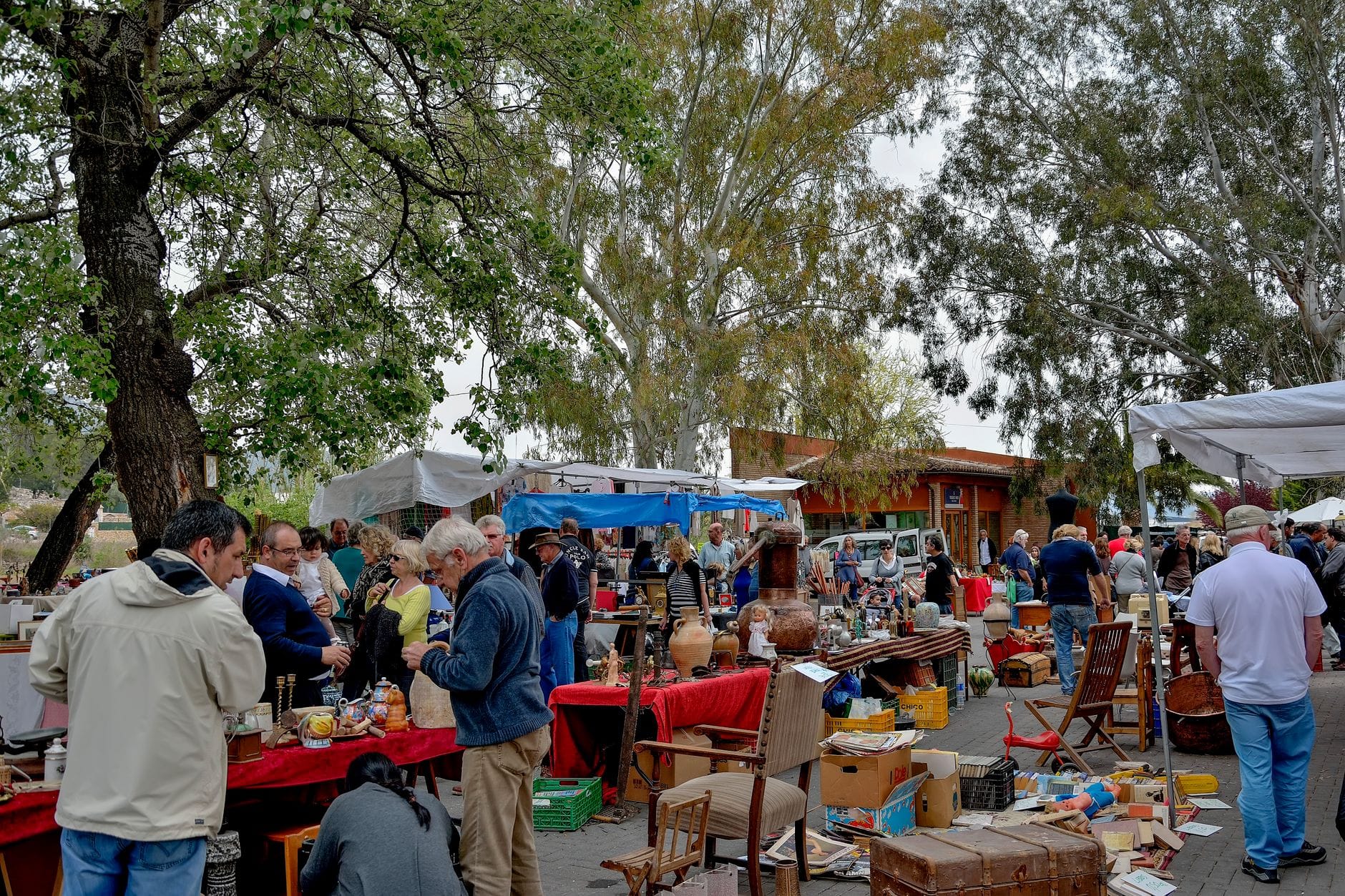
What the Sant Jordi Flea Market Actually Is
The Mercadillo de Sant Jordi, known locally as the Rastro, is a weekly flea market held every Saturday inside the grounds of the old Sant Jordi racecourse (hippodrome), roughly four kilometres from Ibiza Town on the airport road. Born in the 1990s when the racecourse fell out of regular use, it has since become a Saturday morning institution with a loyal following that has little to do with tourist itineraries.
Unlike the island's hippy markets, which are curated craft fairs aimed largely at summer visitors, the Sant Jordi market operates all year round and sells the full chaotic spectrum of flea market goods: second-hand clothing piled on folding tables, antique furniture stacked in the open air, vinyl records, kitchenware, tools, costume jewellery, old ceramics, and occasionally genuinely valuable finds buried under layers of everything else. The mix changes week to week, which is exactly the point.
💡 Local tip
Bring cash. The vast majority of stall holders do not accept card payments. A supply of small euro notes will serve you far better than standing at an ATM after the fact.
The Setting: A Racecourse Turned Open-Air Market
The hippodrome itself is an atmospheric backdrop that no market organiser could have designed from scratch. The open central track area, once used for horse racing, now functions as the main market floor, with stalls arranged in rough rows across the flat ground. On a clear Saturday morning, the light at this hour is sharp and low, casting long shadows across the merchandise and giving the whole scene a slightly cinematic quality.
The surrounding stands and outbuildings add texture without being precious about it. There is nothing polished here. Trestle tables wobble on uneven ground. Sellers sit on folding chairs, drinking coffee from small cups, in no particular hurry to pitch anything to anyone. The atmosphere is calm and slightly unhurried in a way that feels rare on an island that, in high summer, can feel relentlessly performance-driven.
In winter and early spring, when the island shifts into its quieter register, the market takes on a different character. The crowd thins to regulars and residents, the light turns softer, and the pace drops further. For travellers visiting Ibiza outside the peak summer window, the Sant Jordi market is one of the better windows into what the island looks like when it belongs to the people who actually live here.
Tickets & tours
Hand-picked options from our booking partner. Prices are indicative; availability and final rates are confirmed when you complete your booking.
Sunset boat tour with tapas, open bar and water sports in Ibiza
From 70 €Instant confirmationFree cancellationEscape Tour self-guided, interactive city challenge in Ibiza
From 30 €Instant confirmationPrivate Sunset Cruise on a Maritime Classic in Ibiza
From 750 €Instant confirmationFree cancellationIbiza to Formentera boat trip with open bar and water sports
From 69 €Instant confirmationFree cancellation
What to Expect: Stalls, Goods, and the Search
The stall mix is genuinely unpredictable, which is both the challenge and the appeal. On any given Saturday you might find a dealer with a table of well-preserved 1970s Balearic ceramics next to someone selling a pile of used mobile phone cables and three broken umbrellas. That contrast is not a flaw. It is the defining characteristic of a real flea market, and Sant Jordi has remained stubbornly real.
Regular categories include second-hand and vintage clothing (a strong suit, particularly for those who enjoy rummaging), antique and decorative objects, vinyl and cassettes, books in multiple languages, tools and hardware, handmade crafts from a smaller number of artisan sellers, costume and vintage jewellery, and miscellaneous household goods. Quality and condition vary enormously. Prices are generally low, and negotiation is accepted, though hard bargaining is not particularly the culture here.
For context on how this compares to Ibiza's more craft-focused markets, the Las Dalias Hippy Market in Sant Carles offers a more curated, artisan-led experience, while the Punta Arabi Hippy Market in Es Canar runs only in summer. Sant Jordi's Rastro is the island's most traditional flea market format, operating every week regardless of season.
ℹ️ Good to know
The market operates every Saturday, open year-round. Doors open from approximately 8:00–9:00 and trading winds down between 14:00 and 14:30. Arriving by 10:00 gives you full access before the best-quality items disappear.
Timing Your Visit: Morning Versus Late Morning
Arriving between 9:00 and 10:00 gives you first access to incoming stock and the best selection before other buyers have worked through the stalls. The early hours also have a quieter, more exploratory mood. Sellers are setting up, unpacking boxes, arranging tables. You may find items that have not yet been properly sorted or priced, which is often where the best discoveries happen.
By 11:30 or noon, the market reaches its busiest point. In summer, this coincides with an increase in visitors who have added the market to their morning before heading to a beach. The atmosphere shifts, becomes slightly louder, and the sense of having the place to yourself disappears. The market remains entirely manageable and pleasant, but the hunting-ground quality is reduced.
Late arrivals, from 13:00 onward, will find some sellers packing up and the selection thinning. Some sellers will reduce prices sharply in the final hour to avoid carrying goods home, so there is a logic to arriving late if your interest is in whatever bargain remains rather than in first pick.
Getting There and Practical Logistics
The market sits on the airport road (Carretera Aeroport) near the village of Sant Jordi in the municipality of Sant Josep de sa Talaia, a few kilometres south of Ibiza Town. By car, it is a straightforward drive south from the town centre with parking available at the hippodrome. On a busy Saturday in summer, the car park fills early and overflow parking along the road is common. If you are driving, leave before 9:30 to secure a space without frustration.
Bus line 10 from Ibiza Town serves stops along the Sant Jordi / airport road area near the hippodrome, making the journey simple without a car. This is worth knowing for anyone staying in or around Ibiza Town who wants a relaxed morning without the parking calculation.
The market's location near the airport also makes it a logical stop if you are flying out later on a Saturday. You can browse the market in the morning, have a coffee or light lunch in Ibiza Town, and head to the airport from there. The Ibiza Port area is also a short drive away if you want to combine the morning with a waterfront walk.
⚠️ What to skip
No detailed wheelchair accessibility information is available for this venue. The market is held on open ground that may include uneven surfaces, dirt, and makeshift arrangements between stalls. If accessibility is a concern, verify conditions with the market or local tourism office before visiting.
The Local Dimension: Who Actually Goes
What distinguishes the Sant Jordi market from most tourist-facing experiences in Ibiza is its consistent local attendance. Year-round regulars include Ibiza residents who come for practical second-hand shopping, expats who have built the Saturday morning ritual into their week, collectors who know specific sellers and return to check for new stock, and a steady turnover of curious visitors who discovered it through word of mouth rather than a guidebook listing.
This demographic mix matters for how the market feels. Conversations happen in Spanish, Catalan, English, German, and Italian, sometimes in the same exchange. The food and drink options, typically coffee and simple snacks from small vendors within or near the market, are priced for locals rather than tourists. You are unlikely to find an overpriced smoothie bowl here.
For travellers who want more of this kind of cultural grounding, the San Juan Sunday Market in the north offers a similar small-scale, local-feeling market experience, though with a stronger artisan focus. The broader context of Ibiza's market culture is covered in our guide to Ibiza's hippy markets.
Photography and Sensory Notes
The market is rich visually: patterned textiles folded over wooden racks, old mirrors propped against walls, clusters of ceramic plates, the particular visual density of objects accumulated over decades. Morning light, especially in autumn and winter when it remains lower in the sky for longer, hits the open racecourse at a useful angle for photography without the harsh overhead flatness of midday summer sun.
Smells shift as you move through the stalls: old fabric and wood, coffee from a nearby vendor, occasionally motor oil from tools or hardware sections. The sounds are low and conversational, punctuated by the scrape of chairs and occasional bartering. It is not a loud market. It has the sound of a place where people are concentrating on objects rather than performing for each other.
Ask before photographing sellers and their stalls closely. The market does not have a policy against photography, but the normal social contract applies: people at work in a non-tourist context tend to appreciate being asked.
Insider Tips
- Arrive between 9:00 and 9:30 if you want first access to the best stock. Many experienced buyers treat this as a firm rule rather than a preference.
- Bring more cash than you think you need. If you see something worth buying, the time you spend looking for an ATM is the time the next person picks it up.
- Wander the full perimeter before buying anything. The market is not symmetrically arranged and some of the more interesting stalls tend to cluster toward the back or sides of the hippodrome, away from the main entrance flow.
- If you are interested in vintage clothing specifically, come during the off-season months (November through March) when the selection is often stronger and competition from other buyers is lower.
- The market is a short drive from Dalt Vila. Combining a Saturday morning at Sant Jordi with an afternoon exploring the walled old town makes for one of Ibiza's more rounded days.
Who Is Sant Jordi Flea Market (Rastro) For?
- Vintage and second-hand clothing enthusiasts with an eye for value
- Travellers visiting Ibiza in the off-season who want authentic local atmosphere
- Collectors and antique hunters willing to spend time looking
- Budget-conscious travellers who want a free, low-pressure morning activity
- Anyone curious about the Ibiza that exists outside the club and beach circuit
Nearby Attractions
Other things to see while in Ibiza Town (Eivissa):
- Figueretas Beach
Platja de ses Figueretes is a free, accessible urban beach in the Figueretas suburb of Ibiza Town, roughly 15 minutes on foot from the old town. With calm, shallow water, summer ferry connections, and a promenade lined with cafes and restaurants, it serves families, budget travellers, and anyone who wants a beach day without leaving the city.
- Ibiza Port & Marina Botafoch
Stretching along the north side of the Port of Ibiza, the marina known as Botafoc Ibiza offers a flat, walkable promenade lined with restaurants, boutiques, and some of the best views of Dalt Vila's UNESCO-listed walls. Whether you arrive by sea or on foot, this is where the island introduces itself.
- Necropolis del Puig des Molins
Hidden on a small hill just 500 metres from Ibiza Town's old walls, the Necropolis del Puig des Molins is one of the most significant Phoenician and Punic burial sites in the world. Spanning nearly 5 hectares with around 3,000 tombs cut into the rock, this UNESCO World Heritage site offers a rare encounter with 2,700 years of history beneath the surface of a sun-bleached hillside.
- Pacha Ibiza
Open since 1973, Pacha Ibiza is the island's most enduring nightlife institution. Located in Ibiza Town on Avenida 8 d'Agost, it draws serious clubbers with world-class DJ bookings, multiple rooms, and a distinct glamour that has outlasted every trend in electronic music. This guide covers what to expect inside, how the experience shifts across the night, and whether it deserves a place in your itinerary.