Hippy Market Punta Arabí: Ibiza's Original Counterculture Market
Founded in 1973, Hippy Market Punta Arabí in Es Canar is Ibiza's oldest and largest open-air hippy market. Every Wednesday from April to October, hundreds of stalls fill the pine-shaded grounds of the Punta Arabí hotel complex with handmade jewellery, leather goods, clothing, artwork, and food. Entry is free.
Quick Facts
- Location
- Av. de Punta Arabí s/n, Es Canar, Santa Eulària des Riu, Ibiza, Spain
- Getting There
- Bus from Santa Eulària des Riu or Ibiza Town; tourist train and boat excursions also available from most resorts
- Time Needed
- 2 to 4 hours
- Cost
- Free entry; goods priced individually by vendors in euros
- Best for
- Shoppers, families, craft lovers, photographers, curious travellers
- Official website
- http://www.hippymarket.info/en
What Is Hippy Market Punta Arabí?
Hippy Market Punta Arabí is the oldest and largest hippy market on Ibiza, and it has been running continuously since 1973. What started as a handful of travelling artisans selling handmade goods to guests of the Hotel Club Punta Arabí has grown into an outdoor market with hundreds of stalls spread across the pine-shaded grounds of what is now the FERGUS Style Punta Arabí hotel complex in Es Canar, on the island's quieter eastern coast.
The market opens every Wednesday from April to October, 10:00 to 18:00 in 2026, and entry is free. It sits close to the beaches of Cala Martina and Es Canar, which means a market visit and an afternoon swim fit naturally into the same day.
ℹ️ Good to know
Opening dates and hours are seasonal and can vary year to year. For 2026, confirmed dates are Wednesdays from 1 April to 29 October, 10:00 to 18:00. Check hippymarket.info or Ibiza Spotlight before planning your trip.
The Atmosphere: What It Actually Feels Like
Arrive between 10:00 and 11:00 and the market has a relaxed, unhurried quality. Stall holders are still arranging their displays, the air carries a faint mix of incense and pine resin, and you can move between stalls without being jostled. The light filtering through the tall pines gives the whole site a dappled, almost theatrical quality, and the sounds are a low blend of acoustic guitar, conversation in a dozen languages, and the soft clink of silver jewellery being laid out.
By midday, particularly from June through August, the market is genuinely crowded. Coach excursions and tourist train arrivals from resorts across the island swell the crowd significantly in the middle hours. The atmosphere shifts from contemplative to celebratory: drummers often perform in the central areas, henna artists work on long queues of customers, and the food stalls see steady lines. If navigating a dense crowd in 30°C heat is not appealing, arriving early or after 15:00 makes a real difference.
The site is open-air and mostly flat, set across sandy paths under a canopy of pines. Footwear matters: sandals are fine, but very thin-soled shoes can be uncomfortable on the uneven sandy ground, especially over a long browse. There is natural shade throughout, but the warmest part of the afternoon can still be tiring in midsummer. Bringing water is practical advice rather than a formality.
💡 Local tip
For the best combination of crowd comfort and full stall selection, aim to arrive between 10:00 and 11:00. Most vendors are set up by then, and you will have at least an hour before the midday tour groups arrive.
Tickets & tours
Hand-picked options from our booking partner. Prices are indicative; availability and final rates are confirmed when you complete your booking.
Sunset boat tour with tapas, open bar and water sports in Ibiza
From 70 €Instant confirmationFree cancellationEscape Tour self-guided, interactive city challenge in Ibiza
From 30 €Instant confirmationPrivate Sunset Cruise on a Maritime Classic in Ibiza
From 750 €Instant confirmationFree cancellationIbiza to Formentera boat trip with open bar and water sports
From 69 €Instant confirmationFree cancellation
History and Cultural Context
The market's founding in 1973 places it squarely in the era when Ibiza was becoming a reference point for Europe's counterculture. The island had drawn artists, writers, and free spirits since the 1950s and 1960s, partly because of its low cost of living, its distance from mainland Spain's stricter social norms under Franco, and the quality of its light. By the early 1970s, a community of artisans had formed around Es Canar, and the hotel management made the pragmatic decision to let them sell on the grounds, benefiting guests and local traders alike.
What distinguishes Punta Arabí from other Ibiza markets is both its scale and its continuity. It predates, for instance, the Las Dalias Hippy Market in Sant Carles, which is now perhaps better known internationally. The two markets have different characters: Las Dalias is smaller, more curated, and operates on Saturdays; Punta Arabí is larger, louder, and more overtly commercial. Neither is superior, but they suit different moods.
Ibiza's broader market culture is worth understanding before you visit. The island has a tradition of open-air trading tied to its hippy heritage, and exploring it properly is rewarding. The Ibiza hippy markets guide covers the full range of weekly options across the island if you plan to make markets a theme of your stay.
What You Will Find: The Stalls
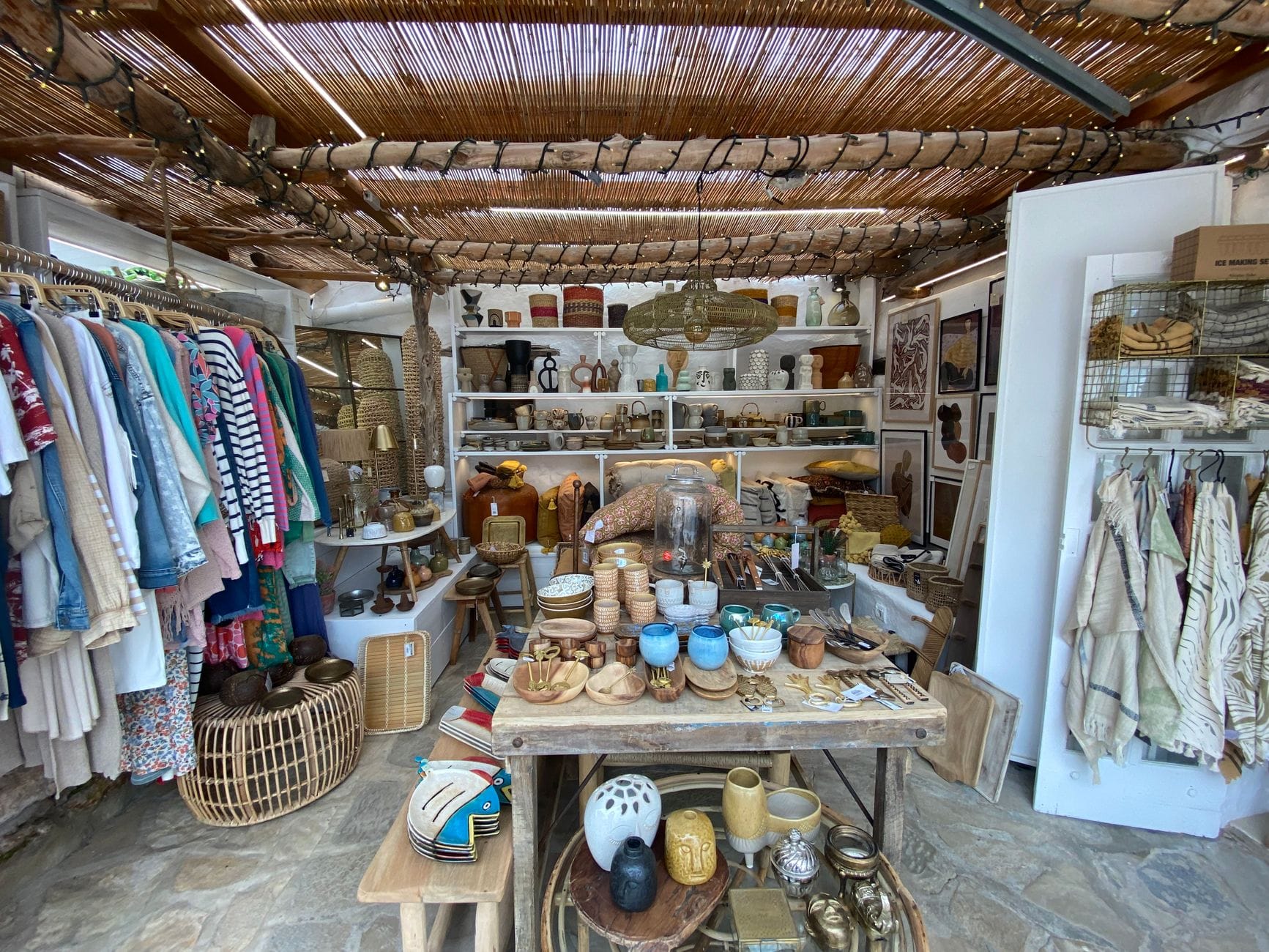
With more than 500 stalls, Punta Arabí covers more ground than most visitors expect. The range is broad: handmade silver jewellery, macramé, hand-tooled leather bags and belts, natural soaps and oils, printed and hand-dyed clothing, ceramics, dreamcatchers, crystals, and a considerable amount of imported goods that are less artisan and more souvenir. It is worth being selective.
The craft quality varies considerably across the site. Stalls closer to the entrance tend to stock more generic tourist items. Walk deeper into the market, past the food and drink area, and you find traders who clearly make their own goods: a leatherworker cutting and stitching on-site, a jeweller with hallmarked silver pieces and a portfolio of custom designs, textile artists using natural dyes. These vendors are worth slowing down for.
- Handmade jewellery in silver, brass, and semi-precious stones
- Leather goods: bags, sandals, belts, and purses made on-site or by local artisans
- Bohemian and resort clothing: dresses, kaftans, linen shirts
- Natural skincare products, essential oils, and incense
- Ceramics and hand-painted glassware
- Henna tattoos and body art
- Food stalls with fresh fruit, olives, spices, and snacks
- Live music and drumming performances in central areas
Prices are set by individual vendors and there is no standard price list. Gentle negotiation is accepted at many stalls, particularly for larger purchases or if you are buying multiple items from the same vendor. Paying by card is not universal; bring cash in euros as a priority, though some stalls now accept card payments.
Getting There: Practical Logistics
Es Canar is on the eastern coast of Ibiza, in the municipality of Santa Eulària des Riu. The town of Santa Eulària itself is roughly 5 kilometres to the south and is the main transport hub for the area. Buses connect Santa Eulària and Ibiza Town with Es Canar; check the current Ibiza bus network timetables before travelling, as services run on seasonal schedules and Wednesday frequencies may differ from the rest of the week.
Many hotels and resorts across Ibiza run dedicated Wednesday excursions to the market by coach, tourist train, or boat. These are popular and often the easiest option if you are based in a resort area, as they handle the return journey and parking is not your concern. Check with your accommodation on Tuesday evening for availability and departure times.
If driving, parking is available near the complex but fills up quickly on busy summer Wednesdays. Arriving before 10:30 gives the best chance of nearby parking. The address is Av. de Punta Arabí s/n, 07840 Es Canar. Taxis from Santa Eulària are a reliable fallback; the ride is short.
⚠️ What to skip
The grounds are outdoor and the paths are sandy and uneven. Wheelchair users or visitors with limited mobility should contact the market directly before visiting to confirm current accessibility provisions. Official sources do not confirm step-free access throughout the site. Contact details are available via hippymarket.info or the current hotel operator.
Photography, Timing, and Who Should Think Twice
The market is photogenic, particularly in the morning hours when the low-angle light filters through the pines and catches the coloured fabrics and metalwork on the stalls. Midday light under the trees is flat but still manageable. The real challenge is crowd density from around 12:00 onwards in summer: wide-angle shots of the market floor become difficult, but portraits and close detail shots of craft objects work well at any hour.
Always ask vendors before photographing them or their stalls. Most are accustomed to it and agree readily, but asking first is courteous and occasionally leads to better access or a conversation about their work.
Travellers looking for a quieter, more intimate market experience might find Punta Arabí overwhelming on a peak summer Wednesday. The scale and tourist-group volume can feel more like a theme park than a craft market by early afternoon in July and August. The Las Dalias Hippy Market offers a smaller alternative on Saturdays. If you are focused on artisan quality over variety, Las Dalias may suit you better. Similarly, visitors hoping for an off-the-beaten-path experience should know that Punta Arabí is one of Ibiza's most-visited Wednesday attractions and is firmly on the group-tour circuit.
That said, for first-time visitors to Ibiza, or anyone travelling with family, Punta Arabí delivers exactly what it promises: a large, lively, free-entry market with something for every age and budget. It fits neatly into a day that also includes a swim at a nearby beach. For context on structuring a full day in this area, see the Ibiza first-timer guide.
Insider Tips
- Arrive before 11:00 to browse at your own pace before the coach tour groups arrive. The stall selection is complete from opening time, so there is no benefit to waiting until later in the day.
- Carry cash in euros. While some vendors now accept card payments, many do not, and ATMs are not on-site. The nearest cash machines are in Es Canar village, a short walk away.
- Walk past the first two rows of stalls before buying anything. The most commercial, generic goods cluster near the entrance. The better-quality artisan work is typically found deeper inside the market grounds.
- If you are interested in a custom leather piece or bespoke jewellery, ask the vendor about turnaround time early in your visit. Some makers on-site can complete small commissions within the same market day.
- Combine the market with an afternoon at Es Canar beach or nearby Cala Martina, both within easy walking distance of the market site. This makes the Wednesday trip worthwhile even if you spend only two hours shopping.
Who Is Hippy Market Punta Arabí (Es Canar) For?
- First-time Ibiza visitors wanting a taste of the island's counterculture history
- Families with children, given the free entry, open space, and varied entertainment including live music and henna
- Shoppers looking for a wide range of handmade jewellery, leather goods, and Bohemian clothing in one place
- Photographers interested in craft markets, textiles, and documentary-style people portraits
- Travellers based in Santa Eulària or eastern Ibiza resorts looking for a full-day Wednesday itinerary
Nearby Attractions
Other things to see while in Santa Eulalia del Río:
- Cala Llonga
Cala Llonga is a sheltered horseshoe bay on Ibiza's eastern coast, about 7 km from Santa Eulalia. With about 200 metres of fine sand, calm and shallow water, and reliable amenities including disabled water access, it draws families and those who want a gentler pace than Ibiza's more famous beaches.
- Es Canar Beach
Es Canar Beach sits on the quieter eastern coast of Ibiza, within the municipality of Santa Eulària des Riu. A crescent of fine sand roughly 300 metres long, it draws families and couples looking for calm Mediterranean swimming, decent beach facilities, and easy access by bus, boat, or car. It is also home to the long-running Wednesday hippy market at Punta Arabí, one of the oldest in Ibiza.
- Puig de Missa, Santa Eulalia
Puig de Missa is the most historically significant landmark in Santa Eulalia des Riu, a whitewashed 16th-century fortified church perched 52 metres above the town. Free to visit, quietly commanding, and largely overlooked by day-trippers, it offers a rare window into Ibiza's pre-tourism identity.