Cala Llonga Beach: Ibiza's Quietest Family Bay
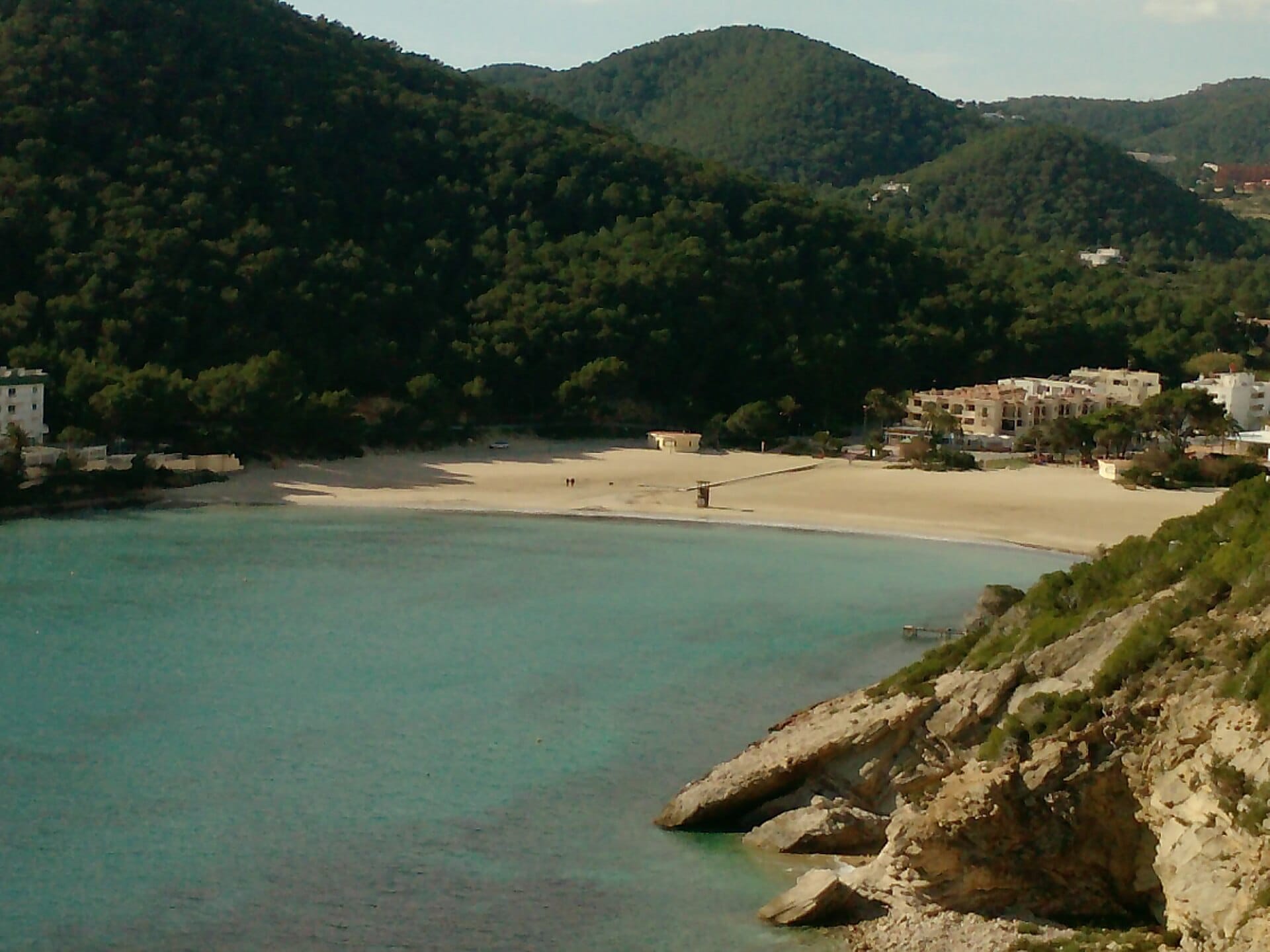
Cala Llonga is a sheltered horseshoe bay on Ibiza's eastern coast, about 7 km from Santa Eulalia. With about 200 metres of fine sand, calm and shallow water, and reliable amenities including disabled water access, it draws families and those who want a gentler pace than Ibiza's more famous beaches.
Quick Facts
- Location
- Cala Llonga resort, municipality of Santa Eulària des Riu, eastern Ibiza. Approx. 7 km from Santa Eulalia, 11 km from Ibiza Town.
- Getting There
- By car, bus from Santa Eulalia or Ibiza Town, or summer ferry from Ibiza Town, Santa Eulalia, and Es Caná.
- Time Needed
- 2 to 4 hours for a beach visit; a full day if you plan to eat, swim, and explore the resort.
- Cost
- Free beach access. Sunbed and parasol hire available at seasonal rates.
- Best for
- Families with children, couples seeking calm water, visitors with mobility needs, ferry day-trippers.
What Cala Llonga Actually Is
Cala Llonga is a compact horseshoe bay on Ibiza's eastern coastline, sitting between pine-covered hillsides that open gradually toward the sea. The beach itself measures roughly 200 metres long and 90 metres wide, giving it a contained, almost intimate scale that stands in contrast to the longer, more exposed stretches elsewhere on the island. The sand is fine and pale, the kind that stays relatively cool underfoot even in mid-afternoon, and the sea floor slopes gently enough that the water stays shallow for a good distance out.
The resort of Cala Llonga has grown around the beach over the decades and now has hotels, apartments, restaurants, and shops arranged along the hillside access road and the seafront promenade. It is not a wild or undeveloped cove. It is an established, functional resort beach that prioritises comfort and calm over atmosphere or drama. That is precisely what makes it worth knowing about.
ℹ️ Good to know
Cala Llonga coordinates: 38.95389°N, 1.51833°E. The beach is open as a natural public area with no fixed closing time, but beach services including lifeguards and water access for disabled visitors operate seasonally, approximately from mid-May to early October.
The Beach Experience: Morning, Afternoon, and Evening
Arriving in the morning, before 10am, gives you the bay largely to yourself. The water at this hour has a glassy stillness to it that the horseshoe shape of the cove protects throughout most of the day. The surrounding pine forest carries a dry, resinous scent down toward the sand, mixing with the salt air in a way that is characteristic of Ibiza's less-trafficked eastern coast. The light in the morning hits the hillside rather than the water directly, so the sea appears a deeper, cooler blue compared to the luminous turquoise it becomes by midday.
By late morning, sunbeds fill steadily. Families with younger children are the dominant presence, drawn by the calm, shallow entry into the water. The beach is sheltered enough that waves rarely build to any significant size, which makes it genuinely suitable for children who are not yet confident swimmers. The sound landscape shifts: where mornings are quiet except for water and birds, midday brings the hum of boat engines from the summer ferry service and the general murmur of a family beach in full operation.
Late afternoon is when Cala Llonga shows its best light, literally. The sun angles over the western hillside and catches the water at a lower angle, turning the surface a richer gold. The afternoon crowd begins to thin from about 5pm onward as day visitors return to hotels or catch the ferry back. If you want a swim in relative peace, the window between 5pm and sunset is worth targeting. The restaurants along the promenade begin to fill for early dinner, and the overall pace of the resort slows into something genuinely relaxed.
Tickets & tours
Hand-picked options from our booking partner. Prices are indicative; availability and final rates are confirmed when you complete your booking.
Sunset boat tour with tapas, open bar and water sports in Ibiza
From 70 €Instant confirmationFree cancellationEscape Tour self-guided, interactive city challenge in Ibiza
From 30 €Instant confirmationPrivate Sunset Cruise on a Maritime Classic in Ibiza
From 750 €Instant confirmationFree cancellationIbiza to Formentera boat trip with open bar and water sports
From 69 €Instant confirmationFree cancellation
Getting There: Your Practical Options
By car, Cala Llonga is a straightforward drive from either Santa Eulalia (about 10 minutes) or Ibiza Town (around 20 minutes via the inland road). Parking in peak summer months can be tight near the beach, so arriving before 10am or after 4pm makes finding a space considerably easier.
The summer ferry service is arguably the most pleasant way to arrive. Boats connect Cala Llonga with Ibiza Town, Santa Eulalia, and Es Caná, making it straightforward to combine a beach stop here with a visit to the Es Canar area or a morning in Santa Eulalia. Ferry schedules are seasonal and subject to change, so verify the current timetable before planning around them.
Bus services from Santa Eulalia and Ibiza Town reach Cala Llonga during the summer season. This is a lower-cost option worth considering if you are not renting a car, though frequency is limited compared to routes serving larger resorts. Check current schedules with the local transport authority before travel.
💡 Local tip
If arriving by ferry, the boat drops you directly at the beach jetty. This avoids the road entirely and is far more scenic than the car approach down the narrow hillside access road.
Accessibility: Genuinely Good, Not Just Nominally So
Cala Llonga is one of the more practically accessible beaches on the island for visitors with mobility needs. From approximately mid-May to early October, the beach offers supervised access into the water using an amphibious wheelchair and adapted crutches, all under lifeguard supervision. There is also a disabled toilet with an emergency bell on site. This level of provision is not universal across Ibiza's beaches, and it makes Cala Llonga a genuinely useful option rather than a token gesture toward inclusion.
The promenade along the seafront is flat and paved, making it manageable for those with pushchairs or wheelchairs outside the sand itself. The gentle slope of the beach toward the water also helps, as there is no sharp drop that makes entry difficult.
Cultural and Geographic Context
Cala Llonga sits within the municipality of Santa Eulària des Riu, the only river municipality in the Balearic Islands, a geographical distinction that has shaped the northeastern part of Ibiza's eastern coast differently from the drier, more rugged south and west. The broader Santa Eulalia area has historically attracted a more settled, year-round population than the clubbing-focused zones around San Antonio or Playa den Bossa, and that quieter character extends to Cala Llonga.
Ibiza as a whole was designated a UNESCO World Heritage Site in 1999, recognised for both its cultural heritage (including the fortified old town of Dalt Vila and the Puig des Molins necropolis) and its natural values, particularly the Posidonia oceanica seagrass meadows that extend along much of the island's coast. These meadows are a key reason the water around Ibiza remains as clear as it does. For more context on what the island offers beyond its beaches, the things to do in Ibiza guide covers the full range of experiences across the island.
Photography and Practical Tips
The best photography at Cala Llonga happens at two points: early morning when the light is soft and the beach is empty, and late afternoon when low-angle sun creates strong shadows across the pine-covered hillsides and saturates the water colour. Midday light is harsh and tends to wash out the blue of the sea in photographs. The bay's horseshoe shape means that a wide-angle lens captures both hillsides framing the water, which is the most distinctive compositional feature of the beach.
For a full day visit, bring shade or plan to rent a sunbed with parasol. The beach receives direct sun for most of the day given its orientation, and there is limited natural shade on the sand itself. The pine trees at the edges of the beach provide some relief in the morning, but by midday the shade retreats.
Cala Llonga is not the place to come if you are looking for the dramatic scenery of Ibiza's southwestern coves. For rugged clifftop views and deeper turquoise water, Cala d'Hort or Cala Comte offer a very different experience. Cala Llonga's strength is consistency and comfort, not spectacle.
Who Should Skip Cala Llonga
Visitors looking for wild, undeveloped scenery or a sense of discovery will find Cala Llonga too built-up. The resort infrastructure is functional but unremarkable, and the beach itself, while pleasant, lacks the striking visual character of Ibiza's more photographed coves. Solo travellers seeking a lively social scene or beach bars with music will also find the atmosphere here too quiet, particularly outside July and August.
If nightlife proximity is a priority, Cala Llonga is inconveniently placed relative to the main club zones. The Ibiza nightlife guide will point you toward bases that make more sense for that kind of trip.
Insider Tips
- The ferry is the best way to arrive: it drops you directly at the jetty, avoids the narrow approach road, and the journey across the bay from Santa Eulalia takes around 20 minutes with good coastal views.
- The disabled water access service operates only from mid-May to early October and requires lifeguard presence, so if this is important for your visit, confirm it is operational before travelling.
- Parking near the beach fills quickly on summer mornings. If driving, aim to arrive before 9:30am or come back after 4pm when day visitors start leaving.
- The restaurants along the promenade are geared toward resort guests and tend toward reliable, safe menus rather than anything distinctive. For better food, the drive to Santa Eulalia takes about 10 minutes and offers considerably more variety.
- Morning is the right time for photography. The beach faces roughly eastward, so sunrise light hits the water directly and the bay glows before the crowds arrive.
Who Is Cala Llonga For?
- Families with young children who need calm, shallow water and good beach amenities
- Visitors with mobility needs, thanks to the supervised amphibious wheelchair water access service
- Couples who want a quiet beach day without the scene of Ibiza's more famous stretches
- Day-trippers combining the eastern coast by ferry, linking Ibiza Town, Santa Eulalia, and Es Caná
- Travellers who want a relaxed base on the eastern side of the island, away from the main tourist noise
Nearby Attractions
Other things to see while in Santa Eulalia del Río:
- Es Canar Beach
Es Canar Beach sits on the quieter eastern coast of Ibiza, within the municipality of Santa Eulària des Riu. A crescent of fine sand roughly 300 metres long, it draws families and couples looking for calm Mediterranean swimming, decent beach facilities, and easy access by bus, boat, or car. It is also home to the long-running Wednesday hippy market at Punta Arabí, one of the oldest in Ibiza.
- Hippy Market Punta Arabí (Es Canar)
Founded in 1973, Hippy Market Punta Arabí in Es Canar is Ibiza's oldest and largest open-air hippy market. Every Wednesday from April to October, hundreds of stalls fill the pine-shaded grounds of the Punta Arabí hotel complex with handmade jewellery, leather goods, clothing, artwork, and food. Entry is free.
- Puig de Missa, Santa Eulalia
Puig de Missa is the most historically significant landmark in Santa Eulalia des Riu, a whitewashed 16th-century fortified church perched 52 metres above the town. Free to visit, quietly commanding, and largely overlooked by day-trippers, it offers a rare window into Ibiza's pre-tourism identity.