Figueretas Beach (Ses Figueretes): Ibiza Town's Accessible Urban Shore
Platja de ses Figueretes is a free, accessible urban beach in the Figueretas suburb of Ibiza Town, roughly 15 minutes on foot from the old town. With calm, shallow water, summer ferry connections, and a promenade lined with cafes and restaurants, it serves families, budget travellers, and anyone who wants a beach day without leaving the city.
Quick Facts
- Location
- Pg. de ses Pitiuses, 07800 Eivissa (Ibiza Town), Spain
- Getting There
- 15-min walk from Ibiza Town centre; local bus to Figueretas; summer ferry from Ibiza Port
- Time Needed
- 2–4 hours for a beach visit; longer if combining with Ibiza Town sightseeing
- Cost
- Free beach access; sunbed and parasol hire charged by individual operators in EUR
- Best for
- Families, budget travellers, swimmers seeking calm water close to Ibiza Town
What Is Figueretas Beach?
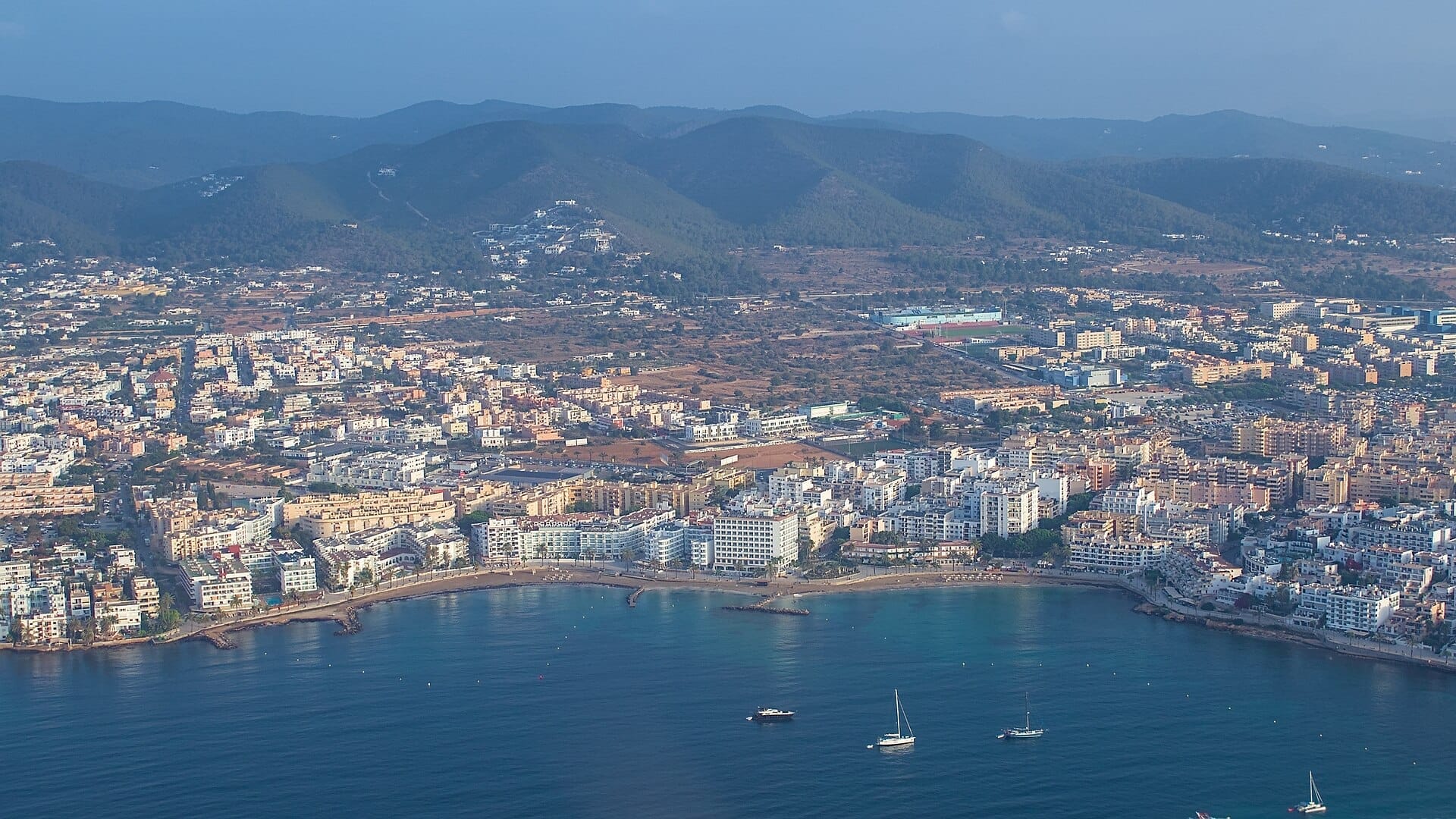
Platja de ses Figueretes (Figueretas Beach) is an open urban beach stretching roughly 400 to 450 metres along the coast in the low-rise residential and hotel suburb known as Figueretas. The name derives from the Catalan word for fig trees, figueres, which historically gave this neighbourhood its character before tourism reshaped the coastline.
The beach is not one unbroken strip. Several small coves are divided by rocky outcrops, with each section offering slightly different character. The combined shore averages around 25 metres in width. Individual cove segments are narrower, with some guides describing sections of roughly 100 metres long and 50 metres deep. The sand is a mix of fine grains and coarser material, pale rather than golden, and the seabed shelves gently into the Mediterranean, keeping the water shallow and calm for most of the shoreline.
ℹ️ Good to know
Beach access is free and the beach is generally accessible year-round. Lifeguards, sunbed hire, and ferry services operate seasonally in summer only.
The Experience: Morning, Afternoon, and Evening
Early mornings at Figueretas are genuinely quiet. By 8am the promenade belongs mostly to local residents walking dogs, elderly swimmers who wade in methodically for their daily dip, and a few joggers using Passeig de ses Pitiuses as a flat running route. The water at this hour carries a particular clarity, glassy and cool before the sun climbs high enough to bounce off it. The smell of salt is cleaner then too, before sun cream, food vendors, and the heat of pavement take over.
By mid-morning in July and August the beach fills steadily. Families with young children claim the shallower sections first, drawn by the safe, calm water. The sunbed operators open early and the rows of orange and blue parasols give the beach a structured, orderly look that differs from the more sprawling feel of wilder coves. By noon the promenade restaurants are doing brisk business with tourists ordering paella and cold drinks while facing the sea.
Late afternoon, especially after 5pm, produces the most photogenic light. The warm western sun catches the water at an angle that makes even this urbanised bay glow. Crowds thin slightly as day-trippers leave. Couples and younger visitors tend to arrive later and stay through sunset. The beach lacks Ibiza's legendary west-facing sunset views (San Antonio's Sunset Strip has those), but the evening light over the water is softer and more forgiving than midday.
In summer evenings a small market appears along the promenade, selling jewellery, handmade goods, and the kind of Ibiza-inflected crafts you also find at the Las Dalias hippy market. It adds atmosphere without being overwhelming.
Tickets & tours
Hand-picked options from our booking partner. Prices are indicative; availability and final rates are confirmed when you complete your booking.
Sunset boat tour with tapas, open bar and water sports in Ibiza
From 70 €Instant confirmationFree cancellationEscape Tour self-guided, interactive city challenge in Ibiza
From 30 €Instant confirmationPrivate Sunset Cruise on a Maritime Classic in Ibiza
From 750 €Instant confirmationFree cancellationIbiza to Formentera boat trip with open bar and water sports
From 69 €Instant confirmationFree cancellation
Practical Walkthrough: Facilities and Layout
The beach is served by public showers, changing areas, and toilets. Lifeguards are posted during the summer season. Sunbeds and parasols are available for hire from private operators at rates set by the individual companies, payable in euros. If you want a free alternative to lying on rented equipment, arrive early enough to find space on the sand directly, though in high summer this requires an early start.
Figueretas Beach has notably good accessibility infrastructure by Ibiza standards. Concrete ramps connect the road to the sand, walkways cross the beach itself, and lifeguards can arrange amphibious wheelchair access into the water. The beach is also designated smoke-free, which families tend to appreciate in practice.
Water sports and activities are available from operators on the beach, though options are more limited than at larger resort beaches like Playa den Bossa. The calm, sheltered bay is better suited to paddleboarding and gentle snorkelling than jet skiing.
💡 Local tip
Bring your own towel and reef-safe sunscreen. The sunbed and parasol rows occupy much of the usable beach space by mid-morning in peak season, so arriving before 10am significantly improves your choice of spot.
Getting There: On Foot, By Bus, or By Ferry
Figueretas is about 15 minutes on foot from the centre of Ibiza Town, following Passeig de Vara de Rey south and then picking up the coastal road. The walk is flat and straightforward, making this genuinely one of the most walkable beaches from an Ibiza Town hotel or rental apartment.
Local buses serve the Figueretas neighbourhood from Ibiza Town's main bus station. Bus routes and timetables change seasonally, so check current schedules from the official Balearic Islands transport authority or the terminal on arrival. The ride is short, just a few stops.
In summer, passenger ferries connect Figueretas with the Ibiza Port, Playa den Bossa, and onward connections toward Formentera. This is one of the more practical aspects of Figueretas that often goes unmentioned: you can combine a morning here with an afternoon at a different beach or even a day trip to Formentera without needing a car. Ferry frequency and pricing are seasonal and should be confirmed locally.
If you are arriving by car, street parking exists on the surrounding roads but fills quickly in high season. Paid parking zones use ticket machines or a parking app. Driving here from central Ibiza Town takes only a few minutes, but parking stress is real in July and August. Walking or busing is genuinely the better option in peak summer.
Historical and Urban Context
Figueretas developed as a residential suburb of Ibiza Town during the second half of the 20th century, expanding outward from the historic walled city of Dalt Vila. Where the old quarter was contained within Renaissance-era fortifications, Figueretas spread along the flat coastal land to the south, acquiring apartment blocks, small hotels, and the kind of compact promenade infrastructure common to Mediterranean resort suburbs.
The neighbourhood's name preserves a reference to the fig trees that grew here before the area was built up. That agricultural-to-resort transition happened fast across much of Ibiza from the 1960s onward, and Figueretas is one of the more visible examples of that shift on the urban southern coastline. Unlike the more manicured resort beach at Talamanca to the north, Figueretas has a slightly rougher urban edge: the buildings backing the promenade are functional rather than architectural, and the neighbourhood feels lived-in year-round rather than purpose-built for tourism alone.
This gives it a character that some travellers prefer. Local residents actually use this beach, especially in spring and autumn when visitor numbers drop. That context matters when you are deciding whether the experience will feel authentic or purely transactional.
What to Expect: Who Will Love This Beach and Who Won't
Figueretas is not Ibiza's most scenic beach. The backdrop is apartment buildings rather than pine-covered hills, and the sand quality is unremarkable compared to the crystalline coves of the island's west coast. If your primary goal is dramatic natural beauty, you will find it elsewhere.
Travellers who expect the postcard-perfect water colours of Cala Comte or the secluded atmosphere of a north Ibiza cove should manage their expectations. What Figueretas offers instead is convenience, accessibility, calm water, and proximity to Ibiza Town's restaurants, shops, and transport connections.
For families with young children, the shallow water, lifeguards, accessible ramps, and amphibious wheelchair provision make this one of the more practical beaches on the island. For travellers without a rental car who are based in Ibiza Town, it is the most easily reachable beach. For budget-conscious visitors, free entry and easy public transport access matter. These are the real reasons to come here.
⚠️ What to skip
In July and August, Figueretas gets crowded quickly. The beach is relatively narrow and the popular sections fill up. If you are visiting in peak summer and want space, arrive before 9:30am or consider weekdays over weekends.
Insider Tips
- The northern end of the beach, closest to the rocky outcrops, tends to be slightly less crowded than the central sections in high season. It also offers better snorkelling along the rocks if the sea is calm.
- The promenade restaurants are aimed primarily at tourists and priced accordingly. Walk one or two blocks inland toward the residential streets of the Figueretas neighbourhood and you will find local bars and cafes with noticeably lower prices for coffee, bocadillos, and lunch menus.
- Summer ferry services from Figueretas can be a practical way to reach Playa den Bossa without a car, and from there onward ferries run toward Formentera. Check timetables locally on arrival as services are adjusted seasonally.
- The beach is designated smoke-free, but enforcement varies. If this matters to you, the sections closer to the lifeguard posts tend to be better policed.
- In September and October, Figueretas becomes noticeably more relaxed. Water temperatures are still warm from summer, crowds are smaller, and the neighbourhood returns to something closer to its everyday character. This is arguably the most pleasant time to visit for anyone who finds peak-summer beach culture exhausting.
Who Is Figueretas Beach For?
- Families with young children seeking shallow, calm water and accessible beach infrastructure
- Travellers based in Ibiza Town without a rental car who want a beach within walking distance
- Budget-conscious visitors: free beach access and easy public transport connections
- Anyone using Figueretas as a ferry staging point for Playa den Bossa or Formentera
- Off-season visitors in May, September, or October who want a quiet urban beach experience
Nearby Attractions
Other things to see while in Ibiza Town (Eivissa):
- Ibiza Port & Marina Botafoch
Stretching along the north side of the Port of Ibiza, the marina known as Botafoc Ibiza offers a flat, walkable promenade lined with restaurants, boutiques, and some of the best views of Dalt Vila's UNESCO-listed walls. Whether you arrive by sea or on foot, this is where the island introduces itself.
- Necropolis del Puig des Molins
Hidden on a small hill just 500 metres from Ibiza Town's old walls, the Necropolis del Puig des Molins is one of the most significant Phoenician and Punic burial sites in the world. Spanning nearly 5 hectares with around 3,000 tombs cut into the rock, this UNESCO World Heritage site offers a rare encounter with 2,700 years of history beneath the surface of a sun-bleached hillside.
- Pacha Ibiza
Open since 1973, Pacha Ibiza is the island's most enduring nightlife institution. Located in Ibiza Town on Avenida 8 d'Agost, it draws serious clubbers with world-class DJ bookings, multiple rooms, and a distinct glamour that has outlasted every trend in electronic music. This guide covers what to expect inside, how the experience shifts across the night, and whether it deserves a place in your itinerary.
- Sant Jordi Flea Market (Rastro)
Every Saturday morning, the old Sant Jordi racecourse transforms into Ibiza's most authentic flea market. Free to enter and open year-round, the Mercadillo de Sant Jordi draws a mix of locals, expats, and sharp-eyed visitors hunting for vintage clothing, antiques, handmade goods, and the kind of random objects that make flea markets worth the early alarm. It is one of the few market experiences on the island that feels genuinely rooted in local life rather than designed for tourism.