Peabody Essex Museum: Where Maritime History Meets Global Art
The Peabody Essex Museum in Salem, Massachusetts is one of the oldest continuously operating museums in the United States, tracing its roots to 1799. Housing vast collections spanning maritime art, Asian export objects, photography, fashion, and a fully reconstructed Chinese house, it rewards visitors with a scope that surprises nearly everyone who assumes Salem is only about witches.
Quick Facts
- Location
- 161 Essex Street, Salem, MA 01970 — in the heart of downtown Salem
- Getting There
- MBTA Commuter Rail (Newburyport/Rockport Line) to Salem Depot, roughly a 5-minute walk from the museum
- Time Needed
- 2 to 4 hours; a full day if you plan to explore Salem's surrounding historic streets
- Cost
- Admission fees apply; check pem.org for current pricing before your visit
- Best for
- Art lovers, history enthusiasts, architecture admirers, and day-trippers from Boston
- Official website
- www.pem.org
What the Peabody Essex Museum Actually Is
The Peabody Essex Museum (PEM) is not a local history curiosity or a witchcraft exhibit. It is one of the largest art museums in New England, with a permanent collection that spans maritime paintings, Asian decorative arts, Native American objects, photography, contemporary design, and fashion. Its scope reflects Salem's actual history: the city was one of the most important seaports in early America, and its ship captains returned from voyages to China, India, Japan, and the Pacific with objects that had never been seen in New England before.
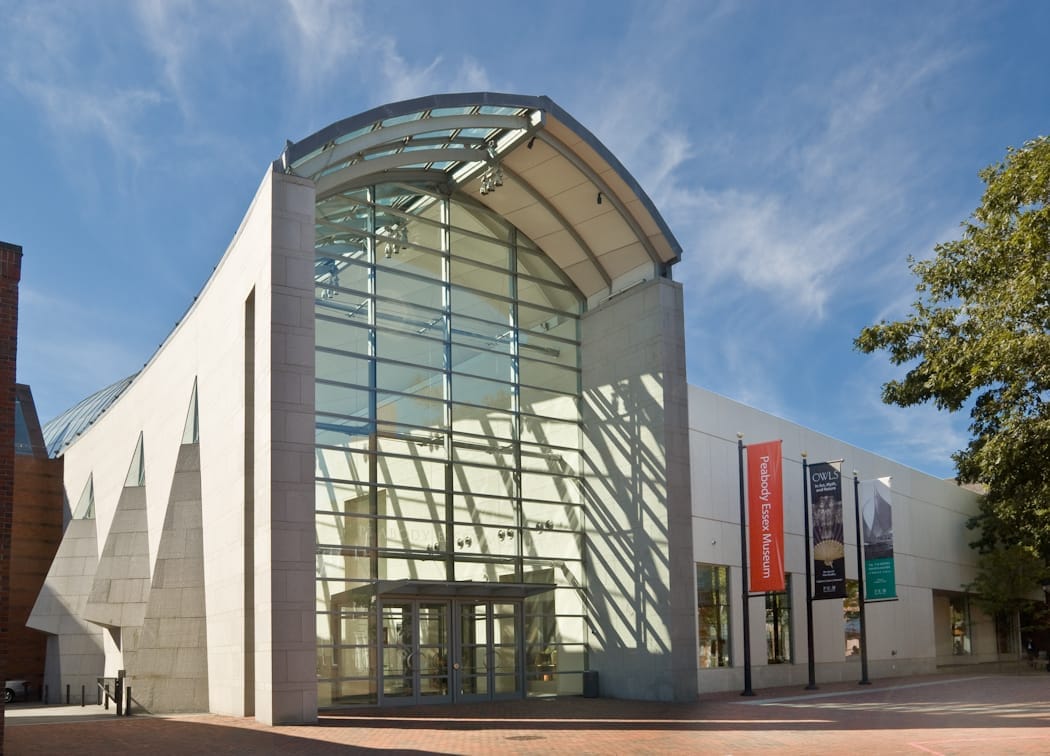
The institution traces its origins to the East India Marine Society, established in 1799 by Salem sea captains who pooled their collections of objects gathered from around the globe. That makes PEM one of the oldest continuously operating museums in the United States. The contemporary museum you enter today is the product of a major expansion completed in 2003, when architect Moshe Safdie designed a dramatic glass atrium linking the museum's historic 19th-century buildings with a new wing. A further major expansion opened in 2019, adding significant gallery space and a new entrance on Essex Street.
💡 Local tip
The museum is generally open Thursday through Monday, 10:00 am to 5:00 pm, and closed on Tuesday and Wednesday, though hours can vary on holidays and for special events; always confirm current hours on pem.org before visiting. Plan accordingly — arriving mid-morning on a Thursday or Friday gives you the best combination of light in the galleries and manageable crowds.
The Collections: What You'll Actually See
The maritime collection is where PEM's identity begins. Enormous oil paintings of clipper ships under full sail hang alongside navigational instruments, figureheads, ship models, and logbooks kept by Salem captains on voyages lasting years. These are not romanticized images: they document real vessels, real routes, and real trade that shaped the global economy of the 18th and 19th centuries. The scale of some of these paintings — wall-filling canvases showing storms off Cape Horn or harbor scenes in Canton — gives the galleries a particular visual weight.
The Asian export art collection is among the strongest in the country. Because Salem traders were among the first Americans to engage in direct trade with China, Japan, and South and Southeast Asia, the objects that came back to Salem are of unusual historical and artistic significance. Lacquerware, porcelain, textiles, and furniture designed for Western buyers but made with Asian craft traditions fill multiple galleries. The visual language is hybrid and fascinating: objects that exist nowhere in their country of origin because they were made specifically for foreign export.
One of PEM's most distinctive features is the Yin Yu Tang house, a fully reconstructed Qing Dynasty merchant's home from Anhui Province, China. The house was dismantled, shipped to Salem, and rebuilt inside the museum with full scholarly documentation of the family who lived in it for over two centuries. It is a unusual experience: walking through the courtyard and sleeping quarters of an 18th-century Chinese house inside a Massachusetts museum. PEM offers timed entry to Yin Yu Tang, and it books up on busy weekends. For those planning a broader trip, the Harvard Art Museums in Cambridge also hold exceptional Asian collections, though the two institutions feel quite different in scale and emphasis.
Beyond maritime and Asian art, PEM has invested significantly in fashion and design, photography, and contemporary art. The fashion collection includes garments spanning centuries, displayed with sophisticated attention to construction and cultural context. The photography holdings are deep, with strengths in 19th-century documentary work and contemporary fine-art photography. The contemporary galleries rotate frequently, so repeat visitors often find something new.
Tickets & tours
Hand-picked options from our booking partner. Prices are indicative; availability and final rates are confirmed when you complete your booking.
Boston Summer Night Trolley Tour and River Cruise
From 27 €Instant confirmationFree cancellationLEGOLAND Discovery Center Boston tickets
From 26 €Instant confirmationFree cancellationGhosts and Gravestones tour of Boston
From 39 €Instant confirmationFree cancellationBest of Boston tour
From 182 €Instant confirmationFree cancellation
How the Experience Changes by Time of Day
Morning visits, particularly on weekdays, offer the quietest experience. The galleries devoted to maritime art and the Yin Yu Tang house are particularly pleasant without crowds: the natural light filters into the central atrium in ways that change noticeably as the day progresses, and the carved wooden details of Yin Yu Tang read differently in softer morning light versus the brighter afternoon hours.
Afternoon visits on weekends, especially in October when Salem draws large crowds for its Halloween season, can feel significantly more crowded. The Essex Street entrance area and the atrium cafe fill up quickly after noon. If you are visiting during October specifically, consider a Thursday or Friday morning visit and book Yin Yu Tang entry in advance online. The rest of the year, weekend afternoons are manageable but the weekday-morning advantage is real.
⚠️ What to skip
October is Salem's busiest month by a significant margin. The museum itself handles crowds well, but the streets, restaurants, and parking around it do not. If you are making a day trip from Boston in October, take the commuter rail and plan to arrive when the museum opens.
Getting There from Boston
Salem is approximately 30 minutes north of Boston by commuter rail. The MBTA Newburyport/Rockport Line departs from North Station in Boston and stops at Salem Depot. From Salem Depot, the museum is roughly a five-minute walk through downtown Salem. This is comfortably the easiest way to make the trip, particularly because Salem's parking situation is stressful on busy days. For first-time visitors building an itinerary, the day trips from Boston guide covers the rail connection and what else to do in Salem in more detail.
Driving to PEM is possible, and there are parking garages in downtown Salem, but the distance from garage to museum is roughly comparable to the walk from Salem Depot. On ordinary weekdays outside October, driving is straightforward. On October weekends, traffic and parking can add 45 minutes or more to the experience in each direction.
The Architecture and the Building Itself
The museum's architecture is worth paying attention to before you start looking at the collections. Moshe Safdie's 2003 central atrium uses a soaring glass roof to flood the interior with natural light, connecting buildings that previously stood as separate structures. The result is a campus-style museum wrapped inside a single coherent interior envelope. The 2019 expansion reinforced this logic with additional gallery space that feels luminous and well-calibrated for displaying both large-scale contemporary work and smaller, delicate objects.
Several of the historic Federal-era buildings that PEM absorbed into its footprint are still visible from Essex Street. The Phillips Library building, a separate PEM research facility, preserves some of the original 19th-century fabric of the institution. For visitors interested in architecture, the contrast between the old granite and brick structures and Safdie's glass additions makes for a interesting exterior to read before entering.
Who Should Visit — and Who Should Not
PEM rewards curiosity and a willingness to spend time with objects. Visitors who engage with the maritime galleries, the Yin Yu Tang house, and one or two of the special exhibition galleries will have a full and satisfying afternoon. Those expecting a quick walk-through may feel the scale is larger than anticipated. The museum does not have the name recognition of Boston's major institutions, but in terms of collection quality and depth, it belongs in the same conversation as the Museum of Fine Arts Boston and the Isabella Stewart Gardner Museum for visitors with serious interest in art and cultural history.
Visitors looking primarily for the Salem witch trials story will find that PEM touches on Salem's broader history but is not structured around that narrative. The Peabody Essex Museum is an art and culture museum, not a historical drama experience. Those specifically drawn to Salem's 1692 history should add other Salem sites to their itinerary rather than expecting PEM to carry that story.
For families, the museum has dedicated programming for children, and the Yin Yu Tang house tends to engage children who are curious about how people lived in different times and places. Families who enjoy the kind of interactive, hands-on model of the Boston Children's Museum may find PEM's galleries require more patience from younger visitors. Older children who are interested in ships, exploration, or Asian art tend to do well.
ℹ️ Good to know
PEM's cafe, located in the central atrium, is a reasonable option for lunch or coffee. It is not a destination meal, but the space is pleasant and the atrium light makes it one of the more agreeable museum cafes in the region.
Photography and Practical Notes
Photography for personal, non-commercial use is generally permitted in PEM's permanent collection galleries, though restrictions apply in some special exhibitions and within Yin Yu Tang. The atrium, with its geometric roof structure and the interplay of natural light at different hours, is worth photographing as an architectural subject in its own right. Wide-angle lenses work well in the larger maritime galleries; detail shots of lacquerwork and porcelain reward a macro lens or close-up phone photography.
The museum is accessible for wheelchair users, with elevator access to all gallery levels and accessible restrooms. The 2019 expansion improved accessibility throughout. Visitors with mobility considerations should note that Salem's surrounding historic streets have uneven brick paving, so the museum itself is more comfortable to navigate than the neighborhood immediately outside.
Insider Tips
- Book Yin Yu Tang timed entry online before you arrive, particularly for weekend visits or any visit during October. Walk-in availability exists but cannot be guaranteed on busy days.
- The permanent collection is large enough that trying to see everything in one visit leads to decision fatigue. Pick two or three collection areas that interest you and spend real time with them rather than walking through all the galleries quickly.
- The MBTA commuter rail runs on a schedule that may require some planning around return trips to Boston. Check the departure times from Salem Depot before you arrive, so you know which train you are aiming to catch in the afternoon.
- PEM's special exhibitions often draw material from collections that rarely travel. Check the exhibitions page on pem.org when planning: the special shows frequently justify the trip independently of the permanent collection.
- Salem's downtown around the museum has a cluster of quite good independent restaurants and cafes on and around Essex Street. Building in a meal before or after the museum is easy and makes the day trip feel complete.
Who Is Peabody Essex Museum For?
- Art and design enthusiasts looking for a world-class collection outside the predictable Boston museum circuit
- History travelers interested in maritime trade, early American commerce, and cross-cultural exchange
- Day-trippers from Boston seeking a full afternoon of cultural depth within easy commuter rail distance
- Architecture admirers interested in how Moshe Safdie's 2003 atrium integrates historic Federal-era buildings with contemporary gallery space
- Families with older children who are engaged by historical objects, ships, and the lived experience of the Yin Yu Tang house
Nearby Attractions
Combine your visit with:
- Arnold Arboretum
Founded in 1872, the Arnold Arboretum is the oldest public arboretum in North America — a free, 281-acre landscape in Jamaica Plain managed by Harvard University. With over 15,000 accessioned plants and sweeping hillside views, it draws botanists, dog walkers, and curious visitors in equal measure across all four seasons.
- Blue Hills Reservation
Ten miles south of downtown Boston, Blue Hills Reservation spreads across more than 7,000 acres of forested hills, rocky ridgelines, and glacial wetlands. Free to enter and open year-round from dawn to dusk, it offers 125 miles of trails ranging from easy pond-side loops to a genuine summit climb at 635-foot Great Blue Hill.
- Boston Duck Tours
Boston Duck Tours puts you aboard a replica World War II DUKW amphibious vehicle for an 80-minute circuit of the city's most historic landmarks, finishing with a splash into the Charles River. Running seasonally from late March through late November, it's one of the few tours in Boston that covers both street-level sights and a Charles River perspective in a single trip.
- Boston Harbor Islands
Boston Harbor Islands National and State Park puts 34 islands and peninsulas within easy ferry reach of downtown Boston. From Civil War earthworks on Georges Island to the oldest lighthouse station in the United States on Little Brewster, the park rewards visitors who are willing to trade the city's brick sidewalks for salt air and open water.