Lurie Garden: Chicago's Extraordinary Free Garden in Millennium Park
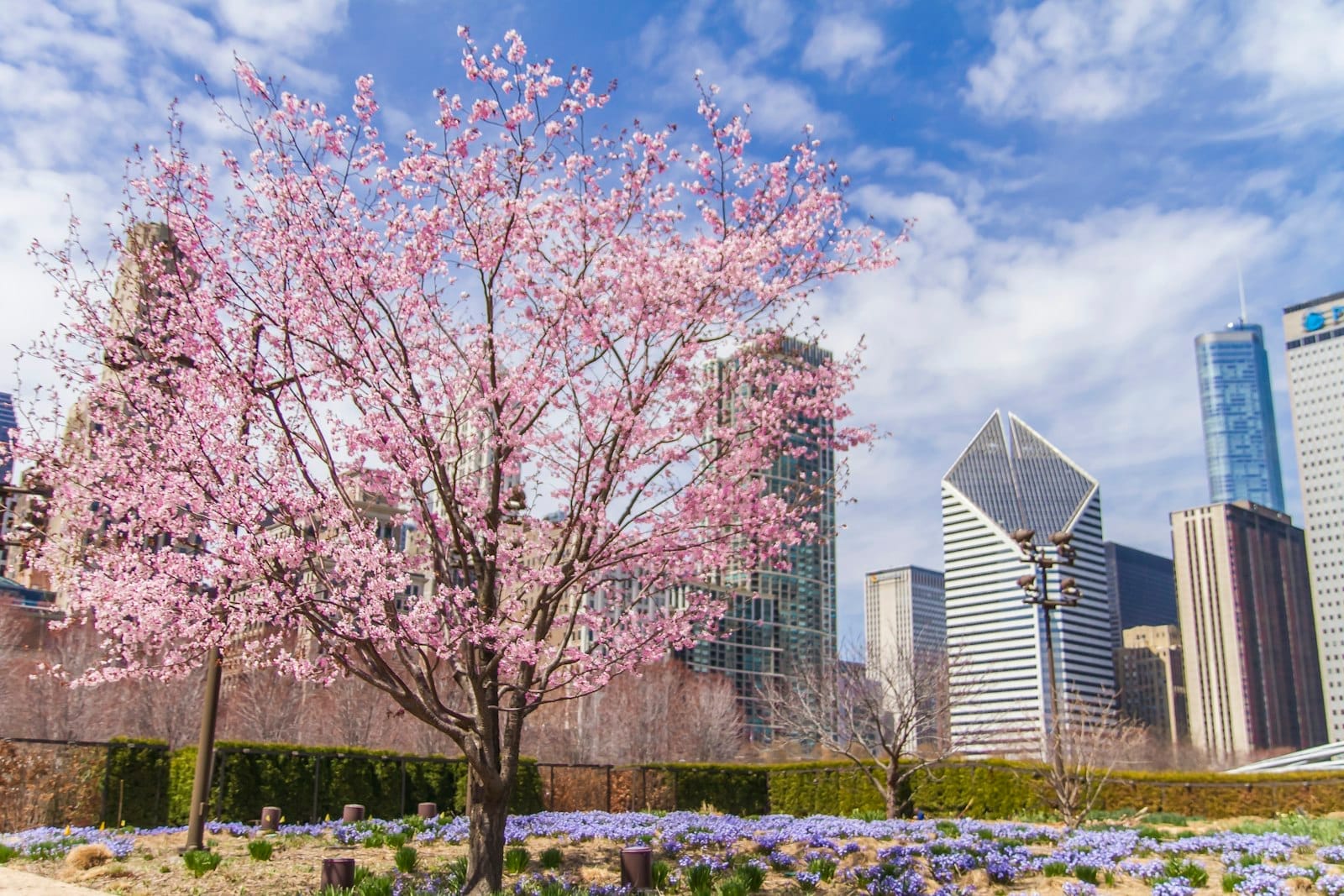
Tucked into the southeastern corner of Millennium Park, Lurie Garden is a free, 3-acre perennial landscape designed by world-renowned planting designer Piet Oudolf. Open daily from 6am to 9pm, it offers one of the most quietly compelling natural experiences in downtown Chicago, changing dramatically with every season.
Quick Facts
- Location
- Southeastern corner of Millennium Park, near 210 E. Monroe St., Chicago, IL 60601 (wayfinding address only)
- Getting There
- CTA 'L' (Brown, Green, Orange, Pink, Purple lines) to Randolph/Wabash; or Red/Blue to Monroe
- Time Needed
- 30–60 minutes; longer for photography or quiet reflection
- Cost
- Free admission
- Best for
- Nature lovers, architecture fans, photography, peaceful escapes from the Loop
- Official website
- www.luriegarden.org
What Is Lurie Garden?
Lurie Garden is a 3-acre public garden in the southeastern corner of Millennium Park, and it is completely free to enter. Opened on July 16, 2004, it was designed by a trio of collaborators: landscape architecture firm Gustafson Guthrie Nichol (GGN), Dutch planting designer Piet Oudolf, and artist Robert Israel. The $13.2 million project was endowed with $10 million from the Ann and Robert H. Lurie Foundation, which funds ongoing maintenance — a detail that explains why the garden looks genuinely cared for rather than merely surviving.
The whole garden sits atop the Lakefront Millennium Parking Garage, making it part of one of the world's largest green roofs. That engineering reality is invisible to visitors; what you see is a dense, layered planting of grasses, perennials, and flowering plants that moves with the wind and reads as a deliberate meditation on the Illinois prairie landscape that Chicago displaced.
The design concept is built around a metaphor: a 'shoulder' hedge (a tall, clipped berm of shrubs) represents the wild, shoulders-back prairie, while the 'seam' divides it from a softer, more cultivated planting zone. Robert Israel contributed a wooden boardwalk and overhead trellis structure called 'The Shoulder' that frames views and marks the boundary between the two planting moods. None of this is obvious to a first-time visitor, but the spatial effect — the sense of being contained, then opened — is very much felt.
How the Garden Changes Through the Day and Season
Early morning, before 8am, is the garden at its most photogenic and most private. The Loop's glass towers catch the low eastern light and throw it across the plantings in long, warm bands. At this hour, the garden belongs mostly to joggers cutting through Millennium Park, the occasional dog walker, and a handful of photographers with tripods. The grasses — many of them Piet Oudolf staples like Sesleria and Calamagrostis — catch and hold dew, and the whole composition has a textural quality that disappears once the sun climbs higher.
Midday in summer (June through August) brings full crowds to Millennium Park, but Lurie Garden absorbs them differently from Cloud Gate or Crown Fountain. Most tourists pass the garden's edge without entering. Inside, the tall plantings reduce noise from the surrounding park, and the internal boardwalk paths are shaded enough to be comfortable even at peak heat. The smell in July and August is specific and strong: it combines the dry, hay-like warmth of mature grasses with sporadic bursts of floral sweetness from the bee balm and alliums.
Late afternoon in autumn (September and October) is the season most devoted garden visitors cite. The grasses turn amber and rust, the seedheads on the Echinacea and Rudbeckia go architectural, and the whole garden begins to look like something between a Dutch Golden Age painting and a Midwestern field. Piet Oudolf designed specifically for this phase of decay, and it shows: the garden is arguably more beautiful in October than in June.
💡 Local tip
Winter visits are genuinely atmospheric but practically limited. Internal paths close when snow or ice is present, so you may only be able to see the garden from its perimeter. The seedheads and dried grasses above a fresh snowfall are worth a look if you're already in Millennium Park.
Tickets & tours
Hand-picked options from our booking partner. Prices are indicative; availability and final rates are confirmed when you complete your booking.
Go City | Chicago All-Inclusive Pass
From 127 €Instant confirmationFree cancellationiFLY Chicago Lincoln Park indoor skydiving experience
From 126 €Instant confirmationFree cancellationiFLY Chicago Rosemont indoor skydiving tickets
From 117 €Instant confirmationFree cancellationChicago lakefront neighbourhood bike tour
From 18 €Instant confirmationFree cancellation
Walking Through the Garden: What to Expect
The main entry is from the northwest, near the corner of S. Columbus Drive and E. Monroe Street. This places the garden directly across from the Modern Wing of the Art Institute of Chicago, connected by Renzo Piano's BP Bridge. The bridge itself is worth the crossing: it's a gently curving stainless steel structure with slatted wood decking, and it frames the first view of the garden before you descend into it.
Once inside, a wooden boardwalk leads through the central planting mass. The paths are generally level, which makes the garden accessible to strollers and wheelchairs in the warmer months. The canopy height of the plantings in summer reaches well above head height in places, creating an enclosed, almost corridor-like experience along the inner walkways. To one side, the Jay Pritzker Pavilion is visible through the plantings; its stainless steel bandshell reads as a strange, glamorous backdrop to the otherwise naturalistic scene.
The 'Shoulder' hedge — a dense, clipped berm that runs along the northern edge — provides a clear physical separation from the rest of Millennium Park. Standing beside it, with the skyscrapers of the Loop rising on all sides, produces one of the more disorienting and memorable spatial experiences in the city: you are simultaneously in a prairie and at the center of a metropolis.
Piet Oudolf and the Plant Palette
Piet Oudolf is the Dutch landscape designer responsible for New York's High Line, the Battery Park garden, and several major European public spaces. Lurie Garden was one of his first major American commissions. His approach, often called the 'New Perennial' movement, foregrounds plants for their structural and textural qualities across all seasons, not just when they flower. The garden at Millennium Park was designed with approximately 240 species, weighted heavily toward North American prairie natives.
Recognizable plants include prairie dropseed (Sporobolus heterolepis), which smells faintly of coriander when brushed; blue wild indigo (Baptisia australis), which produces striking black seedpods in autumn; and various ornamental onions (Allium) whose spherical heads persist long after flowering. In May and June, the alliums and salvias produce a concentrated purple-blue color that photographs well and draws substantial pollinator activity — bees are audible throughout the garden on warm mornings.
ℹ️ Good to know
The garden's official site (luriegarden.org) maintains a seasonal bloom guide. Checking it before a visit will tell you what is flowering during your specific travel window, which is genuinely useful for planning.
Practical Information for Visitors
Lurie Garden is generally open daily from 6:00am to 9:00pm, in line with Millennium Park hours. Admission is free. There are no tickets to book and no queues to manage. The garden can be closed or partially restricted before, during, or after major events in Millennium Park, and internal paths close when winter weather makes them icy. If you're visiting in December through February, check the official site or arrive knowing the interior may not be accessible.
The most straightforward way to reach the garden by public transit is the CTA 'L' to Randolph/Wabash station (Brown, Green, Orange, Pink, Purple lines), which deposits you at the northern edge of Millennium Park about a four-minute walk from the garden's entry. Alternatively, the Red and Blue lines stop at Monroe, placing you at the park's southern edge. For a full picture of getting around Chicago by transit, the CTA system covers this entire area well.
The Millennium Park garages offer paid parking nearby, though rates and availability fluctuate considerably on weekends and during events. Cycling is practical: the Lakefront Trail runs immediately east of the park, and the area has Divvy bike-share docks on multiple surrounding blocks.
⚠️ What to skip
Youth escort policy: visitors under 18 must be accompanied by an adult aged 21 or older after 6:00pm on Thursdays through Sundays throughout Millennium Park, including Lurie Garden. One adult may accompany up to four youths.
Photography is unrestricted for personal use. The garden rewards patience: the interplay of light, plant structure, and Chicago's skyline changes substantially within a single hour. A longer lens (70–200mm) is useful for compressing the relationship between the plantings and the glass towers behind them. For wide shots, morning light from the east, entering from the BP Bridge end, produces the most dramatic shadows across the grasses.
Honest Assessment: Is Lurie Garden Worth Your Time?
If you are visiting Chicago primarily for architecture, big attractions, and the urban spectacle of the Loop, Lurie Garden may register as a pleasant few minutes rather than a destination. The garden sits in the shadow of Cloud Gate and the Pritzker Pavilion, and most visitors treat it as background scenery rather than the main event. That is their loss, but it is an honest description of how the space functions for the average tourist.
For anyone with an interest in contemporary landscape design, urban ecology, or the New Perennial planting style, this is among the most important public gardens in North America and is worth a proper, unhurried visit. It is one of the few places in a major American city where you can observe a landscape architect's vision executed at this scale, maintained at this standard, and completely free to enter.
Visitors who come to Chicago in spring and summer specifically for outdoor green space should pair this with the Chicago Botanic Garden to the north, or simply extend the day along the Lakefront Trail for a broader sense of how the city relates to its natural edges.
Insider Tips
- Visit in late October rather than peak summer for the garden's most distinctive look. The dried seedheads and copper grasses represent what Piet Oudolf specifically designed for, and the crowds drop sharply after Labor Day.
- Enter from the BP Bridge side (from the Art Institute's Modern Wing) rather than from the Columbus Drive edge. The descent from the bridge gives you the best first view of the planting composition and the skyline backdrop simultaneously.
- If you want to understand what you're looking at, download the Lurie Garden's free plant map from the official site before arriving. The garden has interpreted planting zones that become much more legible with a basic map in hand.
- Combine a morning visit here with the free Green City Market, which operates in nearby Lincoln Park on Wednesdays and Saturdays, for a broader picture of Chicago's public green spaces.
- The garden's interior boardwalk is rarely crowded even when the rest of Millennium Park is packed, because most visitors don't realize there are walkable paths inside the planting mass. Walk past the Shoulder hedge and follow the boardwalk to find yourself in near-solitude fifty meters from a thousand tourists.
Who Is Lurie Garden For?
- Landscape architecture and garden design enthusiasts who recognize Piet Oudolf's work
- Photographers seeking unusual combinations of urban skyline and naturalistic planting
- Travelers wanting a quiet, unhurried pause in the middle of a busy Loop itinerary
- Families with children interested in pollinators, grasses, and hands-on sensory plant experiences
- Solo visitors looking for a reflective, low-stimulation space that is free and central
Nearby Attractions
Other things to see while in The Loop:
- Art Institute of Chicago
One of the largest and most visited art museums in the United States, the Art Institute of Chicago anchors the eastern edge of the Loop with a collection of over 300,000 works spanning 5,000 years. From Georges Seurat's pointillist masterpiece to Grant Wood's American Gothic, the highlights alone demand the better part of a day.
- Buckingham Fountain
The Clarence Buckingham Memorial Fountain is one of the largest decorative fountains in the world, sitting at the heart of Grant Park since 1927. Free to visit during its seasonal run from spring through mid-October, it puts on hourly water displays and a nightly illuminated show that draws crowds from across the city.
- Chicago Architecture Center
Housed in Mies van der Rohe's One Illinois Center on the Chicago River, the Chicago Architecture Center packs nearly 10,000 square feet of exhibition space, a landmark scale model of the city, and access to some of the country's most informative architecture tours. It's the most comprehensive entry point into understanding what makes Chicago's skyline one of the world's most significant.
- Chicago Architecture Foundation River Cruise
The Chicago Architecture Center River Cruise aboard Chicago's First Lady is the most authoritative way to read the city's skyline. In 90 minutes, trained docents walk you through more than 40 landmark buildings across all three branches of the Chicago River, connecting architectural styles to the human decisions that shaped them.