Desierto de los Leones National Park: Mexico City's Wild Western Escape
Parque Nacional Desierto de los Leones is Mexico's first national park, a 1,867-hectare pine-and-oak forest rising to 3,700 meters on the city's western rim. At its heart stands a hauntingly preserved 17th-century Carmelite ex-convent, surrounded by cool ravines, morning mist, and trails that feel nothing like the megacity an hour away.
Quick Facts
- Location
- Carretera México–Toluca s/n, boroughs of Cuajimalpa and Álvaro Obregón, western Mexico City
- Getting There
- No direct Metro service; easiest by car or rideshare via the Mexico–Toluca highway, exit at La Venta. Approx. 30–40 min from downtown (traffic-dependent)
- Time Needed
- 2–4 hours for a casual visit; a full day if you hike and explore the convent
- Cost
- Park entry generally free; guided convent access reported around 20–25 MXN per person (verify on-site, subject to change)
- Best for
- Hikers, history buffs, families wanting fresh air, and anyone needing a break from urban density
- Official website
- descubreanp.conanp.gob.mx/en/conanp/ANP?suri=50
What Is Desierto de los Leones, Exactly?
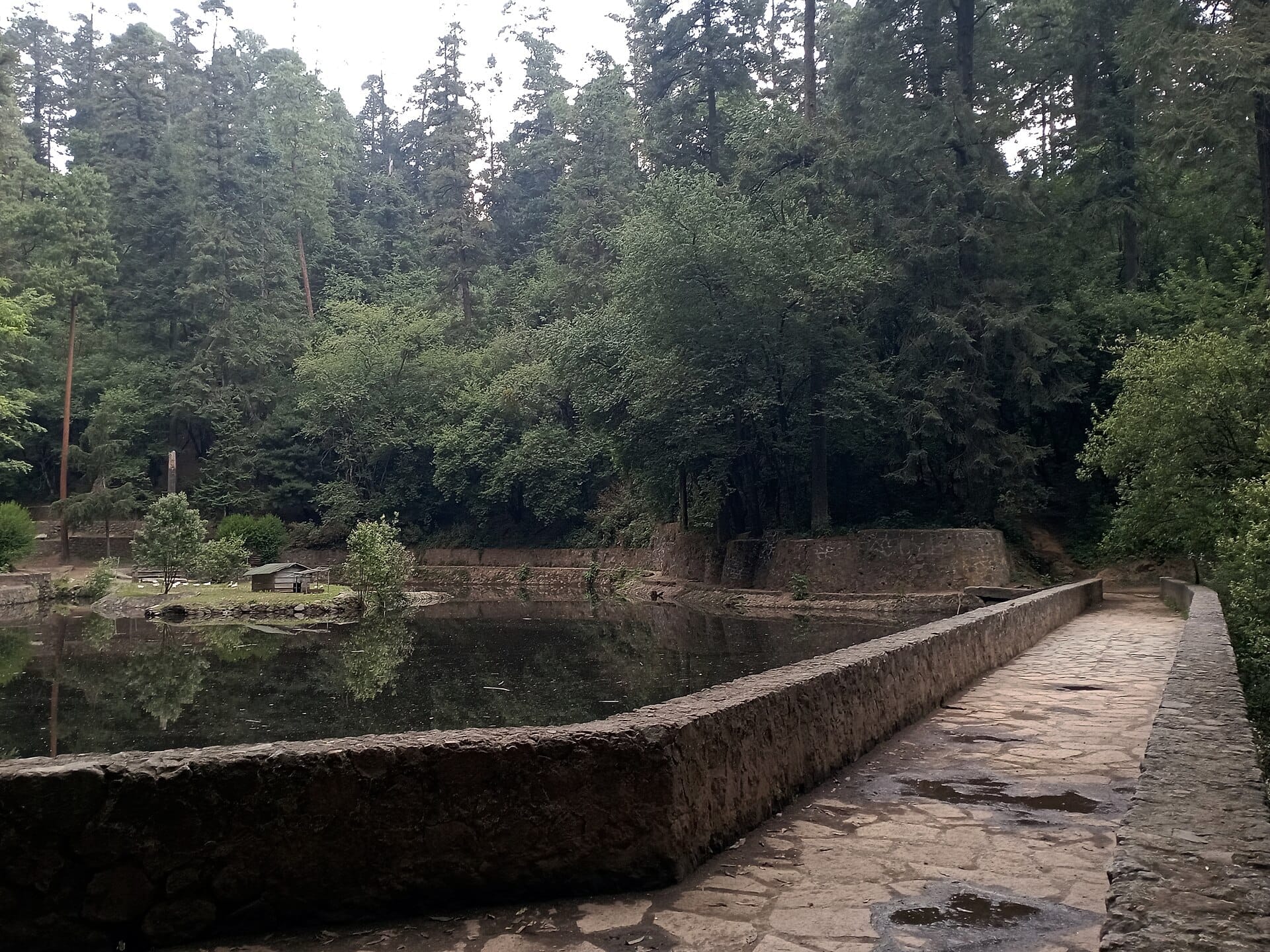
The name throws people. There is no desert here, and there are no lions. Parque Nacional Desierto de los Leones takes its name from a colonial-era term: "desierto" in Spanish once referred to a hermitage or place of religious seclusion, and the de León family owned surrounding land. What you actually find is dense Montezuma pine and sacred fir forest, laced with stream-cut ravines, at elevations between roughly 2,600 and 3,700 meters above sea level.
Declared a national park on 27 November 1917 by President Venustiano Carranza, it is recognized as Mexico's first national park. The park covers 1,867 hectares, stretching about 7 kilometers long and 3 kilometers wide, straddling the boroughs of Cuajimalpa and Álvaro Obregón on the city's western edge, within the Sierra de las Cruces mountain range. The area was first protected as a forest reserve as early as 1876 under President Sebastián Lerdo de Tejada, primarily to safeguard the freshwater springs that fed Mexico City's water supply.
ℹ️ Good to know
The park sits at altitude: even for Mexico City residents, who already live at 2,240 m, the upper trails here climb noticeably higher. If you are visiting from sea level, take the first 30 minutes slowly. Bring a layer — temperatures here run several degrees cooler than in central CDMX.
The Forest: What You Actually See and Smell
The moment you enter the tree canopy, the sound of traffic disappears. What replaces it is the low creak of pines in the wind, birdsong, and the occasional crunch of pine needles underfoot. The air is noticeably cooler, with a resinous smell that people who grew up in highland Mexico associate specifically with this park. On dry-season mornings — roughly November through April — the forest can be bright and sharp-edged, with clear light filtering through the canopy. During the rainy season (May to October), afternoon mist rolls in and the forest takes on a greener, denser quality; the bark of the fir trees turns almost black with moisture.
Trails range from wide gravel paths suitable for an easy walk to narrower earthen routes that require decent footwear. The terrain includes small ravines, seasonal brooks that run with water during the wet season, and open clearings where families spread blankets on weekends. The ground is uneven throughout, so anyone with limited mobility should stick to the main paths near the convent entrance, which are wider and more level.
Birdwatchers come specifically for the highland species here. The park sits within a recognized Important Bird Area, and patient visitors report sightings of mountain species uncommon in the urban lowlands below. It is a different kind of Mexico City experience from the art museums of Polanco or the canals of Xochimilco — quieter, cooler, and less visited by international tourists.
Tickets & tours
Live prices and dates from our booking partner. If you book, we may earn a commission at no extra cost to you.
The Ex-Convent: A 17th-Century Ruin in the Trees
At the geographic and historical heart of the park stands the ex-convent of the Carmelite order, a remarkable complex that was begun in the early 17th century. The Carmelites chose this remote, forested mountain location deliberately: the order valued isolation and contemplation, and the site's springs and dense forest made it ideal for a hermitage compound. The complex was completed over decades and includes a church, cloisters, gardens, and a series of small hermit cells scattered through the surrounding woods.
The convent was eventually abandoned, and today it survives as a partially restored ruin with a museum function. The stone architecture is heavy and austere — thick walls, barrel-vaulted ceilings, narrow windows. Walking through the cloisters, you notice that the silence is not empty; the building has a weight to it that comes from centuries of accumulated history. The stone floors are worn smooth in places, and the walls carry the marks of both Baroque ornamentation and republican-era damage.
Guided access to the ex-convent interior is available for a small fee, with recent visitors reporting an entry charge of about 20–25 MXN per person, though you should verify this on-site as it is not an official published tariff. The convent typically operates on a shorter schedule than the surrounding park and is often closed on Mondays. Arriving without checking ahead on a Monday morning is the single most common source of disappointment at this attraction.
⚠️ What to skip
The convent is frequently closed on Mondays and operates shorter hours than the park itself. Check current schedules locally before planning your visit around the interior. The surrounding forest trails remain accessible regardless.
When to Go: Time of Day and Season
Weekends transform Desierto de los Leones. Mexico City families arrive in numbers from mid-morning, spreading across the grassy clearings near the convent, firing up portable grills, and filling the main trails with children. The atmosphere is warm and local, but if you are hoping for a quiet forest walk, Saturday afternoons in particular can feel crowded near the central area. Weekday mornings, especially Tuesday through Thursday, are when the park is at its most atmospheric.
Early morning visits, arriving around 7–8 AM, reward patience. Mist frequently sits in the lower ravines, the light is oblique and photogenic, and you may have the main paths largely to yourself for the first hour. Photographers targeting the convent facade should aim for morning light, which hits the stone frontage cleanly. By mid-afternoon on sunny days, the light becomes flat and the crowds have peaked.
The dry season (November to April) offers clearer skies and drier trails, but mornings can be cold at this elevation — temperatures can drop below 5°C at dawn. Rainy season afternoons bring spectacular mist and lush greenery, but also muddy paths and sudden showers. Pack a waterproof layer for any visit between May and October. For broader planning, the best time to visit Mexico City guide covers the seasonal tradeoffs across the city in more detail.
Getting There: The Practical Reality
The park has no direct Metro connection. The most practical approach from central Mexico City is by car or rideshare app (Uber, Didi, and Cabify all operate in the city). Follow the Mexico–Toluca highway west and exit at La Venta. The drive takes roughly 30 minutes from downtown under light traffic, but the western corridors of Mexico City can congest significantly, especially on weekend mornings when families are heading out. Budget 45–60 minutes on a weekend.
There are public bus options from certain western neighborhoods, but the routes are not straightforward for visitors unfamiliar with the city's bus network, and services can be irregular. For most travelers, a rideshare is the most reliable option. Save the return address in your app before you go — mobile signal inside the park can be inconsistent. For a broader overview of transport options across the city, getting around Mexico City covers everything from the Metro to rideshares in detail.
💡 Local tip
Ask your rideshare driver to drop you at the main entrance near the ex-convent rather than the park boundary. The park is large and the difference in walking distance is significant. Confirm the destination is 'Ex-Convento del Desierto de los Leones' when booking.
What to Bring, Wear, and Expect
Dress in layers. Even on warm city days, the forest at this altitude is considerably cooler, and a sudden drop in temperature when cloud cover moves in is common. Sturdy, closed-toe shoes with grip are essential for any trail beyond the main paved areas — pine needles on a slight slope can be slippery. Bring water and snacks; while weekend vendors sometimes set up near the convent, there is no reliable food infrastructure inside the park.
Tap water in Mexico City is generally not recommended for drinking, and this applies equally to stream water inside the park. Bring sufficient bottled or filtered water for your planned duration. There are basic toilet facilities near the convent area, but their condition varies.
For families, the open grassy areas near the convent work well for younger children, and the main trails are manageable for kids who are comfortable walking on uneven ground. The park is one of several good Mexico City experiences with kids that require no museum patience — just comfortable shoes.
Worth Your Time?: Who This Is For, and Who Should Skip It
Desierto de los Leones is not a polished ecotourism destination with marked interpretive trails and visitor centers. Infrastructure is minimal. The experience rewards visitors who are comfortable with a degree of self-direction: finding your own trail, reading the landscape, and appreciating a historical building without extensive on-site explanation.
Travelers spending only two or three days in Mexico City and prioritizing landmark cultural sites may find that the transport time and logistical effort doesn't fit their itinerary. For a tightly packed city visit, the 3-day Mexico City itinerary focuses on more centrally located highlights. But for anyone who wants to understand Mexico City beyond its galleries and streets, this park provides genuine context: the forest that fed the city's springs, the altitude that shapes its climate, the history that stretches well before the modern metropolis.
Anyone with significant mobility limitations should be aware that the terrain is consistently uneven. The park is also not ideal for visitors with altitude sensitivity who have just arrived in Mexico City from sea level — the park's highest points are nearly 1,500 meters above the already high city. The Mexico City altitude guide has practical advice on acclimatizing before taking on higher-elevation excursions.
Insider Tips
- The small hermit cells scattered through the woods around the convent are easy to miss. Ask the entrance staff where the 'ermitas' are — they are the most evocative part of the Carmelite complex and rarely crowded.
- Arrive before 8 AM on a weekday and you will often have the convent courtyard completely to yourself. The mist that sits in the ravines at that hour is particularly good for photography.
- The park has no official parking fee at the time of writing, but informal attendants sometimes request payment in the main clearing. Keep small change (20–50 MXN) available and treat it as a convenience payment rather than an official charge.
- Trails beyond the immediate convent area are poorly signed. Download an offline map of the park (AllTrails has trail data for Desierto de los Leones) before you arrive, since mobile signal drops off quickly once you are in the deeper forest.
- Weekend vendors near the convent sell corn, hot drinks, and snacks from mid-morning. If you time your arrival for 9–10 AM on a Saturday, you can have the early quiet and still catch the food stalls before the main crowds arrive.
Who Is Desierto de los Leones National Park For?
- Hikers and trail runners wanting altitude and cool air without leaving the city
- History and architecture visitors interested in colonial religious buildings in an unusual setting
- Families with children who need open space, fresh air, and room to run
- Photographers working with mist, forest light, and aged stone
- Mexico City residents and long-stay visitors who have done the main museums and want something different
Nearby Attractions
Combine your visit with:
- Acuario Inbursa
Built beneath Plaza Carso in the Nuevo Polanco district, Acuario Inbursa holds 1.6 million litres of seawater and roughly 14,000 specimens across more than 230 species. It opened in 2014 and remains one of the most technically ambitious aquariums in Latin America. Here is what the visit actually involves, and whether it is worth your time.
- Arena México
Inaugurated in 1956 and holding up to roughly 16,800 spectators, Arena México is the home of CMLL and the most storied lucha libre venue in the world. Matches run on Tuesday, Friday, and Sunday evenings in Colonia Doctores, making it one of the most accessible live spectacles in Mexico City.
- Basilica of Our Lady of Guadalupe
The Basilica of Our Lady of Guadalupe is one of the most visited Catholic shrines on earth, receiving over 20 million pilgrims and visitors each year. Built around the 1531 apparition site on Tepeyac Hill, it holds the venerated tilma of Juan Diego and offers a rare encounter with living Mexican faith at its most intense.
- Cineteca Nacional
The Cineteca Nacional de México is the country's national film archive and its most important arthouse cinema complex. Rebuilt after a devastating 1982 fire and transformed in 2012 into a world-class cultural campus, it combines 10 indoor screens, a large open-air screening forum, galleries, a bookshop, and restaurants in a single destination that attracts cinephiles, students, and casual visitors alike.
Planning a trip? Discover personalized activities with the Nomado app.