Chicago Airports Guide: O'Hare (ORD) vs Midway (MDW)
Chicago is served by two major airports: O'Hare International (ORD) and Midway International (MDW). This guide breaks down the key differences in location, transit connections, airlines, and costs so you can choose the right one before you book.
Plan and book this trip
Tools from our partner Travelpayouts help you compare flights and hotels. If you book through them, we may earn a commission at no extra cost to you.
Flights
Hotels map
TL;DR
- Chicago has two commercial airports: O'Hare International (ORD), 17-18 miles northwest of downtown, and Midway International (MDW), about 10-12 miles southwest.
- Both connect to downtown via the CTA 'L' train: Blue Line from O'Hare (35-45 min) and Orange Line from Midway (around 30-40 min). See the full getting around Chicago guide for transit details.
- O'Hare is a major hub for United Airlines and a significant hub for American Airlines with extensive international routes; Midway is dominated by Southwest Airlines and is primarily domestic.
- Midway is generally faster to navigate due to its compact layout; O'Hare is larger, more complex, and can suffer heavier weather-related delays in winter.
- CTA train fares are the cheapest option from both airports; rideshare from O'Hare runs around $40-50, from Midway around $25-35, depending on time of day and demand.
The Two Chicago Airports at a Glance
Chicago is one of a small number of major U.S. cities with two significant commercial airports that both offer direct transit into the city center. Understanding the differences between them matters when you are booking flights, not just when you land.
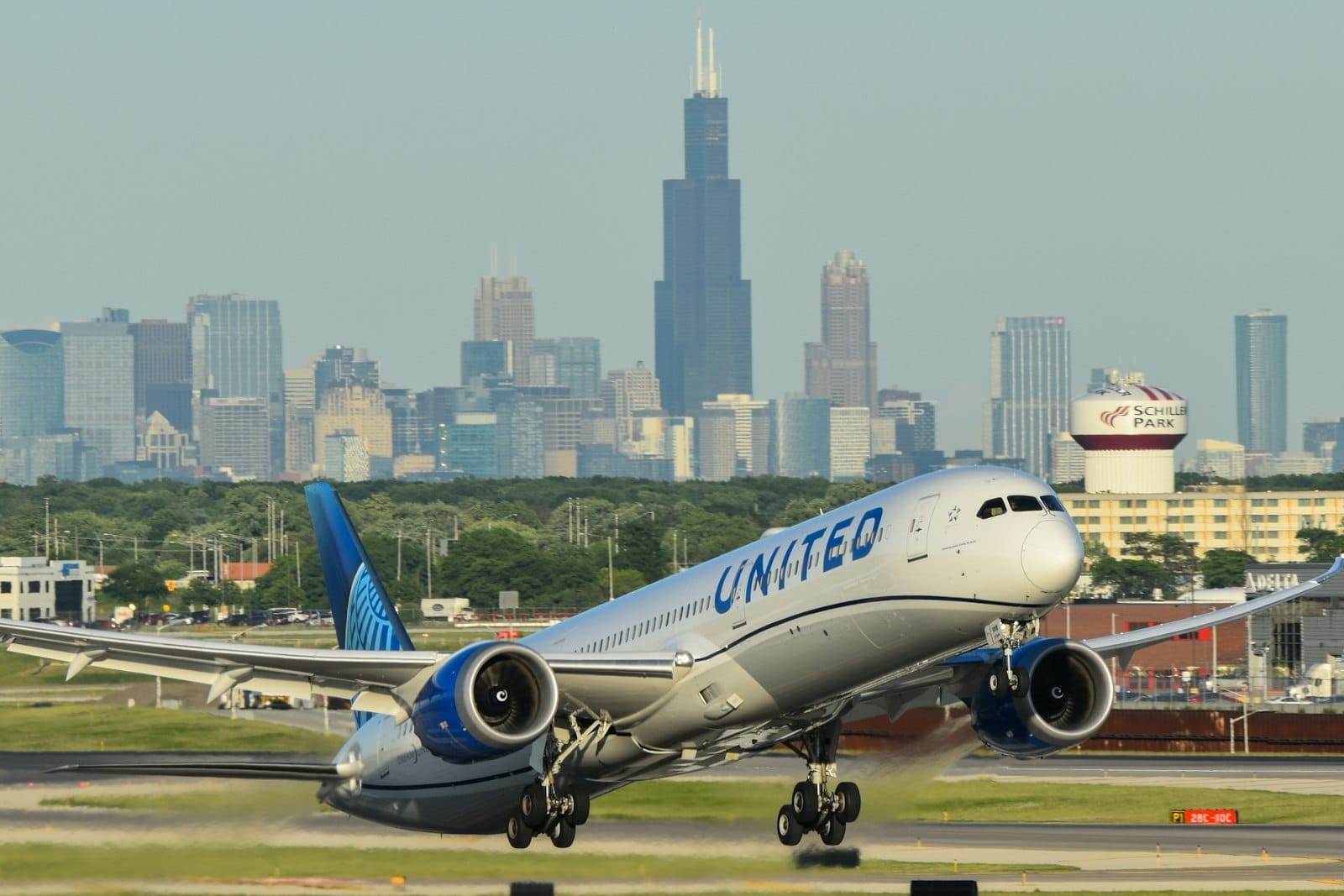
O'Hare International Airport (IATA code ORD) sits about 17-18 miles northwest of the Loop in the city's far northwest corner, near the suburb of Rosemont. It is consistently one of the busiest airports in the world by aircraft movements and serves as a major hub for United Airlines and a significant hub for American Airlines. For international travelers, O'Hare is almost always the answer: it offers far greater long-haul and transatlantic coverage. Learn what to expect before you land by reviewing the broader overview of things to do in Chicago so you can start planning the moment you clear customs.
Midway International Airport (MDW) is located on Chicago's southwest side, roughly 10-12 miles from the Loop, and is the metro area's second airport. Southwest Airlines accounts for the overwhelming majority of Midway's traffic, though Delta, Frontier, and a handful of other carriers also operate here. The airport is compact by design, which translates to shorter walks, faster security, and quicker baggage claim times compared with O'Hare's sprawling multi-terminal layout.
- O'Hare (ORD) 17-18 miles northwest of downtown. Hub for United and American. Extensive international routes. Multiple terminals connected by an underground ATS (Automated Transit System). Larger, busier, and more complex to navigate.
- Midway (MDW) 10-12 miles southwest of downtown. Dominated by Southwest Airlines (90%+ of passengers). Primarily domestic routes. Single main terminal with a simpler layout. Faster check-in and security on average.
Getting Downtown: Transit, Rideshare, and Taxis
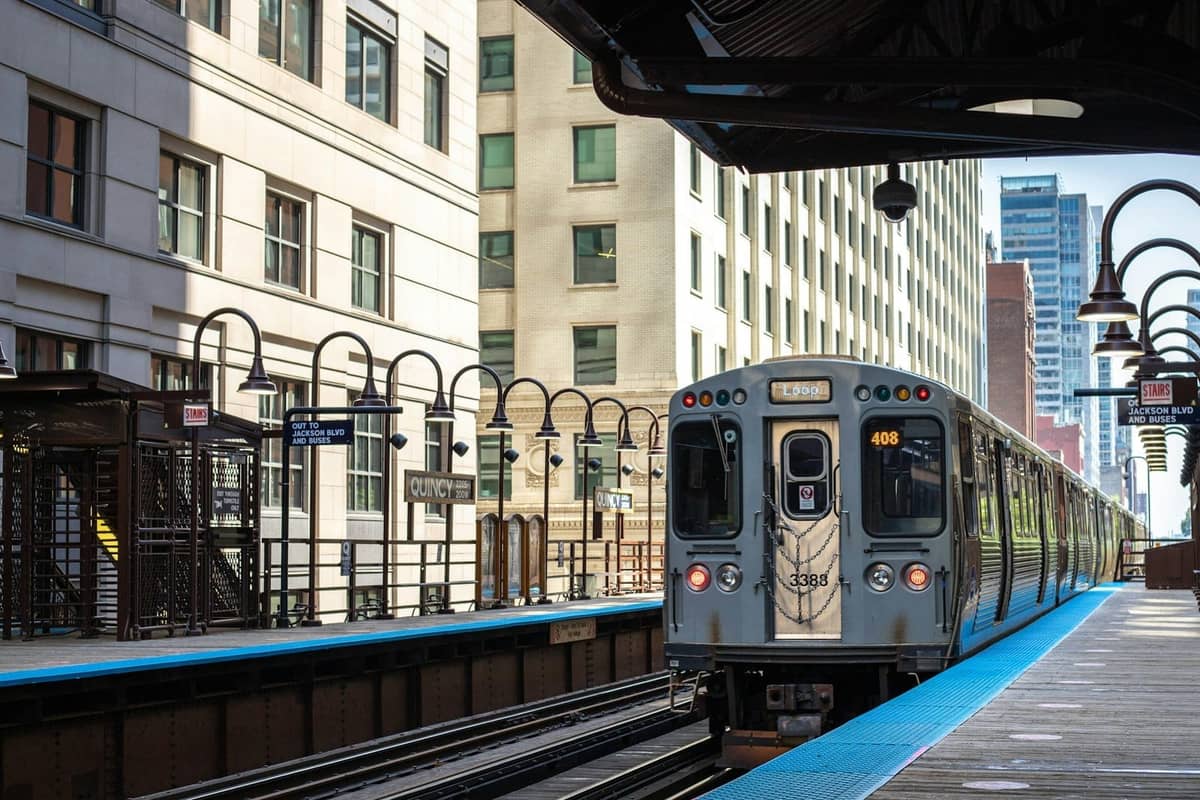
Both airports plug directly into the CTA 'L' rapid transit network, which is by far the most cost-effective and predictable way to reach central Chicago. Neither route requires a transfer, making the train a genuinely practical option even with luggage.
From O'Hare, the Blue Line runs 24 hours a day, seven days a week, making it one of the few airport train connections in the U.S. that operates overnight. The ride from O'Hare station to Clark/Lake in the Loop takes roughly 35-45 minutes under normal conditions. Note that O'Hare has a premium fare surcharge above the standard CTA base fare; check the CTA website for current pricing before you travel. From Midway, the Orange Line connects to the Loop in around 30-40 minutes and runs on a standard schedule (not 24 hours). Standard CTA fares apply from Midway.
💡 Local tip
If you are arriving late at night and need a train from Midway, the Orange Line does not run 24 hours. Last departures from Midway are typically around 11:30 PM on weekdays and slightly later on weekends — check the CTA trip planner before your flight lands. From O'Hare, the Blue Line runs all night so late arrivals are not a concern.
Rideshare apps (Uber and Lyft) operate designated pickup zones at both airports. Both services charge a city surcharge at Chicago airports on top of the base fare. Expect to pay roughly $40-50 from O'Hare to downtown Chicago during normal hours, though surge pricing during peak periods or bad weather can push that significantly higher. From Midway, typical rideshare fares to the Loop run around $25-35. Both taxis and rideshare services have dedicated zones at both airports; taxis operate on metered city rates, which can be competitive with rideshare at off-peak hours.
- CTA Blue Line (O'Hare) 35-45 minutes to the Loop. Runs 24/7. Premium fare applies; confirm current amount on the CTA website.
- CTA Orange Line (Midway) 30-40 minutes to the Loop. Does not run overnight. Standard CTA fares apply.
- Rideshare from O'Hare Typically $40-50 to downtown. Add $10-20 or more during surge periods. Designated pickup on lower level.
- Rideshare from Midway Typically $25-35 to downtown. Pickup area clearly signed at arrivals.
- Taxi from either airport City-metered rates apply. O'Hare to downtown often $40-55; Midway to downtown around $35-45 depending on traffic and destination.
⚠️ What to skip
Chicago traffic is genuinely unpredictable, especially on the Kennedy Expressway (I-90/94) between O'Hare and downtown during rush hours (roughly 7-9 AM and 4-7 PM on weekdays). A cab or rideshare that takes 30 minutes at noon can take 75 minutes at 5:30 PM. If you have a meeting or a connection that matters, take the Blue Line from O'Hare.
Airlines and Routes: Which Airport Serves Your Flight
The most practical reason to choose one airport over the other is simply which airlines fly there. In most cases, your airline — and the available routes — will make the decision for you. But when you have flexibility, knowing the airline landscape helps.
O'Hare is where you will find the most international options. Both United and American use it as a major domestic and international hub, with connections to Europe, Asia, Latin America, and beyond. If you are flying in from outside North America, you are almost certainly landing at ORD. O'Hare also serves Air Canada, British Airways, Lufthansa, Japan Airlines, and many others. For domestic travelers, every major U.S. carrier serves O'Hare. For a broader sense of what awaits once you land, the 3-day Chicago itinerary is a useful starting point.
Midway tells a different story. Southwest Airlines carries well over 90% of the airport's passengers and operates more gates here than any other carrier. If you are flying Southwest, you will use Midway. A common misconception is that Midway is Southwest-only: Delta, Frontier, and a small number of other carriers do operate domestic routes from MDW, and Midway does handle some limited international service, though O'Hare dominates international operations by a wide margin.
ℹ️ Good to know
Chicago Executive Airport (PWK) in Wheeling, about 18 miles north of downtown, is the area's main general aviation and business jet facility. It handles no scheduled commercial passenger service, so it is not relevant to most travelers, but it does appear in search results for 'Chicago airport' and occasionally causes confusion.
Airport Layout and the Passenger Experience
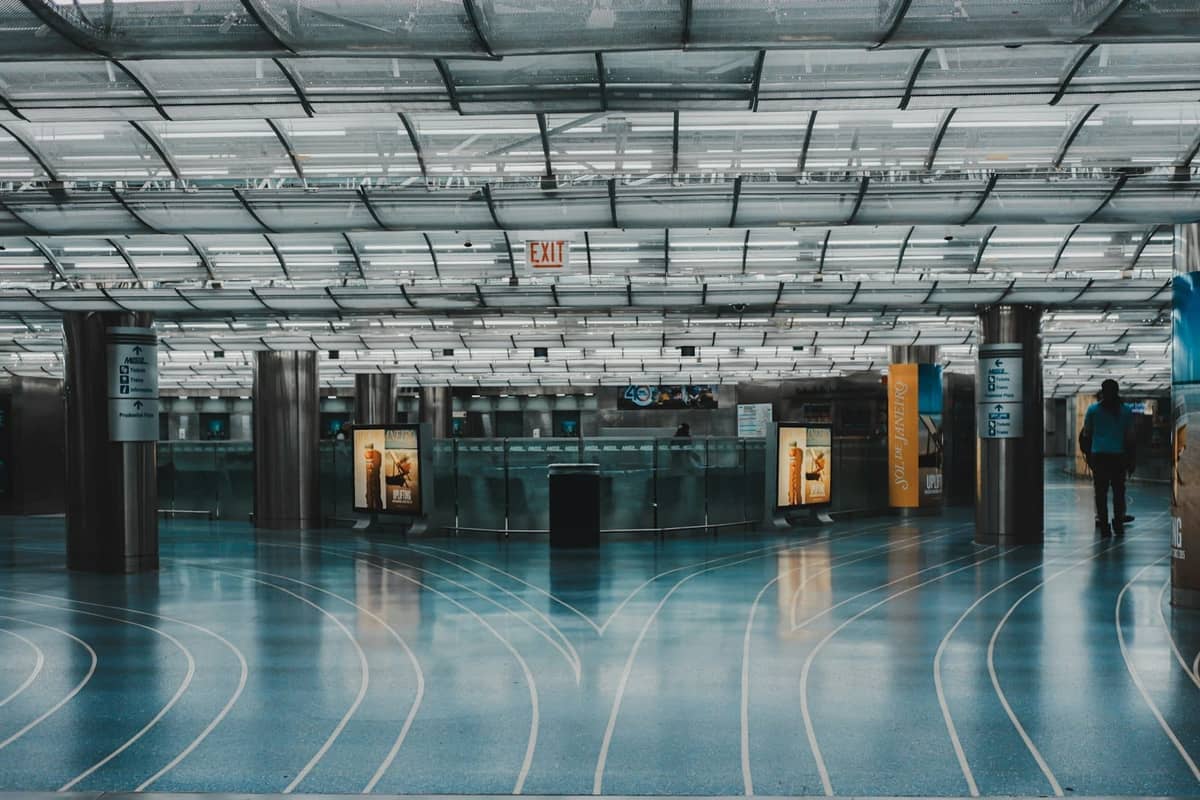
Size matters a lot when you factor in layovers, tight connections, and general stress levels. O'Hare has four passenger terminals: Terminal 1 (United), Terminal 2 (American domestic and partner airlines), Terminal 3 (American international plus other carriers), and Terminal 5 (international arrivals and some foreign-flag carriers). Connections between terminals typically use the above-ground ATS people-mover train. If you have a 45-minute connection between an international arrival in Terminal 5 and a domestic departure in Terminal 1, you need to move quickly.
Midway has a single terminal building with two concourses (A and B), making navigation straightforward. From the curb to your gate is rarely more than a 10-15 minute process under normal security conditions. This compactness is particularly useful on busy travel days when O'Hare's larger footprint can mean longer TSA lines spread across multiple checkpoints.
Both airports offer the full range of amenities: food and retail options airside, currency exchange, lounges (O'Hare has United Club, American Admirals Club, and several independent options; Midway has no dedicated Southwest lounge), and parking garages. On-site hotel options are better developed around O'Hare, with several major properties in the immediate airport area. For travelers staying near the airport before an early departure, O'Hare's immediate surroundings in Rosemont offer more accommodation choices. If you are planning to stay closer to the action first, check where to stay in Chicago for neighborhood-by-neighborhood hotel recommendations.
Weather Delays and Seasonal Considerations

Chicago's climate plays a direct role in airport reliability. The city sits at the southwestern end of Lake Michigan and experiences a full humid continental climate: summers can bring intense thunderstorms, and winters regularly deliver sub-zero temperatures, heavy snow, and ice. The 1991-2020 climate normals for O'Hare (the official weather station used for Chicago data) show January mean temperatures around -3 to -2 degrees Celsius (27-28°F), with the city historically recording over 89 inches of snow in a single season.
For flight reliability, O'Hare's sheer volume of daily operations means weather impacts ripple further. A ground stop at ORD affects connecting passengers across the country. The airport has extensive de-icing facilities and three runways that allow simultaneous departures, but winter storms still cause significant delays. Midway, being smaller and less of a hub, can sometimes operate more smoothly during marginal weather simply because there are fewer flights to cascade. That said, both airports experience winter disruptions.
If your Chicago trip falls in December through February, build extra connection time into your itinerary and monitor flight status closely. The best time to visit Chicago guide covers how the seasons affect the city more broadly, including the upside of visiting in winter when crowds are thinner and hotel rates drop. Late spring (May-June) and early fall (September-early October) are generally when you will encounter the most stable flying conditions at both airports.
✨ Pro tip
If you are booking a connection through Chicago in winter and you have the choice, pick a morning departure rather than an afternoon one. Delays compound throughout the day; an 8 AM flight has a much higher chance of departing on time than a 4 PM flight on the same route, especially during winter weather events.
Which Airport Should You Choose?
For most international travelers, the question answers itself: if your airline or destination requires O'Hare, you fly into ORD. For domestic travelers flying Southwest, Midway is similarly predetermined. The interesting cases are when you genuinely have a choice between fares at both airports on different carriers.
If your destination in Chicago is on the North Side (Lincoln Park, Wrigleyville, Lakeview, Andersonville), O'Hare gives you a more direct Blue Line connection with fewer travel time differences compared to Midway. If you are headed to the South Side or areas like Museum Campus and the South Loop, Midway's Orange Line route via the Loop actually positions you closer. For most visitors staying in the Loop, River North, or along the Magnificent Mile, the difference in total transit time between the two airports is smaller than most people expect.
Fare comparisons sometimes favor Midway meaningfully, especially on Southwest routes where prices can be noticeably lower than equivalent O'Hare fares on legacy carriers. If the price difference is $50 or more each way, the extra transit complexity of O'Hare rarely justifies paying the premium. On the other hand, if you are arriving internationally or have a tight schedule, O'Hare's superior ground transport frequency (especially the 24-hour Blue Line) makes it the more practical choice. Once you land, the city has plenty to explore: from the Chicago Riverwalk to the Art Institute of Chicago, downtown is accessible from either airport in under an hour.
FAQ
What is the airport code for Chicago O'Hare?
O'Hare International Airport's IATA code is ORD. The code derives from the airport's original name, Orchard Field, before it was renamed in 1949 to honor World War II pilot Edward 'Butch' O'Hare. Midway's code is MDW.
Which Chicago airport is closer to downtown?
Midway (MDW) is closer at roughly 10-12 miles southwest of the Loop, versus O'Hare (ORD) at 17-18 miles northwest. In practice, transit times are similar because the Orange Line from Midway and the Blue Line from O'Hare both take 30-45 minutes to reach the Loop, and both routes bypass road traffic entirely.
Does O'Hare have international flights?
Yes. O'Hare is Chicago's primary international gateway and handles the vast majority of the city's long-haul and overseas traffic. It serves destinations across Europe, Asia, Latin America, the Middle East, and Canada. Midway has very limited international service; for any transatlantic or transpacific flight, you will almost certainly be using O'Hare.
Is it faster to take the train or a rideshare from Chicago airports?
On paper, rideshare is sometimes faster — but only when traffic is light. During rush hour on weekdays, the expressways to both airports can be severely congested. The CTA Blue Line from O'Hare and Orange Line from Midway are immune to road traffic and have predictable journey times. For reliability, especially during peak hours or winter weather, the train is the better choice.
Is there a Chicago airport map available?
Yes. The official FlyChicago website (flychicago.com) provides interactive and downloadable terminal maps for both O'Hare and Midway, including gate locations, dining, parking structures, and ground transportation pickup points. O'Hare's multi-terminal layout makes it worth reviewing before a connection; Midway's single-terminal design is simple enough that most travelers navigate it without a map.