Taksim Square: Istanbul's Civic Center and Gateway to Beyoğlu
Taksim Square sits at the top of İstiklal Avenue in the Beyoğlu district, serving as Istanbul's most recognized modern public space. Free to enter at any hour, it anchors the city's cultural and political life around the 1928 Republic Monument, with metro and tram connections making it one of the easiest points in the city to reach.
Quick Facts
- Location
- Gümüşsuyu Mahallesi, Beyoğlu, Istanbul
- Getting There
- Taksim Metro Station (M2 line); nostalgic tram from İstiklal Avenue
- Time Needed
- 30–60 minutes for the square itself; longer if exploring İstiklal
- Cost
- Free — open public space, no ticket required
- Best for
- First-time visitors, history, people-watching, transit hub
What Taksim Square Actually Is
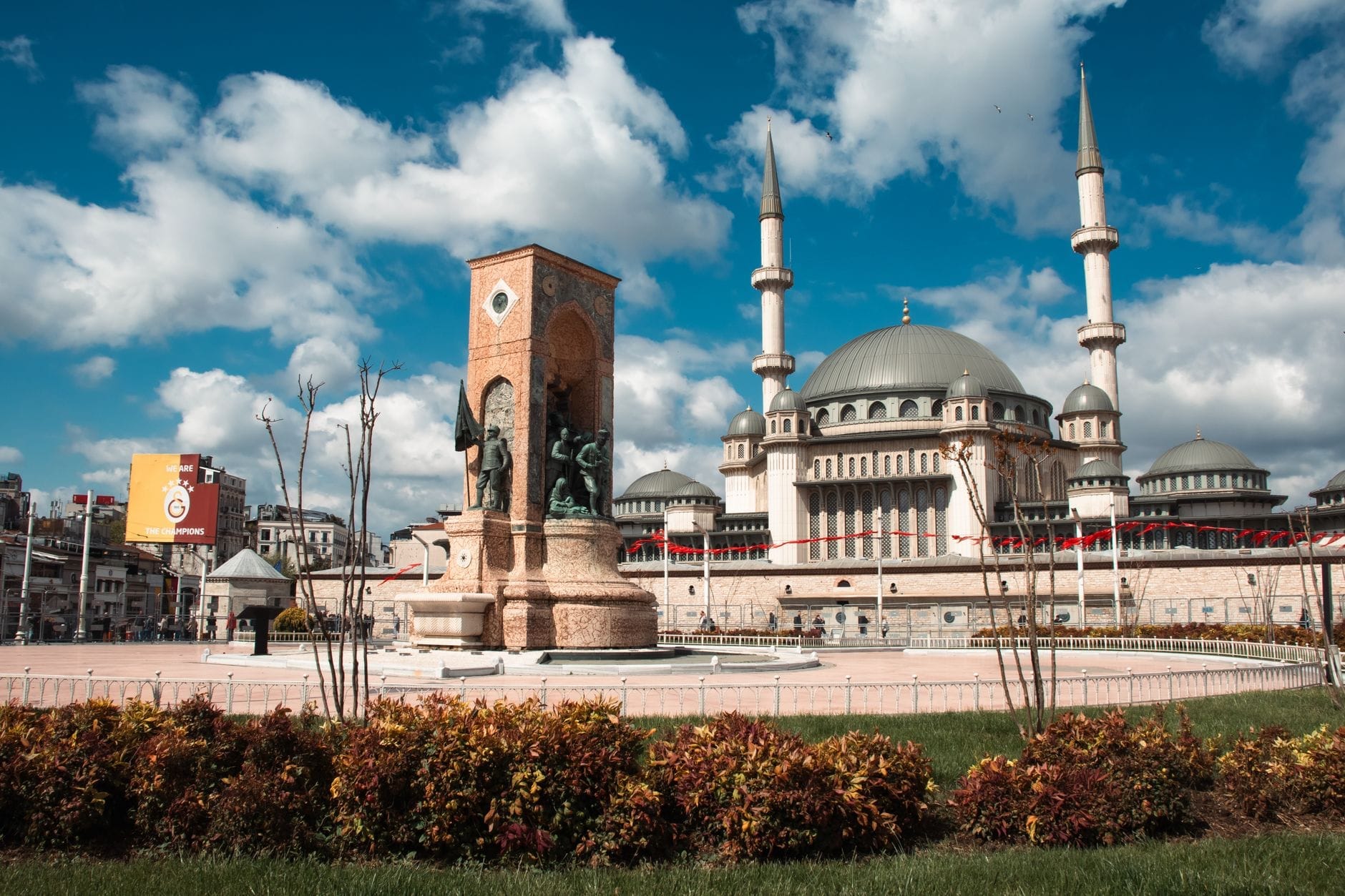
Taksim Square (Turkish: Taksim Meydanı) is a large, open pedestrian plaza in the Beyoğlu district on the European side of Istanbul. It is accessible 24 hours a day with no admission charge. Unlike the city's historic mosques and palaces, Taksim is not an architectural monument in itself — it is a civic space, a transport interchange, and a gathering point that has accumulated symbolic weight over nearly a century of Turkish republican history.
The square sits at the northern end of İstiklal Avenue, roughly 4 kilometers north of the Sultanahmet historic peninsula. Its elevation above sea level gives open views across the surrounding neighborhood, and on clear days you can make out distant water from certain angles. The physical experience of arriving here depends entirely on when you come: the square at 8 a.m. on a Tuesday is a very different place from what it becomes on a Saturday evening.
ℹ️ Good to know
Taksim Square is open 24 hours a day, every day of the year. There are no tickets, no queues, and no gates. You can spend ten minutes or three hours here without any planning.
The Republic Monument and the Name Behind the Square
The name 'Taksim' comes from the Ottoman Turkish word for division or distribution. This refers not to political division but to water: the Taksim Maksemi, a stone water distribution chamber built in 1731–1732 during the reign of Sultan Mahmud I, once channeled water from the Belgrade Forest south toward the city's neighborhoods. The Maksemi still stands at the edge of the square — a low, domed Ottoman structure that most visitors walk past without a second glance, yet it quietly explains why this particular plateau became important in the first place.
The dominant feature at the center of the square is the Republic Monument (Cumhuriyet Anıtı), unveiled on 8 August 1928. It commemorates the founding of the Republic of Turkey in 1923 and depicts Mustafa Kemal Atatürk alongside other leaders of the nationalist movement. The monument is not especially large by European standards, but it carries considerable symbolic authority: state ceremonies are held here, and it remains the reference point by which Turks orient themselves within the square.
The transformation of Taksim into a modern republican plaza was part of a deliberate effort to build an Istanbul that looked outward to Europe rather than back to the Ottoman court. If you want to understand that shift in historical context, the broader Ottoman and republican history of Istanbul adds useful depth to what you are looking at.
Tickets & tours
Hand-picked options from our booking partner. Prices are indicative; availability and final rates are confirmed when you complete your booking.
Istanbul Audio Guide Tour from Taksim Square Through Galata Tower
From 12 €Instant confirmationFree cancellationBosphorus sunset cruise on luxury yacht with guide
From 55 €Free cancellationIstanbul and Bosphorus cruise on private boat - half day afternoon tour
From 40 €Instant confirmationFree cancellationWhirling Dervishes live show and exhibition
From 29 €Instant confirmation
What the Square Feels Like at Different Hours
Early mornings, roughly 7–9 a.m., Taksim belongs to commuters. The metro exits disgorge office workers, delivery staff unload trolleys near the side streets, and a handful of tourists who woke up early have the monument mostly to themselves. The light at this hour hits the square from the east, casting long shadows across the paving stones. The smell of fresh simit from nearby carts mixes with exhaust from the few vehicles allowed in the surrounding roads.
By late morning the tourist density increases markedly. Tour groups arrive from Sultanahmet, students gather near the tram stop, and the square becomes properly loud. Street vendors appear, and the area around the monument fills with people taking photographs. This continues through the afternoon. If you want a clear photograph of the Republic Monument without strangers in the frame, arrive before 8 a.m.
Weekend evenings transform the square into something closer to a festival plaza. The population density spikes dramatically after 8 p.m., particularly on Fridays and Saturdays. Music drifts down from İstiklal Avenue, groups of young people gather on the steps and ledges around the monument, and the general noise level makes conversation at normal volume difficult. It is genuinely atmospheric, but it is also crowded in ways that some travelers find exhausting rather than enjoyable.
💡 Local tip
For photography without crowds: arrive between 6:30 and 8 a.m. on a weekday. The square is nearly empty and the light is excellent. Avoid Sunday afternoons in summer, when the crowd density is at its highest.
Taksim as a Transport Hub: Getting Here and Moving On
Taksim's practical importance to most visitors is logistical: it is one of the most connected transit points in Istanbul. The M2 metro line stops directly at Taksim Station, connecting south to Şişhane (for Galata) and north toward Şişli and Levent, with access to Istanbul Airport via an interchange to the M11 line at Gayrettepe. Trains run frequently and the journey from Şişhane takes only two stops.
The nostalgic tram line F2 runs from Taksim down İstiklal Avenue to Tünel, a short but useful link if your feet are tired after walking the full length of the pedestrianized street. From Tünel, a historic underground funicular dating to 1875 descends to the Karaköy waterfront. From Karaköy, ferries connect to the Asian side. For a broader overview of how the city's transport network fits together, see the guide to getting around Istanbul.
From Istanbul Airport (IST), the most straightforward public option is the M11 metro to Gayrettepe, then change to M2 toward Taksim. Bus services (Havaist and IETT lines) also run directly to Taksim from both major airports. Verify current schedules and fares before travel, as these change periodically.
İstiklal Avenue and What Surrounds the Square
Taksim Square's main draw for most visitors is not the square itself but what it opens onto. İstiklal Caddesi (Independence Avenue) runs south from the square for roughly 1.4 kilometers to Tünel, passing 19th-century European-style apartment blocks, consulate buildings, historic churches, independent bookshops, cafes, and clothing stores. The street is pedestrianized and lined with the kind of layered architectural detail that rewards slow walkers. This is the core of the Beyoğlu district, and İstiklal is its spine.
Side streets off İstiklal lead to quieter neighborhoods. Asmalımescit and Nevizade Sokak, a short walk from Taksim, are known for meyhanes (traditional taverns) where raki and meze are served at pavement tables late into the night. For travelers interested in that particular Istanbul evening ritual, the meyhane and raki guide covers the custom in detail.
A few blocks east of Taksim lies Cihangir, a hillside neighborhood with good cafes and a more residential, less commercial atmosphere. West of the square, a short walk leads toward Dolmabahçe and the Bosphorus shoreline.
What Taksim Is (and Isn't)
Taksim Square itself will not take your breath away. The plaza was significantly redeveloped in the 2010s, with underground parking beneath it and the surrounding streetscape altered substantially. The result is functional but not beautiful. The Republic Monument is historically significant rather than visually grand. If you arrive expecting a European-style grand piazza, you may find it anticlimactic.
What the square does deliver is orientation and energy. Standing here, you understand where modern Istanbul begins — the point where the Ottoman waterfront city gives way to the 19th-century European-influenced neighborhoods. The combination of a major metro station, the start of Istanbul's most famous pedestrian street, and the symbolic weight of the Republic Monument makes Taksim worth at least a brief visit for any traveler spending more than two days in the city.
Travelers who are short on time and focused purely on the historic peninsula, the Hagia Sophia, or the Topkapı Palace might reasonably skip Taksim entirely — there is no monument here that competes with those. But anyone walking İstiklal Avenue will pass through it regardless, so for most visitors it becomes part of the experience by default.
⚠️ What to skip
On major national holidays (Republic Day on October 29, May Day on May 1, and New Year's Eve), Taksim Square fills to an extraordinary degree. Expect large security presence, road closures across Beyoğlu, and very limited metro access during peak times. Plan accordingly if your visit coincides with these dates.
Insider Tips
- The Taksim Maksemi water distribution chamber on the western edge of the square is free to view and almost always deserted. It dates to 1731–1732 and provides a quiet counterpoint to the busy plaza around it.
- If you are using the M2 metro, exit at Şişhane rather than Taksim and walk up İstiklal Avenue from the Galata end. You see the street in context rather than starting at its most crowded point.
- The ATMs immediately adjacent to Taksim Square charge above-average withdrawal fees due to high tourist traffic. Walk one or two blocks down İstiklal or toward Cihangir to find bank-branded machines with standard rates.
- Taksim is noticeably windier than the surrounding streets because of its exposed elevated plateau. A light layer is useful even on warm afternoons, particularly in spring and autumn.
- For the clearest photographs of the Republic Monument, position yourself on the western pedestrian approach to the square rather than directly in front — this angle captures the full relief sculpture and avoids the metro entrance structures crowding the foreground.
Who Is Taksim Square For?
- First-time visitors to Istanbul who want to orient themselves and understand the city's modern identity
- Travelers using Beyoğlu as a base, for whom Taksim is a practical daily transit point
- Evening walkers beginning an İstiklal Avenue stroll or heading to the meyhane streets nearby
- History-focused visitors interested in the early Turkish Republic period and its symbolism
- Anyone connecting between metro lines or heading toward Dolmabahçe and the Bosphorus shore
Nearby Attractions
Other things to see while in Beyoğlu:
- Çukurcuma Antique Quarter
Tucked between Cihangir and Galatasaray in Beyoğlu, the Çukurcuma Antique Quarter is a steep tangle of cobbled streets lined with over 150 antique and second-hand shops. Free to explore and steps from İstiklal Avenue, it rewards slow walkers with Ottoman brass, Soviet cameras, and vintage curiosities spilling out of storefronts onto the pavement.
- Galata Mevlevi Museum
Tucked along Galip Dede Street in Beyoğlu, the Galata Mevlevi Museum occupies a 15th-century dervish lodge that once formed the spiritual heart of Istanbul's Mevlevi Sufi order. Today it houses rotating collections of calligraphy, musical instruments, and ceremonial objects, arranged around a serene courtyard that feels worlds away from the crowds of nearby İstiklal Avenue.
- İstiklal Avenue
İstiklal Caddesi stretches 1.4 km through the heart of Beyoğlu, connecting Tünel Square to Taksim Square along a corridor of Belle Époque apartment buildings, independent bookshops, historic churches, and the iconic nostalgic tram. Free to walk at any hour, the avenue rewards visitors who go beyond the obvious and turn into its side streets.
- Museum of Innocence
Housed in a 19th-century wooden house in Çukurcuma, the Museum of Innocence transforms Orhan Pamuk's celebrated novel into a physical collection of over a thousand objects from everyday Istanbul life. Winner of the European Museum of the Year Award 2014, it is one of the most original museum experiences in Turkey.