St. Paul's Cathedral, Mdina: The Baroque Masterpiece at Malta's Sacred Heart
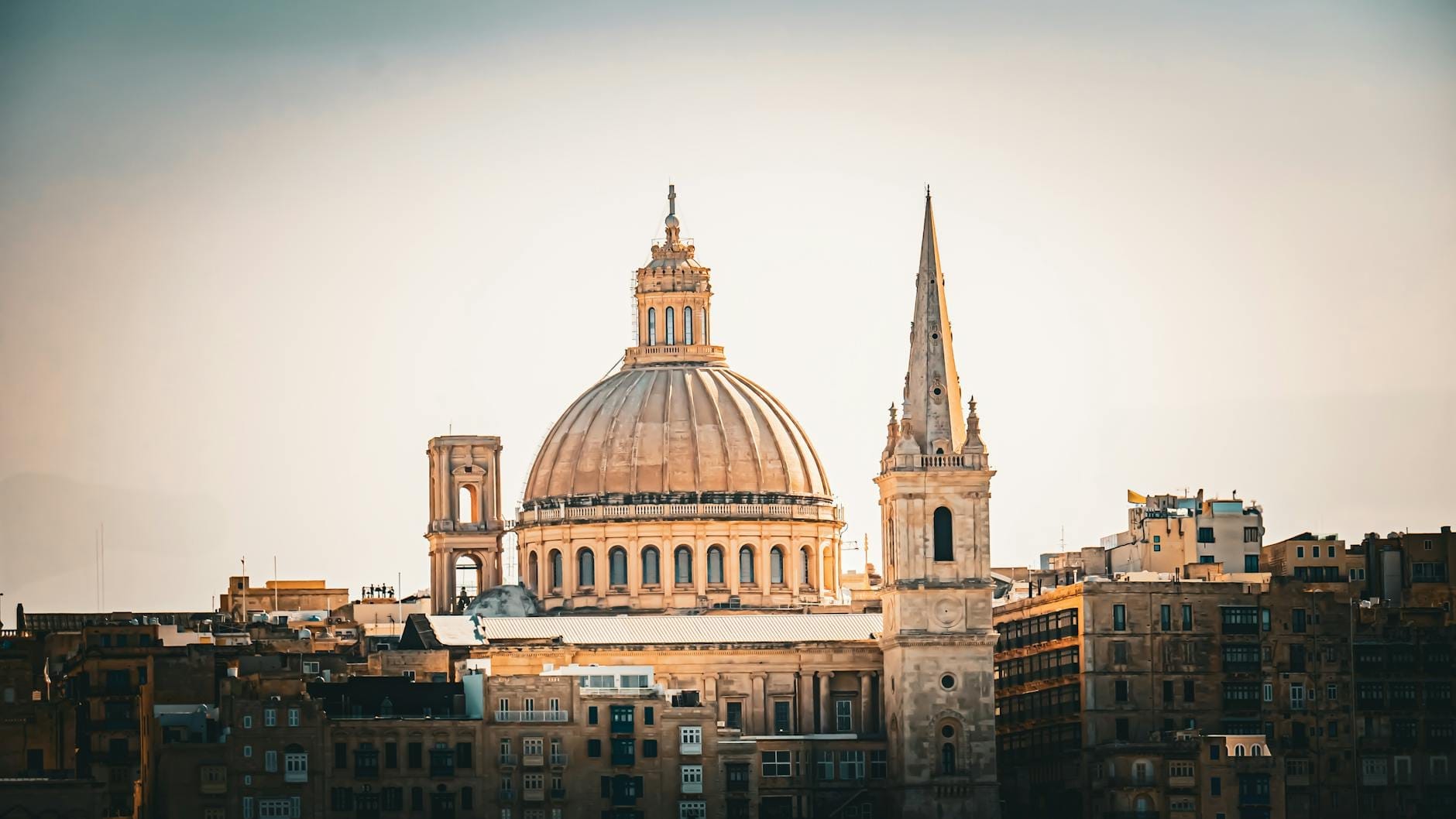
St. Paul's Cathedral dominates Mdina's central square with a honey-gold Baroque facade that has anchored Malta's spiritual life for over three centuries. Built on a site linked to Christianity's earliest arrival on the island, it rewards visitors who take time to understand what they are looking at.
Quick Facts
- Location
- St. Paul's Square (Pjazza San Pawl), Mdina, Malta
- Getting There
- Bus 202 from Valletta to Mdina Gate, then a short uphill walk through the city lanes
- Time Needed
- 45–90 minutes (cathedral + museum)
- Cost
- Ticketed entry covering cathedral and museum; verify current prices at the door or via Visit Malta
- Best for
- History enthusiasts, Baroque architecture, religious heritage, photography
- Official website
- metropolitanchapter.com/mdina-metropolitan-cathedral
What You Are Looking At
The Metropolitan Cathedral of Saint Paul, known universally as St. Paul's Cathedral Mdina, rises from the highest point of Malta's ancient walled city with the composed authority of a building that has outlasted every political regime on the island. Its facade is pale limestone, the same globigerina stone used across Mdina, and in morning light it glows amber in a way that photographs rarely capture accurately. Two square bell towers frame a central facade carved with detail: pilasters, niches with saints, and a relief of St. Paul above the main door. The octagonal dome completes the silhouette above the roofline, visible from the Maltese countryside well before you enter the city gates.
This is a Grade 1 scheduled monument and the seat of the Archdiocese of Malta, a role it shares with St. John's Co-Cathedral in Valletta since the 19th century. The two cathedrals function as co-equal seats, which explains why Mdina's cathedral retains the formal prefix Metropolitan despite Valletta's later prominence. For travelers who have already visited St. John's, Mdina Cathedral offers a quieter, more intimate counterpoint: fewer tourists, more coherent architecture, and a setting that has not been commercialized.
💡 Local tip
Dress code applies: shoulders and knees must be covered for entry. Scarves and wraps are often available at the door, but having your own saves time.
The History Beneath the Baroque
The site itself carries a claim older than the current structure by more than a millennium. According to tradition rooted in early Christian accounts, this is where Publius, the Roman governor of Malta, welcomed St. Paul following the apostle's shipwreck on the island around 60 AD. The story holds that Publius converted to Christianity after Paul healed his father, and that the governor's residence eventually became the island's first Christian place of worship. Archaeological evidence for this specific identification is not conclusive, but excavations beneath the cathedral have uncovered remains of a Roman domus in the crypt, lending the tradition more than symbolic weight.
The first formal cathedral on the site was built following the Norman conquest of Malta in 1091, when Roger I of Sicily took the island from Arab rule. That structure incorporated Gothic and Romanesque elements typical of Norman ecclesiastical architecture across the Mediterranean. It stood for six centuries until the earthquake of January 1693, which devastated large parts of Sicily and Malta and brought down the medieval cathedral almost entirely. What replaced it was the building you see today.
The Baroque rebuild was entrusted to Lorenzo Gafà, a Maltese architect whose previous commissions included the Cathedral of the Assumption in Gozo and the Church of St. Lawrence in Birgu. Construction ran from 1696 to 1705, with the cathedral consecrated in 1702 and the dome completed three years later. Gafà's design is considered his finest work: restrained by high Baroque standards, structurally confident, and deeply suited to the Maltese limestone through which it was built. A subsequent earthquake in 1856 damaged the interior dome frescoes beyond repair, which is why the dome's interior appears plainer than the rest of the decoration.
Tickets & tours
Hand-picked options from our booking partner. Prices are indicative; availability and final rates are confirmed when you complete your booking.
Mdina and Rabat Food and History Tour
From 68 €Instant confirmationFree cancellationValletta walking tour with St. John's Co-Cathedral
From 18 €Instant confirmationFree cancellationMdina and Rabat walking tour Malta
From 22 €Instant confirmationFree cancellationMdina and the highlights of Malta guided tour with lunch
From 69 €Instant confirmationFree cancellation
Inside the Cathedral
The interior follows a Latin cross plan. The nave is relatively narrow given the height, which draws the eye toward the apse and creates a sense of verticality the exterior does not entirely prepare you for. The floor is one of the cathedral's most immediately striking features: a continuous surface of polychrome marble tombstones, each marking a bishop or canon of the cathedral chapter. The inscriptions and heraldic carvings underfoot record centuries of ecclesiastical hierarchy and are worth slowing down to read, though most visitors walk over them without looking down.
The side chapels contain paintings by Mattia Preti, the Calabrian Baroque master who spent much of his later life in Malta and left an outsized artistic imprint across the island. The altarpiece depicting the Shipwreck of St. Paul is particularly notable for its dramatic composition and relatively good state of preservation. Natural light enters through high windows, making morning visits significantly better for viewing the paintings without artificial lighting interference.
The wooden choir stalls lining the apse are finely carved and often overlooked in the rush to photograph the main altar. Take a moment with them. The sacristy door, an intricate wooden structure, is another detail that rewards close attention. Religious services are still held regularly, and if you arrive during one, entry to the main nave may be restricted or suspended temporarily.
ℹ️ Good to know
The Cathedral Museum, accessed through a separate entrance on the same square, holds an exceptional collection of Dürer woodcuts, Baroque silverware, and embroidered vestments. It is included in the same ticket and takes an additional 30 minutes to see properly. Do not skip it.
The Cathedral Museum
The Cathedral Museum occupies a converted seminary building adjacent to the cathedral and contains one of the more surprising collections in Malta. The Dürer woodcut series, a rare and largely intact set of prints, is the headline exhibit and genuinely worth seeking out even for visitors with no particular interest in religious art. The prints are displayed in low-light conditions suitable for their preservation, which gives the museum a quiet, almost contemplative atmosphere.
Beyond the prints, the museum holds ecclesiastical silverware, vestments embroidered with gold thread, illuminated manuscripts, and paintings spanning several centuries of Maltese and European religious art. Context panels are present but brief, so travelers with a deeper interest in Maltese ecclesiastical history will find it useful to read around the collection before visiting. The building itself, organized around a central courtyard, is architecturally composed and worth noticing as you move between galleries.
How the Experience Changes by Time of Day
Mdina is famously quiet, a quality that earns it the Maltese nickname Il-Belt Skiet, the Silent City. But the square in front of St. Paul's Cathedral is rarely truly empty during daylight hours. Coach groups from Valletta and Sliema typically arrive between 10am and noon, filling the parvis with the particular noise of tour leaders and camera shutters. Arriving before 9am or after 3pm shifts the dynamic considerably: the light is better, the square is calmer, and the cathedral interior carries more atmosphere. Mdina as a whole rewards early morning visits above all else.
In summer, temperatures inside the cathedral provide genuine relief from the heat, the stone walls retaining cool air well into the afternoon. In winter, the interior is cold and slightly damp, and the dramatic low-angle sunlight hitting the facade in the late afternoon creates some of the best photographic conditions of the year. Overcast days flatten the limestone's natural warmth, making clear mornings the most reliably good option across all seasons.
Practical Walkthrough: Getting There and Around
Malta's bus network (Malta Public Transport) runs lines 50, 51, 52, and 53 from Valletta to the Mdina Gate stop. The journey takes roughly 30–40 minutes depending on traffic. From the gate, the cathedral is a five-minute walk uphill through Mdina's main street, Triq Villegaignon. The route is straightforward but the street is uneven stone; flat-soled, closed-toe shoes are advisable. More on getting around Malta by bus is worth reading before planning your day.
There is no parking directly in Mdina, as private vehicle access to the walled city is restricted. Visitors arriving by car or taxi will find parking outside the main gate. The walk from the parking area to the cathedral takes under ten minutes on relatively flat ground until the final incline. Wheelchair access within Mdina is limited by the narrow, uneven streets and steps at the cathedral entrance; contacting the chapter in advance is recommended for those with mobility requirements.
If you are planning a full day in the area, the nearby town of Rabat sits immediately outside Mdina's walls and contains the Domus Romana, St. Paul's Catacombs, and several smaller churches. Combining both locations makes for a logistically efficient and historically coherent day trip without retracing steps. The two towns are separated by a short walk of barely five minutes.
⚠️ What to skip
Photography with flash is not permitted inside the cathedral. Tripods are generally not allowed either. For interior shots, use a camera with strong low-light performance or simply accept that the iPhone result will be mediocre and focus on the experience itself.
Honest Assessment: Is It Worth Your Time?
St. Paul's Cathedral is not the spectacle that St. John's Co-Cathedral in Valletta is. If you are choosing between the two on a tight itinerary, St. John's is larger, more opulent, and contains Caravaggio's The Beheading of Saint John the Baptist, one of the most significant paintings in Europe. Mdina Cathedral does not compete on those terms and should not be judged by them.
What it does offer is coherence. The building, the setting, the square, and the museum form a unified experience that St. John's, embedded in Valletta's urban grid, cannot quite replicate. The Cathedral Museum's Dürer collection alone justifies the ticket for anyone interested in printmaking or Northern Renaissance art. And the experience of standing in Pjazza San Pawl in the early morning, with the facade catching the first direct sun, is genuinely affecting in a way that no photograph adequately represents.
Travelers who dislike religious sites in general, or who have already reached saturation point on Baroque churches after visiting Valletta, may find the visit underwhelming. If your interest in Mdina is primarily the city's medieval streetscape and panoramic views, the cathedral can reasonably be kept to 20 minutes rather than 90. But if architecture, religious art, or Maltese history are part of your reason for being here, it warrants more time than most visitors give it.
Insider Tips
- The tombstone floor in the nave is easy to walk over without noticing. Stop near the crossing and look down: the heraldic carvings and Latin inscriptions are among the most detailed surfaces in the building and they are completely free to examine.
- The Cathedral Museum closes earlier than the cathedral itself on some days. Check the board at the entrance when you arrive and visit the museum first if it is nearing closing time.
- For the cleanest exterior photographs without other visitors in frame, aim for the first 30 minutes after opening. The square is at its most photogenic when the morning light comes from the east, hitting the bell towers directly.
- The crypt beneath the cathedral reportedly contains remnants of the Roman domus associated with the Publius tradition. Ask at the ticket desk whether access is available on the day of your visit, as it is not always open to general visitors.
- If you are visiting Mdina on a weekday, lunchtime (roughly 12:30–2pm) sees a significant drop in coach tour traffic and the square becomes noticeably quieter, even in high season.
Who Is St. Paul's Cathedral, Mdina For?
- Architecture enthusiasts who want to understand Baroque design in a Maltese context
- Travelers interested in early Christian and medieval history
- Anyone combining Mdina with a visit to Rabat for a full historical day
- Photography-focused visitors looking for Maltese limestone facades in good light
- Visitors who found St. John's Co-Cathedral overwhelming and want a quieter, more contemplative alternative
Nearby Attractions
Other things to see while in Mdina:
- Mdina Old City Walls & Gates
Mdina's fortified walls and ornate gates form one of Malta's most striking historic landmarks, enclosing a medieval hilltop city with roots stretching back to Phoenician times. Entry is free, the views across the island are panoramic, and the atmosphere shifts dramatically between dawn quiet and midday crowds. This guide tells you what to expect at every hour.
- Palazzo Falson Historic House Museum
Palazzo Falson Historic House Museum preserves eight centuries of Mdina history within one of Malta's oldest standing residences. From Arabesque windows to a rooftop café with panoramic views, it rewards visitors who want more than the Silent City's famous streetscapes.