Palazzo Falson Historic House Museum: Inside Mdina's Most Intimate Collection
Palazzo Falson Historic House Museum preserves eight centuries of Mdina history within one of Malta's oldest standing residences. From Arabesque windows to a rooftop café with panoramic views, it rewards visitors who want more than the Silent City's famous streetscapes.
Quick Facts
- Location
- Villegaignon Street, Mdina, MDN 1191, Malta
- Getting There
- Bus to Mdina main gate, then a short walk along Villegaignon Street
- Time Needed
- 1.5 to 2.5 hours including the rooftop café
- Cost
- €12.50 adults; student discounts available
- Best for
- History enthusiasts, architecture lovers, and collectors of unusual museums
- Official website
- www.palazzofalson.com
What Is Palazzo Falson?
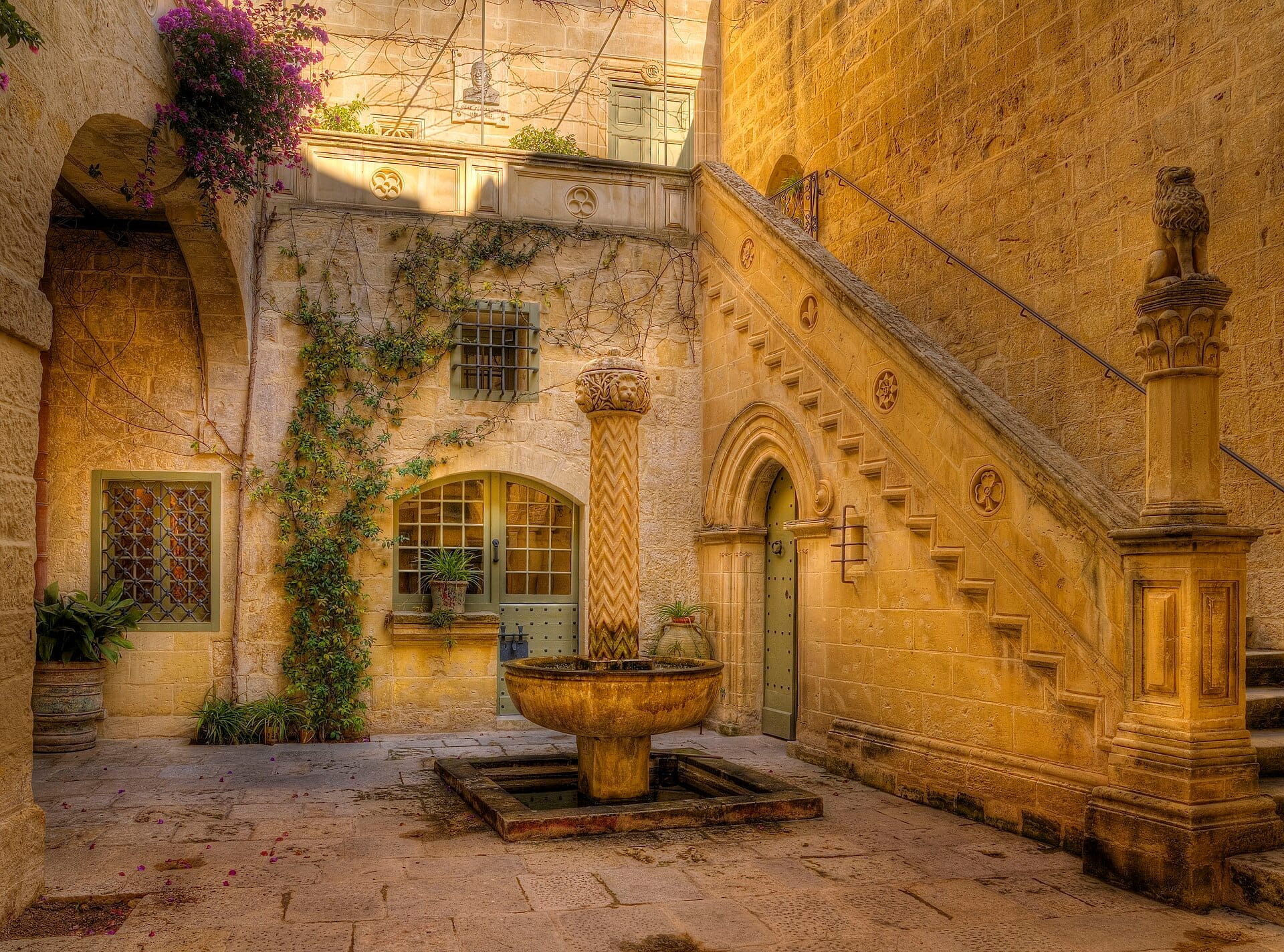
Palazzo Falson Historic House Museum occupies the second oldest building in Mdina, a structure whose foundations date to the early 13th century and whose lower walls sit on top of even earlier Arab-period and Roman remains. That layering of civilisations, Arab, Norman, medieval Maltese, and then the very personal imprint of a 20th-century collector, is what makes this place genuinely different from the grand baroque institutions in Valletta.
It is not a large museum. But size works in its favour. Where the Grandmaster's Palace overwhelms with formal staterooms and military regalia, Palazzo Falson feels like an inhabited home that has simply been frozen in time. Every corridor has a low ceiling, every window reveals a slice of Mdina's rooftops, and every display case holds objects that clearly mattered to one very particular man.
💡 Local tip
The museum is open Tuesday to Sunday, 10:00 AM to 4:00 PM (last entry at 4:00 PM). It is closed on Mondays, Good Friday, Easter Sunday, Christmas Day, and New Year's Day. Arrive before 11:00 AM to have the ground floor almost to yourself.
The Building: Eight Centuries in Stone
The palazzo's construction history is readable in the walls themselves. The original medieval structure went up in the early 1200s, making it contemporary with many of the fortifications that still ring Mdina. A second storey was added around 1524, and it is this upper level where the building's most distinctive external feature appears: a row of Arabesque bifora windows, twin-arched openings with a central column, that betray the lasting influence of the Arab occupation of Malta between 870 and 1091 AD. Even after the Normans expelled the Arabs, their aesthetic sensibility persisted in Maltese stonework for generations.
Standing on Villegaignon Street and looking up, those windows are one of the better examples of medieval domestic architecture surviving in Malta. The street itself is one of the quietest in Mdina's historic core, paved in the same honey-coloured limestone that gives the entire city its warm glow in afternoon light. The building's facade is modest by palace standards, but that restraint makes the Arabesque windows all the more striking as a compositional detail.
After decades of private ownership and gradual deterioration, a major restoration began in 2002. The museum opened in May 2007 under the management of Fondazzjoni Patrimonju Malti. The restoration work was meticulous: original plasterwork was preserved where intact, stone floors were left as found, and the decision was made to display the collection in the rooms where it was actually used and stored, rather than rearranging it into thematic galleries.
Tickets & tours
Hand-picked options from our booking partner. Prices are indicative; availability and final rates are confirmed when you complete your booking.
City Sightseeing hop-on hop-off bus tour of Gozo
From 20 €Instant confirmationFree cancellationThe Malta Experience Audio-Visual Show and La Sacra Infermeria Tour
From 20 €Instant confirmationFree cancellationLuggage Storage in Malta
From 6 €Instant confirmationFree cancellation6-day heritage and attractions pass in Malta
From 80 €Instant confirmationFree cancellation
The Gollcher Collection: One Man's Obsessions
Captain Olof Frederick Gollcher purchased the palazzo in 1927 and spent the following decades filling it with an extraordinary accumulation of art, furniture, silver, weaponry, navigation instruments, carpets, coins, and books. Gollcher was a Maltese-born shipping captain of Swedish descent, and his collection reflects a global reach unusual for the island at that time. He was not buying for investment. He was buying because he was genuinely obsessed.
The weapons room alone justifies the entrance fee for many visitors. Swords, daggers, firearms, and armour are arranged in tightly packed displays that prioritise density over minimalism, giving the room the atmosphere of a serious private armoury rather than a sanitised heritage exhibit. Nearby, the silver collection ranges from ecclesiastical pieces to functional domestic objects, each piece tagged with provenance details that suggest Gollcher tracked origins carefully.
The library holds hundreds of rare books and maps, some dating to the 16th century. The navigation instruments are particularly coherent as a subcollection, probably reflecting Gollcher's professional life at sea. What ties the whole assembly together is not period or geography but temperament: everything here was chosen by the same discerning, acquisitive mind, and that consistency gives the museum a personality that purpose-built collections often lack.
ℹ️ Good to know
Audio guides are available in Maltese, English, Italian, French, German, and Spanish. The guide is well-written and adds significant context to individual objects. Budget an extra 20-30 minutes if you plan to use it properly.
Moving Through the Rooms: What to Expect
The visit follows a roughly linear route through the palazzo's rooms, moving from ground-floor service and storage areas up to the principal living spaces on the first floor. Ceilings are low in sections, stairs are steep and narrow in places, and the overall experience is more like exploring a private house than touring a conventional museum. That is entirely the point, but worth knowing before you arrive.
The ground floor introduces the building's structure and sets historical context. As you ascend, the rooms become more personal: the study, the bedroom, reception rooms with original furniture still in position. Paintings hang in multiple layers on some walls, which creates a visual density that takes time to absorb. Resist the urge to move quickly. The reward for slowing down is noticing details, an unusual glaze on a ceramic tile, a cartographer's annotation in the margin of a map, the way a window frames a specific church tower across Mdina's rooftops.
Bag storage is handled via free lockers at the entrance for bags up to 40cm x 25cm. There is no cloakroom for larger luggage, so leave oversized bags elsewhere before visiting. CCTV operates throughout the building, and photography is generally permitted for personal use.
⚠️ What to skip
The building is not fully wheelchair accessible due to its medieval staircase structure. A special needs toilet is available. If mobility is a concern, contact the museum in advance at +356 2145 4512 to discuss what is accessible for your specific needs.
The Rooftop and Gustav Café
The Gustav Café occupies a rooftop terrace that delivers one of the better elevated views in Mdina without requiring you to climb a church tower or pay for a separate viewpoint. From here you can see over the city's fortification walls toward the central Malta plain, with parish church domes punctuating the horizon at intervals that speak to the extraordinary density of ecclesiastical architecture across the island.
The café is open Tuesday to Sunday, 10:30 AM to 4:00 PM. It serves light refreshments and is worth building into your visit schedule rather than treating as an afterthought. If you have already explored the rest of Mdina's streets and are footsore, the terrace is a genuinely good place to decompress. Morning light is cleaner and softer; by midday in summer the exposed terrace can be warm, so bring sunscreen or time your rooftop visit accordingly.
When to Visit and How to Get There
Mdina receives most of its visitors in the late morning and early afternoon, when tour groups arrive from the resorts in Sliema and St. Julian's. Palazzo Falson is less affected by group traffic than the cathedral or the city walls, but arriving at opening time (10:00 AM) still gives you the quietest experience. Weekday mornings in shoulder season, particularly April to June and September to October, are ideal. For context on planning your broader time in Malta, the best time to visit Malta guide covers seasonal trade-offs in detail.
Getting to Mdina by public bus is straightforward. Malta Public Transport routes serve the Mdina main gate, and from there Villegaignon Street is a short walk into the city. Check current route details via the Malta Public Transport app before travelling, as schedules can vary. For a broader overview of moving around the island, the getting around Malta guide covers bus, taxi, and ride-hailing options including Bolt and Uber.
Winter visits (December to February) bring quieter streets and cooler temperatures (12 to 16°C), which suits the indoor nature of this attraction well. The one weather consideration is that Mdina sits on a ridge and can be noticeably windier than coastal areas. A light jacket is useful even on days that felt warm in Valletta.
💡 Local tip
Combine Palazzo Falson with the nearby Domus Romana and St. Paul's Catacombs in Rabat, which sits immediately outside Mdina's walls, for a full day of historical depth without significant transport.
Honest Assessment: Is It Worth It?
At €12.50, Palazzo Falson sits at the upper end of individual attraction pricing in Malta. The honest answer to whether it is worth it depends entirely on what you are looking for. If you want the quick visual satisfaction of a photogenic medieval city, you can walk Mdina's streets for free and get most of the architectural drama without entering anything. But if you want to understand what accumulated life inside one of these old palaces actually looked like, and what a serious, eccentric collector did with a lifetime of curiosity, then the entrance fee is justified.
Visitors who are primarily interested in outdoor scenery, beaches, or nightlife will not find much here that speaks to their interests. Those visitors are probably better directed toward Malta's beach options or the evening energy around St. Julian's. But for anyone who travels specifically to encounter history at close range, Palazzo Falson offers something rare: a collection that has not been institutionalised out of its original character.
Insider Tips
- Ask at the entrance desk about the building's Roman and Arab-period archaeological layers. Staff can point out specific structural features that are easy to walk past without context.
- The weapons room is the most photographed space, but the library and navigation instrument displays are where the collection's depth becomes clearest. Slow down here if the other rooms have felt rushed.
- The rooftop café terrace faces west, which means late afternoon produces the best light for photography across the Mdina roofscape. If the café is still open when you reach the top, stay for 20 minutes.
- Lockers at the entrance only fit bags up to 40cm x 25cm. If you are carrying a full day pack, drop it at your accommodation or in a café before visiting rather than finding out at the door.
- The museum participates in Heritage Malta joint ticket schemes during certain periods. Check the official website before buying individual tickets if you are planning multiple museum visits on the same day.
Who Is Palazzo Falson Historic House Museum For?
- History and archaeology enthusiasts who want depth over spectacle
- Architecture lovers drawn to medieval domestic buildings rather than just fortifications
- Collectors and antique aficionados who appreciate the logic of a private collection
- Slow travellers spending a full day in Mdina and Rabat
- Visitors returning to Malta who have already covered the main Valletta institutions
Nearby Attractions
Other things to see while in Mdina:
- Mdina Old City Walls & Gates
Mdina's fortified walls and ornate gates form one of Malta's most striking historic landmarks, enclosing a medieval hilltop city with roots stretching back to Phoenician times. Entry is free, the views across the island are panoramic, and the atmosphere shifts dramatically between dawn quiet and midday crowds. This guide tells you what to expect at every hour.
- St. Paul's Cathedral, Mdina
St. Paul's Cathedral dominates Mdina's central square with a honey-gold Baroque facade that has anchored Malta's spiritual life for over three centuries. Built on a site linked to Christianity's earliest arrival on the island, it rewards visitors who take time to understand what they are looking at.