Palazzo Zevallos Stigliano: Caravaggio's Final Masterpiece in a Baroque Palace
Set on Naples' busiest shopping street, Palazzo Zevallos Stigliano is a 17th-century Baroque palace turned gallery, home to Caravaggio's final completed work — The Martyrdom of Saint Ursula. Compact, affordable, and rarely crowded, it rewards visitors who look beyond the city's more famous museums.
Quick Facts
- Location
- Via Toledo 185, Centro Storico, Naples
- Getting There
- Metro Line 1: Toledo station (5-minute walk); Municipio station (10-minute walk)
- Time Needed
- 45–90 minutes
- Cost
- €6 (verify on-site; reductions for students and seniors)
- Best for
- Art lovers, Caravaggio enthusiasts, architecture admirers
- Official website
- gallerieditalia.com/en/naples
What Is Palazzo Zevallos Stigliano?
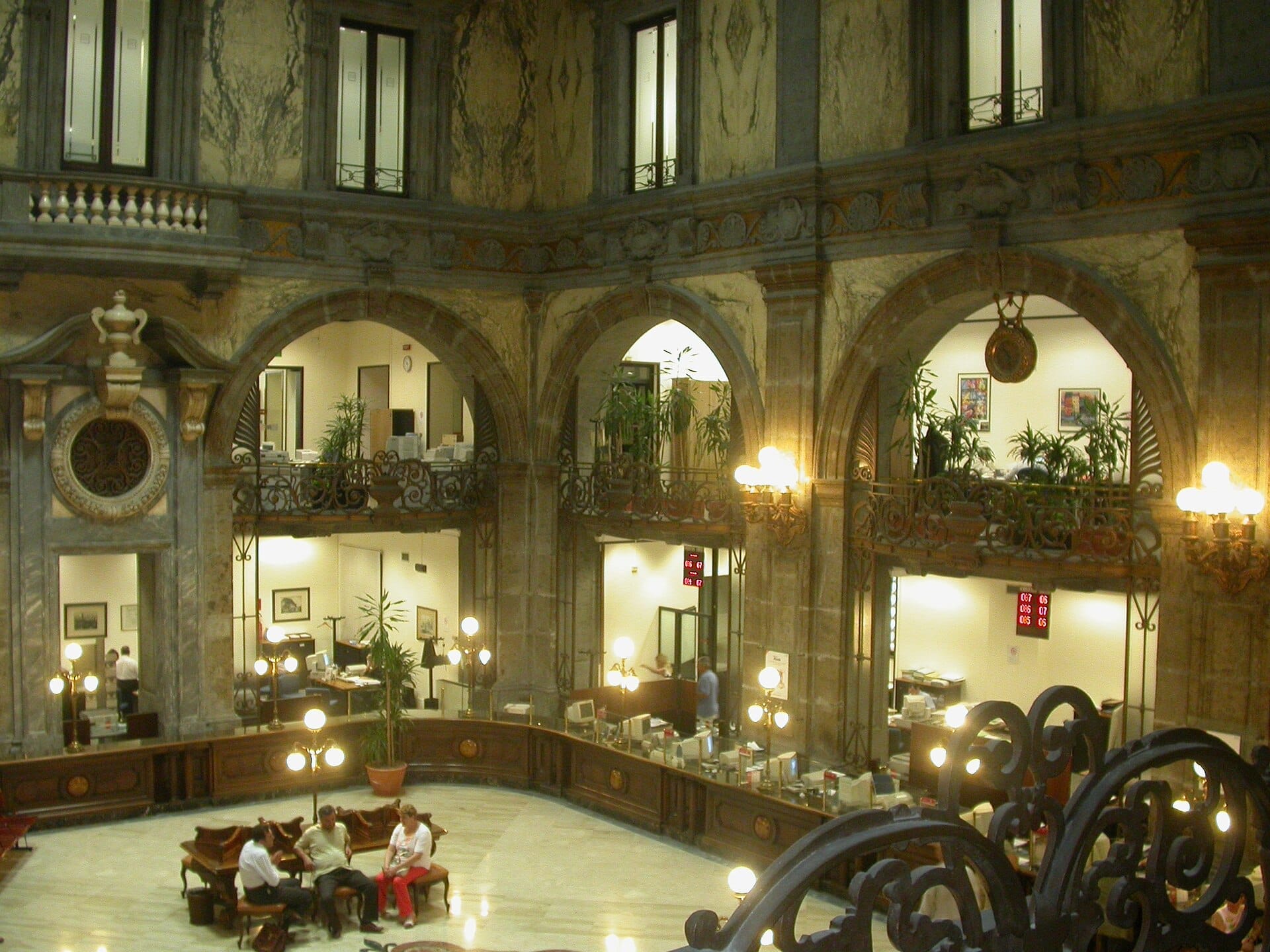
Palazzo Zevallos Stigliano — officially operating today as Gallerie d'Italia - Palazzo Zevallos Stigliano — sits at Via Toledo 185, right in the middle of one of Naples' most trafficked streets. Outside, the city moves at its usual intensity: scooters threading between pedestrians, vendors calling out, the smell of espresso drifting from a dozen bars. Step through the palazzo's entrance and the noise drops away almost immediately. The contrast is part of what makes this place worth seeking out.
The building was commissioned in 1637 by a Spanish merchant named Giovanni Zevallos and completed around 1639. The design is attributed to architect Bartolomeo Picchiatti, though some sources credit contributions from Cosimo Fanzago — a debate that reflects how collaborative and contested Baroque construction in Naples often was. In 1688 the palace passed to the Colonna di Stigliano family, adding the hyphenated name it still carries. Centuries later it became a bank, and since 1999 it has functioned as a gallery managed by Intesa Sanpaolo's cultural foundation.
For visitors trying to make sense of Naples' many museums, this one occupies a distinct niche. It is small — you are not walking for hours — and focused. It does not try to compete with the breadth of the Naples National Archaeological Museum. Instead it offers depth: one extraordinary painting as its centerpiece, surrounded by a collection of Neapolitan and Italian art spanning the 17th to early 20th centuries, all housed in one of the finest Baroque interiors in the city.
The Architecture: What You See When You Walk In
The palazzo's entrance leads through a vestibule into a courtyard, and from there up a grand staircase that immediately signals this is not an ordinary building. The staircase hall, with its barrel-vaulted ceiling and stone detailing, reflects the confidence of 17th-century Spanish-Neapolitan taste — heavy, formal, and built to impress. The decorative language is Baroque without tipping into excess, which makes it feel more like a place of serious intention than of theatrical display.
The gallery rooms themselves retain much of their original architectural character. Frescoed ceilings, ornate cornicing, and the proportions of the rooms give the paintings a context that white-cube galleries cannot replicate. You are seeing Baroque and 19th-century Neapolitan art in a space that was itself conceived as a work of art. The light entering through the tall windows changes across the day — morning visits offer a cooler, more diffuse light; afternoon light becomes warmer and more directional, altering how certain paintings read.
💡 Local tip
Visit on a Tuesday or Wednesday morning to find the galleries nearly empty. Weekend afternoons attract more visitors, particularly tour groups. The palace is closed on Mondays.
Tickets & tours
Live prices and dates from our booking partner. If you book, we may earn a commission at no extra cost to you.
Pompeii and Mount Vesuvius tour with transportation
From 110 €Instant confirmationFree cancellationOrigins and legends of Naples walking tour
From 28 €Instant confirmationFree cancellationGuided walking tour of Naples city and Naples underground
From 45 €Instant confirmationFree cancellationMount Vesuvius and Herculaneum tour with transportation
From 100 €Instant confirmationFree cancellation
The Caravaggio: Why This Painting Matters
The primary reason most informed visitors come to Palazzo Zevallos Stigliano is to see The Martyrdom of Saint Ursula, completed by Michelangelo Merisi da Caravaggio in 1610 — the last painting he finished before his death that same year at the age of 38. Caravaggio painted it in Naples, on his second and final stay in the city, while attempting to secure a papal pardon for a killing he had committed years earlier in Rome. He died shortly after the painting was shipped north, on a beach near Porto Ercole, under circumstances that remain disputed.
The painting shows the moment a Hunnic king, having been refused Ursula's hand in marriage, shoots her with an arrow in anger. What makes it extraordinary is its compression: there is no flourish, no dramatic landscape, no crowd of onlookers rendered in theatrical agony. There are a handful of figures pressed close together in near-darkness, the arrow already embedded in Ursula's chest, her expression one of quiet, almost bewildered acceptance. Caravaggio's face appears in the background — watching. It is a painting made by someone who knew death was close. For those who follow Caravaggio's presence in Naples, this work is essential — arguably more affecting than his better-known pieces precisely because of its restraint.
The painting is displayed in its own dedicated room, well lit and at eye level, without barriers that would force you to stand at a distance. You can get close enough to read the brushwork — the impasto highlights on fabric, the way Caravaggio renders skin against darkness. This access, in a calm room, is a genuine privilege for anyone who takes painting seriously.
The Rest of the Collection
Beyond the Caravaggio, the gallery holds a substantial collection of Neapolitan and Italian painting from the 17th through early 20th centuries. Works by artists of the Posillipo School — a 19th-century movement centered on landscape painting around the Bay of Naples — are well represented. These painters documented the coastline, the light on the water, and the volcanic landscape before industrialization changed the view. For visitors curious about how Naples has looked across different eras, this section adds real context.
There are also decorative arts, silverwork, and objects that reflect the palazzo's life as an aristocratic residence. These pieces are less dramatic than the paintings but help reconstruct what wealthy domestic life looked like in Spanish-Neapolitan society. The collection has enough variety to reward slower visitors but will not overwhelm those who prefer to focus on highlights.
Practical Walkthrough: Getting There and Getting In
Via Toledo is one of the easiest streets in Naples to reach. Metro Line 1 stops at Toledo station, one of the most architecturally striking metro stops in Europe, approximately five minutes on foot from the palazzo. The Toledo metro station is worth a few minutes of your time on its own before or after your visit. Alternatively, the Municipio station is about ten minutes away on foot, useful if you are coming from the port area.
The entrance on Via Toledo is easy to miss if you are moving quickly — the street-level facade does not announce itself loudly. Look for the number 185 and a discreet sign for Gallerie d'Italia. Admission has been reported at €5, with some more recent sources noting a possible increase to €7; check the official website or confirm at the door. The palazzo participates in accessibility initiatives through the AccessibItaly project, making it one of the more thoughtfully adapted cultural sites in the city center.
Opening hours are Tuesday through Friday, 10:00–19:00, and Saturday through Sunday, 10:00–20:00. The gallery is closed on Mondays. No advance booking is typically required given the relatively low visitor numbers, but if you are visiting as part of a tightly planned itinerary — especially one structured around a 3-day Naples itinerary — it is worth confirming current hours on the official Gallerie d'Italia website before you go.
ℹ️ Good to know
Photography policies inside the gallery should be confirmed at entry. As of recent visits, non-flash photography for personal use has generally been permitted in most rooms, but policies can change.
How This Fits Into a Day in the Centro Storico
Palazzo Zevallos Stigliano sits at the southern end of Via Toledo, close to Piazza del Plebiscito and within easy walking distance of several other significant sites. After your visit, Piazza del Plebiscito is a five-minute walk south — the scale of the square after the intimacy of the palazzo offers a satisfying contrast. The Galleria Umberto I, Naples' 19th-century glass-roofed shopping arcade, is directly across Via Toledo and worth stepping into even briefly.
Visitors interested in Baroque religious art should consider pairing this visit with Pio Monte della Misericordia, which houses another major Caravaggio — The Seven Works of Mercy — in the Centro Storico. Together, the two sites give you the most complete picture of Caravaggio's time in Naples available in the city.
The palazzo is not the right choice for visitors expecting an exhaustive survey of Neapolitan history or a large-scale archaeological experience. Those looking for that scope should look elsewhere. But for anyone with a genuine interest in Baroque painting, Italian art history, or the final chapter of one of painting's most turbulent careers, this is one of the most rewarding 90 minutes you can spend in Naples.
⚠️ What to skip
Via Toledo is a busy commercial street and petty theft can occur. Keep bags closed and valuables secured while navigating the crowds outside, particularly near the entrance.
Insider Tips
- Spend time in the Caravaggio room before reading the wall texts — approach the painting without interpretation first. The compression and darkness communicate something that descriptions often diminish.
- The palazzo's staircase hall is architecturally significant in its own right. Look up at the vaulted ceiling before heading into the galleries; most visitors walk straight through without pausing.
- If you read Italian, the curatorial notes throughout the collection are unusually informative. They situate works within Neapolitan social and political history rather than just providing attribution dates.
- Combine this visit with Toledo metro station, a short walk away. The station's underwater-themed ceramic tile descent is a genuine architectural experience — budget 10–15 minutes for it.
- Tuesday and Wednesday mornings are the quietest times. If you arrive when the gallery opens at 10:00, you may have the Caravaggio room entirely to yourself for the first 20–30 minutes.
Who Is Palazzo Zevallos Stigliano For?
- Art historians and serious painting enthusiasts tracking Caravaggio's late career
- Travelers who prefer intimate, focused museums over large sprawling collections
- Architecture lovers interested in 17th-century Neapolitan Baroque interiors
- Anyone building a half-day itinerary around Via Toledo and Piazza del Plebiscito
- Visitors on a budget looking for a high-quality cultural experience at low cost
Nearby Attractions
Other things to see while in Centro Storico:
- Cappella Sansevero
Cappella Sansevero is a small baroque chapel in Naples' historic centre that contains one of the most technically staggering sculptures in the world: the Veiled Christ, a life-sized marble figure so realistically carved it appears draped in real fabric. The chapel is compact, deeply atmospheric, and almost certainly unlike anything else you will see in Italy.
- Naples Cathedral (Duomo di Napoli)
The Cattedrale di Santa Maria Assunta, known to locals simply as the Duomo, is Naples' most historically layered religious site. Built over Greek temples, Roman structures, and early Christian basilicas, it has been the spiritual center of the city for seven centuries. It is also where the famous liquefaction of San Gennaro's blood draws thousands of pilgrims three times a year.
- Naples Botanical Garden (Orto Botanico)
The Orto Botanico di Napoli is one of southern Italy's most significant botanical institutions, covering 12 hectares in the heart of Naples with around 9,000 plant species. Free to enter and largely overlooked by tourists, it offers a genuinely quiet counterpoint to the city's sensory intensity.
- Catacombs of San Gennaro
Carved into the volcanic tuff beneath Rione Sanità, the Catacombs of San Gennaro form one of Southern Italy's most significant early Christian sites. Spanning roughly 5,600 square metres across two levels, they preserve underground basilicas, bishop tombs, and some of the oldest Christian frescoes in the Mediterranean world.
Planning a trip? Discover personalized activities with the Nomado app.