Museo del Periodismo y las Artes Gráficas: Inside the Casa de los Perros
The Museo del Periodismo y las Artes Gráficas (MUPAG), better known as the Casa de los Perros, is one of Guadalajara's more undervisited cultural stops. Housed in a late 18th-century mansion catalogued as a historic monument by INAH, it traces the history of Mexican journalism and print culture in a building with a genuinely fascinating origin story.
Quick Facts
- Location
- Av. Fray Antonio Alcalde 225, Centro Histórico, Guadalajara, Jalisco
- Getting There
- Line 3 metro (San Juan de Dios or Teatro Degollado stations); also walkable from Plaza de la Liberación
- Time Needed
- 45–90 minutes
- Cost
- Free admission (verify on arrival, as policy has changed before)
- Best for
- History enthusiasts, architecture lovers, print culture fans, quiet escapes from the plaza crowds
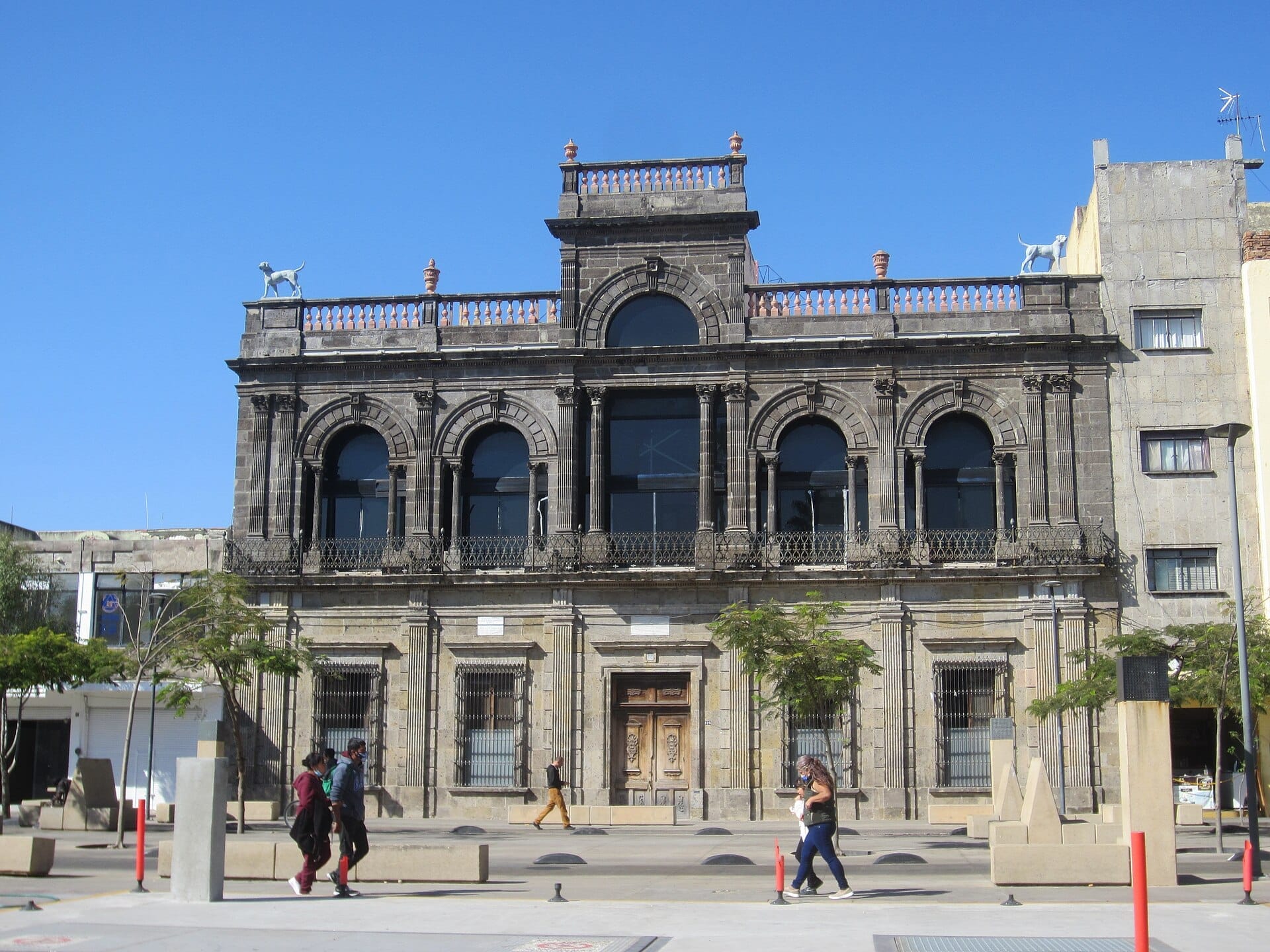
What Is the Casa de los Perros?
The Museo del Periodismo y las Artes Gráficas, known locally as the Casa de los Perros, sits on Paseo Alcalde in Guadalajara's historic center and announces itself with two stone dog figures perched above its colonial facade. That detail alone makes it one of the more recognizable buildings along this stretch of avenue, even if most people walk past without knowing it is a functioning museum.
The museum opened on 11 August 1994, dedicated to the history of journalism and graphic arts in Mexico. Its collection spans early printing presses, newspaper archives, typographic equipment, and rotating exhibitions covering the evolution of media in the country. The permanent displays are modest in scale but carefully curated, and the building itself carries as much historical weight as anything inside it.
ℹ️ Good to know
The museum closed in 2016 for structural reinforcement during construction of Guadalajara's light-rail Line 3 and only reopened in 2022. Some listings and travel blogs still reflect pre-closure information. Confirm current hours via the official Instagram account @mupag.gdl before visiting.
A Building with a Story Worth Knowing
The Casa de los Perros dates to 1788, when it was built for Don Mariano Valdés Téllez y Girón, the editor and printer behind the Gaceta de México, one of colonial Mexico's significant early periodicals. That origin is not incidental to the museum's purpose: the building's first owner was, in a real sense, one of Mexico's first working journalists. The choice to house a museum about print culture here was deliberate and historically coherent.
INAH, the national institute that oversees Mexico's historic heritage, has catalogued the building as a protected historic monument. The facade features neoclassical and late colonial details typical of late 18th-century Guadalajara construction, and the two stone dogs on the parapet give the building its popular nickname. The inner courtyard, with its stone arches and terracotta paving, is the architectural heart of the building and the spot most photographers head for immediately.
The museum sits on Avenida Fray Antonio Alcalde (Paseo Alcalde), overlooking Plaza de la Reforma, a pedestrian-friendly stretch that connects some of the city's most significant civic buildings. If you are planning a broader walking route through the historic center, the Guadalajara walking tour guide maps out a logical path that takes in this building alongside the cathedral, Teatro Degollado, and the surrounding plazas.
Tickets & tours
Hand-picked options from our booking partner. Prices are indicative; availability and final rates are confirmed when you complete your booking.
Lake Chapala and Ajijic guided tour from Guadalajara
From 68 €Instant confirmationFree cancellationGuadalajara and Tlaquepaque guided tour
From 73 €Instant confirmationFree cancellation
What the Visit Actually Feels Like
Step through the entrance on Avenida Fray Antonio Alcalde and the temperature drops noticeably. The thick colonial walls keep the interior cool even on warm afternoons, which makes this a genuinely comfortable stop during the hotter months of May and June when outside temperatures can reach 30–32°C. The air carries a faint papery smell near the archives and typography displays, the kind of institutional museum scent that feels appropriate given the subject matter.
The ground floor and courtyard contain the main exhibition spaces. Display cases hold typesetting equipment, early printing mechanisms, and newspaper front pages marking significant moments in Mexican history. The presentation is informative rather than flashy: there are no large-scale digital installations or immersive rooms. What you get is a well-maintained collection in a beautiful old building, with enough wall text to understand what you are looking at.
The museum also has an auditorium with capacity for 80 people and a specialized library. Both are available for events and research visits. On weekday mornings the museum is quiet enough that you can move through the whole space at your own pace without ever feeling crowded. Weekend afternoons draw slightly more visitors, particularly families exploring the historic center.
💡 Local tip
Morning visits on weekdays offer the calmest experience. Light in the courtyard is best in the mid-morning, roughly 10:00–11:30, when it falls at a low angle through the archways and makes the stonework easier to photograph without harsh shadows.
Opening Hours and Getting There
Based on the museum's official Instagram account (@mupag.gdl), current hours are Tuesday to Saturday 10:00–18:00 and Sunday 10:00–15:00, with the museum closed on Mondays. An older government cultural listing gives different hours (Tuesday to Sunday 10:00–18:00, Saturday and Sunday 10:00–16:00) and indicates a small admission fee with free entry on Sundays, so it is worth checking the Instagram before planning a visit. Admission is currently free according to the museum’s own channels, though the federal cultural directory still lists a nominal fee, so this is worth confirming at the door.
The museum is walkable from most of the historic center's main attractions. Teatro Degollado is a few minutes' walk south, and the Guadalajara Cathedral is similarly close. If you are coming by metro, Line 3 brings you within comfortable walking distance. Ride-hailing apps including Uber and DiDi operate throughout the city and will drop you directly on Paseo Alcalde.
Driving to the museum is possible but requires patience: Centro Histórico has significant traffic and limited parking near Paseo Alcalde. A ride-hailing app or the metro is a considerably easier option for most visitors.
The Surrounding Area
The museum occupies a block on Paseo Alcalde that puts you in the middle of one of Guadalajara's densest concentrations of civic and cultural architecture. Within a ten-minute walk you can reach the Hospicio Cabañas, a UNESCO World Heritage Site housing José Clemente Orozco's monumental murals, and the Plaza de la Liberación, the large square that connects the cathedral with the Degollado theater. Spending a half-day on this stretch of the city is entirely practical.
If you want to understand how Guadalajara's historic center fits together architecturally and historically, the Guadalajara architecture guide provides useful context for the different eras and styles on display along Paseo Alcalde.
Honest Assessment: Is It Worth Your Time?
The museum is not going to compete with Hospicio Cabañas or the Museo Regional de Guadalajara for sheer dramatic impact. The collection is specialized, and visitors with no particular interest in print history or journalism may find 45 minutes here more than enough. The building, however, is genuinely impressive, and the courtyard is one of the quieter and more photogenic spaces in the historic center.
For travelers with even a passing interest in media history, colonial architecture, or the mechanics of early printing, the Casa de los Perros delivers something most tourist circuits miss entirely. And because admission is free, the threshold for stopping in is low. It pairs naturally with a walk to Hospicio Cabañas or a late-morning route through the plazas, making it easy to absorb without reshaping your whole day.
⚠️ What to skip
The museum is closed on Mondays. Visitors who are in Guadalajara for a short stay and planning a Monday in the historic center should build their route around other sites that day.
Insider Tips
- Look up at the roofline before entering: the two stone dog figures that give the building its nickname are best seen from across the street, not from directly below. Cross Paseo Alcalde for a cleaner view of the full facade.
- The inner courtyard is the most photographed space and also the most architecturally rewarding. Arrive early in the morning (10:00–11:30) when the light comes in at a low angle through the archways, before it flattens out overhead.
- The museum's Instagram account (@mupag.gdl) is its most reliably updated source of information, including any temporary closure for events or maintenance. Check it the day before if your schedule is tight.
- Combine this stop with Hospicio Cabañas, which is only a short walk east along Calle Hospicio. Both are free or low-cost, both are housed in historic INAH-protected buildings, and together they make a strong half-day cultural loop.
- The specialized library and auditorium are available for research visits and events. If you have a professional or academic interest in Mexican media history, contact the museum directly at museodelperiodismo@hotmail.com ahead of your visit.
Who Is Museo de Periodismo y Artes Gráficas (Casa de los Perros) For?
- Architecture and colonial history enthusiasts who want to see a well-preserved late 18th-century building that most tours overlook
- Journalists, writers, and print culture fans with an interest in Mexican media history
- Travelers doing a full walking circuit of Centro Histórico who want a calm, free stop between the major plazas
- Photographers looking for a quiet courtyard with colonial stonework and good morning light
- Visitors on a tight budget who want to fill a morning in the historic center without spending anything on admission
Nearby Attractions
Other things to see while in Centro Histórico:
- Calandrias (Horse-Drawn Carriage Rides)
Calandrias are Guadalajara's traditional horse-drawn carriages, operating through the colonial streets of the Centro Histórico since the early 20th century. A slow, unhurried circuit past cathedral facades, plazas, and pedestrian corridors, they offer a different pace from the city's foot traffic. This guide covers what to expect, when to go, and whether it's worth your time.
- Guadalajara Cathedral (Catedral de Guadalajara)
The Catedral Basílica de la Asunción de María Santísima anchors Guadalajara's historic center, surrounded by four plazas and centuries of layered history. Its twin neo-Gothic spires are the city's most recognized silhouette, and entry is free. Here is everything you need to know before you go.
- Instituto Cultural Cabañas (Hospicio Cabañas)
A UNESCO World Heritage Site at the heart of Guadalajara's Centro Histórico, Hospicio Cabañas houses José Clemente Orozco's most celebrated murals inside a neoclassical complex of staggering scale. This is the single most significant cultural site in western Mexico, and one of the most important in all of Latin America.
- Lienzo Charro de Jalisco
The Lienzo Charro Charros de Jalisco, on Av. R. Michel near Parque Agua Azul, is one of Mexico's most storied charro arenas. Home to one of Mexico's oldest charro associations, this is where Jalisco's equestrian traditions are kept alive through competitive charreadas, pageantry, and music.