Museo Argentino de Ciencias Naturales Bernardino Rivadavia: Buenos Aires' Natural History Institution
Built specifically as a museum and set within the circular green space of Parque Centenario, the Museo Argentino de Ciencias Naturales Bernardino Rivadavia houses one of South America's most significant natural history collections. From towering dinosaur skeletons to meteorite fragments and Amazonian biodiversity halls, it rewards visitors of any age who give it a full afternoon.
Quick Facts
- Location
- Av. Ángel Gallardo 470, Parque Centenario, Buenos Aires
- Getting There
- Subte Line B – Ángel Gallardo station (short walk); multiple buses including 15, 36, 55, 65, 99
- Time Needed
- 2 to 3 hours
- Cost
- ARS 6,000 (Argentine residents); ARS 12,000 (foreigners from neighboring/Mercosur countries); ARS 16,000 (foreigners from other countries); children under 6 free. Verify prices before visiting.
- Best for
- Families, science enthusiasts, rainy-day visits, architecture lovers
- Official website
- www.macnconicet.gob.ar/visitas-reapertura
What Is This Museum, Exactly?
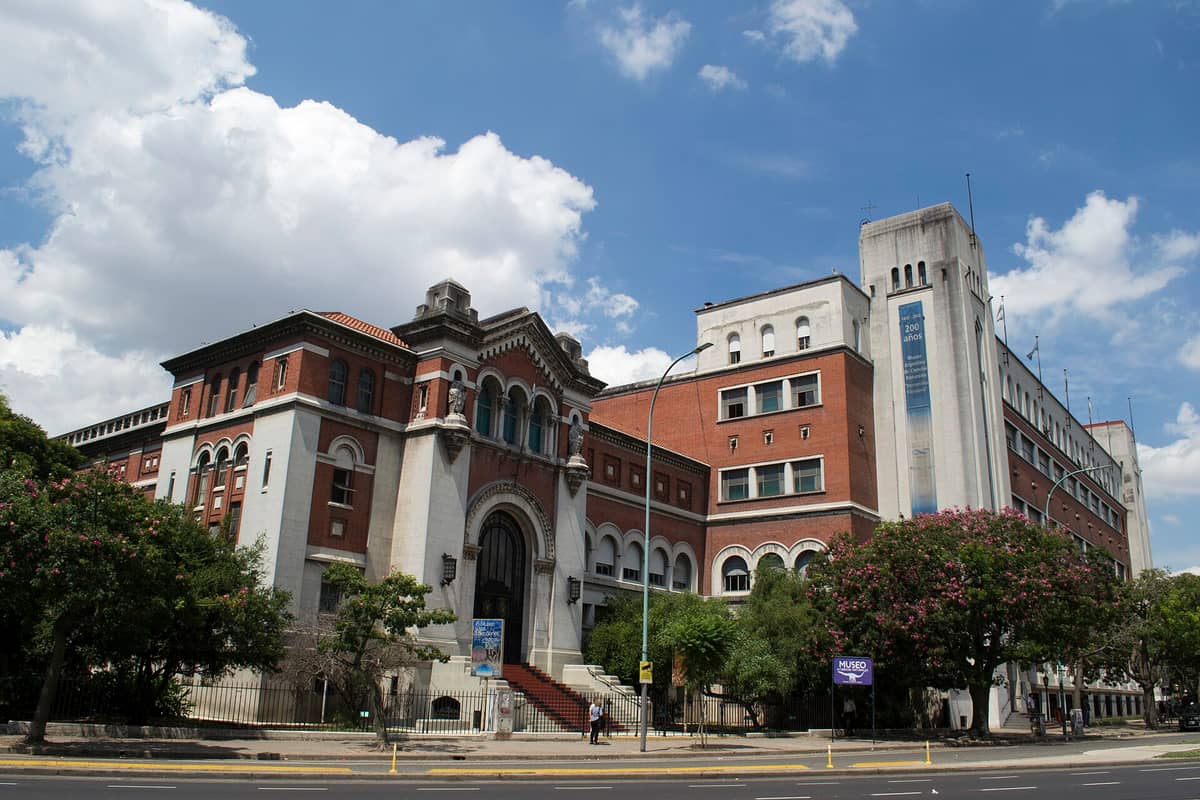
The Museo Argentino de Ciencias Naturales Bernardino Rivadavia, known locally by its acronym MACN, is Argentina's principal natural history museum and one of the most important of its kind in Latin America. Named after Bernardino Rivadavia, Argentina's first president and a promoter of scientific education in the early 19th century, the institution has roots going back to 1812. The current building, however, is a different story: it was completed in 1937 in Parque Centenario, and it holds the rare distinction of being one of very few buildings in Buenos Aires designed and constructed from scratch as a museum, rather than adapted from a palace or civic hall.
The collections span paleontology, zoology, botany, entomology, geology, and mineralogy. In practical terms, that means you walk past enormous dinosaur skeletons, cases of Andean minerals, preserved marine life, and drawers of pinned beetles, all within a single building. The scope can feel ambitious to the point of overwhelming, but the layout is logical and the halls are wide enough to navigate without feeling crowded on a typical weekday afternoon.
ℹ️ Good to know
Opening hours: Tuesday to Sunday, 14:00–19:00 for the general public. Confirm current times at the official website before your visit.
The Building and Its Setting
The MACN building sits on the eastern edge of Parque Centenario, a circular park anchored around a large pond that draws joggers, dog walkers, and weekend market-goers. Approaching the museum from the Ángel Gallardo Subte station, you walk along Avenida Ángel Gallardo for about five minutes before the façade comes into view: a solid Neoclassical structure with stone detailing that, on close inspection, incorporates stylized representations of native Argentine flora and fauna into its ornamental relief work. This zoological motif, carved into column capitals and entrance friezes, is a subtle but meaningful architectural choice that aligns the building's exterior with its interior mission.
The building's interior corridors have the proportions and cool air of an older institution. Marble floors, tall ceilings, and the particular stillness of rooms holding things that are millions of years old give the MACN an atmosphere that is different from most city museums. In the mid-afternoon, light filters through upper windows into the main hall, which creates good viewing conditions for the larger skeletal specimens without the harshness of direct sun.
The park itself is worth a few minutes before or after the museum. On weekends, a small weekend fair operates around the central pond, and the surrounding streets include a number of cafes. For context on Buenos Aires' wider green spaces, the Bosques de Palermo and the Jardín Botánico Carlos Thays offer a different but complementary outdoor experience.
Tickets & tours
Live prices and dates from our booking partner. If you book, we may earn a commission at no extra cost to you.
Boca Juniors Museum skip-the-line tickets
From 17 €Instant confirmationFree cancellationTour to La Boca Jrs and River Plates Stadiums and museums
From 99 €Instant confirmationFree cancellationRiver Stadium and Museum Official Guided Tour
From 33 €Instant confirmationFree cancellationParque de la Costa amusement park tickets with transfer
From 79 €Instant confirmationFree cancellation
What You'll Actually See Inside
The paleontology halls are the most immediately striking. Several large dinosaur skeletons are displayed in open floor space, including specimens that represent taxa discovered in Argentine Patagonia, a region that has produced some of the world's most significant dinosaur finds over the past four decades. The scale of certain theropod and sauropod mounts is genuinely impressive in person, even if the individual cases and labels are not always updated to reflect the most current scientific nomenclature.
The mineralogy and meteorite collection is a highlight that often surprises visitors who came primarily for the dinosaurs. Argentina has been the site of notable meteorite impacts and recoveries, and the specimens on display include large iron meteorites with unusual Widmanstätten crystalline patterns visible on cut surfaces. The geological halls that follow cover Andean mineral formations with a directness that geology students will appreciate and casual visitors can absorb without background knowledge.
The zoology halls contain both taxidermied large mammals and extensive entomology and marine invertebrate collections. The taxidermy varies in condition and age, with some older specimens showing the styling choices of early 20th-century natural history presentation. The insect collections in particular, mounted in illuminated drawers and cases, are surprisingly beautiful in the way that organized pattern and color can be. The botanical section is smaller and more reference-oriented, aimed more at researchers than general visitors.
💡 Local tip
The museum opens at 14:00, and arriving at or just after opening means you'll have the dinosaur hall largely to yourself. By 16:30 on weekday afternoons, school groups begin filtering through, and the largest halls can become briefly noisy.
A Rainy Afternoon or a Deliberate Choice?
It would be unfair to frame the MACN purely as a rainy-day fallback, though it functions well as one. Buenos Aires' climate means afternoon downpours are common from October through March, and the museum's 14:00 opening aligns almost exactly with the hours when afternoon storms roll in from the Río de la Plata. The entrance area stays dry under a deep stone overhang, and the interior temperature, while not always heavily air-conditioned, is cooler than the street in summer.
That said, natural history collections reward deliberate attention. Visitors who treat the MACN as an interruption to sightseeing will get less from it than those who give it a full two to three hours. The signage is primarily in Spanish, which means non-Spanish speakers will either need a translation app or a willingness to absorb the visual content without full explanatory context. There are no audio guide services in English as a standard offering, though this should be confirmed directly with the museum before your visit.
If you're building a day around this neighborhood, the museum pairs naturally with Parque Centenario and the surrounding streets of Caballito and Flores, which are residential areas with a much lower tourist footprint than Palermo or San Telmo. For a broader picture of Buenos Aires' cultural offerings, the best museums in Buenos Aires guide covers how MACN fits alongside the city's other major institutions.
Getting There and Practical Logistics
The most direct public transport option is the Subte Line B to Ángel Gallardo station. From the station exit, the walk to the museum entrance is straightforward: follow Avenida Ángel Gallardo south toward Parque Centenario, and the museum facade becomes visible within a few minutes. Line A's Río de Janeiro station is also walkable, though slightly further. Buses serve Parque Centenario from across the city, including lines 15, 36, 55, 65, 92, 99, 105, 112, 124, 135, 141, and 146.
The museum is described as fully accessible, with ramps, elevators, and accessible restrooms throughout the building. Service animals are permitted. Free admission is available for visitors with disabilities and one companion, for retirees/jubilados with documentation, and for ex-combatants of Malvinas. Children under six enter free when accompanied by a family group. All visitors should confirm current fee categories and any required documentation on the official MACN website before arrival, as Argentina's ARS pricing is subject to change.
⚠️ What to skip
Admission prices are listed in Argentine pesos (ARS) and change frequently due to inflation. Foreigners from neighboring/Mercosur countries and from the rest of the world pay higher rates than Argentine residents. The figures cited here were verified as of early 2026 but should be confirmed at macnconicet.gob.ar before your visit.
For general orientation on moving around the city, the getting around Buenos Aires guide covers the Subte, SUBE card, and bus network in detail. If you're planning a broader cultural itinerary, the 3 days in Buenos Aires itinerary can help you slot the MACN into a wider schedule.
Photography and What to Bring
Photography is generally permitted in the public galleries without flash, which is the standard policy at Argentine natural history institutions. The dinosaur hall offers the best compositional opportunities: the skeletons are displayed on open floor mounts without glass enclosures, allowing clean wide-angle framing. The mineral cases are lit from within, which makes macro photography of crystalline structures straightforward even with a phone camera. The older taxidermy, while sometimes unevenly lit, has the kind of austere museum atmosphere that works well in black-and-white conversion.
Bring comfortable shoes, as the floor surfaces are hard marble throughout and an engaged visit covers considerable ground. A light jacket is useful in summer, when the interior can feel noticeably cooler than outside. The museum does not operate an on-site cafe, so arriving after lunch is practical, and the park outside has vendors on weekends if you need a snack before or after.
Who Might Want to Skip This
The MACN is not the right choice for visitors with only one or two days in Buenos Aires and a specific interest in Argentine art, tango culture, or architecture, since the city has more specialized institutions for each. The museum's afternoon-only opening hours also make it incompatible with morning-heavy itineraries. Visitors who do not read Spanish will miss a significant portion of the interpretive content, as English signage is minimal. And those expecting a fully modern, interactive museum experience on the level of major natural history museums in Europe or North America may find the presentation style straightforward and dense rather than immersive.
For travelers prioritizing architectural institutions, the Buenos Aires architecture guide points toward venues where the building itself is the primary draw. For those whose main priority is fine or contemporary art, the Museo MALBA and the Museo Nacional de Bellas Artes are better fits.
Insider Tips
- Arrive at 14:00 when the doors open to have the dinosaur hall almost entirely to yourself. By mid-afternoon, school groups from the surrounding neighborhoods begin arriving and the main hall fills with noise.
- The meteorite display is in a smaller side gallery that many visitors walk past quickly on the way to the dinosaurs. It deserves at least 15 minutes, particularly the large iron meteorites with visible crystalline cross-sections.
- Parque Centenario hosts a weekend crafts and food fair around its central pond. Arriving by Subte on a Saturday or Sunday and spending 30 minutes in the park before or after the museum makes for a fuller half-day outing without adding cost.
- Check the museum's official website in advance of any July visit. During winter school holidays, the museum sometimes shifts to daily opening with extended hours, which changes the crowd profile significantly.
- The bus network to Parque Centenario is extensive and often faster than the Subte from central neighborhoods like Palermo or Recoleta. The 15 and 65 lines are frequently cited as reliable connections.
Who Is Museo de Ciencias Naturales Bernardino Rivadavia For?
- Families with children aged 5 and up, particularly those curious about dinosaurs and prehistoric life
- Science and natural history enthusiasts who want South American paleontological context
- Visitors looking for a productive afternoon during a summer rainstorm
- Travelers interested in Argentine scientific heritage and Neoclassical institutional architecture
- Budget-conscious visitors, since entry remains inexpensive even for foreigners relative to comparable institutions
Nearby Attractions
Combine your visit with:
- Cementerio de la Chacarita
Larger and less visited than its famous counterpart in Recoleta, Cementerio de la Chacarita is a vast urban cemetery spanning multiple city blocks in the Chacarita neighborhood. Free to enter, it holds the tombs of cultural icons including tango legend Carlos Gardel, and its monumental mausoleums, wide internal avenues, and layers of Argentine social history make it one of the most atmospheric and underappreciated sites in the city.
- Colonia del Sacramento (Uruguay)
Colonia del Sacramento, Uruguay's oldest city and a UNESCO World Heritage Site, sits just across the Río de la Plata from Buenos Aires. Its Barrio Histórico packs cobblestone lanes, Portuguese-era walls, and a working lighthouse into a compact quarter that most visitors can absorb in a single afternoon.
- Espacio Memoria y Derechos Humanos (ex-ESMA)
Built on the grounds of one of Argentina's most notorious clandestine detention centers, Espacio Memoria y Derechos Humanos (ex-ESMA) is a 17-hectare memorial complex in northern Buenos Aires dedicated to human rights and collective memory. Entry is free, the site has regular daily opening hours, and a visit here is one of the most sobering and important experiences the city offers.
- Estadio Monumental (River Plate)
The Estadio Más Monumental Antonio Vespucio Liberti is more than a football ground. Home to Club Atlético River Plate and the largest stadium in South America, it holds around 85,000 spectators and carries decades of Argentine football history. Whether you visit on a quiet Tuesday morning or a roaring match day, the scale and atmosphere of El Monumental is unlike anything else in Buenos Aires.
Planning a trip? Discover personalized activities with the Nomado app.