Musée Bourdelle: Inside a Sculptor's World, Free to Enter
Housed in Antoine Bourdelle's original studio and home near Montparnasse, this free city museum holds over 500 works by one of the most significant sculptors of the early 20th century. It is one of Paris's most intimate and least crowded art experiences, offering preserved workspaces, a hidden garden courtyard, and monumental bronzes under open sky.
Quick Facts
- Location
- 18 rue Antoine Bourdelle, 75015 Paris (Montparnasse district, 15th arrondissement)
- Getting There
- Métro Montparnasse-Bienvenüe (lines 4, 6, 12, 13); Métro Falguière (line 12); buses 28, 58, 91, 92, 94, 95, 96
- Time Needed
- 1 to 2 hours for the permanent collection; allow extra time if a temporary exhibition is running
- Cost
- Free entry to the permanent collection. Temporary exhibitions are ticketed (typically €10 full price, €8 reduced). Free for visitors with disabilities and one companion.
- Best for
- Sculpture lovers, art history students, those seeking a quiet alternative to Paris's crowded museums
- Official website
- www.bourdelle.paris.fr
What Is the Musée Bourdelle?
The Musée Bourdelle is one of Paris's quietest and most rewarding art museums, set inside the former home, studio, and garden of Émile-Antoine Bourdelle (1861–1929), a sculptor who trained under Auguste Rodin and went on to shape a generation of 20th-century artists. Unlike the grand institutional museums that line the Seine, this is a place of accumulated creative life: the walls, tools, and spaces where Bourdelle actually worked have been preserved and opened to the public. The collection runs to over 500 works, including monumental bronzes, plaster studies, portraits, and paintings.
Bourdelle donated his home and studio to the City of Paris shortly before his death, and the museum opened in 1949. Its street-level entrance on rue Antoine Bourdelle is easy to miss from the outside: a modest door on a residential street gives way to a world-class collection that never feels like a tourist destination. That discrepancy is exactly what makes it worth the detour.
💡 Local tip
The permanent collection is free to enter Tuesday to Sunday, 10 a.m. to 6 p.m. (late openings on Fridays until 8 p.m.). No reservation required for the free galleries. Closed Mondays, January 1, May 1, and December 25.
The Studios and Preserved Workspaces
The heart of the museum is not a gallery in the conventional sense. It is a series of interconnected studios where Bourdelle lived and worked for decades. The Great Studio is the most impressive: a vast, high-ceilinged space that still holds the atmosphere of active creation. Unfinished plaster casts lean against the walls. Tools sit in rough proximity to works that were clearly mid-process when the sculptor died. The scale of some pieces is startling up close, particularly the massive studies for the Hercules the Archer (1909), which became one of his most celebrated compositions.
What distinguishes the Bourdelle from a traditional sculpture museum is the sense of process on display. You see not only the finished bronzes, but the plaster originals, the intermediate studies, and in some cases the working notes that accompanied them. For visitors with even a passing interest in how a major sculpture moves from idea to object, this is more informative than any textbook.
The private apartment, also open to visitors, is furnished as it was during Bourdelle's lifetime. His study, his personal library, and the rooms where he received guests have been left largely intact. This kind of domestic honesty is rare in Paris museums, where the tendency is to strip context and display art in neutral white rooms.
Tickets & tours
Hand-picked options from our booking partner. Prices are indicative; availability and final rates are confirmed when you complete your booking.
Musee d'Orsay Skip-the-Line Tickets and Guided Tour
From 59 €Instant confirmationFree cancellationSkip-the line guided tour of Musee Rodin
From 89 €Instant confirmationMusee d'Orsay entrance ticket with Seine river cruise
From 45 €Instant confirmationParis Musee d'Orsay tickets and in-app audio tour
From 35 €Instant confirmation
The Garden Courtyard
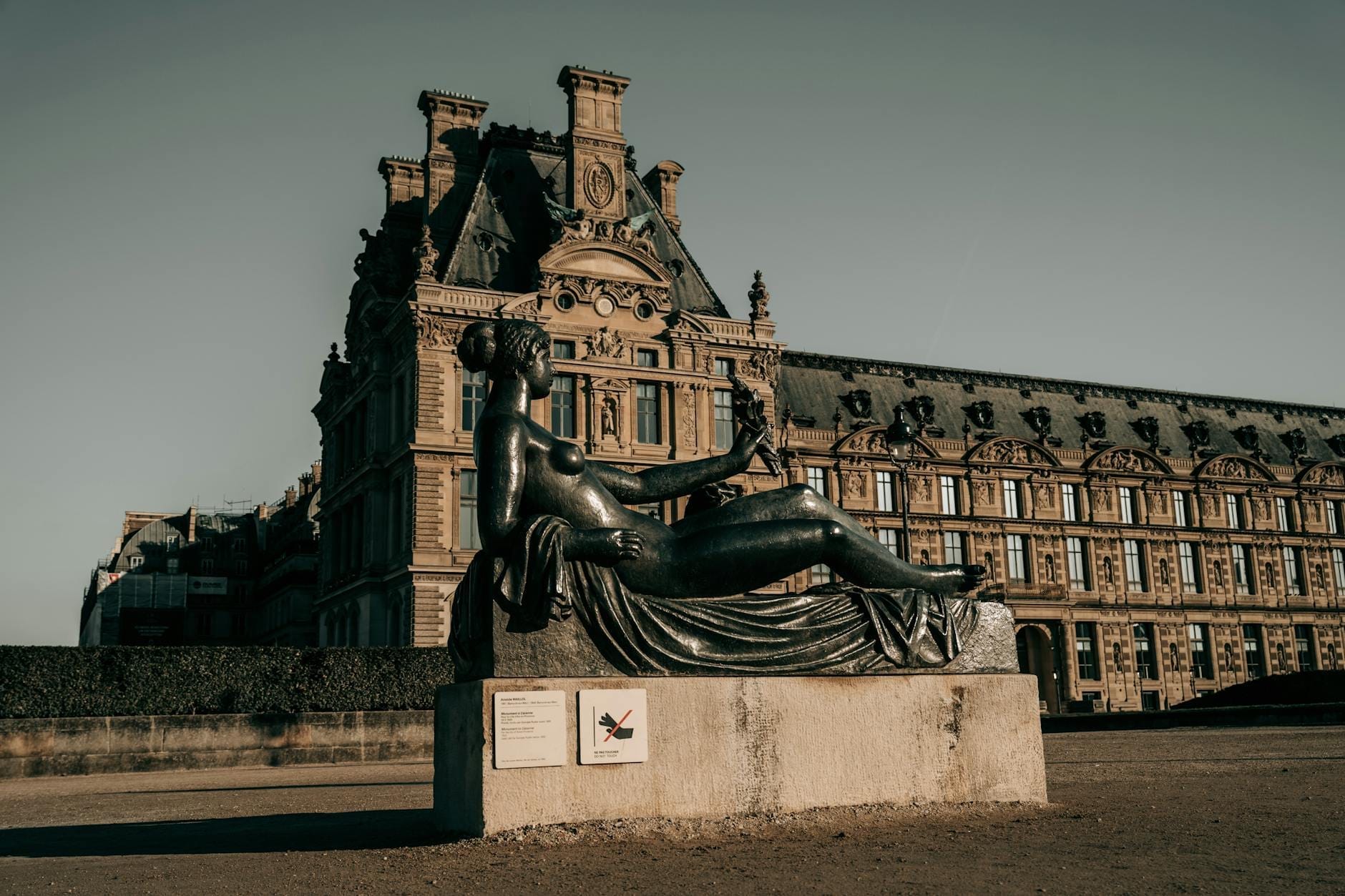
Step through the studios and you emerge into a sculpture garden that catches most visitors off guard. The courtyard is planted with mature trees and layered with bronzes arranged at ground level, where you can walk around them, crouch beside them, and study them without barriers or rope lines. The most prominent works here include versions of Bourdelle's Penelope and multiple heads and figures from his studies for the Beethoven series, a group of works he returned to obsessively over thirty years.
In the morning, when the light comes over the roof of the surrounding buildings and falls at an angle across the bronze surfaces, the garden reads differently than it does in the flat midday light. Serious photographers should note this: early in the day, there are also almost no other visitors, which means unobstructed lines of sight and silence. By early afternoon, school groups occasionally pass through, though they rarely linger long.
💡 Local tip
Photography is permitted throughout the permanent collection, including the garden. The garden bronzes, viewed at eye level on overcast days, photograph particularly well due to the diffused light on their textured surfaces.
Bourdelle's Place in Art History
Antoine Bourdelle occupies a specific and often underappreciated position in the history of Western sculpture. He arrived in Paris from Montauban in the 1880s and eventually became one of Rodin's chief assistants, a position he held for fifteen years. He later taught at the Académie de la Grande Chaumière, where his students included Alberto Giacometti and Fernand Léger. That lineage, from Rodin through Bourdelle to Giacometti, is one of the defining transmission lines of 20th-century sculpture, and the Musée Bourdelle is the place in Paris where it becomes tangible.
His mature style broke from Rodin's fluid surfaces toward something more architectural and elemental, influenced by ancient Greek sculpture and medieval French stonework. The reliefs he created for the Théâtre des Champs-Élysées (1912–13) are considered landmarks of early modernist decorative art, and plaster studies for those works appear in the collection.
If you want to understand Bourdelle in relation to his contemporaries, the Musée Rodin is approximately 25 minutes away by foot or one short metro ride, and the two museums make a natural pairing. The contrast between Rodin's lush, emotionally charged surfaces and Bourdelle's harder, more architectural forms becomes much clearer when you visit both on the same day.
Temporary Exhibitions
The museum runs a program of temporary exhibitions throughout the year, typically staged in a dedicated wing separate from the permanent collection. These shows tend to focus on Bourdelle's circle, his influences, or contemporary sculptors in dialogue with his legacy. Temporary exhibitions carry an admission charge, generally €10 at full price and €8 at reduced rate, though this varies by show. Check the official website before visiting if you want to plan around the current program.
Even when no temporary show is running, the permanent collection justifies the visit fully. The free galleries contain the most significant works in the collection and the most architecturally interesting spaces in the building.
Getting There and Practical Details
The museum is at 18 rue Antoine Bourdelle in the 15th arrondissement, a short walk from the major transit hub at Montparnasse-Bienvenüe. From the metro exit, head north on boulevard du Montparnasse and turn onto rue Antoine Bourdelle: the walk takes under five minutes. The Falguière stop on line 12 puts you even closer. Multiple bus lines (28, 58, 91, 92, 94, 95, 96) serve the surrounding streets, and Gare Montparnasse is within easy walking distance if you are arriving by regional rail.
The Montparnasse area is worth exploring more broadly. The neighborhood's creative history extends well beyond Bourdelle himself, and it connects naturally to the broader character of the Left Bank. For a fuller picture of what the area offers, the Montparnasse Tower is a few minutes' walk and offers a panoramic counterpoint to the museum's intimate interior. The Jardin du Luxembourg is also reachable on foot in around 20 minutes and makes a logical next stop after a morning at the museum.
ℹ️ Good to know
Accessibility: The museum is adapted for visitors with motor, visual, hearing, and cognitive disabilities. Entry is free for visitors with disabilities and one accompanying person. Adapted activities are available; contact the museum in advance for specific needs.
Who Should Skip This Museum
The Musée Bourdelle is not a good fit for visitors whose primary interest is painting, or those looking for a broad survey of art history in a single visit. The collection is focused and specific: almost everything here relates directly to one artist's life and output. Travelers with very limited time in Paris who have not yet seen the Louvre or the Musée d'Orsay should visit those first.
Young children may find the experience slow-paced unless they are unusually engaged by large-scale sculpture. For families looking for a more interactive day, the Cité des Sciences or the Jardin des Plantes might be better choices. That said, the open garden courtyard does give younger visitors room to move, and the scale of the bronzes tends to hold children's attention in a way that wall-hung paintings rarely do.
For first-time visitors to Paris trying to prioritize, the guide on Paris for first-timers offers a clear framework for deciding how to structure your days. The Bourdelle fits naturally into a return visit, or into a first visit itinerary deliberately built around depth over breadth.
Insider Tips
- Arrive right at 10 a.m. on a weekday and you will frequently have the Great Studio entirely to yourself. That atmosphere, the morning light through the high windows and the silence around the plaster casts, is the best version of this museum.
- The garden courtyard is sheltered and remains pleasant even on cool or lightly overcast days. Bring a jacket in spring and autumn; the stone surfaces stay cold even when the air temperature is comfortable.
- If a temporary exhibition is running, buy the combined ticket rather than paying separately. The dual access is worthwhile and the difference in price is marginal.
- The museum shop stocks a well-curated selection of art books, including monographs on Bourdelle and catalogues from past exhibitions. These are significantly harder to find elsewhere and the prices are reasonable by Paris museum standards.
- The museum is not listed on the Paris Museum Pass, so it cannot be used for entry to temporary exhibitions. However, since the permanent collection is already free, this is rarely a practical concern.
Who Is Musée Bourdelle For?
- Sculpture and art history enthusiasts who want to understand how major 20th-century forms developed
- Repeat visitors to Paris who have already covered the headline museums and want something more specific
- Photographers looking for dramatic bronzes in a contained, uncrowded outdoor setting
- Anyone interested in the working life of an artist, including preserved studios and domestic spaces
- Budget-conscious travelers seeking a world-class free cultural experience away from the main tourist circuits
Nearby Attractions
Combine your visit with:
- Bois de Vincennes
Covering nearly 1,000 hectares on the eastern edge of Paris, the Bois de Vincennes is the city's largest green space, combining ancient woodland, three lakes, a botanical garden, a world-class zoo, and a medieval royal castle. It rewards both casual afternoon strollers and full-day explorers.
- Château de Fontainebleau
Older than Versailles and used by more French monarchs, the Château de Fontainebleau is a UNESCO World Heritage palace 55 km southeast of Paris. With over 1,900 rooms, free formal gardens, and a manageable crowd count compared to other royal sites, it rewards visitors who make the 40-minute train trip from Paris.
- Château de Vaux-le-Vicomte
Built between 1656 and 1661 for finance minister Nicolas Fouquet, Château de Vaux-le-Vicomte is the largest privately owned château in France. Its formal gardens, gilded state rooms, and extraordinary backstory make it one of the most rewarding half-day trips from Paris.
- Château de Vincennes
Rising at the eastern edge of Paris, Château de Vincennes is one of the most complete medieval royal fortresses in Europe. Home to France's tallest medieval keep and a stunning Gothic chapel, it rewards visitors who venture beyond the tourist centre with centuries of largely undisturbed royal history.