Monte Pellegrino: Palermo's Sacred Mountain Above the City
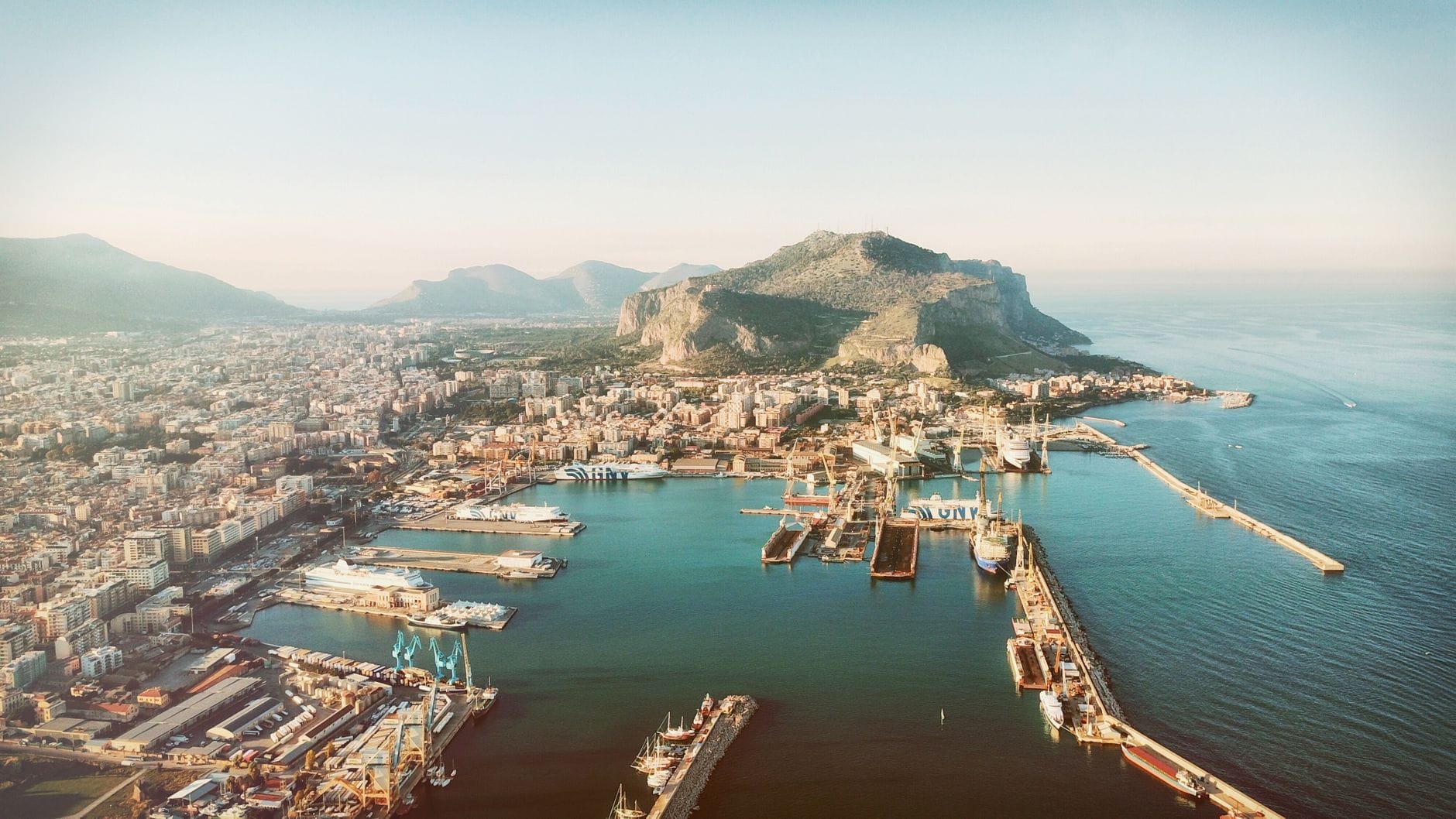
Rising about 606 metres directly above Palermo's rooftops, Monte Pellegrino is a limestone promontory that combines a nature reserve, prehistoric rock art, a pilgrimage sanctuary, and some of the finest panoramic views in Sicily. Access is free, the bus goes to the top, and the hike up is genuinely rewarding.
Quick Facts
- Location
- Monte Pellegrino, 90149 Palermo, Sicily, Italy
- Getting There
- AMAT Bus 812 from central Palermo; approx. 30–40 minutes to the summit area
- Time Needed
- 2–4 hours for viewpoints and sanctuary; full day if hiking the Acchianata trail
- Cost
- Free to access; bus fare applies if using AMAT 812
- Best for
- Hikers, history lovers, pilgrims, photographers, and anyone wanting to see Palermo from above
- Official website
- www.italia.it/en/sicily/palermo/monte-pellegrino
What Monte Pellegrino Actually Is
Monte Pellegrino is a sheer limestone massif that rises to approximately 606 metres at the northern edge of Palermo, separating the city from the Gulf of Mondello. It is not a gentle hill on the outskirts of town. From the waterfront districts, its cliffs appear almost vertical, and on clear days the summit is visible from far out to sea. Goethe famously called it the most beautiful promontory in the world, and while that kind of superlative rarely holds up, the view from the top does justify the hyperbole more than most.
Declared the Riserva Naturale Orientata Monte Pellegrino in 1996, the mountain is a protected area containing around 134 caves of marine and karst origin, significant archaeological sites, the Sanctuary of Santa Rosalia, and an Art Nouveau castle. It is, in short, several different attractions stacked on top of each other, which makes it one of the more rewarding half-days you can spend near Palermo.
ℹ️ Good to know
The mountain and nature reserve are freely accessible with no entrance ticket required. The Sanctuary of Santa Rosalia does not charge a fixed admission fee, though donations are customary. Always verify the sanctuary's current opening hours locally before visiting, as they vary.
The Ascent: Hiking the Acchianata
The traditional pilgrim route to the summit is called the Acchianata, a Sicilian dialect word meaning 'the ascent.' The path covers approximately 6–7 kilometres with around 360–450 metres of elevation gain, climbing through a landscape of exposed limestone, wild fennel, and prickly pear. The surface underfoot is largely paved with stone, much of it uneven, and it is genuinely steep in places. Local sources estimate around several thousand stone steps across the full route. On the right morning, with the scent of wild herbs and the city falling away below you, it earns every metre.
Most walkers start the Acchianata from the Piazzetta Valdesi area at the base of the mountain. The path winds upward through scrubland and under rock faces that occasionally drip with spring water. Shade is limited until you gain altitude, so the experience changes considerably depending on the season. In spring, the hillside flowers and the air is cool enough to make the climb comfortable. In July and August, the same path becomes a serious undertaking in the midday heat.
💡 Local tip
Start the hike by 8am in summer to avoid the worst of the heat. Bring at least 1.5 litres of water per person. The path is rocky and uneven throughout, so closed shoes with grip are essential. Sandals are a poor choice.
If the hike is not feasible for you, AMAT bus 812 runs from central Palermo to the summit area and takes around 30 to 40 minutes depending on traffic. The road spirals up through tight switchbacks with dramatic views appearing at each bend. Taxis and private cars are also a practical option. For context on how this fits into a broader Palermo day, see our day trips from Palermo guide.
Tickets & tours
Hand-picked options from our booking partner. Prices are indicative; availability and final rates are confirmed when you complete your booking.
Mondello and Sanctuary in Monte Pellegrino Tour
From 25 €Instant confirmationFree cancellationEtna South Upper Craters Guided Excursion from Taormina
From 42 €Instant confirmationFree cancellationTaormina private tour with an expert guide
From 42 €Instant confirmationFree cancellationIsola Bella boat tour and snorkeling
From 55 €Instant confirmationFree cancellation
The Sanctuary of Santa Rosalia
Near the summit stands the Sanctuary of Santa Rosalia, built into and around a natural cave where the bones of Palermo's patron saint were reportedly discovered in 1625. The discovery came during a plague outbreak, and when the relics were carried through the city in procession, the epidemic ceased. That event embedded Santa Rosalia into Palermitan identity so deeply that her festival on September 4th remains one of the city's most significant occasions.
The sanctuary itself is an unusual structure: part chapel, part cave. Inside, the rock walls of the grotto drip with moisture and are hung with votive offerings. Candles burn at all hours. The air smells of wax and damp stone. It has none of the polished grandeur of Palermo's Norman churches, and that rawness is precisely what makes it affecting. Even visitors with no religious connection to the site tend to find the interior quietly striking.
The approach to the sanctuary is lined with small stalls selling religious items, souvenirs, and local produce. On weekends and feast days, this area draws significant numbers of pilgrims from across Sicily, and the atmosphere shifts from contemplative to celebratory. Arriving on a quiet Tuesday morning gives a completely different experience from a Sunday afternoon in September.
💡 Local tip
Dress modestly to enter the sanctuary: covered shoulders and knees are expected. Lightweight layers that you can add before entering are a practical solution if you have been hiking in warm weather.
Castello Utveggio and the Panoramic Views
Rising above the sanctuary and visible from much of Palermo below is Castello Utveggio, a pale pink castle built in 1934 in an Art Nouveau style for Cavaliere Michele Utveggio. It was originally intended as a luxury hotel, though that plan never fully materialised. Today it houses a research institute. The building is not open to the public in the conventional sense, but it forms a distinctive silhouette against the sky that appears in almost every photograph taken from Palermo looking north.
The real draw at the summit is the view. From the miradoro near the castle, the whole of Palermo spreads out below: the cathedral, the grid of the old city, the port, and the Conca d'Oro plain stretching inland toward the mountains. On clear days, the Aeolian Islands are visible to the northeast. The view is best in the morning before haze builds, and photographers specifically after the light of early sunrise will find the city bathed in warm, low-angle light with the Gulf of Palermo shimmering to the east.
If you are planning multiple viewpoints around Palermo, Monte Pellegrino pairs naturally with a visit to the Santuario di Santa Rosalia and can anchor a broader exploration of the city's historic character alongside landmarks like the Norman Palace and the Palatine Chapel.
The Addaura Caves and Prehistoric Rock Art
Monte Pellegrino contains numerous caves of marine and karst origin. The most significant archaeologically are the Addaura Caves, located on the northeastern flank of the mountain facing the sea. These caves contain Upper Palaeolithic engravings depicting human and animal figures in ritual scenes, dating to roughly 10,000 years ago. The engravings are considered among the most important prehistoric artworks in the Mediterranean.
Access to the Addaura Caves requires advance arrangements and is not simply a matter of turning up. The carvings are protected, and independent access is restricted. Visitors with a serious interest in the prehistoric context of Sicily should contact the relevant archaeological superintendency or check with Palermo's Museo Archeologico Regionale Antonio Salinas, which holds related material and can advise on current access conditions.
For those interested in Sicily's deeper archaeological layers, the Museo Archeologico Salinas in Palermo is the logical companion stop and houses finds from across the region.
When to Go and What to Expect at Different Times
The mountain is openly accessible year-round, and the experience shifts significantly with the season. Spring, from late March through May, is arguably the best time: the temperatures are comfortable for hiking, the limestone scrubland is green rather than scorched, and the views are sharp before the summer haze sets in. October is also good, with warm days and noticeably fewer visitors than the peak summer months.
Summer visits are very doable but require planning around the heat. Early mornings are the answer: the summit area is cool at dawn, the light is ideal for photography, and the bus is nearly empty. Avoid hiking the Acchianata between 10am and 4pm in July and August. For a broader seasonal framework, the best time to visit Sicily guide covers this in more detail.
On the feast day of Santa Rosalia (September 4th) and in the days surrounding it, Monte Pellegrino draws very large crowds of pilgrims and visitors. The Acchianata is walked by thousands of people overnight on the 3rd into the 4th. It is a remarkable collective ritual to witness, but it is also genuinely crowded. If you are visiting for solitude or a quiet hike, that weekend is not the time.
⚠️ What to skip
The mountain road is narrow and the bus service can be irregular on public holidays. If visiting during the Santa Rosalia festival period in early September, allow significantly extra time for transport and expect the summit area to be very busy.
Practical Walkthrough: Getting There and Getting Around
The simplest way up is AMAT bus 812, which departs from central Palermo and travels to the summit area. The journey takes around 30 to 40 minutes. Check current AMAT schedules before your visit as departure times and frequency can change. Taxis from central Palermo to the summit are also a reliable option and straightforward to arrange.
Hikers should note that the Acchianata trailhead is at the base of the mountain, reached on foot from the city's northern neighbourhoods. The full trail is approximately 7.8 kilometres and 450 metres of ascent, rated difficult due to the uneven stone surface and sustained gradient. Trekking poles are useful but not essential. The trail is well-signposted. Allow two to three hours up at a moderate pace, plus time at the sanctuary and viewpoint.
At the summit, there are basic food and drink options near the sanctuary, including small kiosks and the occasional bar. Do not count on these being open outside peak hours or on weekday mornings. Bringing your own water and snacks is the sensible approach regardless.
💡 Local tip
Photography tip: The view of Palermo from the summit is best captured in the first hour after sunrise when the city is lit from the east and the air is clear. The western cliffs of the mountain catch warm afternoon light, making the approach from the coast-facing side worth walking in the late afternoon.
Insider Tips
- The pilgrimage walk up the Acchianata on the night of September 3rd into the 4th is one of the most atmospheric things you can do in Palermo. Thousands of residents walk it by candlelight or torchlight. It is not advertised to tourists but is entirely open to anyone willing to join.
- If you take the bus up, consider walking part of the way back down along the old pilgrimage path. The descent takes about 90 minutes and gives a different perspective on the mountain's scale. The bus can then be caught again lower down if needed.
- The pink silhouette of Castello Utveggio is best photographed from the city below, particularly from the waterfront near Mondello or from the port area, where the castle appears framed against the cliff face in the late afternoon.
- Birdwatchers should note that the limestone cliffs and scrub habitat around Monte Pellegrino support raptors including Peregrine Falcons and Kestrels. Early morning visits in spring are the most productive time.
- Do not confuse the summit area bus stop with the actual highest point of the mountain. The Castello Utveggio sits on the summit ridge near the highest point. A short walk from the main sanctuary area leads to the best unobstructed panoramic views over the city.
Who Is Monte Pellegrino For?
- Hikers and trail walkers looking for a challenging half-day route directly from a major city
- History and archaeology enthusiasts interested in prehistoric cave art and layers of religious history
- Photographers wanting panoramic views of Palermo and the surrounding coastline
- Pilgrims or culturally curious visitors drawn to the Sanctuary of Santa Rosalia and its extraordinary cave setting
- Travellers who want meaningful outdoor time without leaving the Palermo area
Nearby Attractions
Other things to see while in Palermo:
- Ballarò Market
Stretching through the Albergheria district from Piazza Ballarò to Corso Tukory, the Mercato di Ballarò is Palermo's oldest continuously operating street market, with roots tracing back over a thousand years to Arab rule. It is free to enter, open daily, and unlike anything else in Sicily for raw atmosphere, local produce, and street food.
- Catacombs of the Capuchins
Below a quiet convent on the western edge of Palermo's historic centre, the Catacombs of the Capuchins hold one of the most extraordinary collections of preserved human remains anywhere in the world. Around 2,000 mummified bodies and skeletons line stone corridors carved from tuff rock, dressed in period clothing and arranged by profession, gender, and social status. It is an intimate, unsettling, and genuinely thought-provoking encounter with how a Mediterranean culture once confronted death.
- Church of the Martorana
Built in 1143 by a Norman admiral and decorated by craftsmen from Constantinople, the Church of the Martorana contains some of the most important Byzantine mosaics in the western Mediterranean. It sits on Piazza Bellini in Palermo's historic center, part of a UNESCO World Heritage site, and rewards visitors who arrive early and look up.
- La Kalsa
La Kalsa is Palermo's oldest neighborhood, founded by Arab rulers in the 9th century as the city's administrative heart. Today it is a layered district of crumbling palazzi, Baroque churches, art-filled piazzas, and some of Palermo's most atmospheric street life. Free to explore and walkable in half a day, it rewards those who slow down.