Marché Maisonneuve: The East End's Underrated Public Market
Marché Maisonneuve is one of Montreal's official public markets and one of its least crowded. Free to enter, open seven days a week, and genuinely rooted in its neighborhood, it rewards travelers who venture beyond the tourist circuit.
Quick Facts
- Location
- 4445 Ontario Street East, Montréal, QC H1V 3V3
- Getting There
- Metro: Pie-IX or Viau (Green Line); Bus: 125, 139
- Time Needed
- 45 minutes to 1.5 hours
- Cost
- Free admission; purchases from vendors charged separately
- Best for
- Local food, architecture, low-key weekend browsing, east-end exploration
- Official website
- www.marchespublics-mtl.com/en/markets/maisonneuve-market
What Is Marché Maisonneuve?
Marché Maisonneuve is one of Montreal's four official public markets, operated by Marchés publics de Montréal. It sits at the corner of Ontario Street East and William-David Street in the Maisonneuve district, roughly 5 kilometers east of downtown. Unlike the heavily visited Jean-Talon Market in Little Italy or the tourist-facing Atwater Market near the Lachine Canal, Maisonneuve draws primarily from its own neighborhood. That distinction matters more than it might sound.
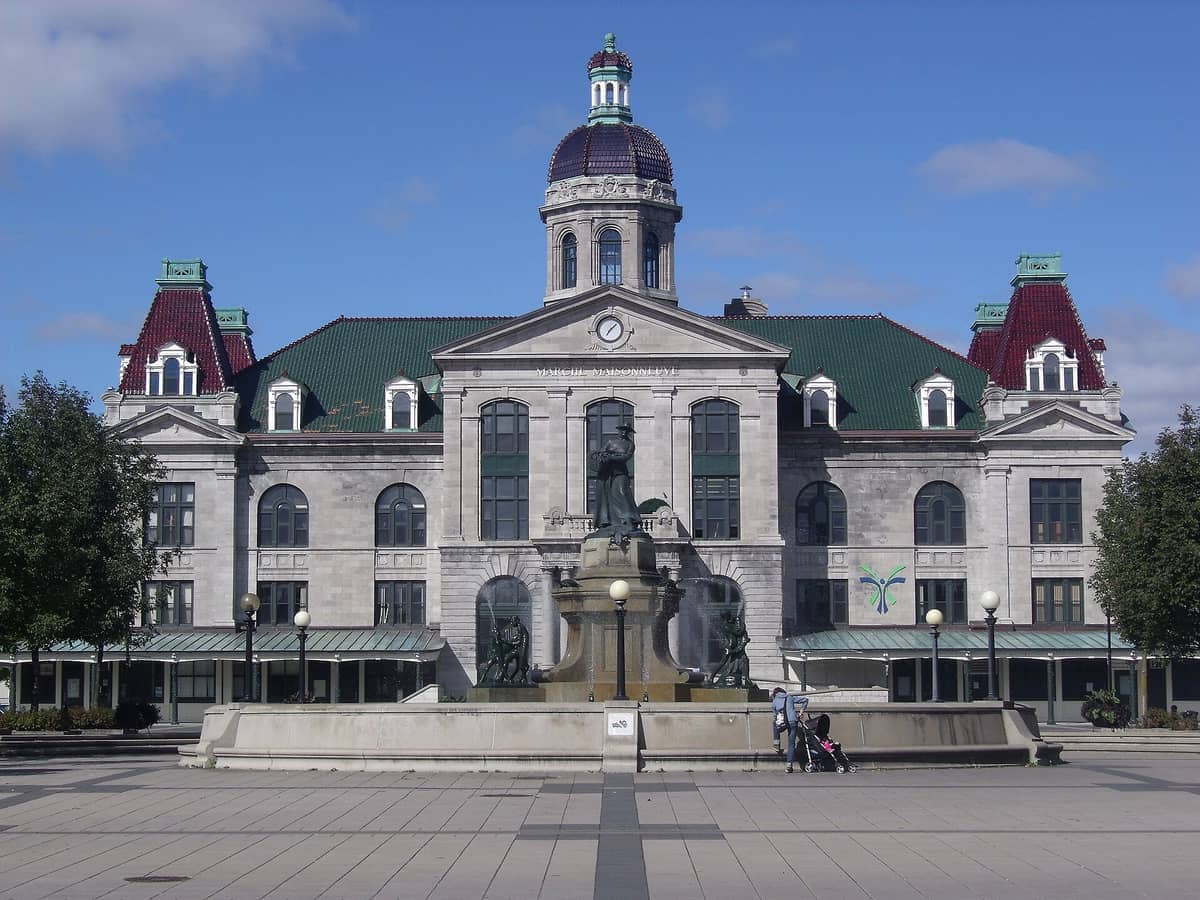
The market occupies a purpose-built structure near the original Beaux-Arts building, totaling approximately 13,620 square feet of interior space. Inside, you'll find produce vendors, specialty food stalls, and a small number of artisan sellers. The surrounding exterior plaza and the market's civic scale give it a presence that feels disproportionately grand for a neighborhood shopping stop, which is exactly the point.
💡 Local tip
The market is open Monday to Saturday 9:00 a.m.–6:00 p.m. and Sunday 9:00 a.m.–5:00 p.m. The public markets close December 25–26 and January 1–2. Always verify hours with the official website before making it the centerpiece of a day trip.
The Architecture: Why the Building Matters
The Maisonneuve district was, in the early twentieth century, an independent municipality with genuine civic ambitions. City leaders hired architects to design public buildings that would signal prosperity and permanence, not just utility. The market building is one of the surviving results of that effort. Its Beaux-Arts facade, with classical columns, symmetrical massing, and ornamental stonework, sits somewhat incongruously against the surrounding residential streets, which makes the contrast all the more interesting to observe.
This architectural ambition connects to a broader story about Montreal's east end that most visitors never encounter. Maisonneuve was annexed by Montreal in 1918, and the grand civic projects of that era now stand as neighborhood landmarks rather than tourist attractions. If you're drawn to Montreal's architectural layers, the Montreal architecture guide covers this period in greater depth.
From the outside, the building photographs well in morning light, when the eastern exposure catches direct sun across the stone facade. The decorative details reward close inspection: carved moldings, arched windows, and a roofline that announces civic intent. Bring a wide-angle lens if you want to capture the full facade without competing with parked cars.
Tickets & tours
Hand-picked options from our booking partner. Prices are indicative; availability and final rates are confirmed when you complete your booking.
Montreal evening cruise on the St. Lawrence River
From 54 €Instant confirmationFree cancellation3-hour e-bike guided tour in Montreal
From 68 €Instant confirmationFree cancellationWalking tour of Old Montreal
From 20 €Instant confirmationFree cancellationMontreal helicopter tour
From 156 €Instant confirmationFree cancellation
What You'll Find Inside
The interior is a single covered hall, compact but organized. Stalls line the perimeter and cluster through the central space. The range of vendors is what you'd expect from a working neighborhood market: seasonal produce, local cheeses, fresh bread, prepared foods, meat and charcuterie, and a modest selection of specialty items. The smell inside shifts by section, from the earthy weight of root vegetables near the entrance to the sharper tang of aged cheese further in.
On weekday mornings, the pace is genuinely unhurried. Regulars know the vendors by name and linger in conversation. There's little performance for visitors here, which is either a selling point or a limitation depending on what you're after. If you want a lively, sensory-dense market experience with dozens of stalls competing for your attention, Maisonneuve will feel subdued. If you want to shop the way locals do, the low-key atmosphere is exactly right.
Weekend mornings bring slightly more foot traffic, but the crowds never approach what you'd encounter at Jean-Talon on a Saturday in September. The market's 13,620-square-foot floor plan feels comfortably navigable at any time of week, even when reasonably busy.
How the Experience Changes Through the Day
Early arrivals between 9:00 and 10:30 a.m. get first access to the freshest produce and the most attentive vendors. The light through the market windows is cooler and cleaner at this hour, and conversations between shoppers happen at a pace that doesn't feel rushed. If you want to pick up ingredients for a picnic or self-catered meal, this is the window to shop.
Midday stretches from late morning through early afternoon bring the most foot traffic on Saturdays and Sundays. Prepared food vendors do their best business here, and the aroma of hot lunches competes with the ambient smell of fresh produce. Lines at popular stalls stay short by urban market standards.
Late afternoon, particularly on weekdays, is quiet to the point of being peaceful. Some vendors begin packing down around an hour before closing. If you're visiting primarily for the architecture and the neighborhood atmosphere rather than specific purchases, late afternoon on a weekday gives you the most unobstructed view of both the building and the surrounding streets.
ℹ️ Good to know
In winter, the outdoor plaza areas around the market are largely dormant, but the interior remains open. This makes Maisonneuve one of the few markets in Montreal that functions as a genuine year-round destination rather than a seasonal event.
Getting There and Getting Around
The most direct metro access is via the Green Line. Pie-IX station and Viau station serve the market area. Bus routes 125 and 139 also provide access. For cyclists, the market provides bicycle-locking spaces outside. If you're driving, free parking is available behind the building for up to 90 minutes.
The market is identified as accessible to visitors with reduced mobility. The building's ground-level layout and open floor plan make navigation straightforward for wheelchair users and those with strollers. For broader transit guidance in Montreal, the getting around Montreal guide covers the STM metro and bus system in detail.
The surrounding Maisonneuve neighborhood is walkable and worth exploring on foot before or after your market visit. Ontario Street East has independent shops, cafés, and bakeries at street level. The scale is residential, not commercial, which gives the area a character quite different from tourist-heavy districts closer to downtown.
Honest Assessment: Is It Worth the Trip?
Marché Maisonneuve is not the most spectacular market in Montreal. Jean-Talon is larger, has more vendors, and offers a more dramatic sensory experience overall. Atwater is better positioned for combining with other attractions like the Lachine Canal. If you have only one market visit in your Montreal itinerary and you want maximum impact, Jean-Talon is probably the call.
Where Maisonneuve earns its place is as a complement, not a substitute. It is the right stop for travelers who want to see Montreal east of the Plateau, who are curious about Beaux-Arts civic architecture in a neighborhood context, or who simply prefer their market experiences without crowds and performance. Visitors staying multiple days in Montreal will find the contrast with the city's better-known markets genuinely illuminating.
First-timers with limited time and a tight itinerary should probably prioritize other stops. But if your trip is longer, or if you're building an east-end day that combines Maisonneuve with nearby Olympic Stadium and the Biodôme, Marché Maisonneuve adds authentic local texture to an otherwise landmark-heavy itinerary.
⚠️ What to skip
The market closes for Christmas (December 25–26) and New Year's (January 1–2). If your trip falls around these dates, confirm hours directly with Marchés publics de Montréal before visiting.
Insider Tips
- Saturday mornings attract the widest vendor selection and occasional special seasonal stalls, but arrive before 10:30 a.m. to get the best produce before regulars pick through it.
- The exterior of the building photographs best from across Ontario Street East in morning light. Step back far enough to include the full roofline without distortion.
- Combine a visit with a walk east along Ontario Street to find independent French-language bakeries and cafés that serve the local population, not tourists.
- Free parking behind the market is capped at 90 minutes, which is enough time for a thorough visit, but plan accordingly if you want to linger in the neighborhood afterward.
- In winter, the indoor market is noticeably warmer than many of its competitors. It functions as a practical, working food market year-round rather than scaling down its operation in cold months.
Who Is Marché Maisonneuve For?
- Return visitors to Montreal exploring neighborhoods beyond the Plateau and downtown
- Architecture and urban history enthusiasts interested in Beaux-Arts civic buildings
- Travelers building a full east-end day combining the Olympic Park complex with a local food stop
- Self-catering visitors looking for fresh produce and specialty foods without Jean-Talon's crowds
- Anyone seeking a market experience that reflects neighborhood life rather than tourist programming
Nearby Attractions
Combine your visit with:
- Eastern Townships
The Eastern Townships (Cantons-de-l'Est) stretch across the rolling hills south of Montreal, reaching the U.S. border. With lavender fields, gorge walks, vineyards, and covered bridges, this is one of the most rewarding escapes from the city, especially in autumn when the hills turn amber and rust.
- Îles-de-Boucherville National Park
Parc national des Îles-de-Boucherville is a five-island nature reserve in the St. Lawrence River, reachable from Montreal in under an hour. Cyclists, kayakers, birdwatchers, and families find quiet trails, shoreline views, and genuine wilderness just minutes from the city's eastern suburbs.
- Maison Saint-Gabriel
Maison Saint-Gabriel is one of the oldest intact structures on the Island of Montreal. Originally a working farm connected to Marguerite Bourgeoys and the Filles du roi, it is now a museum and National Historic Site where guided tours walk visitors through three centuries of Quebec's colonial and religious history.
- Mont-Saint-Bruno National Park
Covering 8.9 km² of forested hills, five lakes, and apple orchards on the Montérégie plain, Mont-Saint-Bruno National Park is the closest true wilderness to Montreal's urban core. Whether you come for autumn colour, winter snowshoeing, or a quiet midweek trail run, the park rewards visitors who understand its rhythms.