Eastern Townships: The Essential Day Trip from Montreal
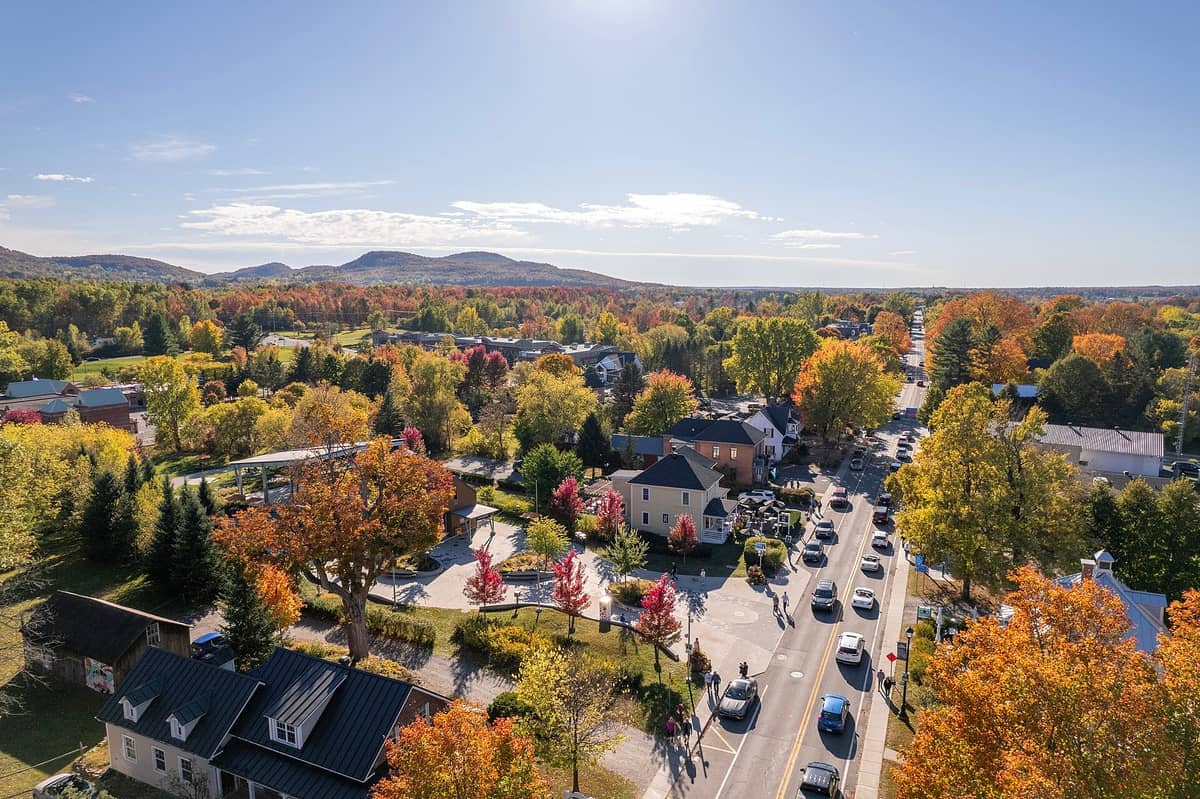
The Eastern Townships (Cantons-de-l'Est) stretch across the rolling hills south of Montreal, reaching the U.S. border. With lavender fields, gorge walks, vineyards, and covered bridges, this is one of the most rewarding escapes from the city, especially in autumn when the hills turn amber and rust.
Quick Facts
- Location
- In southern Quebec, including and extending southeast from the Estrie region, roughly 90–150 km from Montreal, Quebec
- Getting There
- By car from Montreal (approx. 1–1.5 hrs) or organized day tours departing near Place-d'Armes metro station
- Time Needed
- Full day minimum; overnight stays unlock far more
- Cost
- No regional entry fee; individual attractions charge separately (verify current prices at each venue)
- Best for
- Nature lovers, road trippers, fall foliage seekers, wine and food enthusiasts
- Official website
- www.easterntownships.org
What the Eastern Townships Actually Are
The Eastern Townships, known in French as Cantons-de-l'Est, are not a single park or attraction with a ticket booth and opening hours. They form a wide geographic region of southern Quebec, running from the edge of Montreal's suburban sprawl to the Vermont, New Hampshire, and Maine borders. The area encompasses 31 municipalities, connected by the Townships Trail, a route that stretches 430 km through lakeside towns, apple orchards, and forested ridgelines.
What draws people here from Montreal is the combination of accessible countryside and genuine character. These are not manufactured tourist villages. Granby, Bromont, Magog, Sherbrooke, and Coaticook each have distinct personalities. You'll find working farms, family-run fromageries, small-batch wineries, and nationally significant parks, all within reach of a single day trip if you're selective, or a relaxed weekend if you're not.
ℹ️ Good to know
The Townships Trail covers 430 km through 31 municipalities. A single day allows you to cover one or two stops well. Plan around a theme: nature, food, or wine, rather than trying to see everything.
Getting There from Montreal
The most practical way to reach the Eastern Townships is by car. The autoroute network south of Montreal, primarily Autoroute 10 East, feeds into the region within about an hour of leaving downtown, depending on traffic and your destination. Exit options branch off toward different towns: Bromont, Granby, and Waterloo come early; Magog and the shores of Lake Memphremagog appear after about 90 minutes; Coaticook is roughly 2.5 hours from the city center.
For travelers without a car, organized day tours are available. One operator listed at the time of writing departs from near 68 Boulevard René-Lévesque Ouest in Montreal, close to the Place-d'Armes metro station, and routes through destinations including the Coaticook Gorge Park, the Bleu Lavande lavender farm, and a blueberry garden. Admission fees for specific stops on these tours are charged separately in Canadian dollars; verify current pricing directly with the tour operator before booking.
If you're planning a self-drive trip, read through getting around Montreal first, particularly the sections covering car rentals and driving in Quebec, before heading out on the autoroute.
⚠️ What to skip
Autumn weekends, particularly the peak foliage weeks in late September and early October, bring heavy traffic on Autoroute 10. Leave early on Saturday mornings to avoid significant delays, especially near Bromont.
Tickets & tours
Hand-picked options from our booking partner. Prices are indicative; availability and final rates are confirmed when you complete your booking.
Montreal evening cruise on the St. Lawrence River
From 54 €Instant confirmationFree cancellation3-hour e-bike guided tour in Montreal
From 68 €Instant confirmationFree cancellationWalking tour of Old Montreal
From 20 €Instant confirmationFree cancellationMontreal helicopter tour
From 156 €Instant confirmationFree cancellation
What You'll Actually See and Do
The variety across the Townships is one of its strengths, but it can also make planning feel shapeless without a focal point. The Coaticook Gorge Park (Parc de la Gorge de Coaticook) is one of the region's most distinctive natural sites: a suspension footbridge spans a deep river gorge, and the park operates a renowned night-time forest light experience called Foresta Lumina in summer. The gorge walls are carved primarily from Paleozoic sedimentary rock, and the drop is abrupt enough that first-time visitors often pause at the bridge center for longer than they intended.
Bleu Lavande, a lavender farm near Fitch Bay, is the largest lavender farm in Canada and one of the largest in North America. The bloom is peak in July, when the rows give off that specific cool, herbal smell that photographs can't quite capture. Outside peak season, the shop and grounds are still open, but the visual drama is much reduced. Check bloom timing before committing to a visit.
The lakes are a constant through-line across the region. Lake Memphremagog stretches about 40 km, crosses the U.S. border into Vermont, and frames the town of Magog on its northern shore. In summer, kayakers and paddleboarders move through the morning water while café terrasses along the waterfront fill up by midday. The lake effect softens the climate slightly, which is why the wine route around it produces some of Quebec's most credible bottles.
The Townships is also legitimately excellent hiking territory. Mont Orford National Park offers trails ranging from easy lakeside walks to more demanding summit routes, and it sits close enough to Montreal to function as a half-day hike. For context on how this compares to other natural escapes near the city, see the day trips from Montreal guide.
How the Experience Changes by Season
Autumn is the season that puts the Eastern Townships on the map for most visitors. From roughly mid-September through mid-October, the deciduous forests across the hillsides shift through every variation of yellow, orange, and deep red. The light on a clear October morning, angling through birch and maple at low elevation, is the kind of thing people describe inadequately afterward. It is genuinely among the better fall foliage experiences in eastern North America, comparable to Vermont just to the south.
Summer is warmer and more active: farms are open, lavender is in bloom, lake swimming is viable, and outdoor festivals run across the region. The towns of Bromont and Magog get noticeably crowded on summer weekends. Morning arrivals make a real difference here. Reaching Magog's waterfront before 9 a.m. means café seating without a wait and water that isn't yet choppy from motorboat traffic.
Winter reshapes the region entirely. Bromont is home to a ski mountain that's well-regarded for night skiing, and the surrounding countryside becomes cross-country ski and snowshoe territory. The temperature in winter can easily reach minus 15 degrees Celsius or colder, and some rural attractions close entirely. Check individual venue schedules before a winter visit. The reward, if you come prepared, is a quieter and locally-populated version of the Townships that feels nothing like the summer tourist circuit.
Spring arrives later here than in Montreal, with mud season running into May at elevation. Apple orchards begin their blossom cycle in early May, and the region is far less visited in spring than any other season. If wildflowers and bare-minimum crowds appeal to you more than foliage or ski slopes, May is underappreciated.
💡 Local tip
For fall foliage, target the last two weeks of September for the hills around Magog and the Orford area. Timing varies by year and elevation, so check Quebec's foliage tracking resources in the two weeks before your trip.
Food, Wine, and Local Producers
The Eastern Townships have a serious food culture that often surprises visitors expecting countryside generic. Quebec's artisan cheese tradition is well represented here, with small fromageries producing washed-rind and soft cheeses from local dairy farms. Buying cheese at the source, from a producer who can explain the aging process over a tasting counter, is one of the more straightforward pleasures of a day in the region.
The wine route (Route des Vins) in the Brome-Missisquoi area near Dunham is the most established wine circuit in Quebec. The climate is marginal for viticulture by most standards, which means most producers work with cold-hardy hybrid varietals. The wines are interesting precisely because they're different from what you'd find in French or Californian appellations. Some wineries require reservations for tastings; confirm before driving out.
The regional food culture here connects naturally with Montreal's own market traditions. If you enjoy this kind of direct-from-producer experience, Jean-Talon Market in Montreal brings many Townships producers into the city, particularly in autumn during harvest season.
Practical Notes for Planning
There is no single admission fee, operating schedule, or address for the Eastern Townships as a whole. Every attraction, park, farm, and winery sets its own hours and prices. Seasonal closures are common, and some rural businesses have limited or no web presence, making phone confirmation worthwhile before a long drive.
Accessibility across the region varies considerably by venue. The regional tourism authority, Tourisme Cantons-de-l'Est, directs visitors with accessibility requirements to Kéroul, a Quebec-based organization that evaluates and rates tourism and cultural sites for physical accessibility. Check the Kéroul directory for specific venues before visiting.
Most transactions in the region are in Canadian dollars. French is the primary language in most municipalities, though English is widely understood in tourist-facing businesses. Smaller rural operations may be French-only, which is worth knowing if you're ordering at a farm stand or asking for directions.
For a broader overview of how to structure a trip that includes both Montreal and the surrounding region, the 3-day Montreal itinerary includes day-trip planning notes that apply here.
Who Should Think Twice
The Eastern Townships reward travelers who are comfortable with open-ended itineraries and the occasional dead end: a fromagerie that closed early, a trail that was muddier than expected, a winery that only does tastings by appointment. Visitors who prefer structured, time-efficient tourism with guaranteed payoffs at every stop will find the loose, variable nature of rural Quebec travel frustrating.
This is also a poor choice for travelers without significant mobility. Rural paths, farm terrain, and older town infrastructure are not consistently accessible. Distances between interesting stops require a car or tour bus. Anyone hoping to reach the region by public transit independently, without a scheduled guided tour, will find it close to impossible.
Insider Tips
- The best fall foliage viewpoints in the region are often not the official lookouts. The back roads east of Magog toward Eastman pass through uninterrupted maple forest with almost no traffic on weekday mornings.
- Bleu Lavande's lavender bloom peaks in July but the exact timing shifts year to year. Their social media accounts post field updates in late June that are more reliable than published calendar dates.
- If you're driving the wine route near Dunham, call ahead to at least two or three wineries before you go. Several operate on reduced or appointment-only hours outside peak summer weekends.
- The Coaticook Gorge suspension bridge is at its most atmospheric in early morning before the day-trip groups arrive. The park opens early enough in main season to walk the gorge with lighter crowds if you plan to arrive close to opening time.
- Bromont ski mountain allows night skiing several evenings per week in winter, which makes a viable evening add-on to a winter day trip without requiring an overnight stay.
Who Is Eastern Townships For?
- Autumn foliage seekers wanting accessible hillside color within two hours of Montreal
- Food and wine travelers interested in Quebec artisan cheese and cold-climate viticulture
- Hikers looking for half-day or full-day trail options beyond what the city parks offer
- Families with flexible schedules who can mix outdoor activities with farm visits and lake towns
- Couples looking for a slower-paced, scenically varied alternative to a city weekend
Nearby Attractions
Combine your visit with:
- Îles-de-Boucherville National Park
Parc national des Îles-de-Boucherville is a five-island nature reserve in the St. Lawrence River, reachable from Montreal in under an hour. Cyclists, kayakers, birdwatchers, and families find quiet trails, shoreline views, and genuine wilderness just minutes from the city's eastern suburbs.
- Maison Saint-Gabriel
Maison Saint-Gabriel is one of the oldest intact structures on the Island of Montreal. Originally a working farm connected to Marguerite Bourgeoys and the Filles du roi, it is now a museum and National Historic Site where guided tours walk visitors through three centuries of Quebec's colonial and religious history.
- Marché Maisonneuve
Marché Maisonneuve is one of Montreal's official public markets and one of its least crowded. Free to enter, open seven days a week, and genuinely rooted in its neighborhood, it rewards travelers who venture beyond the tourist circuit.
- Mont-Saint-Bruno National Park
Covering 8.9 km² of forested hills, five lakes, and apple orchards on the Montérégie plain, Mont-Saint-Bruno National Park is the closest true wilderness to Montreal's urban core. Whether you come for autumn colour, winter snowshoeing, or a quiet midweek trail run, the park rewards visitors who understand its rhythms.