Maison Saint-Gabriel: Montreal's Oldest Surviving Farm and a Window into New France
Maison Saint-Gabriel is one of the oldest intact structures on the Island of Montreal. Originally a working farm connected to Marguerite Bourgeoys and the Filles du roi, it is now a museum and National Historic Site where guided tours walk visitors through three centuries of Quebec's colonial and religious history.
Quick Facts
- Location
- 2146 Place Dublin, Pointe-Saint-Charles, Montreal, QC H3K 2A2
- Getting There
- Bus from nearby metro stations; BIXI available seasonally
- Time Needed
- 1.5 to 2.5 hours
- Cost
- C$15 adult (regular season); C$17 adult (summer); C$20 on days with animation; children 5 and under free
- Best for
- Quebec history lovers, architecture enthusiasts, and families with older children
- Official website
- maisonsaintgabriel.ca/en
What Is Maison Saint-Gabriel?
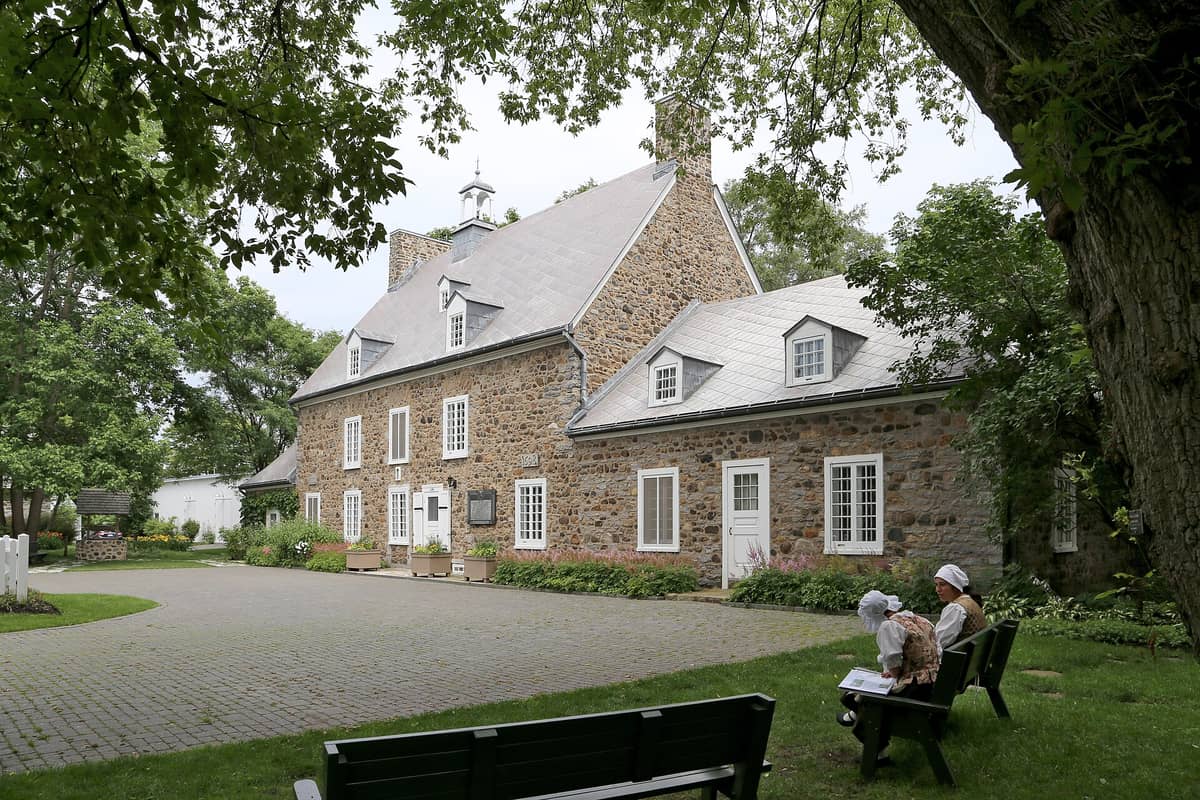
Maison Saint-Gabriel, musée et site historique, is one of the most significant heritage properties in Montreal, and one of the least visited by tourists who stick to the usual circuit. The farm complex sits in Pointe-Saint-Charles, a working-class borough southwest of Old Montreal, and at first glance it surprises people: a low, grey stone farmhouse surrounded by a courtyard, seemingly lifted from rural Quebec and dropped into an urban residential block.
The original house dates to the seventeenth century. Marguerite Bourgeoys and the Congregation of Notre-Dame acquired the property in 1668 and used it as a farm connected to their work with the Filles du roi. After a fire destroyed much of the building in 1693, it was rebuilt in 1698, and that structure is largely what visitors walk through today. The site is a National Historic Site of Canada.
ℹ️ Good to know
Maison Saint-Gabriel operates on a guided-tour model during the regular season (Monday to Friday, 1:00–5:00 p.m.) and extends to Wednesday through Sunday during the summer season (May 31 to September 6 in 2026). Check the official website before visiting, as hours and tour departure times can vary by date.
The Building Itself: What You're Looking At
The main farmhouse is a classic example of New France rural architecture: thick rubble-stone walls, a steeply pitched roof designed to shed heavy Quebec snowfall, and small windows that were a practical response to both cold winters and the cost of glass in the seventeenth century. The walls have a rough, almost chalky texture up close, and the mortar joints are wide and irregular in the way that hand-laid colonial construction inevitably is. This is not a reconstruction or a replica. The main farmhouse is a classic example of New France rural architecture: thick rubble-stone walls, a steeply pitched roof designed to shed heavy Quebec snowfall, and small windows that were a practical response to both cold winters and the cost of glass in the seventeenth century. The walls have a rough, almost chalky texture up close, and the mortar joints are wide and irregular in the way that hand-laid colonial construction inevitably is. This is not a reconstruction or a replica; the historic house incorporates the 1698 rebuilding and later changes to the structure.
The Catherine-Crolo Pavilion, added to provide visitor amenities, has an access ramp and connects to the historic complex without disrupting its visual integrity. The barn is wheelchair accessible. Access to the historic house is limited to the ground floor, with movable ramps available for visitors using walkers; the circulation areas are narrow and sometimes steep. Visitors with significant mobility limitations should factor this into their planning: the upper floors of the main house are not accessible.
If you're drawn to Montreal's architectural heritage, this site pairs well with a visit to Pointe-à-Callière Museum in Old Montreal, which covers an earlier period of the city's urban archaeological history.
Tickets & tours
Hand-picked options from our booking partner. Prices are indicative; availability and final rates are confirmed when you complete your booking.
Montreal evening cruise on the St. Lawrence River
From 54 €Instant confirmationFree cancellation3-hour e-bike guided tour in Montreal
From 68 €Instant confirmationFree cancellationWalking tour of Old Montreal
From 20 €Instant confirmationFree cancellationMontreal helicopter tour
From 156 €Instant confirmationFree cancellation
Inside the Visit: Room by Room
Maison Saint-Gabriel operates primarily as a guided-tour experience, and that structure matters. You don't wander freely through the house; instead, a guide leads you through rooms furnished and interpreted to reflect different periods of the property's history, from the late seventeenth century through to the early twentieth century. The pacing is deliberate, and the guides tend to be knowledgeable about both the religious history of the Congregation of Notre-Dame and the broader context of colonial Quebec.
The rooms are low-ceilinged and intimate. In the kitchen, the hearth is large enough to stand inside, and the display of period cookware gives a concrete sense of how time-consuming daily food preparation was for the nuns and their charges. The smell of old wood and stone is constant, the kind of deep, slightly damp mineral scent that comes from walls that have absorbed three hundred winters. Natural light enters through the small windows at oblique angles, which means that on overcast days the interiors feel genuinely dim, closer to how they would have looked by candlelight than to a typical museum gallery.
On 'days with animation', the museum stages historical re-enactments and demonstrations, which raise the admission price slightly but add considerable texture to the visit. These events vary by season and date, so confirm the schedule on the official website if this is part of your reason for visiting.
💡 Local tip
Arrive at least 15 minutes before your desired tour departure. Tour group sizes are small, and if a slot fills up, you may wait for the next departure time. Early afternoon on weekdays during the regular season tends to be the quietest.
Marguerite Bourgeoys and the Filles du Roi: The Human Story
The most compelling layer of Maison Saint-Gabriel is the human story it carries. Marguerite Bourgeoys is one of the central figures in Montreal's founding history. She arrived in New France in 1653, founded the first school in Ville-Marie (the settlement that became Montreal), and established the Congregation of Notre-Dame, the first non-cloistered religious community for women in North America. She was canonized by Pope John Paul II in 1982.
The farm at Pointe-Saint-Charles served as a reception and preparation centre connected with the Filles du roi, young women recruited in France to emigrate to New France and marry colonists. Many passed through Maison Saint-Gabriel, and the museum presents their experience in the broader social context of colonial life with attention to its complexity.
Bourgeoys is also central to the history of the Musée Marguerite Bourgeoys and Notre-Dame-de-Bon-Secours Chapel in Old Montreal, which is worth visiting alongside Maison Saint-Gabriel if you want to follow her story across the city.
Getting There: Pointe-Saint-Charles Is Not a Tourist District
Pointe-Saint-Charles is a residential and historically working-class neighbourhood. It has no tourist infrastructure to speak of around the museum. The walk from the nearest metro station takes some time, and the surrounding streets are quiet, grid-pattern blocks of low-rise housing. This is not a problem, but it is worth knowing in advance: do not expect to stumble onto a café immediately after your visit. Plan accordingly.
The museum is reachable by STM bus routes connecting from several metro stations, and BIXI bike-share is available seasonally. The site also has parking nearby if you are arriving by car. The address is 2146 Place Dublin, and it sits slightly away from main arterial streets, so allow extra navigation time on your first visit.
⚠️ What to skip
The museum is closed Saturday and Sunday during the regular season (September 8, 2026 through May 30, 2027), and is also closed from December 20, 2026 through January 3, 2027. Verify the current season and hours at maisonsaintgabriel.ca before making the trip.
Photography, Atmosphere, and Practical Details
The exterior of the complex photographs well in the late afternoon, when low-angle light catches the texture of the stone facade and the courtyard takes on a warm quality. In summer, the grounds around the farm include garden plantings that add colour and period context. In winter, the stone buildings against snow have a stark, almost severe beauty, though the museum's reduced hours during the regular season mean fewer visitors experience it this way.
Interior photography is generally permitted for personal use, though confirm this with your guide. Tripods and flash are typically restricted in historic buildings of this type. The low light in the rooms means a camera that handles low-light conditions reasonably well will produce much better results than a phone camera without a night mode.
If you are building a broader itinerary around Montreal's historic and religious architecture, the Notre-Dame Basilica and Notre-Dame-de-Bon-Secours Chapel are natural complements, both located in Old Montreal and connected thematically to the same founding-era history.
Who Should Skip This Attraction
Maison Saint-Gabriel demands a particular kind of patience. If your interest in history is casual, or if you prefer self-directed exploration over guided tours, the format may feel slow. Young children under ten are unlikely to stay engaged through a full guided visit unless they respond well to structured storytelling. Visitors with significant mobility limitations should note that the upper floors of the historic house are not accessible.
The neighbourhood itself is perfectly safe but offers no complementary attractions within easy walking distance, so if you are trying to combine this with other tourist sites in a single morning, the logistics require advance planning. It is not the kind of place you pass by and decide to stop into.
Insider Tips
- Book your visit in advance during the summer season, especially for 'days with animation'. Tour group sizes are small and the most popular time slots fill up, particularly on weekends in July and August.
- The barn is the most underrated part of the complex. Its scale and the quality of the historic carpentry are impressive, and it receives less attention from visitors who focus on the main house.
- If you read French, the French-language tours tend to go deeper into certain archival and genealogical details, particularly around the Filles du roi. English tours are excellent, but the French-language interpretation has slightly more local texture.
- Pair the visit with a walk along the Lachine Canal, which begins not far from Pointe-Saint-Charles. The combination gives you colonial history and nineteenth-century industrial history in the same afternoon, with a waterside trail connecting them.
- Check the museum's event calendar before booking. The animated-history days offer costumed interpretation and hands-on demonstrations that are genuinely informative rather than gimmicky, and they justify the slightly higher admission.
Who Is Maison Saint-Gabriel For?
- Quebec and Canadian history enthusiasts who want context beyond the standard Old Montreal circuit
- Travelers interested in women's history and the founding of New France
- Architecture lovers drawn to seventeenth-century colonial stone construction
- Families with older children (ten and up) who can engage with guided historical storytelling
- Repeat Montreal visitors looking for something substantive away from the tourist core
Nearby Attractions
Combine your visit with:
- Eastern Townships
The Eastern Townships (Cantons-de-l'Est) stretch across the rolling hills south of Montreal, reaching the U.S. border. With lavender fields, gorge walks, vineyards, and covered bridges, this is one of the most rewarding escapes from the city, especially in autumn when the hills turn amber and rust.
- Îles-de-Boucherville National Park
Parc national des Îles-de-Boucherville is a five-island nature reserve in the St. Lawrence River, reachable from Montreal in under an hour. Cyclists, kayakers, birdwatchers, and families find quiet trails, shoreline views, and genuine wilderness just minutes from the city's eastern suburbs.
- Marché Maisonneuve
Marché Maisonneuve is one of Montreal's official public markets and one of its least crowded. Free to enter, open seven days a week, and genuinely rooted in its neighborhood, it rewards travelers who venture beyond the tourist circuit.
- Mont-Saint-Bruno National Park
Covering 8.9 km² of forested hills, five lakes, and apple orchards on the Montérégie plain, Mont-Saint-Bruno National Park is the closest true wilderness to Montreal's urban core. Whether you come for autumn colour, winter snowshoeing, or a quiet midweek trail run, the park rewards visitors who understand its rhythms.