Leeum Museum of Art: Seoul's Most Serious Art Destination
Leeum Museum of Art in Hannam-dong brings together over 15,000 works spanning ancient Korean ceramics to contemporary global art, housed in three architecturally distinct buildings designed by some of the world's most recognized architects. It is a rare institution that rewards both first-time visitors and those who return with purpose.
Quick Facts
- Location
- 60-16 Itaewon-ro 55-gil, Yongsan-gu, Seoul (Hannam-dong)
- Getting There
- Seoul Subway Line 6, Hangangjin Station, Exit 1 (approx. 400 m walk)
- Time Needed
- 2–3 hours for the full collection; 1 hour for a single gallery focus
- Cost
- M1 always free; combined ticket ₩20,000; partial tickets from ₩12,000. Verify current rates at official site.
- Best for
- Art lovers, architecture enthusiasts, Korean cultural history, and quiet contemplative visits
- Official website
- www.leeumhoam.org/leeum
What Is Leeum Museum of Art?
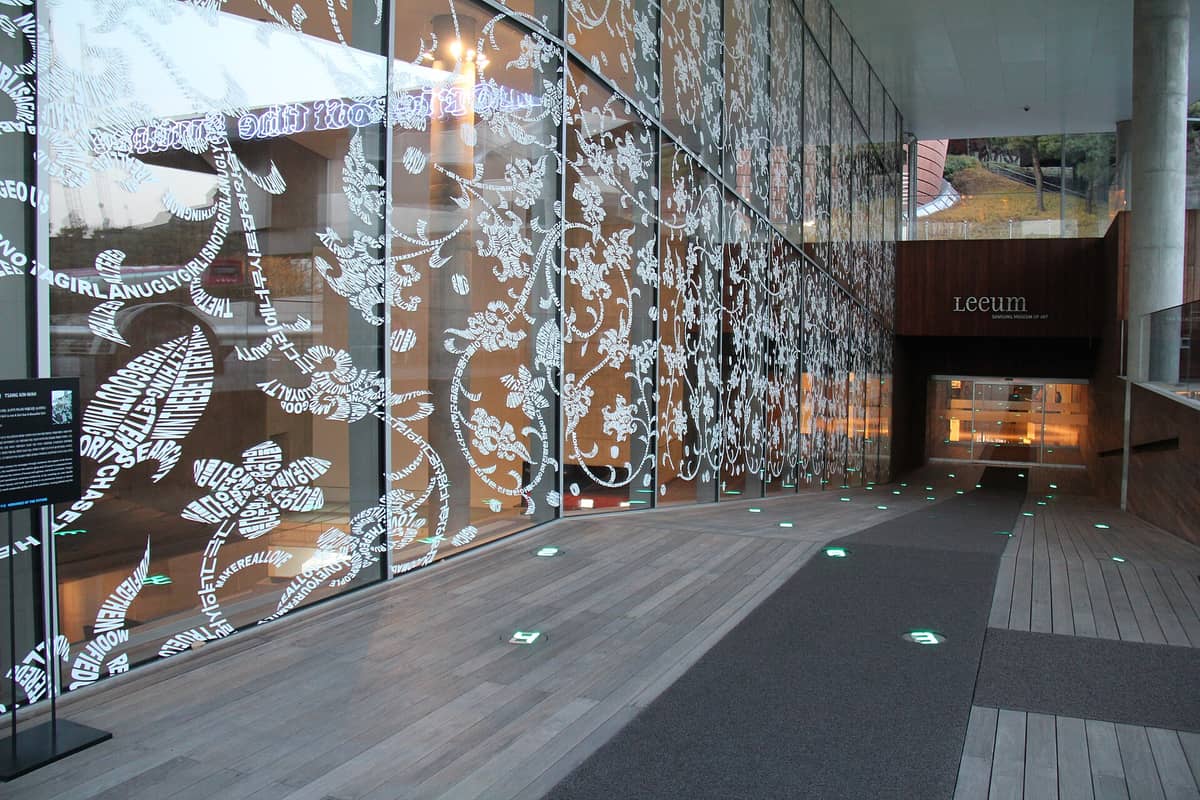
Leeum Museum of Art, officially known in Korean as 리움미술관 and sometimes referred to as Leeum, Samsung Museum of Art, sits on a hillside in Hannam-dong, one of Seoul's quieter and more affluent residential neighborhoods. The museum was established to publicly display a private collection assembled by Samsung founder Lee Byung-chul, a collection that grew to approximately 15,000 artworks ranging from Goryeo celadon to paintings by the world's most collected living artists.
The institution is not trying to be a crowd-pleaser. There are no gift-shop gimmicks at the entrance, no themed photo booths. What you get instead is a serious, beautifully maintained collection presented across three gallery buildings, each commissioned from a different internationally recognized architect. That architectural decision alone sets Leeum apart from most museums in East Asia.
ℹ️ Good to know
Opening hours: Tuesday to Sunday, 10:00–18:00. Closed Mondays, New Year's Day, and Chuseok. Arrive by 17:00 to have enough time for the full collection.
The Architecture: Three Buildings, Three Visions
Before you look at a single painting or ceramic, the buildings themselves demand attention. Museum 1 (M1) was designed by Mario Botta, the Swiss architect known for his geometric brick structures. Its spiral interior is clad in dark terracotta, and natural light filters down through a central void in a way that shifts subtly with the hour. Morning visits in particular catch the light at a low, raking angle that throws long shadows across the curved walls.
Museum 2 (M2) is the work of Jean Nouvel, the French architect whose buildings almost always play with opacity and reflection. Here he used a dark stainless-steel exterior that absorbs rather than reflects, giving M2 a weight and solidity that contrasts with the transparency you might expect from Nouvel. The interior spaces are more theatrical, suited to the contemporary works displayed inside.
Museum 3 (M3), the Samsung Child Education and Culture Center, was designed by Rem Koolhaas of OMA. This is the most conceptually restless of the three structures, using concrete and glass in ways that feel deliberately ambiguous. Not everyone warms to Koolhaas's approach, and frankly M3 is the least intuitive space to navigate. But for visitors interested in the intersection of architecture and programming, it rewards patience.
Walking between the three buildings across the landscaped outdoor spaces gives you a rare chance to experience three major architectural voices side by side, on one Seoul hillside. Even if the collection were mediocre, the buildings alone would justify a visit for anyone interested in contemporary architecture.
Tickets & tours
Hand-picked options from our booking partner. Prices are indicative; availability and final rates are confirmed when you complete your booking.
DMZ and Lake Majang Suspension Bridge Tour from Seoul
From 57 €Instant confirmationFree cancellationHalf Day DMZ Tour from Seoul, 3rd Tunnel, Observatory and More
From 47 €Instant confirmationFree cancellationSeoul zombie city exploration game and private tour
From 10 €Instant confirmationFree cancellationLuggage Storage in Seoul
From 7 €Instant confirmationFree cancellation
The Collection: Korean Heritage and Contemporary Art
M1 houses the traditional Korean art collection and is permanently free to enter. The works here are extraordinary by any measure: Goryeo celadon from the 10th to 14th centuries with the distinctive muted blue-green glaze that Korean potters developed to a level never replicated elsewhere; Joseon-era white porcelain; gilt-bronze Buddhist sculptures; and ink paintings on silk and paper. For visitors whose exposure to Korean art has been limited to folk craft reproductions in tourist markets, this collection is genuinely corrective. The objects are presented with minimal clutter, allowing close observation of form and surface.
M2 holds the contemporary collection, where Korean modern masters like Lee Ufan and Park Seo-bo appear alongside international names including Joseph Beuys, Cy Twombly, and Mark Rothko. The curatorial approach avoids the predictable chronological march through art history and instead groups works around conceptual and material relationships. It is the kind of collecting and presentation that reflects decades of serious institutional thinking, not a recent attempt to appear sophisticated. If you are planning a wider tour of Seoul's art institutions, pairing Leeum with a visit to the National Museum of Modern and Contemporary Art Seoul gives a fuller picture of how Korean institutions approach the twentieth century.
Temporary exhibitions rotate through M2 and M3. The quality is consistently high, and the programming tends toward thematic group shows rather than blockbuster retrospectives. Check the official website before your visit, as temporary exhibitions sometimes affect which permanent collection galleries are accessible on a given day.
Visiting by Time of Day
Weekday mornings, particularly Tuesday through Thursday between 10:00 and 12:00, are the quietest periods. You can stand in front of a celadon wine vessel or a Twombly canvas without anyone pressing behind you, which at a museum this size and quality is an uncommon luxury. The steep hillside location means morning light hits M1's terracotta facade directly, and the interior spiral glows in a way it does not in the flat afternoon light.
Weekends from midmorning onward bring a steady flow of visitors. Saturday afternoons can feel crowded in M2's contemporary galleries, especially when a popular temporary show is on. If you are visiting on a weekend, arriving at opening (10:00) gives you roughly 90 minutes of calm before group tours and families arrive in volume.
💡 Local tip
The outdoor sculpture courtyard between the buildings is worth 10–15 minutes on its own. Works by Louise Bourgeois and Alexander Calder are positioned in the landscape rather than on pedestals, and the hillside planting changes with the season. In autumn, the foliage creates a frame that photographs well without effort.
Getting There and Practical Details
From Hangangjin Station on Seoul Subway Line 6, take Exit 1 and follow the road uphill for approximately 400 meters. The walk involves a moderate incline and takes about 5 minutes at a comfortable pace. The path is paved and manageable in most footwear, though the slope may be challenging for visitors with limited mobility. The museum notes that disability facilities are available on-site; if specific accessibility requirements are a factor, it is worth contacting the museum directly before visiting.
Hannam-dong is one of Seoul's more walkable upscale neighborhoods, with well-regarded cafés and restaurants concentrated along Itaewon-ro and the surrounding streets. The area sits between Itaewon and Yongsan, making it straightforward to combine a museum visit with an afternoon in either district. Itaewon station on Line 6 is one stop away if you want to continue into the main commercial strip after your visit.
Admission pricing as of the most recent available information: M1 is free to enter at all times. A combined ticket for all three museums (M1, M2, M3) is ₩20,000. Partial tickets are available: the 'Blanket: After 1998' ticket covering M1 and M3 is ₩16,000, and the 'Contemporary Art Collection' ticket for M1 and M2 is ₩12,000. Exhibition-specific pricing and discounts for students, seniors, or group visits may apply. Verify current rates at the official website before visiting, as these figures are subject to change.
⚠️ What to skip
The museum is closed on Mondays. It also closes for New Year's Day, New Year's weekend, and Chuseok (the autumn harvest holiday). Plan accordingly, especially if visiting during Korean public holiday periods.
Photography and What to Bring
Photography policies inside the galleries vary by exhibition. In the permanent collection areas, personal photography without flash is generally permitted, but always check the posted notices at each gallery entrance. The outdoor spaces and architecture are freely photographable and genuinely rewarding. M1's exterior in warm afternoon light, and the view back across the courtyard toward M2's dark steel surface, both photograph cleanly with a phone camera.
There is a café on-site, though it is compact. If you plan a long visit, eating beforehand in Hannam-dong's nearby restaurants is a more comfortable approach than relying on the museum café during busy periods. The cloakroom accepts bags, which is helpful given M1's spiral interior where carrying a large bag through narrow viewing corridors is awkward.
Leeum is a strong choice for visitors following Seoul's art and architecture trail. Combining it with a visit to Dongdaemun Design Plaza on the same day gives a sharp contrast: one institution quiet and hillside, the other enormous and central. For those building a broader Seoul cultural itinerary, the best museums in Seoul guide maps out where Leeum fits relative to other major collections.
Who This Museum Is Not For
Leeum is not designed for short attention spans or visitors whose primary motivation is a social media backdrop. The collection demands slow engagement, and the labeling, while available in Korean and English, is concise rather than explanatory. Visitors expecting the kind of immersive, interactive museum experience common in newer institutions may find the presentation understated to the point of austerity. Families with young children will find M1's free collection accessible, but the narrower spaces in M2 and the abstract nature of much of the contemporary collection make this a less ideal destination for very young visitors compared to, for example, the National Folk Museum or Lotte World.
If your Seoul itinerary is focused on historical palaces and cultural monuments rather than fine art, you may find your time better spent at the National Museum of Korea in Yongsan, which covers Korean history and material culture at a scale and accessibility that suits a wider range of visitors. Leeum is best understood as a destination for visitors who are specifically interested in art, architecture, or both.
Insider Tips
- M1, the traditional Korean art building, is permanently free. Even if you decide not to pay for the contemporary galleries, M1 alone is worth the trip from anywhere in central Seoul. The Goryeo celadon collection on its own ranks among the finest publicly accessible displays of Korean ceramic art.
- The outdoor sculpture installations between the buildings are included with any ticket and are also visible from parts of the approach path. Louise Bourgeois's 'Maman' spider sculpture positioned near the entrance courtyard is a genuine surprise in scale and material, and far more striking in person than in photographs.
- If you are visiting Seoul during autumn (late September to early November), the hillside planting around the museum grounds turns amber and red. The contrast between the foliage and M2's dark steel exterior is one of the better incidental visual experiences available in the Yongsan area.
- The museum's location in Hannam-dong means you are already in the neighborhood for some of Seoul's best independent coffee and international dining. The streets within 10 minutes of the museum have a density of quality restaurants that rivals Gangnam without the crowds.
- For the quietest possible experience of the contemporary collection, aim for a weekday between 10:00 and 11:30. The museum opens precisely on time and the first hour is noticeably calmer than any weekend slot.
Who Is Leeum Museum of Art For?
- Art collectors and serious museum-goers who want a world-class collection without the crowds of a major national institution
- Architecture enthusiasts who want to experience Mario Botta, Jean Nouvel, and Rem Koolhaas in a single visit
- Travelers interested in Korean cultural heritage, particularly ceramics and Buddhist sculpture from the Goryeo and Joseon periods
- Couples or solo travelers looking for a contemplative, unhurried afternoon in a quiet part of the city
- Visitors building a broader Seoul cultural itinerary who want to understand how Korean collecting and curation compares to international standards
Nearby Attractions
Other things to see while in Itaewon & Yongsan:
- Seoul Central Mosque & Itaewon Mosque Area
Built in 1976, Seoul Central Mosque (서울중앙성원) is Korea's first and largest mosque, perched on a quiet hillside above Itaewon. Free to visit and architecturally striking against Seoul's skyline, it offers a genuinely contemplative experience alongside a neighborhood packed with halal restaurants and international culture.
- National Museum of Korea
The National Museum of Korea in Yongsan is South Korea's premier public museum and one of Asia's largest museums by floor area. Housing hundreds of thousands of artifacts across three floors of permanent galleries, it traces Korean civilization from the prehistoric era through the Joseon dynasty — and admission to the permanent collection is completely free.
- War Memorial of Korea
The War Memorial of Korea in Yongsan is one of Seoul's largest and most serious museums, covering the full arc of Korean military history from ancient conflicts through the Korean War and beyond. Admission is free, the outdoor displays alone take an hour, and the indoor galleries reward visitors who give it a full half-day.
- Yongsan Electronics Market
Yongsan Electronics Market is Seoul's sprawling hub for consumer electronics, computer components, cameras, and second-hand tech. Spread across several interconnected buildings in Yongsan-gu, it rewards patient shoppers who know how to navigate it, but can feel overwhelming and dated to those expecting a polished retail experience.