Tokyo Imperial Palace: The Complete Guide to Visiting Kokyo and Its East Gardens
The Imperial Palace (Kokyo) sits at the geographic and symbolic heart of Tokyo, occupying the former grounds of Edo Castle in Chiyoda. While the palace itself remains a working royal residence, the East Gardens are open to the public and free to enter, revealing stone castle ruins, manicured lawns, and centuries of Japanese history within walking distance of Tokyo Station.
Quick Facts
- Location
- 1-1 Chiyoda, Chiyoda-ku, Tokyo (Chiyoda district)
- Getting There
- Otemachi Station (multiple subway lines) or Takebashi Station (Tokyo Metro Tozai Line); also 10-15 min walk from Tokyo Station (Marunouchi exit)
- Time Needed
- 1.5 to 3 hours for the East Gardens; half a day if combining with the outer moat walk and Nijubashi Bridge viewpoint
- Cost
- Free (East Gardens); guided palace-area tours also free but require advance registration through the Imperial Household Agency
- Best for
- History lovers, garden walkers, architecture enthusiasts, and anyone wanting green space in central Tokyo
- Official website
- www.kunaicho.go.jp/eindex.html
What Is the Imperial Palace, Exactly?
The Tokyo Imperial Palace, known in Japanese as Kokyo (literally 'Imperial Residence'), is the primary residence of Japan's Emperor and the Imperial Family. The complex covers a substantial area of central Chiyoda, surrounded by moats, stone walls, and pine trees that create an unexpected pocket of quiet within one of the world's densest cities. To stand at the Nijubashi Bridge and look toward the palace gates is to understand, immediately, that this is no ordinary urban landmark.
Most of the palace grounds are off-limits to the public year-round. What travelers can access freely are the Imperial Palace East Gardens (Higashi Gyoen), the outer plaza known as the Kokyo Gaien, and the view from Nijubashi. Twice a year, on January 2 (New Year's Greeting) and February 23 (Emperor's Birthday), the inner grounds open for public appearances by the Imperial Family, drawing large crowds.
ℹ️ Good to know
The East Gardens are closed on Mondays and Fridays, and between December 28 and January 3, except that they open on most national holidays (other than the Emperor’s Birthday), with the following Tuesday closed if Monday is opened as a holiday. They also close on certain days due to imperial events, sometimes without much advance notice. Always check the Imperial Household Agency website before visiting: kunaicho.go.jp
Standing on the Site of Edo Castle
The ground beneath your feet in the East Gardens is historically layered in a way that few sites in Tokyo can match. This is the former site of Edo Castle, the seat of the Tokugawa shogunate that governed Japan for over 250 years from 1603 until the Meiji Restoration in 1868. At its peak, Edo Castle was the largest castle complex in the world by area. When the Emperor moved from Kyoto to Tokyo (then called Edo) after the restoration, the castle grounds became the Imperial Palace.
The original main keep of Edo Castle, or tenshu, burned down in 1657 during the Meireki fire and was never rebuilt. What remains in the East Gardens is the stone foundation of that keep, a broad raised platform that gives you a clear sense of the structure's scale. Climbing to the top of the foundation platform is permitted, and from there you can see the surrounding garden landscape spreading out across what were once the castle's inner defense zones. It is a genuinely evocative experience, particularly if you have any interest in the Edo period or feudal Japanese history.
For deeper historical context on how Edo period culture shaped modern Tokyo, the Edo-Tokyo Museum in Ryogoku is an excellent companion visit, with detailed reconstructions and artifacts that bring the shogunate era to life.
Tickets & tours
Hand-picked options from our booking partner. Prices are indicative; availability and final rates are confirmed when you complete your booking.
Meiji Shrine, Imperial Palace, Asakusa and Tokyo Skytree Entry
From 34 €Instant confirmationFree cancellationHalf-Day Imperial Palace, Ginza and Japanese Tea Ceremony Guided Tour
From 190 €Instant confirmationFree cancellationTsukiji Fish Market Walking Food Tour
From 40 €Instant confirmationFree cancellationMt.Fuji,Owakudani, Hakone Cruise & Ropeway, Oshino Hakkai 1-Day Trip
From 54 €Instant confirmationFree cancellation
The East Gardens: What You Actually See
Entering through the Otemon Gate, the most commonly used entrance, you pass through a small guard post where plastic tokens are handed out and collected on exit. It is a low-key, orderly process. The path opens into a large, well-maintained landscape garden divided into several distinct zones: manicured lawn areas, a Japanese strolling garden with a small pond, sections of seasonal plantings, wooded hillside paths, and the stone ruins of the castle's inner enclosures.
The lawn in front of the tenshu foundation is the visual centerpiece, and it behaves differently depending on the season. In late March and early April, the cherry trees along the paths bloom softly, without the shoulder-to-shoulder crowds found at more famous spots. In early summer, irises flower near the pond area in the Ninomaru section. Autumn brings reliable foliage color from the maples and zelkova trees in October and November. Even in winter, the clean lines of the stone walls and the pale winter light give the gardens a composed, almost austere quality worth experiencing.
Noise from the surrounding city is largely absent. You hear birds, the occasional crunch of gravel underfoot, and sometimes wind through the pine trees. The gardens attract a mix of visitors: foreign tourists, Tokyo office workers taking a lunchtime walk, elderly Japanese residents who come regularly. The atmosphere is contemplative rather than performative.
💡 Local tip
Photography tip: The tenshu stone foundation photographs best from the western edge of the lawn, with the platform framed against open sky. Arrive within the first hour of opening for the cleanest shots without other visitors in frame.
Seasonal Hours and the Best Time to Visit
The East Gardens operate on a seasonal schedule, with opening hours adjusted to daylight throughout the year. From March 1 to mid-April and again from September 1 to October, the gardens open at 09:00 and close at 16:30. The longest hours run from mid-April through August (09:00 to 17:00). From November through the end of February, the gardens close at 16:00. Arriving at opening time on a Tuesday, Wednesday, or Thursday generally gives the quietest experience.
Spring and autumn are the most photogenic seasons by a clear margin. The cherry blossom period in late March to early April is lovely and less chaotic than nearby spots. Autumn foliage in mid to late November offers rich color without the spring crowds. Summer visits are possible but the midday heat can be draining. If you visit in July or August, go early in the morning before 10:00 and bring water. Winter mornings are cold but the gardens are nearly empty, and the low light on the stone walls has a quality that photographs unexpectedly well.
If seasonal timing is central to your Tokyo planning, the guide on the best time to visit Tokyo covers cherry blossom windows, autumn foliage peaks, and rainy season considerations in detail.
The Outer Palace Area: Nijubashi and the Kokyo Gaien
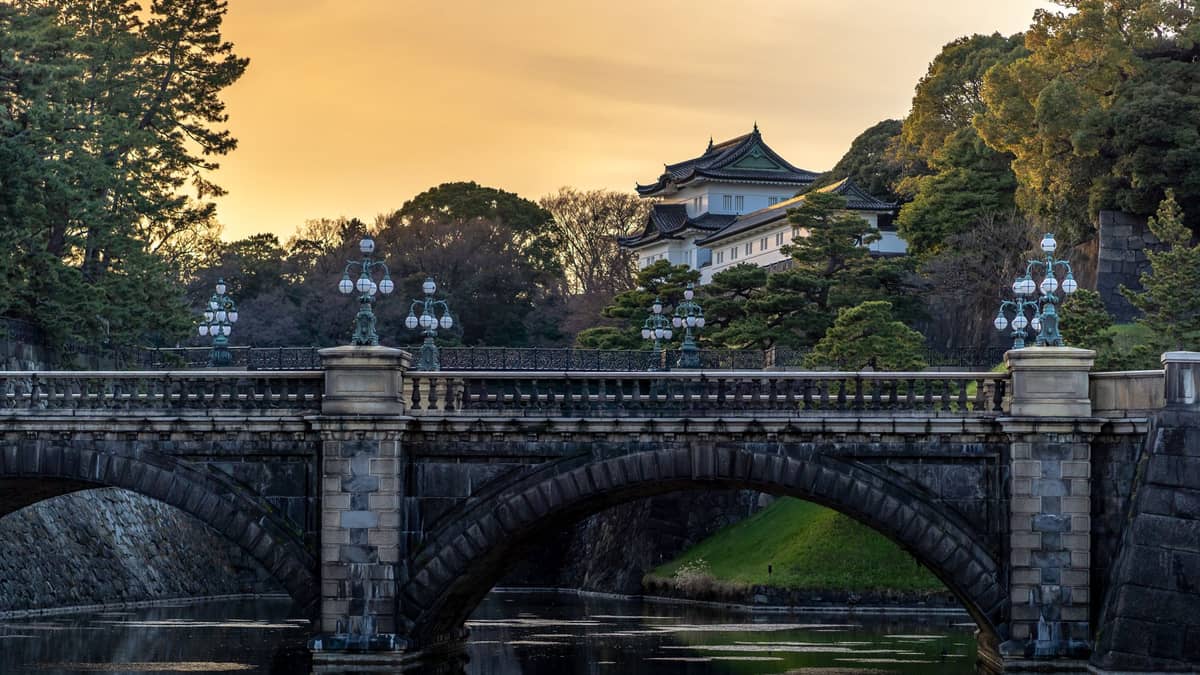
Beyond the East Gardens, the outer plaza known as the Kokyo Gaien (Imperial Palace Outer Garden) stretches toward the famous Nijubashi Bridge and the Seimon Ishibashi stone bridge in front of it. This is the postcard image of the Imperial Palace: two arching stone bridges reflected in the moat, framed by pine trees and castle walls. The view is accessible any time, from early morning through to evening, and it requires no registration or garden entry.
The wide graveled plaza of the Kokyo Gaien is popular with joggers at all hours, particularly in the early morning and around lunchtime on weekdays. The 5-kilometer circuit around the full palace moat is a well-established running route among Tokyo residents. If you walk the outer moat rather than run it, allow around 60 to 75 minutes and you will pass several good viewpoints of the stone walls, watchtowers, and the moat's resident ducks and cormorants.
Getting There and Getting In
Access is straightforward from multiple directions. From Tokyo Station, use the Marunouchi central exit and walk west across the plaza for about 10 to 15 minutes. This route is pleasant and well-signed. By subway, Otemachi Station on the Tokyo Metro Chiyoda, Hanzomon, Marunouchi, and Toei Mita lines places you within a short walk of the Otemon Gate. Takebashi Station on the Tozai Line is the closest stop for the Kitahanebashi Gate entrance on the northern side.
There are three main entry gates for the East Gardens: Otemon (east side, most common), Hirakawamon (northeast), and Kitahanebashimon (north). All provide access to the same garden but lead to different starting points within it. Entry is free at all gates. Bags are not checked, but the garden staff are present throughout and the environment is orderly.
For visitors with mobility considerations, the East Gardens include paved and packed gravel paths across much of the main garden area, and wheelchair users can navigate the majority of the grounds. Some hillside sections and the tenshu foundation platform involve steps and are not accessible. The surrounding Kokyo Gaien plaza is flat and fully accessible.
⚠️ What to skip
The guided tour of the inner palace grounds (separate from the East Gardens) is free but has limited capacity and requires advance registration through the Imperial Household Agency's online system at sankan.kunaicho.go.jp. Same-day slots exist but fill quickly. The tour is conducted in Japanese with a written English guide available.
Honest Assessment: Is It Worth Your Time?
The Imperial Palace East Gardens are genuinely worth a half-morning, particularly for visitors who care about Japanese history or want a quiet, spacious place to walk in central Tokyo. The Edo Castle ruins are more affecting in person than most photos suggest, and the combination of manicured gardens, stone walls, and moat scenery is unlike anything else in the city.
That said, if you are hoping to see the palace itself up close, you will leave slightly disappointed. The actual palace buildings are largely invisible from the public areas, set well back behind walls and trees. The East Gardens feel like what they are: a historic public park built on castle ruins. That is a meaningful experience on its own terms, but travelers expecting a Versailles-style grand tour of royal rooms will find the reality more understated.
Combine this visit with a walk through the Imperial Palace East Gardens and then head toward Nihonbashi or the Ginza district to the south for an afternoon of a completely different character.
For those building a broader Tokyo itinerary, the Tokyo gardens guide covers the city's other major garden spaces, including Shinjuku Gyoen and Hamarikyu, with comparative notes on scale, atmosphere, and best season.
Insider Tips
- The Kitahanebashimon (north gate) entrance is the least-used of the three and often has no queue at all, even on busy spring days. Enter here and walk south through the wooded section before reaching the tenshu lawn for a more gradual reveal of the gardens.
- The plastic tokens handed out at the gate are collected on exit. If you want a small memento, note that some gates use numbered wooden tags instead of plastic. Otemon typically uses plastic; Hirakawamon sometimes issues wooden ones.
- The moat circuit walk is best done counterclockwise (starting from the Kokyo Gaien side heading toward Hanzomon), which keeps the castle walls and watchtowers on your right for better photographs in morning light.
- Guided palace-area tours (separate from the East Gardens) generally run twice daily, around 10:00 and 13:30 on operating days. The morning slot tends to be less crowded. Register in advance at sankan.kunaicho.go.jp; slots open weeks ahead and fill for peak cherry blossom and autumn periods.
- The Ninomaru Garden section within the East Gardens contains a small traditional Japanese strolling garden that most visitors walk through quickly. Slow down here: the iris beds in early June and the small wooded pond area are more carefully composed than the main lawn and deserve ten or fifteen minutes.
Who Is Imperial Palace For?
- History and culture travelers who want to understand Tokyo's pre-modern past without paying museum entry fees
- Garden and landscape photography enthusiasts, especially during cherry blossom season and autumn foliage
- Walkers and joggers who want a scenic green loop in the heart of the city
- Visitors with limited mobility who need accessible green space in central Tokyo (main paths are paved or packed gravel)
- Travelers combining a half-day in Chiyoda with nearby attractions like Tokyo Station, Nihonbashi, or Ginza
Nearby Attractions
Other things to see while in Imperial Palace & Chiyoda:
- Imperial Palace East Gardens
The Imperial Palace East Gardens sit on the former grounds of Edo Castle, offering free access to historic stone ruins, manicured lawns, and seasonal gardens in the heart of Tokyo. Calm, spacious, and historically layered, they reward visitors who take time to look closely.
- Jimbocho Book District
Kanda Jimbocho Used Bookshop Town in Chiyoda is widely recognised as one of the largest concentrations of secondhand and specialist bookstores on earth. Entry is free, the streets are walkable year-round, and the neighbourhood rewards slow, unhurried browsing — whether you read Japanese or not.
- National Museum of Modern Art, Tokyo (MOMAT)
Tucked beside the moat of the Imperial Palace in Kitanomaru Park, the National Museum of Modern Art, Tokyo traces Japanese art from the Meiji era to today across four floors of rotating and permanent displays. It draws far fewer crowds than Tokyo's blockbuster attractions, making it one of the most rewarding museum experiences in the city for anyone who gives it the time.
- Tokyo Station
Opened in 1914, Tokyo Station is the architectural and logistical heart of Japan's rail network. The restored red-brick Marunouchi facade frames one of the country's most recognizable buildings, while inside, a labyrinthine complex of platforms, restaurants, and specialty shops rewards those who treat it as a destination rather than just a transit point.