The National Museum of Modern Art, Tokyo (MOMAT): A Serious Collection in a Quiet Corner of Chiyoda
Tucked beside the moat of the Imperial Palace in Kitanomaru Park, the National Museum of Modern Art, Tokyo traces Japanese art from the Meiji era to today across four floors of rotating and permanent displays. It draws far fewer crowds than Tokyo's blockbuster attractions, making it one of the most rewarding museum experiences in the city for anyone who gives it the time.
Quick Facts
- Location
- 3-1 Kitanomaru Koen, Chiyoda-ku, Tokyo 102-8322
- Getting There
- Takebashi Station, Exit 1b (Tokyo Metro Tozai Line, T-08) — approx. 3-minute walk
- Time Needed
- 1.5 to 2.5 hours for the Collection Exhibition; add 30–60 min for special exhibitions
- Cost
- Collection: ¥500 adults / ¥250 college and university students; free for under-18s, 65+, and persons with disabilities. Evening discount: ¥300 adults / ¥150 college and university students from 17:00 Fri–Sat
- Best for
- Art lovers, solo travelers, rainy-day culture seekers, and anyone wanting to escape the tourist circuit
- Official website
- www.momat.go.jp/en
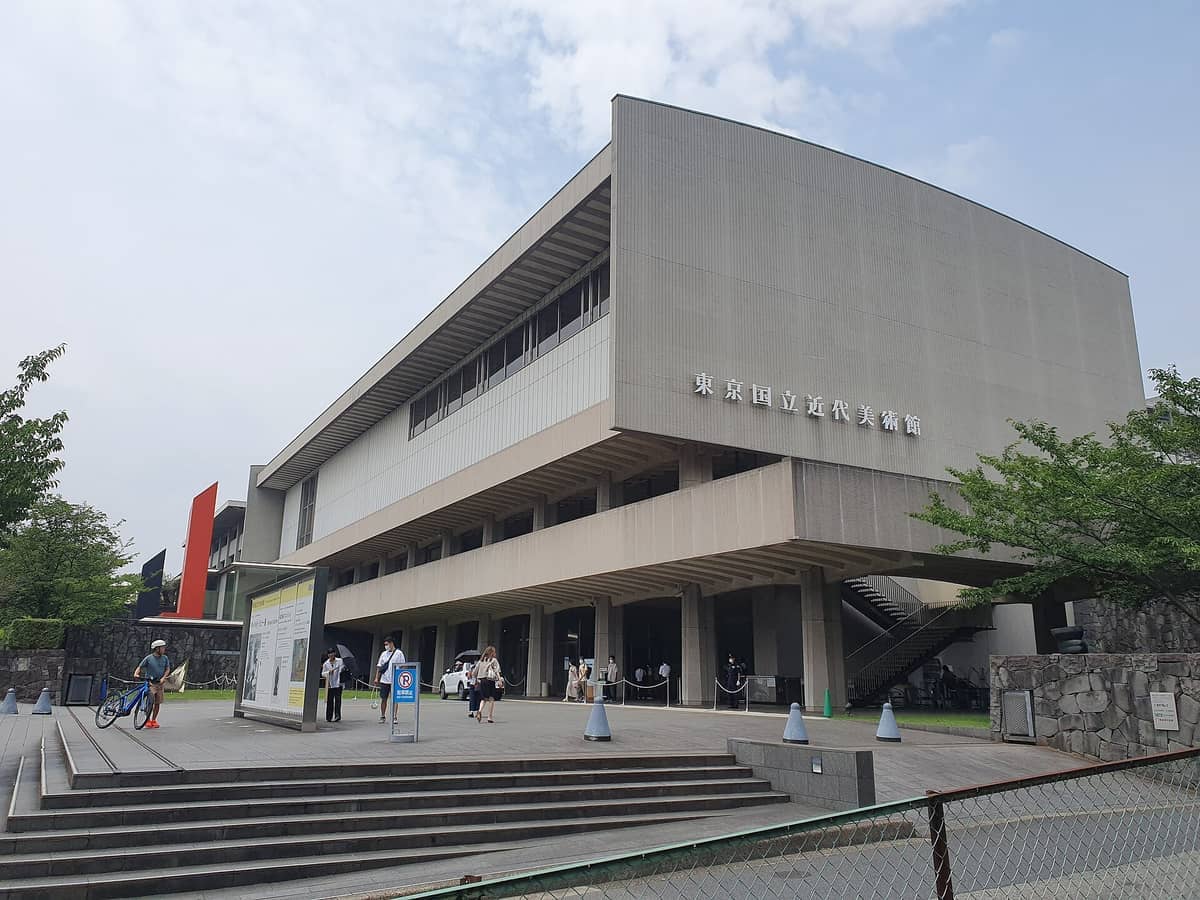
What MOMAT Actually Is
The National Museum of Modern Art, Tokyo, known universally by its acronym MOMAT (full Japanese name: 東京国立近代美術館, Tōkyō Kokuritsu Kindai Bijutsukan), is Japan's first national art museum dedicated to modern and contemporary work. The National Museum of Modern Art, Tokyo, known universally by its acronym MOMAT (full Japanese name: 東京国立近代美術館, Tōkyō Kokuritsu Kindai Bijutsukan), is Japan's first national art museum dedicated to modern and contemporary work. Founded in 1952, it opened in its current Kitanomaru Park building in 1969. The permanent Collection Exhibition spans four floors and presents more than 200 works at any one time, drawn from a holdings pool of around 13,000 pieces. The scope runs from the late 19th century, when Japanese artists first grappled with Western techniques alongside their own traditions, through to work made in the present decade. The permanent Collection Exhibition spans four floors and presents more than 200 works at any one time, drawn from a holdings pool of around 13,000 pieces. The scope runs from the late 19th century, when Japanese artists first grappled with Western techniques alongside their own traditions, through to work made in the present decade.
What makes MOMAT worth serious attention is not a single iconic work or a viral installation, but the coherence of the narrative it presents. You can watch Japanese painting, printmaking, photography, and sculpture evolve in real time across the galleries, responding to industrialization, war, occupation, and postwar reconstruction. That arc, told through original works rather than replicas or digital approximations, is genuinely difficult to find anywhere else.
ℹ️ Good to know
MOMAT runs two parallel programs: the permanent Collection Exhibition (open most days the museum is open) and rotating special exhibitions, which have their own tickets. Check the official calendar before you visit, as special exhibitions occasionally close galleries and change the flow of the building. Check the official calendar before you visit, as special exhibitions occasionally close galleries and change the flow of the building.
Getting There and Arriving
The museum sits at the northern edge of Kitanomaru Park, directly across the park's main path from the science museum, and within easy walking distance of the Imperial Palace moat. From Takebashi Station on the Tokyo Metro Tozai Line (Exit 1b), the walk takes around three minutes along a quiet road with the moat on one side. The approach is understated: no grand plaza, no queuing infrastructure for hundreds of people. The building announces itself modestly.
If you are combining MOMAT with a broader Chiyoda day, the Imperial Palace East Gardens are a short walk south. You can do both comfortably in a half-day, particularly in spring or autumn when the park paths are at their most pleasant. For a fuller picture of the neighborhood's cultural density, the Chiyoda district also contains the National Archives, Budokan arena, and several small museums within ten minutes on foot.
💡 Local tip
No parking is available at MOMAT itself. Public transport is the practical choice. Bicycle racks are available near the entrance if you are cycling through the park.
Tickets & tours
Hand-picked options from our booking partner. Prices are indicative; availability and final rates are confirmed when you complete your booking.
Tokyo Dining Bar Experience with Darts Throwing Plan
From 8 €Instant confirmationFree cancellationTokyo Dining Darts Bar Experience with Unlimited Darts Plan
From 8 €Instant confirmationFree cancellationManga Art Workshop in a Traditional Tokyo House
From 88 €Instant confirmationFree cancellationTour to Mt. Fuji Area, Oshino Hakkai and Kawaguchi Lake from Tokyo
From 57 €Instant confirmationFree cancellation
The Collection: Four Floors, One Long Story
The Collection Exhibition occupies floors two through four. The curators rotate works every few months, so the specific pieces on display will differ from any printed guide, but the organizing logic stays consistent: the galleries move broadly chronologically from the Meiji and Taisho periods on the upper floors down through postwar modernism and contemporary work. Labels are in Japanese and English throughout.
On the upper floors, you encounter paintings that show Japanese artists working through a genuinely difficult cultural moment: absorbing oil paint, perspective, and academic realism imported from Europe while trying to maintain the sensibility of Japanese brushwork and subject matter. The tension between those two impulses produced some of the most interesting art of the early 20th century, and MOMAT presents it without oversimplifying the conflict. Works by Kishida Ryusei, Yorozu Tetsugoro, and their contemporaries reward slow looking.
Moving down through the floors, the galleries open out into the postwar decades: abstract experimentation, the Gutai group's radical material practice, the political provocations of the 1960s protest era, and eventually photography and video. Moving down through the floors, the galleries open out into the postwar decades: abstract experimentation, the Gutai group's radical material practice, the political provocations of the 1960s protest era, and eventually photography and video. The fourth floor, the highest, ends with a room of large windows looking out over Kitanomaru Park. It is one of the quieter viewpoints in central Tokyo, and easy to linger in. It is one of the quieter viewpoints in central Tokyo, and easy to linger in.
💡 Local tip
The museum's audio guide app (available for download before your visit from the MOMAT website) covers key works in the collection and is more informative than the printed labels alone. Download it before entering to avoid relying on in-building wifi.
How the Experience Changes by Time of Day
Weekday mornings between opening at 10:00 and noon are the calmest periods. School groups occasionally arrive mid-morning, but they tend to move through quickly and are confined to specific gallery areas. The upper floors in particular are often near-empty, with natural light from the clerestory windows falling across the paintings in a way that changes as the sun moves. There is an almost library-like quiet to the building at these hours.
Lunch hour and early afternoon see modest increases in visitors, particularly near the cafe on the first floor, which looks out toward the park. Weekend afternoons are busier, especially when a special exhibition is running. If a high-profile special show is on, arrive at opening or after 15:00 when the first wave of visitors has moved through. Friday and Saturday evenings are an underused option: the museum stays open until 20:00, admission drops to ¥300 from 17:00, and the crowd thins noticeably by 18:00. The park outside is quiet, and the light through the gallery windows shifts to a warm late-afternoon tone that suits the older paintings particularly well.
Practical Details Worth Knowing
MOMAT is closed on Mondays. If Monday falls on a national holiday, the museum opens that day and closes on Tuesday instead. It also closes during installation periods when works are being changed, and over the New Year holiday period. These closures are listed on the official calendar at momat.go.jp/en. Regular hours are 10:00 to 17:00 daily, extending to 20:00 on Fridays and Saturdays. Last admission is 30 minutes before closing.
Admission to the Collection Exhibition costs ¥500 for adults and ¥250 for university and college students. High school students and younger, visitors aged 65 and over, and persons with disabilities (plus one accompanying person, with valid ID) enter free. Special exhibitions carry separate, higher ticket prices. The Collection Exhibition is free on International Museum Day (May 18) and Culture Day (November 3), unless those dates fall on a regular closing day. Wheelchairs and baby strollers are available for loan, and nursing and diaper-changing facilities are on site.
Photography policy varies by gallery and exhibition. In the Collection Exhibition, photography of works is generally permitted in designated areas without flash, but specific rooms or individual works may be excluded. Follow the posted signs rather than assuming. If you are planning a photography-focused Tokyo itinerary, the Tokyo Photographic Art Museum in Yebisu Garden Place offers a different but complementary experience.
⚠️ What to skip
MOMAT does not have a large cloakroom, but coin lockers are available near the entrance for bags and large items. Confirm at the information desk on arrival if you have a large backpack or other oversized item.
Context: Why This Museum Matters
MOMAT opened in 1952, just seven years after the end of World War II, at a moment when Japanese cultural institutions were being rebuilt from scratch. Its founding purpose was to collect, preserve, and exhibit modern Japanese art at a national level, a function that had no institutional home before then. The museum's Crafts Gallery (a separate building in Kitanomaru Park, not covered by Collection Exhibition tickets) houses decorative art, ceramics, lacquerware, and textile work from the same period, extending the collection's scope beyond painting and sculpture. If you are interested in applied arts and craft traditions, that building warrants a separate visit. For a broader map of Tokyo's serious museum offerings, the best museums in Tokyo guide covers the full landscape.
The building itself, designed by architect Yoshiro Taniguchi and completed in 1969, is a restrained modernist structure that lets the art read clearly without competing for attention. The interiors are calm and well-proportioned. Natural light is used carefully. It is not a signature building in the way that Renzo Piano's Pompidou Centre or Frank Gehry's Guggenheim Bilbao demands notice from the outside, but it functions exceptionally well as a container for looking at art.
Insider Tips
- The fourth-floor window room overlooking the Imperial Palace moat is worth the admission price alone on a clear day. Bring a coat in winter: the glass makes the room cold in the mornings before heating catches up.
- Friday and Saturday evenings after 17:00 offer the lowest admission price (¥300) and the smallest crowds. It is the best combination of value and calm in the entire week.
- The museum cafe on the first floor serves a short menu of drinks and light food, and the tables facing the park are quiet even on busy days. It is a better option than backtracking to Kitanomaru Park benches.
- MOMAT's website posts the full list of works currently on display under the Collection section, updated with each rotation. Check it before visiting if there is a specific work or artist you want to see, rather than assuming it will be on view.
- If you are visiting on Culture Day (November 3), admission to the Collection Exhibition is free, and Kitanomaru Park is typically at its autumn foliage peak. Arrive before 11:00 to beat the midday rush.
Who Is National Museum of Modern Art, Tokyo (MOMAT) For?
- Art lovers with a genuine interest in Japanese modernism and 20th-century art history
- Solo travelers seeking a calm, uncrowded museum experience in central Tokyo
- Rainy-day visitors looking for a half-day of indoor culture near the Imperial Palace
- Budget travelers: the ¥500 base admission and free evening discount make it one of Tokyo's best-value museum hours
- Visitors combining a Chiyoda cultural walk with the Imperial Palace East Gardens
Nearby Attractions
Other things to see while in Imperial Palace & Chiyoda:
- Imperial Palace
The Imperial Palace (Kokyo) sits at the geographic and symbolic heart of Tokyo, occupying the former grounds of Edo Castle in Chiyoda. While the palace itself remains a working royal residence, the East Gardens are open to the public and free to enter, revealing stone castle ruins, manicured lawns, and centuries of Japanese history within walking distance of Tokyo Station.
- Imperial Palace East Gardens
The Imperial Palace East Gardens sit on the former grounds of Edo Castle, offering free access to historic stone ruins, manicured lawns, and seasonal gardens in the heart of Tokyo. Calm, spacious, and historically layered, they reward visitors who take time to look closely.
- Jimbocho Book District
Kanda Jimbocho Used Bookshop Town in Chiyoda is widely recognised as one of the largest concentrations of secondhand and specialist bookstores on earth. Entry is free, the streets are walkable year-round, and the neighbourhood rewards slow, unhurried browsing — whether you read Japanese or not.
- Tokyo Station
Opened in 1914, Tokyo Station is the architectural and logistical heart of Japan's rail network. The restored red-brick Marunouchi facade frames one of the country's most recognizable buildings, while inside, a labyrinthine complex of platforms, restaurants, and specialty shops rewards those who treat it as a destination rather than just a transit point.