Illinois Institute of Technology Campus: A Masterclass in Modernist Architecture
The Illinois Institute of Technology's main campus in Chicago's Bronzeville neighborhood is one of the most significant collections of Modernist architecture in the United States. Designed largely by Ludwig Mies van der Rohe, the open campus is free to explore and offers a rare opportunity to walk through a coherent architectural vision built across decades.
Quick Facts
- Location
- 10 West 35th Street, Chicago, IL 60616 (South Side)
- Getting There
- CTA Green Line: 35th–Bronzeville–IIT station (adjacent to campus); CTA Red Line: Sox–35th station (short walk)
- Time Needed
- 1.5 to 3 hours for a thorough walking tour
- Cost
- Free to walk the campus grounds; guided tours may require advance registration
- Best for
- Architecture enthusiasts, design students, Modernism fans, serious urban explorers
- Official website
- www.iit.edu
What the Illinois Tech Campus Actually Is
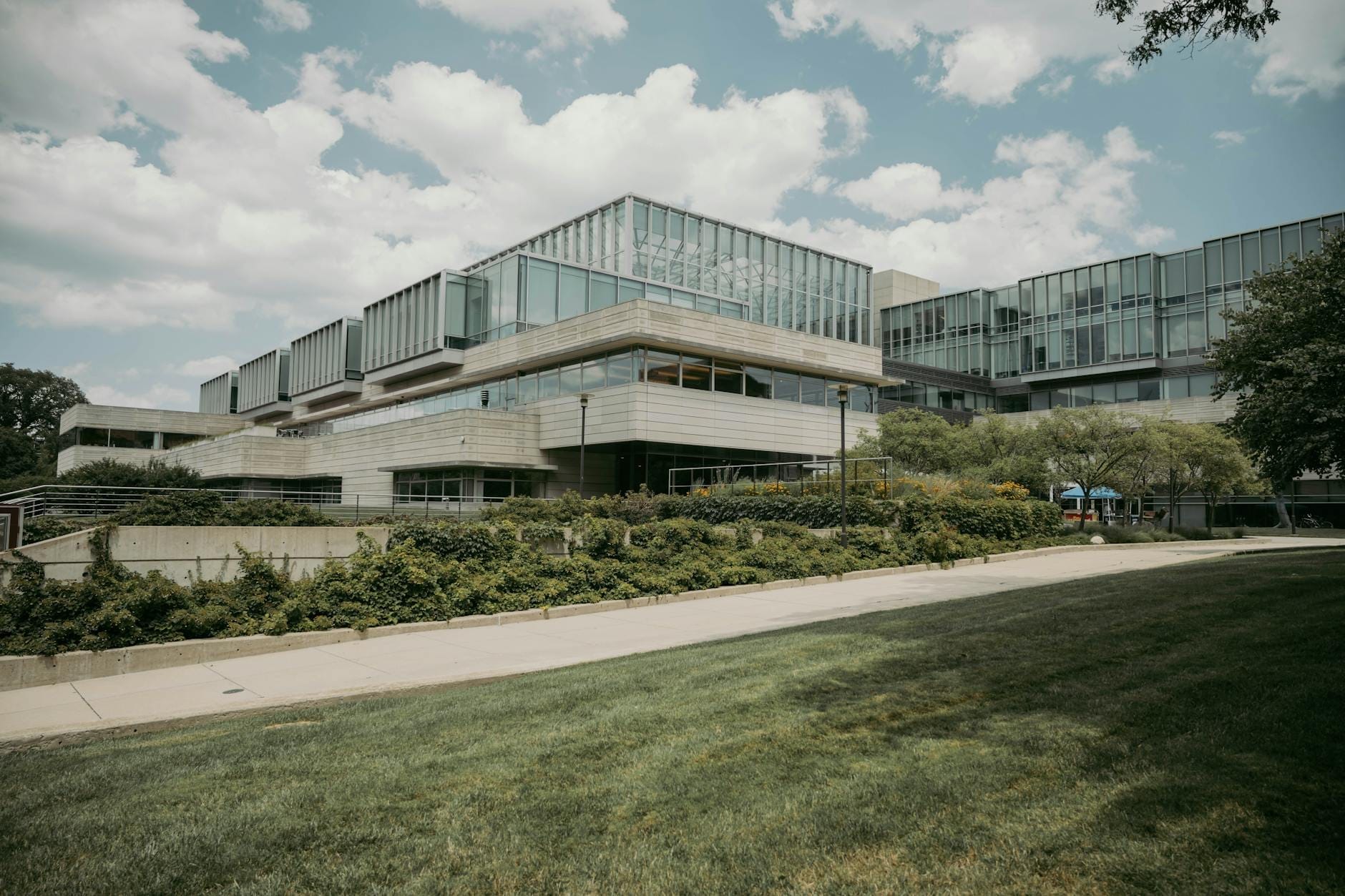
The Illinois Institute of Technology's Mies Campus is not a tourist attraction in the conventional sense. There are no ticket booths, no audio guides handed out at an entrance, and no crowds forming at a designated photo spot. What you get instead is something rarer: an entire city campus conceived as a unified architectural statement, spread across roughly 120 acres on Chicago's South Side, designed primarily by one of the 20th century's most influential architects.
Ludwig Mies van der Rohe joined Illinois Tech (then the Armour Institute of Technology) as director of the architecture school in 1938, one year before Armour merged with Lewis Institute to form the present university. He went on to design more than twenty buildings on the main campus over the following two decades, creating what remains the most complete example of his architectural philosophy applied at an urban scale. The result is a campus built on a 24-foot structural grid, clad in steel frames and brick panels, where the proportions of every window and column bay were worked out with the precision of a craftsman.
ℹ️ Good to know
The campus grounds are generally open to the public at no charge. Individual buildings follow university schedules that vary by term and facility. Plan your visit around exterior exploration; interior access to classrooms and labs is restricted.
The Architecture: What You Are Looking At
Crown Hall is the building most visitors come specifically to see, and it earns the attention. Completed in 1956 and designated a National Historic Landmark, it houses the College of Architecture. The structure is essentially a large glass and steel box elevated slightly above grade, with a roof suspended from four wide-flange steel plate girders that span the entire 120-foot width without interior columns. The effect from inside is a single unobstructed floor of about 18,000 square feet. From the exterior, the building reads as a study in absolute clarity: the steel frame is painted black, the glass panels are clear or translucent depending on height, and the whole thing sits on a granite platform approached by broad symmetrical stairs. Early morning light makes the translucent lower panels glow, and the steel's black finish absorbs the sky differently at different hours.
Beyond Crown Hall, the campus rewards slow, attentive walking. The Minerals and Metals Research Building (1943) was one of the early structures Mies completed here, and it shows the vocabulary he would refine over the next fifteen years: exposed steel skeleton, brick infill, flush surfaces. S.R. Crown Hall tends to absorb most of the camera attention, but the residential towers on the south end of campus, the Hermann Hall student center, and the chapel and other nearby buildings all show different facets of the same rigorous approach. The IIT Tower at 35th and State, a high-rise completed in 1966, extends the Miesian grid vertically and can be seen from the Green Line platform above.
For context on how this campus fits into Chicago's broader architectural story, the Chicago Architecture Center downtown offers excellent background on Mies and the city's other major movements. If you want to connect the dots between IIT, the Loop, and the lakefront, an architecture river cruise covers the downtown canon in roughly 90 minutes.
Tickets & tours
Hand-picked options from our booking partner. Prices are indicative; availability and final rates are confirmed when you complete your booking.
Go City | Chicago All-Inclusive Pass
From 127 €Instant confirmationFree cancellationArt Institute of Chicago tickets and self-guided audio tour
From 49 €Instant confirmationArt Institute of Chicago Guided Tour with Skip-the-Line Tickets
From 63 €Instant confirmationFree cancellationThe Art Institute of Chicago: private skip-the-line tour
From 124 €Instant confirmationFree cancellation
How the Campus Changes by Time of Day
Morning visits, particularly on weekdays during the academic term, offer the sharpest contrast between the buildings and the sky before the day's activity picks up. The low horizontal sun catches the steel frame edges of Crown Hall and throws the structural grid into relief. The campus is quiet enough that you can actually hear the wind moving through the open spaces between buildings, which Mies designed with deliberate spacing to create a series of outdoor rooms rather than a continuous built mass.
Midday brings students crossing between buildings, which adds scale and gives Crown Hall's stairs a sense of use that photographs well. The campus does not feel like a busy urban university during quieter periods; the brick and steel palette absorbs noise, and the flat South Side geography keeps the visual field wide and calm. In summer, the campus grounds take on a slightly more relaxed character, with students and staff outside on benches near Hermann Hall.
Evening visits are worth considering if you can time it to coincide with dusk. Crown Hall's translucent lower panels, when the building is lit from within, produce a quality of light that reverses the daytime relationship between solid and transparent. This is less predictable on weekends when the building may not be in active use, so aim for a weekday evening during term time if this interests you.
💡 Local tip
The Green Line 35th–Bronzeville–IIT elevated station is itself worth a moment of attention. The station platform sits above the campus edge, giving you an unobstructed elevated view of the IIT Tower and the surrounding blocks before you even descend to street level.
Getting There and Getting Around Campus
The most convenient transit option is the CTA Green Line, which drops you directly at the 35th–Bronzeville–IIT station at the northern edge of campus. The Red Line's Sox–35th station is a few blocks west and is useful if you're coming from the North Side or connecting from the Dan Ryan corridor. From the Loop, the Green Line takes roughly 15 to 20 minutes. There is no dedicated visitor parking lot, and street parking in the surrounding blocks is unmetered in places but can be limited on weekday mornings.
The campus is compact enough to cover on foot without any particular planning. Crown Hall sits toward the northern half of the main campus and is the logical starting point. From there, walking south takes you past the series of academic and residential buildings Mies designed in the late 1940s and 1950s. The campus maps posted near campus entrances and on the IIT website help orient first-time visitors to which buildings are which.
The Mies Campus sits in the Bronzeville neighborhood, which has its own distinct history as a center of African American cultural life in Chicago during the early 20th century. If you're building a full South Side day, the campus pairs naturally with a visit to the DuSable Black History Museum further north, or with the Museum Campus about two miles to the north along the lakefront.
Photography and What to Focus On
The campus rewards photographers who are interested in geometry, repetition, and the relationship between structure and light, rather than dramatic skyline shots or colorful street scenes. Crown Hall is the primary subject, and it photographs differently at almost every hour. The wide, flat stairs leading up to the entrance make for strong foreground geometry. The building's proportions are best captured from a position roughly 40 to 50 feet back, where the entire facade fits into a standard frame without distortion.
The secondary subjects are the smaller Mies buildings nearby: the interplay of their black steel frames against red brick and sky is consistent with his palette throughout the campus. Look for the shadow patterns cast by the structural bays in late afternoon, particularly on the west-facing elevations. Wide angle lenses suit the flat, horizontal character of the buildings; telephoto compression tends to flatten the depth cues that make the grid-based composition legible.
💡 Local tip
Overcast days reduce harsh shadows on the glass and steel surfaces and often produce the most balanced exposures for photographing Crown Hall's facade. Chicago's cloudy shoulder-season weather is actually an asset here.
Who Should Visit, and Who Should Probably Skip It
The IIT Mies Campus is genuinely one of the most significant architectural sites in the United States, but it is not a site that explains itself to visitors who arrive without any prior interest or context. If you're not drawn to questions of structural expression, proportion, and the relationship between form and function, the campus will read as a collection of fairly stark institutional buildings in a South Side neighborhood, and there are livelier ways to spend a Chicago afternoon.
For architecture students, designers, and anyone seriously engaged with the history of Modernism, it is close to indispensable. The campus offers something that buildings in books and photographs cannot: the experience of Mies's spatial sequencing at full scale, in real urban context, over an extended walk. That experience does not require a ticket or a tour guide, though having some background on Mies's work before arriving makes it considerably richer.
Families with young children will likely find the experience limited; there are no interactive elements and the campus's appeal is almost entirely intellectual. For a more engaging South Side experience for mixed groups, consider pairing a brief campus visit with a meal nearby, or heading toward the Museum of Science and Industry in Hyde Park, about 20 minutes south by bus or car. Chicago's broader architecture scene also covers buildings far more accessible to general visitors.
Accessibility and Practical Notes
Illinois Tech states a commitment to accessibility across its campus facilities, coordinated through the Center for Disability Resources. The campus grounds are flat and largely paved, which makes outdoor navigation straightforward for most visitors. Building accessibility varies by structure, particularly in older Mies-designed buildings where interior configurations may present limitations. Visitors with specific accessibility requirements are advised to contact the university directly before visiting.
In winter, Chicago's cold makes extended outdoor exploration uncomfortable, though Crown Hall's exterior can be appreciated quickly from the stairs. Spring and early fall are the most comfortable seasons for the kind of slow, attentive walking the campus rewards. Bring a layer regardless of season; the flat campus exposes you to wind without the shelter that denser urban blocks provide.
Insider Tips
- The Green Line 35th–Bronzeville–IIT elevated platform gives you a brief aerial view of the IIT Tower and surrounding campus before you descend. Pause there for a moment before heading down to street level.
- Crown Hall's interior is most accessible on weekdays during the academic term, when the building is in active use for architecture classes. Weekends and summer sessions often mean locked doors.
- The Mies-designed campus chapel, Wishnick Hall, and the Minerals and Metals Research Building are easy to overlook compared to Crown Hall, but each is worth at least a few minutes to understand how the same structural logic was adapted to different program types.
- If you want to go deeper, Illinois Tech's College of Architecture occasionally hosts public lectures and exhibitions that are open to visitors without enrollment. Check the college's event calendar before your visit.
- For the sharpest understanding of what Mies was doing here architecturally, read even a brief summary of his 'skin and bones' philosophy before arriving. The campus makes significantly more sense with that framing in mind.
Who Is Illinois Institute of Technology Campus For?
- Architecture students and design professionals seeking firsthand exposure to Miesian Modernism at urban scale
- Photographers interested in geometric composition, light on steel and glass, and structural repetition
- Travelers building a full South Side itinerary who want to combine architecture with Bronzeville's cultural history
- Anyone doing a deep dive into Chicago's architectural legacy beyond the downtown and River North canon
- Independent explorers who prefer unmediated, self-directed visits to formal museum experiences
Nearby Attractions
Combine your visit with:
- Bahá'í House of Worship
The Bahá'í House of Worship in Wilmette, Illinois, is one of the most architecturally singular buildings in North America. Free to enter, open daily, and reachable by CTA from downtown Chicago, it rewards visitors with a 135-foot lace-like dome, meditative silence, and an unusual kind of spiritual calm that transcends denomination.
- Brookfield Zoo Chicago
Brookfield Zoo Chicago is one of the largest and most historically significant zoos in the United States, covering 216 acres about 14 miles west of downtown. With more than 511 species, landmark indoor exhibits, and a genuine conservation mission, it rewards a full day of exploration. But it takes planning to get the most out of it.
- Chicago Air and Water Show
Every August, the Chicago Air and Water Show transforms the lakefront into a grandstand for one of the most spectacular free public events in the United States. Fighter jets, military demonstrations, and precision flying teams perform over Lake Michigan while hundreds of thousands of spectators line the shore from Fullerton to Oak Street.
- Chicago Botanic Garden
A living museum spread across 385 acres and nine islands north of Chicago, the Chicago Botanic Garden offers 27 gardens, four natural areas, and six miles of lake shoreline in Glencoe, Illinois. Whether you visit for a single seasonal bloom or spend a full day exploring Japanese landscapes and native prairies, this guide covers everything you need to plan a worthwhile trip.