Harvard University Campus: What to Expect When You Visit
Founded in 1636, Harvard University is the oldest institution of higher education in the United States, and its Cambridge campus draws visitors from around the world. Walking through Harvard Yard costs nothing, but knowing how to read the campus, when to go, and what to skip makes the difference between a rewarding afternoon and a confused wander.
Quick Facts
- Location
- Harvard Yard, Cambridge, MA (near Harvard Square)
- Getting There
- Harvard Station, MBTA Red Line – 5-minute walk to the Yard gates
- Time Needed
- 1.5 to 3 hours for the Yard and surrounding buildings; half a day if you add museums
- Cost
- Free to walk the outdoor campus; Harvard Art Museums offer free admission to all visitors
- Best for
- History enthusiasts, architecture lovers, families, and curious travelers with a morning to spare
- Official website
- www.harvard.edu
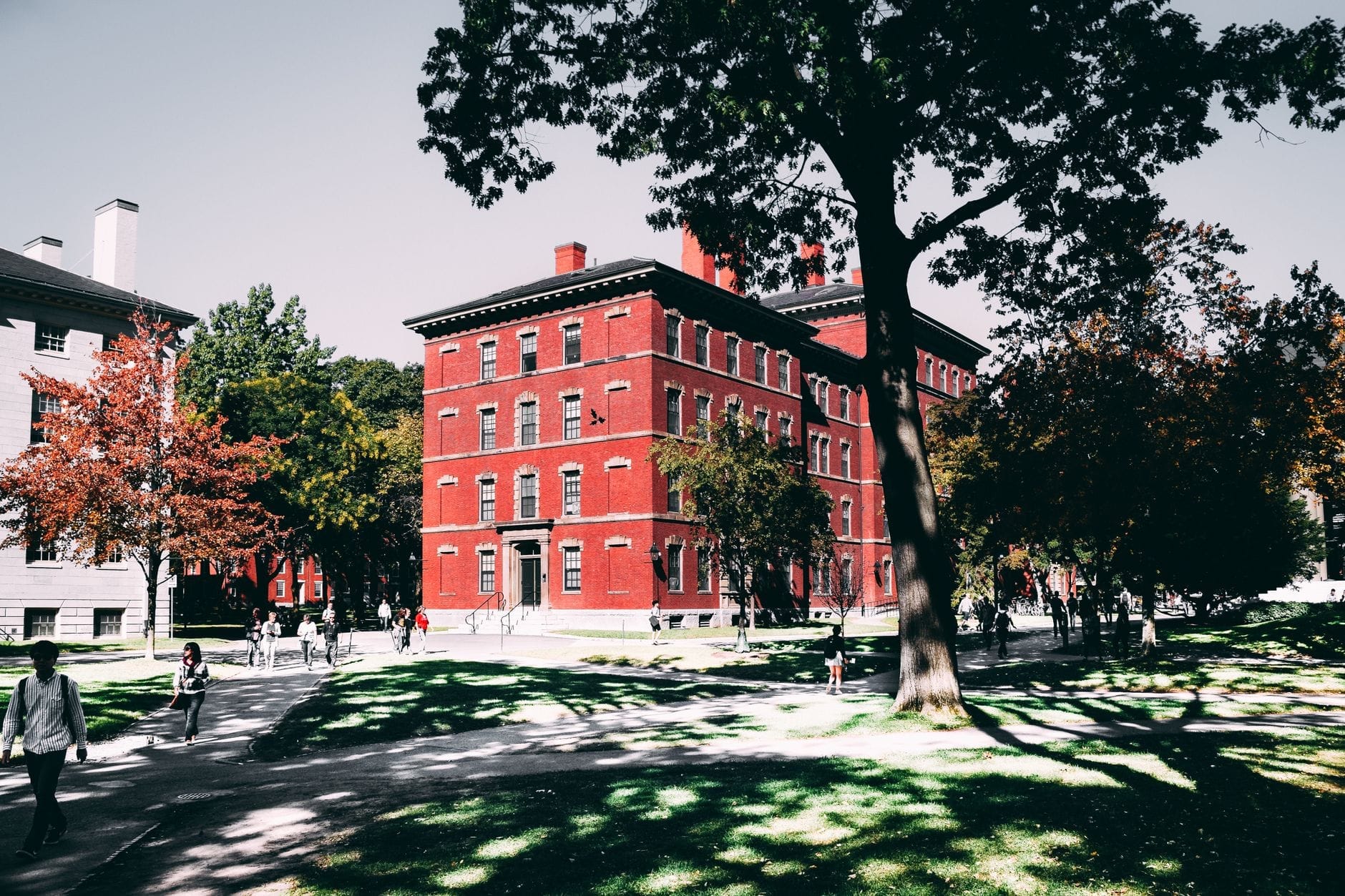
What Harvard Yard Actually Looks Like
Harvard Yard is the original, enclosed heart of Harvard University's Cambridge campus, roughly 22 acres of brick paths, towering elms, and colonial-era buildings surrounded by iron gates. It is not one dramatic plaza but a layered collection of spaces: the older, quieter Old Yard to the north, where the freshman dormitories line up in Georgian brick rows dating to the early 18th century, and the broader Tercentenary Theatre at the center, dominated by Widener Library's broad granite steps and the neoclassical facade of Memorial Church directly across.
The most photographed spot in the Yard is the bronze statue of John Harvard, seated on a high pedestal in front of University Hall. Tour guides refer to it as the Statue of Three Lies: the subject is not actually John Harvard, the date inscribed (1638) is wrong, and Harvard was not the university's founder. Knowing this before you arrive lets you appreciate it more than the students who shuffle past it daily without a second glance.
💡 Local tip
The John Harvard statue's left shoe is polished to a bright shine from generations of tourists rubbing it for good luck. If you want a clean photo without hands in frame, arrive before 9 a.m. on a weekday.
Beyond the Yard, the campus extends across approximately 209 acres (85 hectares) in Cambridge and Boston, with additional facilities in Boston's Longwood Medical Area and on the Allston waterfront. For most visitors, the relevant geography is a walkable triangle formed by Harvard Yard, Harvard Square to its west, and the Science Center and Law School to the north. The Divinity School, Business School, and medical campus are worth knowing about but require more targeted effort to reach.
The History Behind the Bricks
Harvard was founded on October 28, 1636, by a vote of the Massachusetts Bay Colony's General Court, predating the United States by 140 years. The institution was renamed Harvard College in 1639 to honor John Harvard, a young Puritan minister who died in 1638 and left half his estate and his personal library to the fledgling school. That library, since replaced and expanded into one of the world's largest academic library systems, is still centered in the Yard.
Walking through the Yard, you are moving through nearly four centuries of American institutional architecture compressed into a single space. Massachusetts Hall (1720), one of the oldest surviving university buildings in the country, stands near the main Johnston Gate and still houses freshman dormitory rooms on its upper floors while Harvard administrative offices occupy the lower levels. The contrast between these colonial structures and H.H. Richardson's massive Sever Hall (1880), with its Romanesque arched entrance and intricate brickwork, illustrates how the campus absorbed successive architectural generations without ever fully replacing the old ones.
For context on how Harvard fits into the broader Boston and Cambridge academic landscape, the Boston and Cambridge university guide covers the cluster of institutions that make this region one of the most education-dense places in the world.
Tickets & tours
Hand-picked options from our booking partner. Prices are indicative; availability and final rates are confirmed when you complete your booking.
Harvard Square food tour
From 62 €Instant confirmationTour Harvard Yard Boston in The Mysterious Porcelain Exploration Game
From 10 €Instant confirmationFree cancellationHistorical Cambridge and Harvard Square doughnut tour
From 60 €Instant confirmationFree cancellationGo City | Boston All-Inclusive Pass
From 67 €Instant confirmationFree cancellation
How the Campus Changes Through the Day
Early morning, roughly 7 to 9 a.m., is when the Yard belongs to joggers, graduate students on bicycles, and the occasional groundskeeper raking paths. The light on the brick is warm, the noise level is low, and every gate is generally accessible. This is the best window for photography if you want clean frames without tour groups clustered around the John Harvard statue.
By mid-morning on weekdays during the academic year, the pace shifts noticeably. Students cross between buildings with laptop bags and coffee cups, and the Yard fills with ambient noise: the heavy thud of Widener Library's doors, distant conversations, the chime of Memorial Church marking the hour. This is actually a good time to visit because the campus is clearly alive rather than feeling like a stage set, but tour groups also begin arriving, and the paths around the statue get congested.
Summer weekends present a different experience entirely. The student population thins dramatically after May, and from late June through August, the Yard fills with tourists and prospective students on official campus tours. If you visit outside the academic year, the campus is quieter in one sense but more uniformly tourist-facing. Fall, particularly late September and October, is widely considered the most visually rewarding season: the elms and oaks turn amber and gold, the air is cool, and the academic year is in full swing without yet being overwhelmed by the end-of-term pressure.
ℹ️ Good to know
Harvard Yard has no single opening or closing time for general visitors, but access to certain residential areas may be restricted, particularly during exams or university events. Individual buildings are not open to the general public unless they contain a publicly accessible museum, chapel, or cafe.
The Museums: Where the Real Depth Lives
The outdoor campus is free and appealing, but Harvard's museums are where a visit becomes solidly educational. The Harvard Art Museums, housed in a Renzo Piano-designed building on Quincy Street, hold one of the most significant university art collections in North America, spanning the Fogg (European and American art), Busch-Reisinger (German-speaking Europe), and Arthur M. Sackler (Asian and ancient art) collections under one roof. Admission is free for all visitors, and hours are posted on the museum's website; visiting is strongly recommended for anyone with more than a passing interest in art.
The Harvard Museum of Natural History, adjacent to the Peabody Museum of Archaeology and Ethnology on Divinity Avenue, is particularly well-suited to visitors with children. Its Glass Flowers collection, 3,000 botanically accurate glass models created by Leopold and Rudolf Blaschka between 1887 and 1936, is one of the more quietly astonishing things in Boston. For more on family-oriented options across the city, the Boston with kids guide provides useful framing.
Widener Library is not generally open to the public for browsing, though the lobby and exterior are worth examining. The library holds over 3.5 million volumes and was built in 1915 as a memorial to Harry Elkins Widener, who died on the Titanic. His mother, Eleanor Elkins Widener, funded the construction with the condition that the footprint and exterior never be altered. Harvard has been careful to honor this, preserving the exterior while expanding the library through underground additions.
Getting There and Moving Around
The simplest approach is the MBTA Red Line to Harvard Station, which deposits you directly in Harvard Square. From the station exit, the main Johnston Gate entrance to Harvard Yard is about a five-minute walk east on Massachusetts Avenue. The square itself is worth a few minutes: it has a circular pedestrian plaza, bookshops (including the Harvard Book Store, which is independent despite the name), cafes, and the former site of the Out of Town News kiosk, a longtime Harvard Square institution that closed in 2019.
Cambridge is a walkable destination in its own right. The Cambridge neighborhood guide outlines what else is within reach, including MIT's campus to the east and the streets of Inman and Central Squares beyond.
Within the campus, navigation is manageable but not entirely intuitive. The Yard itself is small enough to cross in five minutes, but the surrounding buildings spread out in ways that can confuse first-time visitors. Free campus maps are available at the Harvard Visitor Center in the Smith Campus Center, located at 1350 Massachusetts Avenue adjacent to the Yard. This building also has accessible restrooms and is a useful orientation point.
💡 Local tip
Official Harvard student-led tours are offered through the Harvard Visitor Center. These are free, 45 to 60 minutes, and provide access to parts of the Yard that are harder to interpret without context. Check availability and scheduling at the information center upon arrival, as times vary by season.
Photography, Weather, and What to Bring
The Yard photographs well in most conditions, but overcast days are actually better than full midday sun for architectural shots because the brick facades reflect harsh light unevenly. The view from the steps of Widener Library looking toward Memorial Church is the classic composition. Early morning mist in autumn creates atmospheric results, though you'll need to time your visit carefully.
Boston's climate is relevant here. Summers are warm and humid (July averages around 82°F / 28°C), making the shade of the Yard's elms welcome. Winters are cold, with January temperatures frequently below freezing and snowfall common from December through March. A winter visit to the Yard has its own appeal, particularly after snow when the red brick and white drifts create a stark contrast, but dress accordingly: the wind between buildings can be sharp.
The campus is partially accessible for visitors with mobility needs, but Harvard Yard is a historic area and not all paths or building entrances are step-free. The main paths through the Yard are paved and generally manageable, but visitors with specific accessibility requirements are encouraged to check Harvard's building-level accessibility information before visiting.
For those building a fuller Boston itinerary around the Harvard visit, a well-structured three-day Boston itinerary can help integrate Cambridge with downtown Boston's major sites without over-scheduling.
Who Should Manage Their Expectations
Visitors who arrive expecting a traditional open-to-the-public tourist attraction may find the experience somewhat anticlimactic on first approach. The Yard is beautiful but essentially a working academic space. You cannot enter most buildings, there are no permanent outdoor exhibits, and much of what makes Harvard compelling is invisible from the outside. If you come with no preparation, it is easy to spend 20 minutes looking at brick buildings, feel mildly underwhelmed, and leave.
The campus rewards curiosity and prior reading. Know which buildings you want to see and why. Budget time for at least one museum. Consider the free guided tour if you're new to it. Travelers who want primarily visual spectacle or action-based activities may find more satisfaction in other Boston attractions. Those who enjoy historical layering, architectural detail, and the particular atmosphere of a place that has been continuously in use for nearly 400 years will find it well worth their time.
Insider Tips
- The best free view of Widener Library's full facade is from the steps of Memorial Church directly opposite. Walk to the top of the church steps and look across the Tercentenary Theatre early on a weekday morning for a largely unobstructed composition.
- Several cafes inside the Smith Campus Center are open to the public and provide a useful rest stop mid-visit without leaving campus. The building also has clean accessible restrooms, which are not always easy to find in Harvard Square.
- The Harvard Art Museums offer free admission to all visitors daily (permanent policy since July 2023). Check the museum website for current hours before your visit.
- If you are visiting during the academic year, the undergraduate houses along the Charles River (Winthrop, Kirkland, Eliot) form a separate architectural cluster that most visitors miss entirely. The riverfront walk between Harvard and the Weeks Footbridge offers a completely different perspective on the university's scale.
- Avoid visiting on Commencement Day (typically late May) unless you have a specific reason. The entire area around the Yard is closed or severely restricted, Harvard Square is gridlocked, and the logistical complexity far outweighs the visual interest for a general visitor.
Who Is Harvard University Campus For?
- History and architecture enthusiasts who want to understand American institutional design across four centuries
- Travelers combining Boston and Cambridge into a single trip who want to understand the academic culture that defines the region
- Families with older children (10+) interested in science or art museums with genuine depth
- Solo travelers with a half-day and a preference for walking, reading architectural detail, and people-watching in a university setting
- Anyone visiting during fall foliage season in late September and October, when the Yard's trees peak and the academic atmosphere is fully present
Nearby Attractions
Other things to see while in Cambridge:
- Harvard Art Museums
The Harvard Art Museums unite three distinct collections — the Fogg, Busch-Reisinger, and Arthur M. Sackler — inside a Renzo Piano-designed building steps from Harvard Yard. Free to all visitors, the complex is one of Cambridge's most rewarding cultural stops, offering everything from ancient coins to German Expressionism under a light-flooded glass canopy.
- Harvard Square
Harvard Square is the commercial and cultural heart of Cambridge, Massachusetts, where a triangular plaza at the intersection of Massachusetts Avenue, Brattle Street, and John F. Kennedy Street anchors a neighborhood of independent bookshops, street musicians, sidewalk chess tables, and some of the best people-watching in greater Boston. Free to explore, open around the clock, and directly served by the MBTA Red Line, it rewards both a quick two-hour detour and a full half-day of wandering.
- MIT Campus
The Massachusetts Institute of Technology sprawls across 168 acres along the Cambridge bank of the Charles River, blending 19th-century founding ideals with some of the most audacious architecture of the 20th century. Admission is free, the campus is open to the public, and a visit rewards anyone willing to look beyond the surface.
- Mount Auburn Cemetery
Established in 1831 and designated a National Historic Landmark, Mount Auburn Cemetery is a roughly 175-acre landscape of glacial ponds, flowering trees, and historic monuments that shaped how Americans think about both death and public green space. Free to enter and open year-round, it draws historians, birders, and quiet-seekers in equal measure.