Mount Auburn Cemetery: America's First Garden Cemetery
Established in 1831 and designated a National Historic Landmark, Mount Auburn Cemetery is a roughly 175-acre landscape of glacial ponds, flowering trees, and historic monuments that shaped how Americans think about both death and public green space. Free to enter and open year-round, it draws historians, birders, and quiet-seekers in equal measure.
Quick Facts
- Location
- 580 Mount Auburn Street, Cambridge, MA 02138 (Cambridge/Watertown line, ~1.5 miles west of Harvard Square)
- Getting There
- Red Line to Harvard Square, then MBTA bus #71 or #73 to Brattle St stop (directly across from entrance); or 1.4-mile walk west on Brattle/Mount Auburn St
- Time Needed
- 1.5 to 3 hours for a thorough walk; dedicated birders often stay longer
- Cost
- Free admission (active cemetery and public green space)
- Best for
- Birding, landscape history, quiet reflection, photography, and autumn foliage
- Official website
- mountauburn.org
What Mount Auburn Cemetery Actually Is
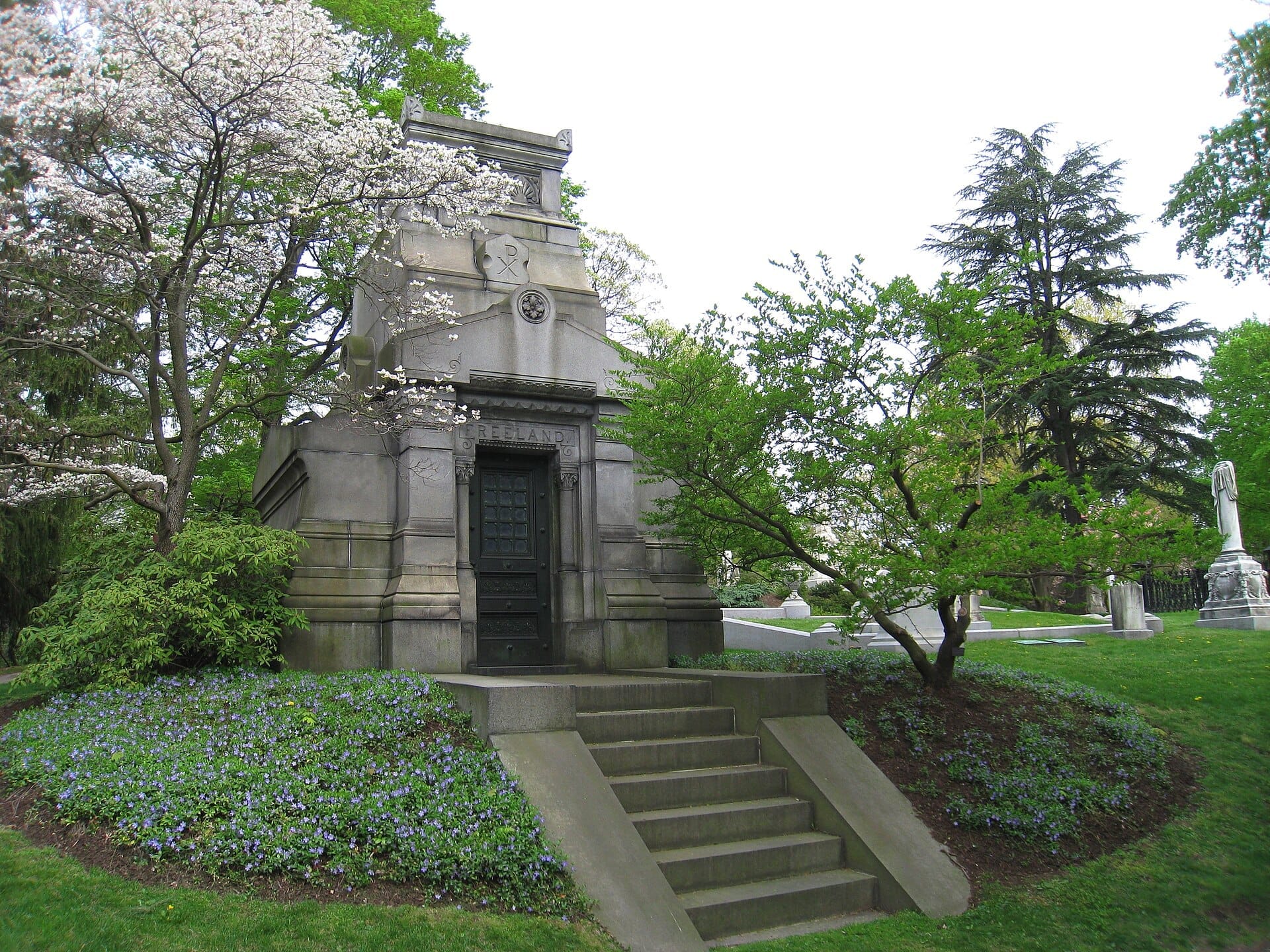
Mount Auburn Cemetery is not a typical graveyard. When it was consecrated on September 24, 1831, it introduced an entirely new concept to North America: the garden cemetery, a designed landscape where the experience of nature was inseparable from the purpose of burial. Spread across approximately 174–175 acres on the Cambridge-Watertown line, the cemetery features glacial ponds, winding carriage roads, plantings chosen for botanical variety, and more than 70,000 burial plots occupied by figures from Massachusetts Supreme Court justices to poets to architects.
The National Park Service designated Mount Auburn a National Historic Landmark in 2003, recognizing its dual significance: it is both the first rural or 'garden' cemetery in the United States and a foundational influence on American landscape design. Frederick Law Olmsted, who later designed Central Park and Boston's own Emerald Necklace, cited Mount Auburn as a direct inspiration. That lineage matters when you walk its paths: the careful layering of elevation, water, and plantings feels intentional because it was, shaped by over 190 years of deliberate horticultural stewardship.
ℹ️ Good to know
Hours: Grounds are open daily from 8:00 AM to 7:00 PM, with closing times adjusted seasonally. Check mountauburn.org for current closing times before you go, as they shift seasonally.
The Experience at Different Times of Day and Year
Arrive at 8:00 AM on a weekday and you will often have the place largely to yourself. The main entrance gate on Mount Auburn Street opens directly onto a broad avenue lined with mature American elms and copper beeches. The light at that hour filters low through the canopy, and the only consistent sounds are birdsong and the distant hum of Brattle Street traffic fading behind you. The air carries the scent of damp grass and, in spring, the sweetness of flowering cherries and magnolias planted throughout the grounds.
By late morning on weekends, the character shifts. Dog walkers (dogs are not permitted inside the Cemetery, so this is mostly pedestrians), birders carrying binoculars, and visitors consulting paper maps from the Visitors Center create a more social atmosphere. The cemetery is large enough that crowds rarely feel dense, but the most serene experience consistently belongs to early morning visitors.
Seasonally, the differences are dramatic. Spring, roughly late April through mid-May, brings what many consider peak conditions: Japanese cherries, magnolias, redbuds, and azaleas bloom in overlapping sequence, and the tree canopy is still thin enough to see considerable distance. This is also when migratory songbirds concentrate here in numbers that have made Mount Auburn one of the most celebrated urban birding sites in the northeastern United States. Autumn delivers fiery color from the maples and oaks, with the added quality of low-angle light that makes photography particularly rewarding from mid-October onward. Winter is quieter but not without reward: the bare structure of the landscape becomes visible, and the cemetery's glacial topography, with its knolls, kettle ponds, and winding roads, reads clearly without foliage obscuring the form.
Tickets & tours
Hand-picked options from our booking partner. Prices are indicative; availability and final rates are confirmed when you complete your booking.
Boston Summer Night Trolley Tour and River Cruise
From 27 €Instant confirmationFree cancellationLEGOLAND Discovery Center Boston tickets
From 26 €Instant confirmationFree cancellationGhosts and Gravestones tour of Boston
From 39 €Instant confirmationFree cancellationBest of Boston tour
From 182 €Instant confirmationFree cancellation
Birding at Mount Auburn: A Serious Destination
If you know any dedicated birders in Boston, they will mention Mount Auburn Cemetery without prompting. The site sits along the Atlantic Flyway and, because it offers dense shrub cover, water, and mature trees within an otherwise urbanized landscape, it acts as a magnet for migrating species during spring and fall passage. Warblers, thrushes, orioles, and occasionally rarer visitors appear here in numbers that would be unusual even in formal nature reserves.
The peak birding window is typically early to mid-May, when the maximum number of warbler species move through simultaneously. Arrive by 7:00 AM or even earlier if serious about it; birding activity is heaviest in the first two hours after sunrise. Willow Pond, Dell Pond, and the area around Washington Tower are consistently productive spots. The cemetery's own website and social media accounts post regular sighting updates during migration season, which is a useful planning resource.
💡 Local tip
Birding tip: The cemetery publishes seasonal bird checklists and sighting reports on its website. During spring migration, the Friends of Mount Auburn often organize free guided birding walks. Check the events calendar at mountauburn.org before your visit.
History, Notable Burials, and Landscape Significance
The cemetery was founded by the Massachusetts Horticultural Society, which originally envisioned it partly as a botanical garden. That horticultural mission never left: Mount Auburn today maintains a living collection of over 5,500 trees representing more than 630 species and cultivars, along with extensive shrub, perennial, and aquatic plantings. A printed plant guide is available at the Visitors Center, and the cemetery has a searchable online collections database for visitors interested in specific species.
Among the figures interred here are Henry Wadsworth Longfellow, Winslow Homer, Oliver Wendell Holmes Sr., Mary Baker Eddy, Charles Bulfinch, and Buckminster Fuller. That concentration of 19th and early 20th century cultural figures reflects Cambridge's position as a center of American intellectual life. For visitors already exploring Harvard University's campus nearby, Mount Auburn provides a quiet counterpoint: the same era rendered not in brick and lecture halls but in stone and landscape.
The Egyptian Revival entrance gate, designed by Jacob Bigelow and dating to 1842, sets the architectural tone at the outset: massive granite pylons with papyrus-capital columns that signal a deliberate departure from the churchyard aesthetic of earlier American burial grounds. The symbolism was intentional, evoking ancient permanence and the Egyptian association of the afterlife with a verdant, garden realm.
Practical Walkthrough: How to Navigate 175 Acres
The cemetery distributes free paper maps at the Visitors Center, located just inside the entrance gate. Picking one up is useful: the road network is extensive and the layout is non-linear by design. The roads follow natural contours, which is atmospheric but disorienting on a first visit. Most visitors who skip the map find themselves retracing routes.
A sensible loop for a first visit covers the main avenue from the entrance gate to Washington Tower, a 62-foot-high granite observation tower near one of the highest points of the property. The tower is open to the public when a volunteer docent is present (hours vary seasonally), and the view from the top encompasses Cambridge, Boston's skyline to the east, and the Blue Hills to the south. From the tower, descend toward Willow Pond and Dell Pond, following the lower road network back toward the gate. This circuit takes approximately 90 minutes at a comfortable pace.
Cars are permitted inside at a 15 mph limit, and visitors with mobility limitations can drive or be driven through the entire cemetery. On-road parking is available on most interior roads without a green line marking. There is a small parking area just inside the main entrance as well as on-road spaces near the entrance on Lawn Avenue. Bicycles, scooters, and rollerblades are not permitted inside, though a bike rack sits just inside the entrance gate. For visitors arriving from Harvard Square, the #71 or #73 MBTA bus from the square stops directly across the street from the entrance, making the transit connection straightforward.
⚠️ What to skip
Mount Auburn is an active cemetery with ongoing funerals and private family moments. Maintain a respectful distance from any service in progress, keep voices low near gravesites, and follow posted signage about restricted areas during ceremonies.
Photography and What to Bring
The cemetery allows personal photography for non-commercial use, and it is one of the more photogenic landscapes in Greater Boston across all four seasons. For architectural and monument photography, the Egyptian Revival gate, the Asa Gray Garden, and the Gothic-arched Egyptian Revival chapel offer the most layered compositions. For landscape photography, the ponds and the view from Washington Tower reward early morning visits when mist is sometimes present over the water.
Bring comfortable walking shoes with grip: the interior roads are paved but the landscape includes grades, and wet leaves in autumn make some slopes slippery. Water is advisable on warm days, as there are no vendors inside. Public restrooms are available near the entrance gate. The terrain is entirely outdoors and exposed to weather, so dress in layers during spring and autumn when temperatures can swing significantly between morning and afternoon.
Visitors interested in the broader context of Boston's designed green spaces may want to pair this visit with the Arnold Arboretum in Jamaica Plain, another major historic landscape with botanical collections, or with the Emerald Necklace park system that connects several of the city's major green spaces. Together, these sites tell a coherent story about how 19th-century Boston and Cambridge approached landscape design as a civic and moral project.
Who Should Skip This, and Why
Mount Auburn is not suited to visitors whose primary interest is active recreation. The prohibition on bicycles and the cemetery's function as an active burial site make it a poor substitute for a park where you want to run, cycle, or play. Children who need structured activity or interactive exhibits will likely find the experience slow; it is a walking landscape requiring patience and some capacity for self-directed discovery. Visitors with a very limited time budget and only a few hours in Cambridge will have to weigh this against the density of options immediately around Harvard Square. The cemetery rewards visitors who slow down, and those in a hurry often leave having seen less than they expected given the scale.
If your interest in Cambridge runs more toward academic architecture and cultural institutions, the Harvard Art Museums or MIT's campus may offer more concentrated content per hour spent. Mount Auburn is best treated as a half-day commitment by those who want to engage with it seriously, rather than a quick stop.
Insider Tips
- The cemetery's online GIS map at mountauburn.org allows you to search any buried individual by name and get a precise location on the grounds, saving considerable time if you have specific people you want to find.
- Washington Tower is only open when docent volunteers are present, typically on weekends and some weekday afternoons in warmer months. Call ahead or check the website events calendar if the tower view is a priority for your visit.
- During spring migration in early May, arrive before 7:30 AM and head directly toward Willow Pond and the Dell. Experienced birders concentrate here, and following their gaze is often the fastest way to spot something unusual.
- The Asa Gray Garden, a formal garden area dedicated to the botanist who helped establish the cemetery's horticultural collections, is frequently overlooked by first-time visitors who stay on the main roads. Look for it on your map near the central section of the grounds.
- The #71 bus from Harvard Square runs frequently and stops directly across the street from the cemetery gate. Compared to driving and searching for parking in the surrounding residential neighborhood, the bus is consistently faster and less stressful.
Who Is Mount Auburn Cemetery For?
- Birders: one of the premier urban migration sites in the northeastern United States, especially in May
- Landscape and design history enthusiasts: the foundational American garden cemetery, directly influential on Central Park and the Emerald Necklace
- Photographers: strong year-round subject matter from spring blossoms to autumn color to winter architectural details
- Visitors interested in 19th-century American intellectual and cultural history through its notable burials
- Anyone wanting a quiet, car-accessible green space within easy reach of Harvard Square
Nearby Attractions
Other things to see while in Cambridge:
- Harvard Art Museums
The Harvard Art Museums unite three distinct collections — the Fogg, Busch-Reisinger, and Arthur M. Sackler — inside a Renzo Piano-designed building steps from Harvard Yard. Free to all visitors, the complex is one of Cambridge's most rewarding cultural stops, offering everything from ancient coins to German Expressionism under a light-flooded glass canopy.
- Harvard Square
Harvard Square is the commercial and cultural heart of Cambridge, Massachusetts, where a triangular plaza at the intersection of Massachusetts Avenue, Brattle Street, and John F. Kennedy Street anchors a neighborhood of independent bookshops, street musicians, sidewalk chess tables, and some of the best people-watching in greater Boston. Free to explore, open around the clock, and directly served by the MBTA Red Line, it rewards both a quick two-hour detour and a full half-day of wandering.
- Harvard University Campus
Founded in 1636, Harvard University is the oldest institution of higher education in the United States, and its Cambridge campus draws visitors from around the world. Walking through Harvard Yard costs nothing, but knowing how to read the campus, when to go, and what to skip makes the difference between a rewarding afternoon and a confused wander.
- MIT Campus
The Massachusetts Institute of Technology sprawls across 168 acres along the Cambridge bank of the Charles River, blending 19th-century founding ideals with some of the most audacious architecture of the 20th century. Admission is free, the campus is open to the public, and a visit rewards anyone willing to look beyond the surface.