MIT Campus: What to Know Before You Visit Cambridge's Research Powerhouse
The Massachusetts Institute of Technology sprawls across 168 acres along the Cambridge bank of the Charles River, blending 19th-century founding ideals with some of the most audacious architecture of the 20th century. Admission is free, the campus is open to the public, and a visit rewards anyone willing to look beyond the surface.
Quick Facts
- Location
- Cambridge, MA (across the Charles River from Boston)
- Getting There
- Kendall/MIT Station — MBTA Red Line
- Time Needed
- 1.5 to 3 hours for a self-guided walk
- Cost
- Free — no campus admission fee
- Best for
- Architecture lovers, science enthusiasts, curious independent travelers
- Official website
- www.mit.edu/visitmit
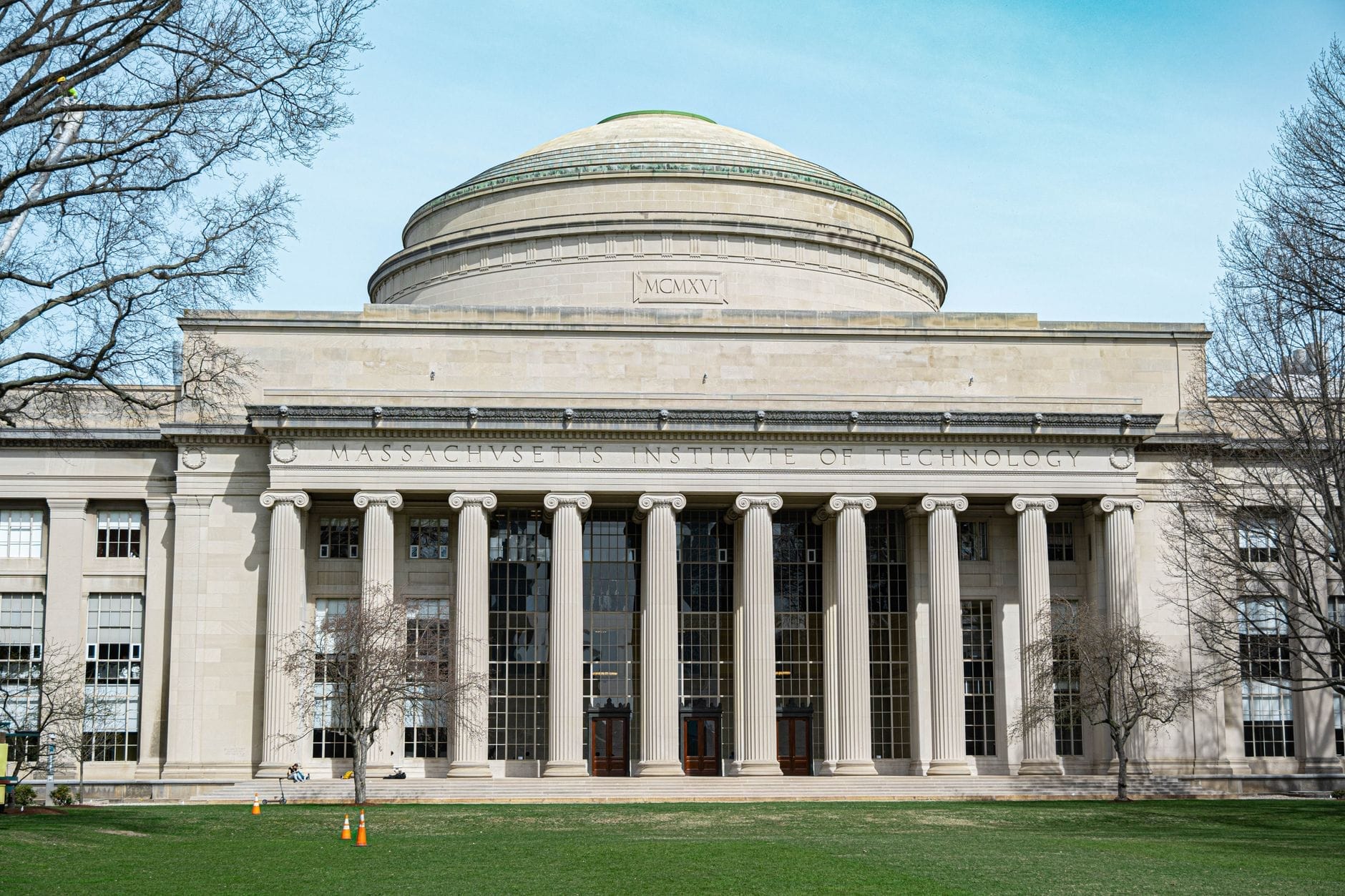
First Impressions: What MIT Actually Looks Like
Most first-time visitors are surprised to find that the Massachusetts Institute of Technology does not look like a leafy New England college. There are no wrought-iron gates, no Gothic spires, and no tidy quad ringed with Colonial brick. Instead, the campus along Massachusetts Avenue opens onto a sweeping neoclassical facade — the Great Dome atop Building 10, inspired by the Pantheon in Rome — flanked by grand colonnaded wings designed by William Welles Bosworth and completed in 1916. The effect is more civic monument than university, intentionally so: MIT’s founders wanted an institution focused on practical education and research.
Step past that classical front, though, and the campus becomes a kind of open-air survey of 20th-century architecture. Buildings by Eero Saarinen, I.M. Pei, Frank Gehry, and Steven Holl coexist in close proximity, producing a unusual visual landscape. Gehry's Stata Center, opened in 2004, is the most photographed structure on campus — its collapsing, tilting facades look deliberately unfinished, a visual argument that science is never complete. The contrast between Bosworth's Beaux-Arts symmetry and Gehry's deconstructivist chaos, separated by only a few hundred meters, makes for an unusually stimulating walk.
💡 Local tip
Start at the MIT Welcome Center at 292 Main Street, next to Kendall/MIT Station. It’s open Monday through Friday, 9:00 a.m. to 4:00 p.m. (excluding MIT holidays), and provides free campus maps and restrooms — useful before setting out on a longer walk.
Getting There and Getting Your Bearings
The easiest way to reach MIT from downtown Boston is the MBTA Red Line. The Kendall/MIT station sits at the edge of campus, practically at the Welcome Center's front door. The ride from Park Street Station in downtown Boston takes roughly 10 minutes. MIT's own guidance emphasizes public transit or rideshare because on-campus parking is limited and often restricted to permit holders.
If you are combining MIT with a visit to Harvard University's campus — about 1.5 miles northwest along Massachusetts Avenue — the Red Line connects both stops easily. Many visitors do both in a single half-day. The two campuses have a very different character, and the contrast is worth experiencing directly.
MIT's campus occupies both sides of Massachusetts Avenue, but the Charles River-facing portion is where most visitor interest concentrates. The main academic buildings, the dome, the public sculptures, and the Kendall Square end of campus all sit within comfortable walking distance of the Welcome Center. Kendall Square itself, immediately east of campus, has transformed over the past two decades into a major biotech and innovation corridor in the region, with dozens of research companies and spinoffs in the surrounding blocks.
Tickets & tours
Hand-picked options from our booking partner. Prices are indicative; availability and final rates are confirmed when you complete your booking.
Boston Summer Night Trolley Tour and River Cruise
From 27 €Instant confirmationFree cancellationLEGOLAND Discovery Center Boston tickets
From 26 €Instant confirmationFree cancellationGhosts and Gravestones tour of Boston
From 39 €Instant confirmationFree cancellationBest of Boston tour
From 182 €Instant confirmationFree cancellation
Architectural Highlights Worth Seeking Out
The Great Dome atop Building 10 is visible from across the Charles River and orients you on campus. Directly inside, the Infinite Corridor — an 825-foot-long hallway running through the main campus buildings — serves as the spine of MIT's interconnected interior. On specific dates in early November and early February, the setting sun aligns perfectly with the Infinite Corridor's axis, illuminating the passage end-to-end. MIT students call this 'MIThenge.' It happens twice a year, and the corridor fills with observers.
Kresge Auditorium, designed by Eero Saarinen and completed in 1955, sits to the west of the main campus. Its concrete shell rests on three points of contact with the ground, a structural feat that was considered risky at the time of construction. Directly opposite stands MIT Chapel, also by Saarinen — a cylindrical brick structure surrounded by a moat, with an interior lit by a skylight that reflects off a sculptural aluminum screen designed by Harry Bertoia. Both buildings are generally visible to visitors from the outside.
Frank Gehry's Ray and Maria Stata Center (Building 32), opened in 2004, houses the Computer Science and Artificial Intelligence Laboratory (CSAIL) among other departments. Its exterior reads as a cluster of towers in different materials — brick, metal, painted concrete — leaning at angles that seem structurally improbable. The ground-floor spaces are publicly accessible in some areas during normal working hours and worth walking through for the unconventional interior geometry alone.
ℹ️ Good to know
MIT has an ongoing public art program with 60+ works installed across campus, including pieces by Louise Nevelson, Alexander Calder, and Pablo Picasso. A free self-guided public art map is available from the Welcome Center and at art.mit.edu.
How the Campus Changes by Time of Day
Midweek mornings between 9:00 a.m. and 11:00 a.m. are when the campus is most alive with students and researchers moving between buildings. This is also when the Infinite Corridor and Lobby 7 — the main entrance foyer — are at their most atmospheric, filled with the sound of footsteps on hard floors and the murmur of people in conversation. The scale of Lobby 7 only becomes apparent when there are people in it to provide reference.
By early afternoon on weekdays the pace slows. The outdoor spaces along the Charles River, especially the strip of lawn running parallel to Memorial Drive, become quieter. Late afternoon in spring and fall is pleasant here: the view across the river toward the Boston skyline is clear and unobstructed, and the light comes in low and direct from the west. If you have a camera, this is the time to be on the riverfront.
Weekends are noticeably quieter across the academic side of campus. Buildings may be closed or have restricted access. Kendall Square's cafes and restaurants are still open, but much of the research-building interior life disappears. Weekend visitors get the architecture without the context of a working university, which suits some travelers and frustrates others.
MIT's History and Why It Matters
MIT was chartered in 1861, in the same year the American Civil War began, with a founding mission that distinguished it from the classical universities of its era: it was explicitly oriented toward applied science and industry, not classical scholarship. Its founding reflected a belief that scientific and technical education should serve society directly. That utilitarian founding purpose still shapes the culture of the place — the emphasis on practical problem-solving and real-world application remains visible in how the campus is organized and how research is presented publicly.
MIT's proximity to Boston and its deep integration with the city's innovation economy makes it a useful reference point for understanding why Cambridge and the broader region developed the way they did. The cluster of hospitals, research institutions, and technology companies along the Route 128 corridor and in Kendall Square is directly connected to MIT's century-plus presence in the area. If you are interested in the broader relationship between Boston's universities and its urban development, the Boston and Cambridge university guide provides useful context.
Museums and Indoor Spaces
The MIT Museum, which moved to a new facility at 314 Main Street in Kendall Square in 2022, is the most structured visitor experience on campus. It covers MIT's research history, robotics, artificial intelligence, and architecture, with rotating exhibitions alongside permanent collections. Admission is charged for the museum; verify current pricing directly with the museum before your visit.
The List Visual Arts Center, located in the Wiesner Building designed by I.M. Pei, presents contemporary art exhibitions and is generally free and open to the public during gallery hours. It operates on an academic-year schedule with reduced hours in summer; check the current schedule at listart.mit.edu before visiting.
For travelers building a broader itinerary around Boston's cultural institutions, the best museums in Boston guide covers MIT Museum alongside the city's major collections.
Practical Notes: Weather, Crowds, and Photography
MIT's campus is an outdoor environment, and Boston-area weather affects the experience considerably. Winters in Cambridge are cold, with January average temperatures below freezing, and significant snowfall is common from December through March. The campus remains operational and walkable in winter, but outdoor time is limited and some secondary pathways become difficult. The interconnected indoor corridors — the Infinite Corridor system links many main buildings — mean you can cover much of the central campus without going outside in poor weather.
Spring and fall are the most comfortable seasons for a campus walk. May, September, and October typically offer mild temperatures, lower humidity than summer, and good light for photography. Summer brings more tourist traffic to Kendall Square and the surrounding area, and the campus can feel emptier than expected as many students leave between semesters.
⚠️ What to skip
Research and laboratory buildings are not accessible to general visitors without an escort or specific event invitation. Do not attempt to enter buildings beyond publicly designated areas. The Welcome Center staff can clarify which spaces are open on any given day.
Photography is generally permitted in public outdoor areas and some publicly accessible interior spaces. The Stata Center, the Great Dome viewed from Killian Court, and the Kresge Auditorium exterior are the most frequently photographed subjects. The riverfront lawn facing the Boston skyline produces the campus's best known wide-angle view. A 24-35mm equivalent lens is useful for the building interiors; the scale of Lobby 7 and the Stata Center atrium is difficult to capture on a phone from inside.
If you plan to pair the MIT campus with time along the Charles River, the Charles River Esplanade on the Boston side offers a walkable riverfront path with views back toward Cambridge.
Insider Tips
- Ask at the Welcome Center about the current student-led free campus tour schedule. These tours run on a limited basis but offer access to anecdotes and building interiors that self-guided walking simply cannot replicate.
- The Infinite Corridor MIThenge alignment — when the setting sun illuminates the full length of the hallway — occurs for a few days around November 11 and February 1 each year. If your visit coincides with those windows, plan to be inside the corridor around sunset.
- The Kendall Square area immediately east of campus has some of the best weekday lunch options in Cambridge, with a high concentration of cafes and restaurants catering to researchers and tech workers. The quality-to-price ratio is generally good on weekdays; some spots close or reduce hours on weekends.
- The roof garden of Building 10 is accessible only through specific campus events and open days — check MIT's events calendar if this interests you, as the view from the Great Dome's level is not available to visitors under normal circumstances.
- If you are visiting with children or teenagers with a strong science interest, the MIT Museum in Kendall Square is a more focused and engaging experience than a general campus walk alone.
Who Is MIT Campus For?
- Architecture enthusiasts interested in 20th-century and contemporary design
- Travelers with a specific interest in science, technology, or innovation history
- Independent walkers who prefer exploring without a fixed itinerary
- Students and academics researching or considering postgraduate programs
- Visitors combining the trip with Harvard Square and a half-day in Cambridge
Nearby Attractions
Other things to see while in Cambridge:
- Harvard Art Museums
The Harvard Art Museums unite three distinct collections — the Fogg, Busch-Reisinger, and Arthur M. Sackler — inside a Renzo Piano-designed building steps from Harvard Yard. Free to all visitors, the complex is one of Cambridge's most rewarding cultural stops, offering everything from ancient coins to German Expressionism under a light-flooded glass canopy.
- Harvard Square
Harvard Square is the commercial and cultural heart of Cambridge, Massachusetts, where a triangular plaza at the intersection of Massachusetts Avenue, Brattle Street, and John F. Kennedy Street anchors a neighborhood of independent bookshops, street musicians, sidewalk chess tables, and some of the best people-watching in greater Boston. Free to explore, open around the clock, and directly served by the MBTA Red Line, it rewards both a quick two-hour detour and a full half-day of wandering.
- Harvard University Campus
Founded in 1636, Harvard University is the oldest institution of higher education in the United States, and its Cambridge campus draws visitors from around the world. Walking through Harvard Yard costs nothing, but knowing how to read the campus, when to go, and what to skip makes the difference between a rewarding afternoon and a confused wander.
- Mount Auburn Cemetery
Established in 1831 and designated a National Historic Landmark, Mount Auburn Cemetery is a roughly 175-acre landscape of glacial ponds, flowering trees, and historic monuments that shaped how Americans think about both death and public green space. Free to enter and open year-round, it draws historians, birders, and quiet-seekers in equal measure.