Hampstead Heath: London's Wild Hilltop Escape
Hampstead Heath is a vast, ancient heathland rising above north London, offering panoramic skyline views, outdoor swimming ponds, old-growth woodland, and open grassland — all free to enter and roughly 30–45 minutes from central London. It is one of the few places in the city where you can lose yourself in landscape that feels uncurated and unhurried.
Quick Facts
- Location
- North London, Borough of Camden (Zone 2), NW3 / N6
- Getting There
- Hampstead Heath Overground; Hampstead or Golders Green (Northern line, Tube)
- Time Needed
- 2–4 hours for a proper walk; half a day if you swim or visit Kenwood
- Cost
- Free entry to the Heath; charges apply for swimming ponds and the Parliament Hill Lido
- Best for
- Scenic walks, outdoor swimming, city views, nature, dog walking, picnics
What Hampstead Heath Actually Is
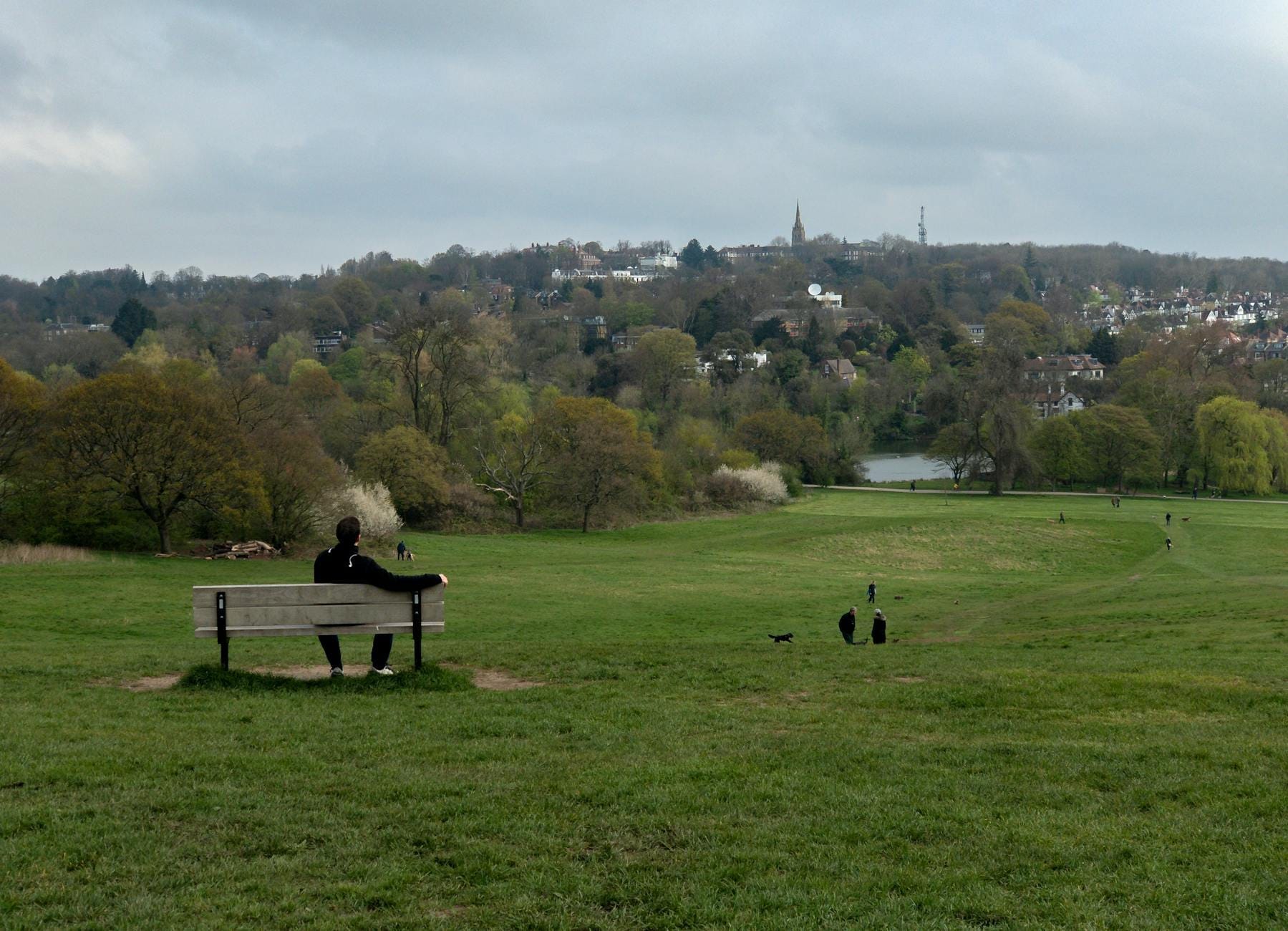
Hampstead Heath is a 320-hectare ancient heathland in north London, sitting at one of the city's highest natural points — Parliament Hill reaches around 98 metres above sea level. That elevation is the whole point. Stand on Parliament Hill on a clear morning and the London skyline spreads below you in a way that no purpose-built viewpoint can quite replicate, because there is nothing in the foreground except grass.
The Heath is managed by the City of London Corporation and designated a Site of Metropolitan Importance for Nature Conservation. Part of the Kenwood area holds Site of Special Scientific Interest (SSSI) status. This is not a manicured royal park with neat pathways and flower beds. It is deliberately rough: gorse scrub, ancient woodland, open meadow, reed-fringed ponds, and muddy tracks that reward waterproof boots.
It sits mostly within the London Borough of Camden, with the Hampstead Heath Extension and Golders Hill Park extending into Barnet. For first-time visitors, it is worth reading up on the Hampstead neighbourhood before you arrive, as the village itself — with its independent cafes and Georgian streets — is an ideal place to continue the day after a walk.
💡 Local tip
The Heath has no gates and no main entrance. Most visitors arrive via Hampstead Heath Overground station (south side) or walk down from Hampstead Tube (Northern line), or Golders Green for the northern side. Each entry point gives you a different experience of the park, so choose based on what you want to see first.
The View from Parliament Hill: Why It Works
Parliament Hill is the Heath's most visited spot for good reason. The name's origins are debated — one theory links it to the Gunpowder Plot conspirators watching from here in 1605 — but whatever its history, the physical reality is simple: a long, open grass slope facing south, with a bench-lined summit and an unobstructed view across the city.
Early mornings reward the most. Before 9am on weekdays, the hill belongs almost entirely to dog walkers and dedicated runners. The skyline — the Shard, the Gherkin, St Paul's dome, the BT Tower, Canary Wharf — appears sharper in low morning light, and on cold days the city is often half-visible through a thin layer of mist. By midday on summer weekends, the slope fills with families and picnickers and the solitary quality disappears.
If city panoramas interest you, it is worth comparing Parliament Hill with other elevated vantage points across London. The Primrose Hill viewpoint offers a similarly unobstructed skyline view in a different part of north London, but Parliament Hill tends to feel less managed and more open. For enclosed observation decks, the guide to the best views in London covers the full range of options.
ℹ️ Good to know
Photography note: Parliament Hill faces south-southwest, meaning morning light comes from behind you if you're shooting the skyline, which works well for most of the year. Sunset shots require patience — the sky above the city can be vivid, but the skyline itself will be in shadow.
Tickets & tours
Hand-picked options from our booking partner. Prices are indicative; availability and final rates are confirmed when you complete your booking.
Self-guided Discovery Walk in London's Hampstead neighborhood
From 32 €Instant confirmationFree cancellationLuggage storage in London Heathrow airport
From 8 €Instant confirmationFree cancellationSafe and Convenient Luggage Storage at London Heathrow Terminal 5
From 7 €Instant confirmationFree cancellationHeathrow layover experience
From 519 €Instant confirmationFree cancellation
Swimming in the Ponds: What to Expect
The Heath's bathing ponds are one of London's unusual offerings. There are three: the Men's Pond, the Ladies' Pond, and the Mixed Pond. All are natural, fed by the River Fleet's headwaters, and open for outdoor swimming year-round (though specific hours and seasonal access should be confirmed with the City of London before visiting, as they vary). A fee applies.
The water is not heated and not filtered in the way a municipal pool would be. It is green, weedy, and cold even in August. Regulars swim through January and February. The Ladies' Pond in particular has a long-standing community of year-round swimmers and an atmosphere that is completely its own — peaceful, unhurried, separated from the rest of the Heath by trees and reeds. If you have never swum in open water in a city before, this is a remarkable experience.
Parliament Hill Lido, a separate outdoor pool with heated water, is also on the Heath and operates seasonally. It charges a different fee. Check current prices and opening hours directly with the City of London Corporation before travelling, as these change between seasons.
⚠️ What to skip
The ponds can be closed unexpectedly due to water quality, weather, or maintenance. If swimming is your primary reason for visiting, check the City of London's Hampstead Heath page on the morning of your visit before making the journey.
Kenwood House and the Northern Edge
On the Heath's northern boundary sits Kenwood House, a neoclassical 18th-century villa remodelled by Robert Adam and now managed by English Heritage. Entry to the house is free for the collection and grounds, though special exhibitions may charge separately. Inside is a small but serious art collection that includes a self-portrait by Rembrandt and works by Vermeer, Turner, and Reynolds.
The grounds behind the house extend across a wide formal lawn overlooking a lake, with woodland paths leading back into the Heath. In summer, outdoor concerts take place on the lawn — classical performances and popular music events, with audiences sitting on the grass above the lake. It is one of the more civilised ways to spend a summer evening in London. The Kenwood House experience pairs well with a walk across the Heath from the south side, roughly 30–40 minutes on foot depending on pace.
The cafe at Kenwood is reliable for coffee and a hot lunch, and the covered terrace works even on overcast days. It is significantly less crowded than the cafes near Parliament Hill or the Lido on weekends.
Woodland, Wildlife, and Practical Walking
The Heath contains around 25 ponds in total and extensive sections of ancient woodland with oak, hornbeam, and sweet chestnut. The East Heath area, between the main road and the ponds, is where the landscape feels most wild: bracken, gorse, and secondary woodland paths that dead-end at water. This is where you go to feel like you have left London, even if you can hear a siren in the distance.
Wildlife is present in ways unusual for an urban park. Kingfishers appear at the ponds. There are grass snakes in warm weather. The Heath supports breeding populations of woodpeckers, kestrels, and a range of bat species active after dusk. Autumn is particularly atmospheric: the woodland paths collect mist, the leaf litter is deep, and the Heath takes on a different character from its summer crowds.
Paths across the open heathland are generally well-worn and easy to follow. Woodland tracks are unpaved and can be very muddy from October through March. Sturdy footwear is strongly advised in any season other than a dry summer. There are no maps posted consistently throughout the park, so downloading an offline map before arriving is useful.
💡 Local tip
Wear or bring layers regardless of the season. Even in July, the exposed hilltop on Parliament Hill can be noticeably cooler and windier than street level. In autumn and winter, the exposed sections of the Heath are exposed in the fullest sense.
For context on how the Heath fits into the wider offer of London's green spaces, the guide to London's best parks is a useful starting point for comparing it against Richmond Park, Hyde Park, and others.
Getting There and Practical Details
The Heath sits in Zone 2, roughly 30–45 minutes from central London by public transport. From King's Cross, the most direct route is typically the London Underground to Hampstead station and a walk, or the London Overground to Hampstead Heath station for the south side near Parliament Hill. Hampstead Tube station (Northern line) is a short walk from the west side of the Heath and is convenient if you are coming from central London or the South Bank.
Golders Green Tube station (also Northern line) gives access to the quieter northern section near the Extension and Kenwood, which is a longer walk from the busier southern entry points.
The Heath is generally open all day and there are no gates or fences across most of it. There is no main car park dedicated to the Heath, and on summer weekends parking in surrounding streets is extremely difficult. Public transport is the strongly recommended approach.
Accessibility on the Heath is limited by the terrain itself. The open heathland and many woodland paths are uneven, unpaved, and hilly. Some paths around Parliament Hill and near the cafes are more manageable, and the City of London team can advise on specific accessibility requirements by phone. The Kenwood estate grounds are more accessible than the open Heath.
Who Will and Won't Enjoy This
Hampstead Heath suits people who want space, quiet, and landscape that feels unmediated. It is excellent for those willing to walk without a specific destination and comfortable with rough terrain. Children who enjoy open outdoor space will find it far more engaging than many formal parks.
It is less suited to visitors with very limited mobility, those looking for a polished or event-driven experience, or anyone expecting clear signage and a logical path network. In wet weather, significant sections of the Heath become muddy and unpleasant without appropriate footwear. If you are in London for two or three days and focused on major cultural institutions, the Heath may feel like an investment of time better allocated elsewhere — though the Parliament Hill view alone takes under an hour and is worthwhile on any itinerary.
For a structured introduction to London's major attractions that can help you prioritise the Heath against other options, the 3-day London itinerary covers how to allocate limited time across the city.
Insider Tips
- The Model Boating Pond on the west side of the Heath is almost always quiet, even on busy summer afternoons. It is a useful shortcut from Parliament Hill toward Kenwood and passes through the least-trafficked section of the open Heath.
- If you want Parliament Hill to yourself, arrive before 8am on a weekday morning. The view is identical to midday but the hill will have fewer than a dozen people on it.
- The cafe at the Lido (Parliament Hill) has outdoor tables facing the field and is open to non-swimmers. It fills up fast on weekends but is manageable on weekday mornings. The Kenwood cafe is a more reliable bet on busy days.
- The Heath Extension to the north — accessible from Golders Green — is significantly less visited than the main Heath and offers longer, quieter woodland walks without the weekend crowds near Parliament Hill.
- During the annual summer concerts at Kenwood, the grassy slope outside the paying enclosure still offers good sound carry. Locals bring a picnic and sit beyond the fence. It is not the same as the full experience, but it is free.
Who Is Hampstead Heath For?
- Walkers and runners looking for varied terrain and real space within the city
- Outdoor swimmers seeking year-round wild swimming in natural ponds
- Photographers wanting the London skyline from an elevated, unobstructed position
- Families with children who want outdoor space that is unconstrained
- Visitors who want a half-day counterweight to London's indoor cultural attractions
Nearby Attractions
Other things to see while in Hampstead & Highgate:
- Freud Museum London
The Freud Museum London preserves the Hampstead house where Sigmund Freud spent the last year of his life after fleeing Nazi-occupied Vienna in 1938. His original consulting room, the iconic couch, and thousands of antiquities remain exactly as he left them, making this one of London's most quietly extraordinary house museums.
- Highgate Cemetery
Opened in 1839 as one of London's 'Magnificent Seven' cemeteries, Highgate Cemetery combines Gothic Victorian architecture, overgrown woodland, and the graves of some of history's most recognisable figures. The East Cemetery is open to independent visitors; the wilder West Cemetery requires a guided tour booked in advance.
- Kenwood House
Kenwood House is a beautifully restored neo-classical villa sitting on the northern edge of Hampstead Heath, housing one of London's finest free art collections. From Rembrandt self-portraits to sweeping landscaped grounds, it rewards visitors looking for culture without crowds or cost.