Hakone: The Complete Guide to Tokyo's Favorite Mountain Escape
Hakone is a mountain hot-spring area in Kanagawa Prefecture, about 85 to 90 minutes from Shinjuku by direct train. It offers volcanic landscapes, onsen ryokan, views of Mount Fuji across Lake Ashi, and a density of quality museums that rewards both a rushed day trip and a leisurely overnight stay.
Quick Facts
- Location
- Hakone-machi, Ashigarashimo District, Kanagawa Prefecture — approx. 80 km southwest of central Tokyo
- Getting There
- Odakyu Romancecar from Shinjuku to Hakone-Yumoto: approx. 85–90 min. Shinkansen to Odawara then Hakone Tozan Railway: approx. 45–55 min total.
- Time Needed
- Minimum 1 full day; 1–2 nights recommended for onsen and multiple attractions
- Cost
- No entry fee for the area itself. Hakone Freepass (2-day from Shinjuku) around ¥7,100 if you include the Romancecar; individual sights charge separately (e.g., Hakone Sekisho ¥500)
- Best for
- Nature lovers, onsen seekers, Mount Fuji views, museum-goers, couples
- Official website
- hakone-japan.com
What Hakone Actually Is (And Why That Matters for Planning)
Hakone is not a single attraction with a ticket booth and a closing time. It is an entire mountain resort town built around the caldera of an ancient volcano, and understanding that distinction is the single most useful thing you can know before you arrive. The area spans forests, volcanic ridges, a crater lake, hot-spring valleys, and the southern shore of Lake Ashi, all connected by a loop of trains, cable cars, a ropeway, and cruise boats. You do not visit Hakone so much as navigate it.
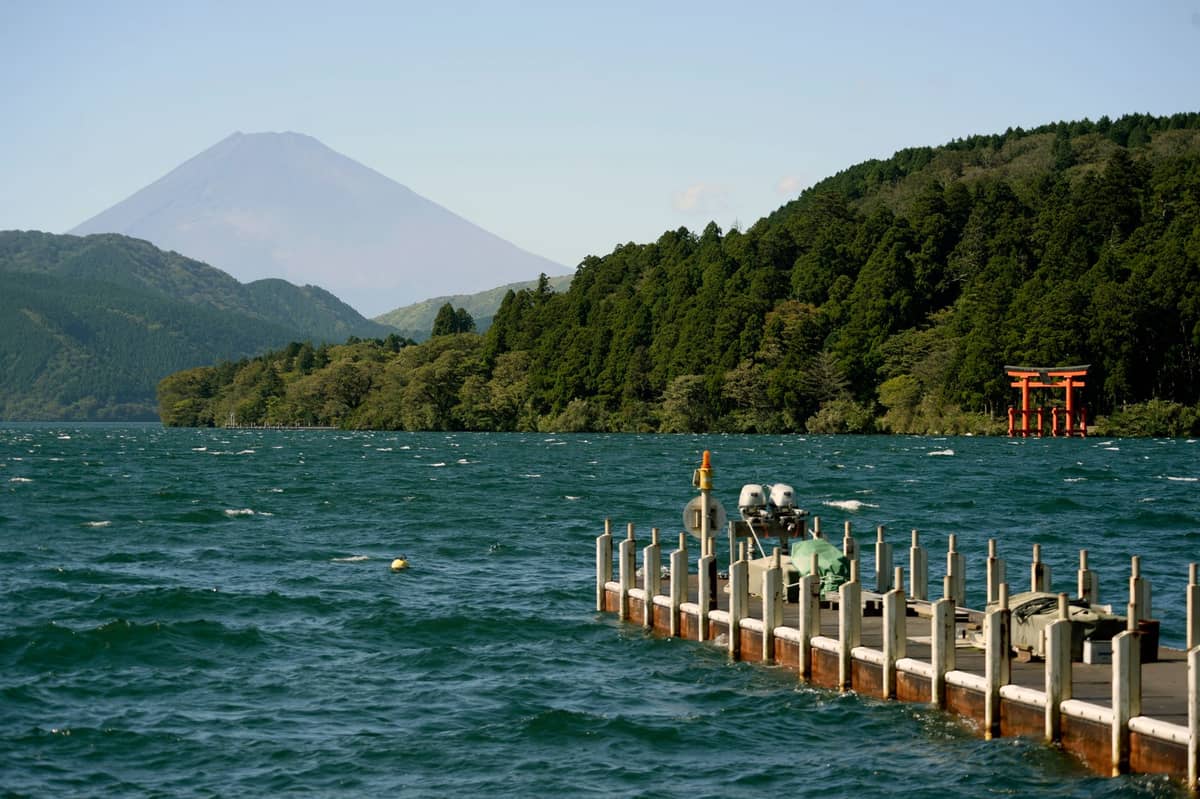
The town of Hakone-machi sits in Ashigarashimo District, Kanagawa Prefecture, roughly 80 kilometers southwest of central Tokyo. Despite that distance, the Odakyu Romancecar limited express covers Shinjuku to Hakone-Yumoto in about 85 to 90 minutes without a single transfer, which is why Hakone has been Tokyo's default weekend escape for well over a century. On a clear morning, the silhouette of Mount Fuji appears above the far ridge of Lake Ashi with the kind of geometric perfection that seems almost staged.
💡 Local tip
Buy the Hakone Freepass before you leave Shinjuku. It covers the Odakyu limited express (express surcharge not included for Romancecar), the Hakone Tozan Railway, the Hakone Tozan Cable Car, the Hakone Ropeway, the Hakone Cruise on Lake Ashi, and all Hakone Tozan Buses within the loop — plus discounts at many museums and facilities. A 2-day pass from Shinjuku costs around ¥7,100 as of 2026. For a single day, a 1-day version is also available.
Getting There: Your Realistic Options from Tokyo
The most comfortable option from Tokyo is the Odakyu Romancecar, a reserved-seat limited express that runs directly from Odakyu Shinjuku Station to Hakone-Yumoto. Seats face forward with large windows and the ride takes about 85 to 90 minutes. Book in advance on weekends, especially during cherry blossom season and autumn foliage, when trains sell out early. The Romancecar surcharge is not covered by the Freepass, but it is modest and well worth the comfort on an early-morning departure.
The faster alternative is the JR Tokaido Shinkansen from Tokyo Station or Shinagawa to Odawara, which takes around 30 to 40 minutes. From Odawara you transfer to the Hakone Tozan Railway for a further 15 minutes to Hakone-Yumoto. This route is covered by the JR Pass for the Shinkansen leg and suits travelers already holding that pass. Highway buses from Shinjuku run directly to stops along Lake Ashi including Togendai, but the journey takes over two hours and is weather-dependent for schedule reliability. Reserve early regardless of which option you choose.
Once in the area, the classic itinerary traces the Hakone Loop: Hakone-Yumoto up the mountain by Hakone Tozan Railway to Gora, then cable car to Sounzan, then the Hakone Ropeway over the volcanic Owakudani valley to Togendai on Lake Ashi, then the Ashi Cruise to Hakone-machi or Moto-Hakone, and finally a bus back toward your hotel or onward to Odawara. For full planning context, the day trips from Tokyo guide has additional route options and timing advice.
Tickets & tours
Hand-picked options from our booking partner. Prices are indicative; availability and final rates are confirmed when you complete your booking.
Mt.Fuji,Owakudani, Hakone Cruise & Ropeway, Oshino Hakkai 1-Day Trip
From 54 €Instant confirmationFree cancellationTsukiji Fish Market Walking Food Tour
From 40 €Instant confirmationFree cancellationTour to Mt. Fuji Area, Oshino Hakkai and Kawaguchi Lake from Tokyo
From 57 €Instant confirmationFree cancellationNikko UNESCO Shrine and Nature View 1-Day Tour from Tokyo
From 78 €Instant confirmationFree cancellation
The Hakone Tozan Railway: A Slow Climb Worth Savoring
The Hakone Tozan Railway between Hakone-Yumoto and Gora is the steepest adhesion railway in Japan, ascending about 445 meters over roughly 15 kilometers via a series of switchbacks. Trains zigzag upward through dense forest and past hydrangea banks that bloom in vivid blue and purple from mid-June through July, making this one of the most photographed rail journeys in the Kanto region. In the early morning, mist clings to the cedar slopes and the carriage windows fog slightly from the temperature difference between the train and the air outside. In late autumn, the same corridor turns rust and amber.
Miyanoshita Station, a stop midway up, is worth a brief exit if you have time. The area around it has the feel of a Victorian hill station, with older hotel buildings and a quiet main street that contrasts sharply with the weekend crowds lower down at Hakone-Yumoto. The Fujiya Hotel, opened in 1878 as one of Japan's first Western-style resort hotels, sits just uphill from the station and has hosted guests including Charlie Chaplin and John Lennon.
Owakudani: The Volcanic Heart of the Loop
The Hakone Ropeway crosses the active volcanic zone of Owakudani, where sulfurous steam vents hiss from the grey hillside and the air carries a sharp, eggy smell that hits you the moment you step off the gondola. At an elevation of around 1,044 meters, the viewing area offers the clearest potential sightlines to Mount Fuji on the western horizon, though cloud cover renders the summit invisible on most afternoons. Early morning arrivals, ideally before 10:00, give the best statistical chance of an unobstructed view.
The famous kuro-tamago, hard-boiled eggs cooked in the volcanic hot springs until the shells turn black, are sold here. The sulphur in the water reacts with iron in the shell to produce the color; the egg inside is ordinary. Eating one has become a ritual for visitors, and the small vendor area at the top station is usually crowded by late morning. The eggs sell out; arrive early if this is a priority.
⚠️ What to skip
The Owakudani ropeway section is occasionally closed due to elevated volcanic activity. This closure can last days or months with little notice. When the direct ropeway is shut, buses replace that segment of the loop but the Owakudani station itself may be off-limits. Check the Hakone Ropeway operator's website or the official Hakone tourism portal before your trip if this part of the journey is important to you.
Lake Ashi and Hakone Shrine: The Postcard View
Lake Ashi, known in Japanese as Ashino-ko, fills a volcanic crater at around 723 meters elevation. The lake is calm and a deep blue-green on clear days, and the combination of a red torii gate rising from the water near the Hakone Shrine with Mount Fuji in the background is among the most reproduced images in Japanese travel photography. In practice, that framing requires standing on the Moto-Hakone shore looking northwest, and it works best between roughly 07:00 and 10:00 before haze or afternoon cloud builds on the mountain.
The Hakone Shrine itself is a functioning Shinto shrine with origins traced to 757 CE, set back from the lake shore in a cedar forest. The approach from the lakeside torii gate passes through tall cryptomeria trees that block the sun even in summer, creating a cool, dim corridor that feels genuinely atmospheric rather than managed. The main hall receives a steady stream of visitors throughout the day, but the forest paths branching off toward the Peace Torii and around the outer precincts are often quiet even when the main area is busy.
The pirate-themed cruise boats on Lake Ashi run between Togendai, Hakonemachi-ko, and Moto-Hakone-ko. The boats themselves are theatrical, styled after European galleons, which strikes most visitors as either charming or absurd depending on expectation. Function over aesthetics: the 30-minute ride gives you a good sense of the lake's scale and the mountain panorama, and it is the most logical way to connect the ropeway arrival point at Togendai with the Hakone Shrine area without backtracking.
Hakone's Museums: Better Than You'd Expect
The concentration of serious art and design institutions in Hakone is unusual for a resort area of this size. The Hakone Open-Air Museum, located near Chokoku-no-Mori Station on the Tozan Railway, spreads sculptures by Rodin, Henry Moore, Miro, and others across a hillside garden of about seven hectares. There is a Picasso pavilion with over 300 works. Admission is charged separately and the museum is not covered by the Freepass, but it is included in discounts. Plan at least two hours.
The Pola Museum of Art in the Sengokuhara area holds an impressive collection of Impressionist and Post-Impressionist work, including paintings by Monet, Renoir, and Cézanne, in a building that merges into the surrounding forest. It requires a bus from the main loop and is easy to skip on a rushed day, but rewards visitors who plan around it. For travelers who take modern art seriously, this museum alone could justify an overnight stay. Hakone also fits well into a broader museum itinerary around the Tokyo region.
Onsen: The Reason Locals Actually Come
Hot spring bathing is the original and still the primary draw for Japanese visitors. Hakone sits within a geothermal zone fed by several distinct spring sources, each with different mineral compositions and water temperatures. The main onsen town of Hakone-Yumoto, at the base of the mountains, has public bathhouses and day-use facilities alongside hotels. Higher up, the Gora and Sengokuhara areas have more spacious ryokan with private garden baths. The Tonosawa and Dogashima areas along the Hayakawa River offer some of the oldest and quietest inns.
Day visitors can access onsen at many hotels that offer day-use bathing, typically in the late morning to early afternoon window before overnight guests arrive. Call ahead or check online, as policies change seasonally and some facilities restrict day-use on busy weekends. If you plan to stay overnight, booking a ryokan with a private open-air bath (rotenburo) makes the experience significantly more private and relaxed than shared public baths.
Travelers new to onsen etiquette should know the basics: bathe before entering the water, no swimwear in traditional baths, tattoos are still prohibited at many facilities. The Tokyo onsen guide covers etiquette, terminology, and how to find tattoo-friendly facilities in detail.
When to Go and What to Expect by Season
Spring (late March to early May) brings cherry blossoms to the lower valleys and mild temperatures. Autumn (mid-October to mid-November) turns the mountain forests gold and red and is arguably the most visually dramatic season, though it is also the most crowded. Both periods require weekend bookings weeks or months in advance for popular ryokan.
Summer weekdays are quieter than weekends but humid and sometimes rainy. The hydrangea bloom on the Tozan Railway in June and July is genuinely worth the wet season. Winter is the quietest period and offers the clearest skies for Fuji views, especially in January and February when cold, dry air reduces haze. Temperatures at Owakudani can drop below zero in winter; dress in warm, windproof layers if you plan to be at altitude.
If timing your Hakone trip around the best weather window is a priority, the best time to visit Tokyo guide covers seasonal conditions across the wider region, including the Kanagawa day-trip corridor.
Hakone Sekisho: The Historic Checkpoint
The Hakone Sekisho is a reconstructed version of the Tokugawa-era checkpoint that stood on the old Tokaido road between Edo (present-day Tokyo) and Kyoto. Established in 1619, the original checkpoint controlled the movement of weapons into Edo and of daimyo family members, who were required to live in the capital as hostages. The reconstruction, completed in 2007 near the shore of Lake Ashi at Moto-Hakone, is meticulous: original tools, guard equipment, and documents are displayed in the main gate and guardhouse buildings. Adult admission is ¥500. Hours are typically 09:00 to 17:00, with reduced hours in December and February.
The site is small enough to cover in 45 minutes but gives genuine historical weight to what can otherwise feel like a purely scenic trip. It is located close to the lake shore and the Hakone Shrine approach, so it pairs naturally with a late morning visit to the shrine before lunch.
Insider Tips
- The Romancecar sells out on weekend mornings during peak seasons (late March–May and October–November). Book reserved seats through the Odakyu app or website at least two weeks ahead, not the morning you plan to leave.
- Mount Fuji is most reliably visible in the morning before around 10:00. If a Fuji view is your primary goal, stay overnight and position yourself at Lake Ashi or the Owakudani ropeway at opening time rather than arriving on an afternoon day trip.
- The Hakone Tozan Bus covers parts of the loop that the train, cable car, and ropeway do not reach — including the Pola Museum of Art in Sengokuhara. Download the Hakone Navi app before you travel; it has real-time bus tracking and covers the full loop network.
- Many ryokan have strict check-in windows and will not hold dinner service if you arrive late. If you are traveling from Tokyo with onward dinner included, take the earliest practical train and leave buffer time for delays on busy days.
- Day-use onsen at hotels are usually available from around 10:00 to 14:00. Arriving early avoids the post-lunch rush and means you are more likely to get access before facilities close to day visitors for overnight preparations.
Who Is Hakone For?
- Travelers based in Tokyo wanting a genuine contrast to city life without a complicated journey
- Couples looking for a ryokan overnight with private hot spring bathing
- Photography-focused visitors targeting Mount Fuji compositions
- Art and museum enthusiasts who want quality collections in a natural setting
- First-time visitors to Japan who want to experience traditional onsen culture within a manageable day trip distance
Nearby Attractions
Combine your visit with:
- Akasaka Palace (State Guest House)
The State Guest House, Akasaka Palace is Japan's principal diplomatic residence and one of the few Western-style palaces in Asia open to the public. Built in neo-baroque style for the Crown Prince in the early 20th century, it now receives heads of state and, on select days, ordinary visitors. The combination of ornate gilded interiors, formal French gardens, and a Japanese-style annex makes it one of the most architecturally unusual stops in Tokyo.
- Edo-Tokyo Open Air Architectural Museum
Spread across the grounds of Koganei Park, the Edo-Tokyo Open-Air Architectural Museum rescues and reassembles more than 30 historic structures spanning the Edo period through the early 20th century. From a dismantled farmhouse to a reconstruction of a Showa-era Tokyo streetscape, it is one of the most thoughtful and undervisited cultural sites in the metropolitan area.
- Enoshima
A small island off the Shonan coast of Kanagawa Prefecture, Enoshima packs a surprising amount into a short walk: a three-part Shinto shrine, ancient sea caves, a hilltop botanical garden, a lighthouse observation tower, and seafood stalls lining a stone-paved shopping street. It works as a half-day excursion or a full day if you combine it with nearby Kamakura.
- Gotokuji Temple
Gotokuji Temple in Setagaya is a working Soto Zen Buddhist temple that happens to be one of the claimed birthplaces of the maneki-neko, Japan's iconic beckoning cat. Hundreds of white ceramic cats line the shelves of a dedicated shrine, creating one of Tokyo's most quietly striking visual spectacles. Entry is free, crowds are manageable, and the surrounding grounds offer genuine calm.