Enoshima Island: The Complete Guide to Tokyo's Coastal Day Trip
A small island off the Shonan coast of Kanagawa Prefecture, Enoshima packs a surprising amount into a short walk: a three-part Shinto shrine, ancient sea caves, a hilltop botanical garden, a lighthouse observation tower, and seafood stalls lining a stone-paved shopping street. It works as a half-day excursion or a full day if you combine it with nearby Kamakura.
Quick Facts
- Location
- Enoshima, Fujisawa-shi, Kanagawa Prefecture (approx. 60 km south of central Tokyo)
- Getting There
- Katase-Enoshima Station (Odakyu Enoshima Line from Shinjuku, ~65 min); Enoshima Station (Enoshima Electric Railway Enoden Line from Kamakura or Fujisawa)
- Time Needed
- 3–5 hours for the island; full day if combining with Kamakura
- Cost
- Island entry free; Sea Candle observation tower ¥800 adults / ¥400 children; Escar escalators ¥360 adults; garden entry free in daytime (¥500 adults / ¥250 children after 17:00 during illumination events)
- Best for
- Coastal scenery, shrine culture, seafood, photography, day-trippers from Tokyo
- Official website
- discover-fujisawa.jp/en
What Enoshima Actually Is
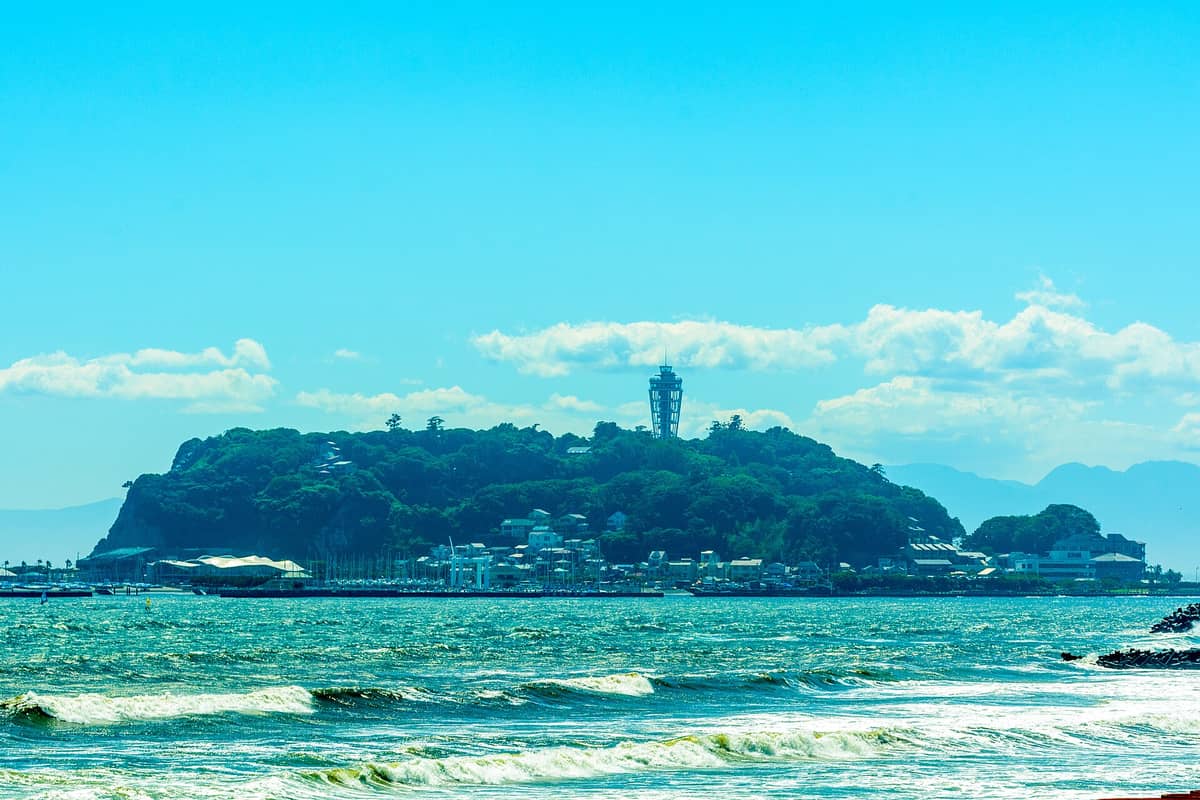
Enoshima Island is a small offshore island on the Shonan coast, connected to the mainland by a pedestrian bridge roughly 400 meters long. The island sits in Fujisawa, Kanagawa Prefecture, about 50 kilometers south of central Tokyo. It is not a remote or rugged place: the main thoroughfare is a covered shopping arcade lined with restaurants, souvenir shops, and stalls selling fresh shirasu (baby anchovies), the local specialty. Behind the commerce, however, is genuine historical and religious depth.
The island is anchored around Enoshima Shrine, a complex of three interconnected shrines dedicated to Benzaiten, the goddess of music, beauty, and the sea. Benzaiten is one of the Seven Lucky Gods of Japanese mythology, and Enoshima has been a pilgrimage site associated with her worship since at least the 9th century. This religious heritage sits alongside a modern botanical garden, a lighthouse tower, and sea caves at the island's western tip. The combination makes Enoshima unusual: part pilgrimage site, part coastal resort, part afternoon seafood market.
ℹ️ Good to know
The island is free to enter and walk around. The paid elements are specific: the Escar escalator system (¥360 adults), the Sea Candle observation tower (¥800 adults), and nighttime entry to the Samuel Cocking Garden during illumination events (¥500 adults). You can see a great deal at no cost if you are willing to climb the hill on foot.
Getting There from Tokyo
The most direct route is the Odakyu Enoshima Line from Shinjuku to Katase-Enoshima Station, which takes around 65 minutes on the Romance Car express or somewhat longer on local services. From the station, the bridge to the island is a short walk. Alternatively, the Enoden (Enoshima Electric Railway) connects Enoshima Station to Kamakura in about 25 minutes, making it easy to combine both destinations in a single day. For full guidance on building an itinerary, the day trips from Tokyo guide covers both Enoshima and Kamakura as a paired excursion.
If you are combining Enoshima with Kamakura, consider starting in Kamakura (the larger and more complex destination) and ending at Enoshima for the afternoon, when the light over the ocean is at its most photogenic. The Enoden runs regularly between the two and takes about 25 minutes.
💡 Local tip
The Enoshima-Kamakura Free Pass, sold by Odakyu, covers the Odakyu round trip from Shinjuku to Fujisawa plus unlimited rides on the Odakyu Enoshima Line between Fujisawa and Katase-Enoshima and on the Enoden for the day. It typically works out cheaper than buying individual tickets, and eliminates the need to queue at machines. Verify current pricing with Odakyu before travel.
Tickets & tours
Hand-picked options from our booking partner. Prices are indicative; availability and final rates are confirmed when you complete your booking.
1-day tour to Kotoku-in, Hachimangu Shrine and Enoshima from Tokyo
From 54 €Instant confirmationFree cancellationTsukiji Fish Market Walking Food Tour
From 40 €Instant confirmationFree cancellationMt.Fuji,Owakudani, Hakone Cruise & Ropeway, Oshino Hakkai 1-Day Trip
From 54 €Instant confirmationFree cancellationTour to Mt. Fuji Area, Oshino Hakkai and Kawaguchi Lake from Tokyo
From 57 €Instant confirmationFree cancellation
Walking the Island: What You Actually See
Cross the Benten Bridge from the mainland and you step immediately onto Enoshima Benten Bridge Road, the island's main pedestrian spine. The covered arcade, called Enoshima Benzaiten Nakamise-dori, runs uphill from the entrance torii gate. On weekends, the smell of grilled shirasu, scallops on the half shell, and fresh squid fills the air from the first stalls. The noise is cheerful rather than overwhelming: families, couples, and groups of students moving at a leisurely pace, most with something to eat in hand.
The shrine complex begins after the arcade. Enoshima Shrine is split into three sections: Hetsumiya, Nakatsumiya, and Okitsumiya, each dedicated to one of three sea goddesses collectively called the Munakata goddesses. The approach is through multiple torii gates with stone lanterns lining the path. The architecture is relatively modest compared to major urban shrines, but the setting compensates: the path feels ancient, shaded by old trees, with the sound of the ocean audible as you climb.
Above the shrine precincts, the Samuel Cocking Garden occupies the hilltop. Built on the site of a botanical garden originally developed by British merchant Samuel Cocking in the late 19th century, it is now a well-maintained public space with the Sea Candle lighthouse tower at its center. The tower rises 59.8 meters and offers 360-degree views of the Shonan coast: on clear days, particularly in winter and early spring, Mount Fuji is visible to the northwest. For context on Tokyo-area viewpoints, see the best views around Tokyo guide.
The sea caves, called Iwaya Caves, are at the island's western end, a downhill walk from the garden. These natural caves extend into the rock face and are associated with early Buddhist and Shinto religious practice on the island. They are dimly lit, narrow in places, and low-ceilinged. Visitors are given candles at the entrance. The caves have a separate admission fee and are genuinely atmospheric, though not for anyone with strong claustrophobia. Check opening times locally, as they can vary.
How the Island Changes by Time of Day
Early morning, before 10:00, is the calmest window. The shops along the arcade are mostly shuttered, and the shrine receives its first visitors in near-quiet. The sea air is clean and the light on the water is flat and cool. If your priority is the shrine rather than the food stalls, arriving early is worth the effort of an early train.
By midday on weekends, the main arcade becomes genuinely congested. The bridge approach fills with visitors moving in both directions, the stalls operate at full capacity, and the Escar escalator queues lengthen. Weekday visits are noticeably calmer at all hours.
Late afternoon shifts the mood again. Day-trippers begin to leave, the seafood stalls thin out, and the garden takes on warmer light. During seasonal illumination events in the Samuel Cocking Garden (typically autumn and winter evenings), the Sea Candle is lit and the garden opens for paid night entry at ¥500 per adult (¥250 per child). The sight of the tower lit against a dark sky above the sea is one of the better visual experiences the island offers. The last trains back to Tokyo run late enough to accommodate an evening visit, but confirm timetables before planning around it.
Food and Eating on Enoshima
Shirasu is the defining food of Enoshima and the surrounding Shonan coast. These tiny whitebait anchovies are served raw (nama shirasu), as a rice topping, in don bowls, in pasta, in pizza, and in numerous snack forms. Raw shirasu has a translucent, soft texture and a mild brininess. Many visitors find it one of those regional specialties that makes a place worth visiting independently of anything else. Note that raw shirasu is not available year-round due to fishing restrictions, typically paused from early January to early–mid March.
Beyond shirasu, the island's stalls and small restaurants offer grilled seafood, takoaki, soft-serve ice cream flavored with local ingredients, and sit-down menus at the restaurants along the arcade and the clifftop terraces. The restaurants overlooking the ocean on the island's south side tend to be pricier but offer views worth considering for a longer lunch stop.
Practical Notes for Visitors
The island is hilly. From the entrance torii to the garden at the top involves a sustained uphill walk along stone-paved paths and stairs. The Enoshima Escar is a three-section escalator system that covers most of the elevation gain for ¥360 adults (¥180 children). It is one-way upward only, so you still walk down. For visitors with limited mobility, the escalators make the upper sections accessible that would otherwise be very difficult. The terrain on the western end near the caves is rougher and less accommodating.
Photography is best on the bridge approach at golden hour, from the Sea Candle platform on clear winter days (for Fuji views), and around the shrine gates in morning light. The caves require candles provided at entry, which creates an atmospheric rather than documentary situation. Bring a wide-angle lens if you want interior cave shots.
Weather affects the experience significantly. On overcast days, the Sea Candle views lose much of their draw. Typhoon season (late August through October) can bring rough coastal conditions. The best months for clear ocean and mountain views are December through February, when the air is dry and cold. Spring visits in March and April bring comfortable temperatures and the possibility of cherry blossoms on the Kamakura side. For full seasonal context, see the best time to visit Tokyo region.
⚠️ What to skip
On busy weekends and public holidays, particularly during Golden Week (late April to early May) and summer, the pedestrian bridge and main arcade can become uncomfortably crowded. The island is small, and large volumes of visitors on a narrow path are not pleasant. Weekday visits or off-season trips in November or January are the clearest way to avoid this.
Who Should Skip Enoshima
Travelers who are primarily interested in Japanese history and shrine culture will likely find Kamakura more rewarding, with its Great Buddha and multiple major temples across a wider area. Enoshima's shrine is historically significant but relatively compact, and the commercial overlay of the island is not easily avoided.
Visitors who struggle with hills or uneven surfaces will find significant portions of the island difficult despite the Escar. The western cliff path and cave approach are not suitable for wheelchairs or pushchairs. Anyone who dislikes crowds should avoid weekend visits in summer entirely; the experience degrades sharply under those conditions.
If the primary draw is ocean scenery and an easy coastal walk rather than specific shrines or cave exploration, Enoshima delivers well. It also pairs naturally with a spring itinerary around Tokyo or an autumn coastal day when the light and temperatures cooperate.
Insider Tips
- The shirasu don bowls at restaurants near the top of the island tend to be quieter than those at the bottom, and many have sea-facing windows. Walk past the first block of stalls before choosing where to eat.
- Raw shirasu (nama shirasu) is unavailable during the fishing ban, roughly early January to early–mid March. If this is on your list, check the current season before you visit.
- The Sea Candle observation deck is exposed and windy. Even in mild weather, bring a layer. In winter, it can be bitterly cold on the upper platform, but that is also when Fuji views are sharpest.
- Most visitors walk up the main arcade and turn around at the garden. If you continue down the western side to the Iwaya Caves and the clifftop terraces, the crowds thin dramatically. The view back toward the bridge from the island's far end is one of the better perspectives available.
- The Enoshima-Kamakura Free Pass sold by Odakyu from Shinjuku typically offers better value than individual tickets if you plan to use the Odakyu Enoshima Line to Katase-Enoshima and the Enoden between Enoshima and Kamakura. Verify current pricing with Odakyu before travel.
Who Is Enoshima For?
- Day-trippers from Tokyo wanting a coastal change of scenery without a long journey
- Food travelers chasing regional Japanese specialties, particularly shirasu
- Photographers interested in shrine architecture, ocean light, and winter Fuji views
- Travelers combining Enoshima with a Kamakura itinerary via the Enoden line
- Couples looking for a scenic, low-pressure half-day excursion from the city
Nearby Attractions
Combine your visit with:
- Akasaka Palace (State Guest House)
The State Guest House, Akasaka Palace is Japan's principal diplomatic residence and one of the few Western-style palaces in Asia open to the public. Built in neo-baroque style for the Crown Prince in the early 20th century, it now receives heads of state and, on select days, ordinary visitors. The combination of ornate gilded interiors, formal French gardens, and a Japanese-style annex makes it one of the most architecturally unusual stops in Tokyo.
- Edo-Tokyo Open Air Architectural Museum
Spread across the grounds of Koganei Park, the Edo-Tokyo Open-Air Architectural Museum rescues and reassembles more than 30 historic structures spanning the Edo period through the early 20th century. From a dismantled farmhouse to a reconstruction of a Showa-era Tokyo streetscape, it is one of the most thoughtful and undervisited cultural sites in the metropolitan area.
- Gotokuji Temple
Gotokuji Temple in Setagaya is a working Soto Zen Buddhist temple that happens to be one of the claimed birthplaces of the maneki-neko, Japan's iconic beckoning cat. Hundreds of white ceramic cats line the shelves of a dedicated shrine, creating one of Tokyo's most quietly striking visual spectacles. Entry is free, crowds are manageable, and the surrounding grounds offer genuine calm.
- Hakone
Hakone is a mountain hot-spring area in Kanagawa Prefecture, about 85 to 90 minutes from Shinjuku by direct train. It offers volcanic landscapes, onsen ryokan, views of Mount Fuji across Lake Ashi, and a density of quality museums that rewards both a rushed day trip and a leisurely overnight stay.