Akasaka Palace (State Guest House): Tokyo's Most Unexpected European Palace
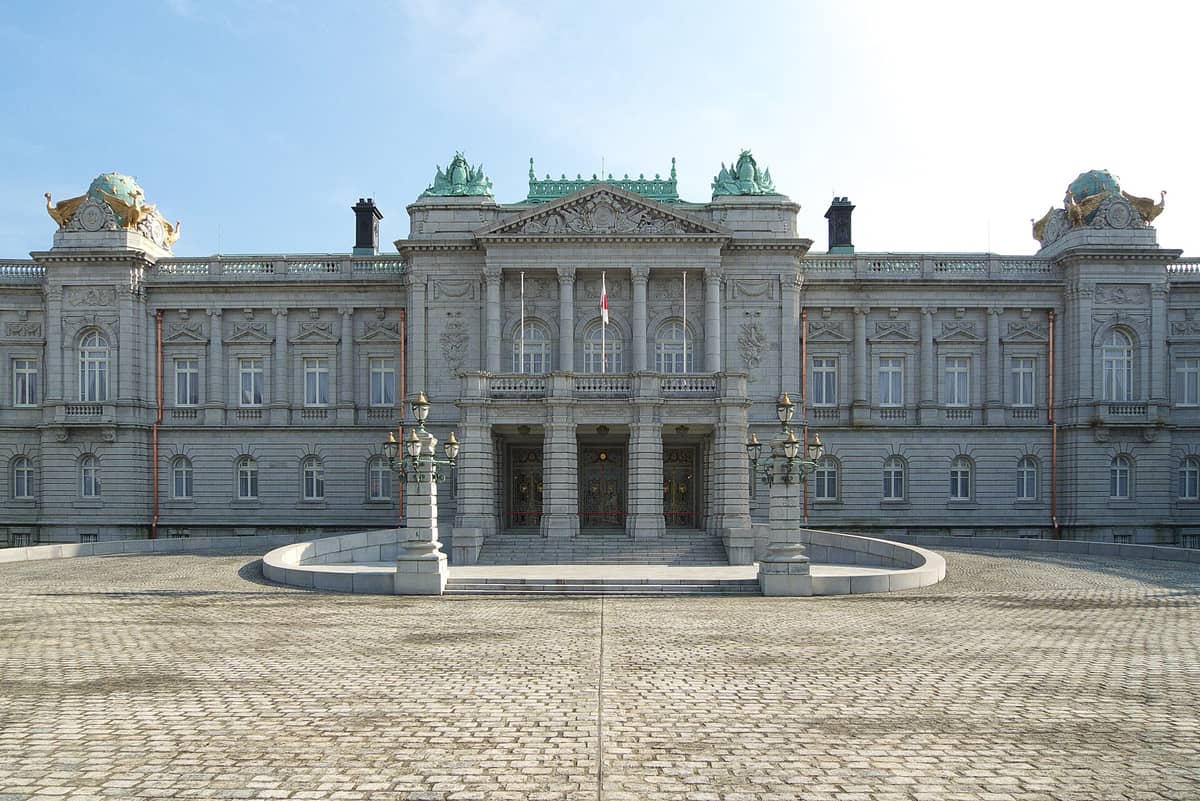
The State Guest House, Akasaka Palace is Japan's principal diplomatic residence and one of the few Western-style palaces in Asia open to the public. Built in neo-baroque style for the Crown Prince in the early 20th century, it now receives heads of state and, on select days, ordinary visitors. The combination of ornate gilded interiors, formal French gardens, and a Japanese-style annex makes it one of the most architecturally unusual stops in Tokyo.
Quick Facts
- Location
- 2-1-1 Moto-Akasaka, Minato-ku, Tokyo 107-0051
- Getting There
- Yotsuya Station (JR Chuo/Sobu Line, Tokyo Metro Marunouchi & Namboku Lines) or Akasaka-mitsuke Station (Tokyo Metro Ginza & Marunouchi Lines) — both roughly 10 minutes on foot
- Time Needed
- 1.5 to 2.5 hours (garden only: 45 minutes; full tour with annex: up to 3 hours)
- Cost
- Garden only ¥300 (university students and younger free); Main Building & Garden ¥1,500 (adults); Annex, Main Building & Garden ¥2,000 (adults). Verify current fees at the official site before visiting.
- Best for
- Architecture enthusiasts, history buffs, travelers seeking something genuinely unlike the rest of Tokyo
- Official website
- www.geihinkan.go.jp/en/akasaka
What Akasaka Palace Actually Is
Most visitors arrive expecting something vaguely palatial and leave genuinely surprised. The State Guest House, Akasaka Palace is Japan's official state guesthouse, the building where the Japanese government hosts foreign heads of state, and it is one of the only places in the country where you can step inside a large-scale Western palace. That combination — a functioning diplomatic facility that opens its doors to the public on select days — makes it unlike almost anything else in Tokyo.
The building was originally constructed between 1899 and 1909 as a residence for the Crown Prince. It was designed in neo-baroque style by Japanese architect Katayama Tokuma, who drew directly from European palace architecture at a time when Japan was actively signaling its modernity to the world. The scale is serious: the main structure runs roughly 160 meters across its facade, and it sits within formal grounds that feel genuinely removed from the surrounding city. Since 1974, after extensive renovation, it has served as Japan's primary facility for hosting official state and diplomatic guests, and it is designated as a National Treasure.
If you are trying to understand the range of architectural ambition in Tokyo, Akasaka Palace is the most useful counterpoint to the city's better-known shrines and temples. The Meiji Jingu Shrine represents the Japanese imperial tradition in its purest domestic form. Akasaka Palace represents the same Meiji-era impulse turned entirely outward, toward Europe.
The Building and Interiors: What You Will Actually See
When the palace is open to the general public, visitors can enter several of the main ceremonial rooms on the ground floor of the main building. These include the Asahi Room, used for welcoming ceremonies, and the Kacho Room, where state banquets are held. The interiors are heavily gilded, hung with chandeliers, and decorated with European-style paintings, silk wall coverings, and carved ceilings. The word that comes to mind is operatic: nothing is understated. Some visitors find it overwhelming. Others find it one of the most visually rich interiors they encounter anywhere in Japan.
Photography is permitted in the gardens and on the exterior approach, but rules on interior photography can vary and are posted at the entrance. The floors are polished to a mirror finish, and visitors are typically required to wear protective shoe covers provided at the door. This has the slightly surreal effect of making you shuffle through a setting of considerable grandeur, which is worth knowing in advance.
The Japanese-style annex, the Yushintei, is a separate wooden structure set within its own garden. It presents a sharp aesthetic contrast to the main building and reflects a later addition to the complex — quieter, darker, and more intimate in scale. Access to the annex requires either the combined ticket or the annex-and-garden ticket, and entry is not permitted for children of elementary school age and under. The combination of the two buildings, one baroque and one traditional Japanese, gives the site a complexity that takes time to absorb.
ℹ️ Good to know
Opening days are not fixed weekly. The palace closes on Wednesdays and whenever a state guest is being hosted, which can happen with little advance notice. Always check the official calendar at geihinkan.go.jp before making this a centerpiece of your day.
Tickets & tours
Hand-picked options from our booking partner. Prices are indicative; availability and final rates are confirmed when you complete your booking.
Tsukiji Fish Market Walking Food Tour
From 40 €Instant confirmationFree cancellationMt.Fuji,Owakudani, Hakone Cruise & Ropeway, Oshino Hakkai 1-Day Trip
From 54 €Instant confirmationFree cancellationTour to Mt. Fuji Area, Oshino Hakkai and Kawaguchi Lake from Tokyo
From 57 €Instant confirmationFree cancellationNikko UNESCO Shrine and Nature View 1-Day Tour from Tokyo
From 78 €Instant confirmationFree cancellation
The Gardens: More Than a Waiting Area
The forecourt and surrounding gardens are worth the ¥300 garden-only admission on their own terms, particularly in spring and autumn. The formal approach is lined with conifer trees and flanked by stone fountains. The scale of the facade from the main forecourt is genuinely impressive at close range, the kind of thing photographs do not fully convey. In the morning, before the main building opens at 10:00, the gardens have a stillness that disappears as tour groups arrive around late morning; general visiting hours run from 10:00 to 17:00, with last admission to the main building at 16:00 and garden reception until 16:30.
In late March and April, the grounds benefit from cherry blossom trees near the perimeter, though this is not the primary reason to visit. In autumn, the zelkova trees along the outer approach turn a deep amber. The garden-only option is the fastest route into the complex and works well for travelers who are short on time but want the exterior experience of one of Tokyo's more unusual landmarks.
Visiting Hours and When to Go
Public visiting hours are generally 10:00 to 17:00, with final admission at around 16:00. Arriving at opening time on a weekday is the most reliable strategy for avoiding large groups. Weekend mornings can see queues forming for timed-entry slots into the main building, particularly during spring and autumn, when the gardens are at their most photogenic.
Midday in summer is uncomfortable: the forecourt is fully exposed to the sun, the stone and gravel radiate heat, and there is limited shade in the main garden approach. If you are visiting between July and August, aim for early morning or accept that the experience will be warm and direct exposure to the exterior will be brief before you move inside.
Autumn, specifically October and early November, is the most balanced time. Temperatures are moderate, the light is good for exterior photography in the morning, and the approach avenue has some color. Spring visits in late March through April align with cherry blossom season across Tokyo, when the palace gardens have additional appeal but tourist numbers across the city are at their peak.
⚠️ What to skip
The palace closes without prior public notice when diplomatic events are scheduled. If you are arriving from another city specifically to visit, check the official calendar the day before and build a backup plan. The nearby Akasaka and Yotsuya areas have enough to occupy several hours independently.
Getting There and Practical Logistics
The two most convenient subway access points are Yotsuya Station, served by the JR Chuo and Sobu Lines and the Tokyo Metro Marunouchi and Namboku Lines, and Akasaka-mitsuke Station on the Tokyo Metro Ginza and Marunouchi Lines. From either station, the walk to the main entrance is around 7 minutes. The route from Yotsuya passes along a quiet road that already begins to shift the feel of the visit: fewer convenience stores, fewer pedestrians, more institutional buildings. The outer moat of the Imperial Palace grounds is also nearby, which gives this part of Tokyo a different density than Shibuya or Shinjuku.
Visitors combining Akasaka Palace with other areas of central Tokyo often pair it with the Imperial Palace East Gardens, a 20-minute walk or short subway ride away. Both involve formal historical grounds, though the Imperial Palace gardens are free to enter and much larger in scale. Spending a morning at one and an afternoon at the other is a workable itinerary for travelers focused on Tokyo's civic and architectural heritage.
Photography is generally permitted in the outer gardens and on the exterior. The light on the south-facing facade is best between late morning and early afternoon, when the stone catches direct sun. The forecourt gravel creates a practical issue for high heels or thin-soled shoes; flat shoes or comfortable walking shoes are the right choice.
Accessibility and Practical Details
Wheelchair users can access the main building via a separate entrance with a ramp that bypasses the main staircase. Elevators are available within the building, and stairways throughout the complex are fitted with handrails. The official barrier-free access page provides detailed information on specific routes and services including wheelchair rental, and notes that the Japanese-style annex is not accessible by wheelchair as spaces in the building are limited.
For a broader overview of getting around Tokyo and navigating its transit network, the getting around Tokyo guide covers subway, JR, and bus options in practical detail.
Is It Worth Your Time? Honest Assessment
For travelers interested in architecture, political history, or the ways in which Meiji-era Japan engaged with European design, Akasaka Palace is one of the most substantive stops in the city. There is nothing quite like it elsewhere in Tokyo, and the quality of the interiors — assuming the main building is open on your visit — is genuinely remarkable. The ¥1,500 adult ticket for the main building and garden represents reasonable value for what is an unusual cultural experience.
For travelers who are primarily here for temples, street food, or contemporary culture, Akasaka Palace may feel like a detour into someone else's itinerary. It does not connect easily to the rhythms of most Tokyo visits. The surrounding neighborhood is quiet in the governmental sense: low foot traffic, few casual dining options in the immediate vicinity, and limited street-level interest beyond the palace complex itself.
If your Tokyo trip is focused on temples and traditional culture, you may get more from your time at Senso-ji Temple in Asakusa or exploring the broader temples and shrines across the city. Akasaka Palace rewards visitors who arrive specifically for it, not those who stumble in as an afterthought.
Insider Tips
- The garden-only ticket (¥300, university students and younger free) gives access to the forecourt and perimeter grounds without entering the main building. On days when the interior is crowded, this is the fastest way to see the facade and get a feel for the scale of the complex.
- Timed entry slots for the main building can fill up on weekend mornings, particularly in spring and autumn. Arriving at opening (10:00) on a weekday significantly reduces waiting time.
- The official website publishes a monthly calendar of open and closed dates. Bookmarking the English visit page (geihinkan.go.jp/en/akasaka/visit/) and checking it the day before your visit is the single most important preparation step.
- The walk from Yotsuya Station passes alongside the outer edges of the Akasaka Palace grounds before reaching the main entrance, offering a quieter approach than the busier Akasaka-mitsuke route. It is also slightly more atmospheric.
- Interior photography rules vary and are posted at the entrance on the day of your visit. Do not assume permissions from third-party photos you may have seen online; the rules can change based on event schedules and curatorial decisions.
Who Is Akasaka Palace (State Guest House) For?
- Architecture and design enthusiasts interested in Meiji-era engagement with European building traditions
- History travelers wanting to understand Japan's diplomatic and imperial history through its physical spaces
- Photographers seeking an architectural subject unlike anything else in Tokyo, especially at exterior golden-hour light
- Travelers combining a day in central Tokyo with the Imperial Palace area and nearby Akasaka neighborhoods
- Visitors on longer trips (five days or more) who have covered the major shrines, markets, and contemporary attractions and want something genuinely different
Nearby Attractions
Combine your visit with:
- Edo-Tokyo Open Air Architectural Museum
Spread across the grounds of Koganei Park, the Edo-Tokyo Open-Air Architectural Museum rescues and reassembles more than 30 historic structures spanning the Edo period through the early 20th century. From a dismantled farmhouse to a reconstruction of a Showa-era Tokyo streetscape, it is one of the most thoughtful and undervisited cultural sites in the metropolitan area.
- Enoshima
A small island off the Shonan coast of Kanagawa Prefecture, Enoshima packs a surprising amount into a short walk: a three-part Shinto shrine, ancient sea caves, a hilltop botanical garden, a lighthouse observation tower, and seafood stalls lining a stone-paved shopping street. It works as a half-day excursion or a full day if you combine it with nearby Kamakura.
- Gotokuji Temple
Gotokuji Temple in Setagaya is a working Soto Zen Buddhist temple that happens to be one of the claimed birthplaces of the maneki-neko, Japan's iconic beckoning cat. Hundreds of white ceramic cats line the shelves of a dedicated shrine, creating one of Tokyo's most quietly striking visual spectacles. Entry is free, crowds are manageable, and the surrounding grounds offer genuine calm.
- Hakone
Hakone is a mountain hot-spring area in Kanagawa Prefecture, about 85 to 90 minutes from Shinjuku by direct train. It offers volcanic landscapes, onsen ryokan, views of Mount Fuji across Lake Ashi, and a density of quality museums that rewards both a rushed day trip and a leisurely overnight stay.