The David Collection: Copenhagen's Quietly Extraordinary Free Museum
Housed in a former private residence near Rosenborg Castle, the David Collection (Davids Samling) holds one of Europe's most significant collections of Islamic art alongside European 18th-century decorative arts and Danish early modern painting. Entry is free, crowds are thin, and the experience rewards visitors who slow down.
Quick Facts
- Location
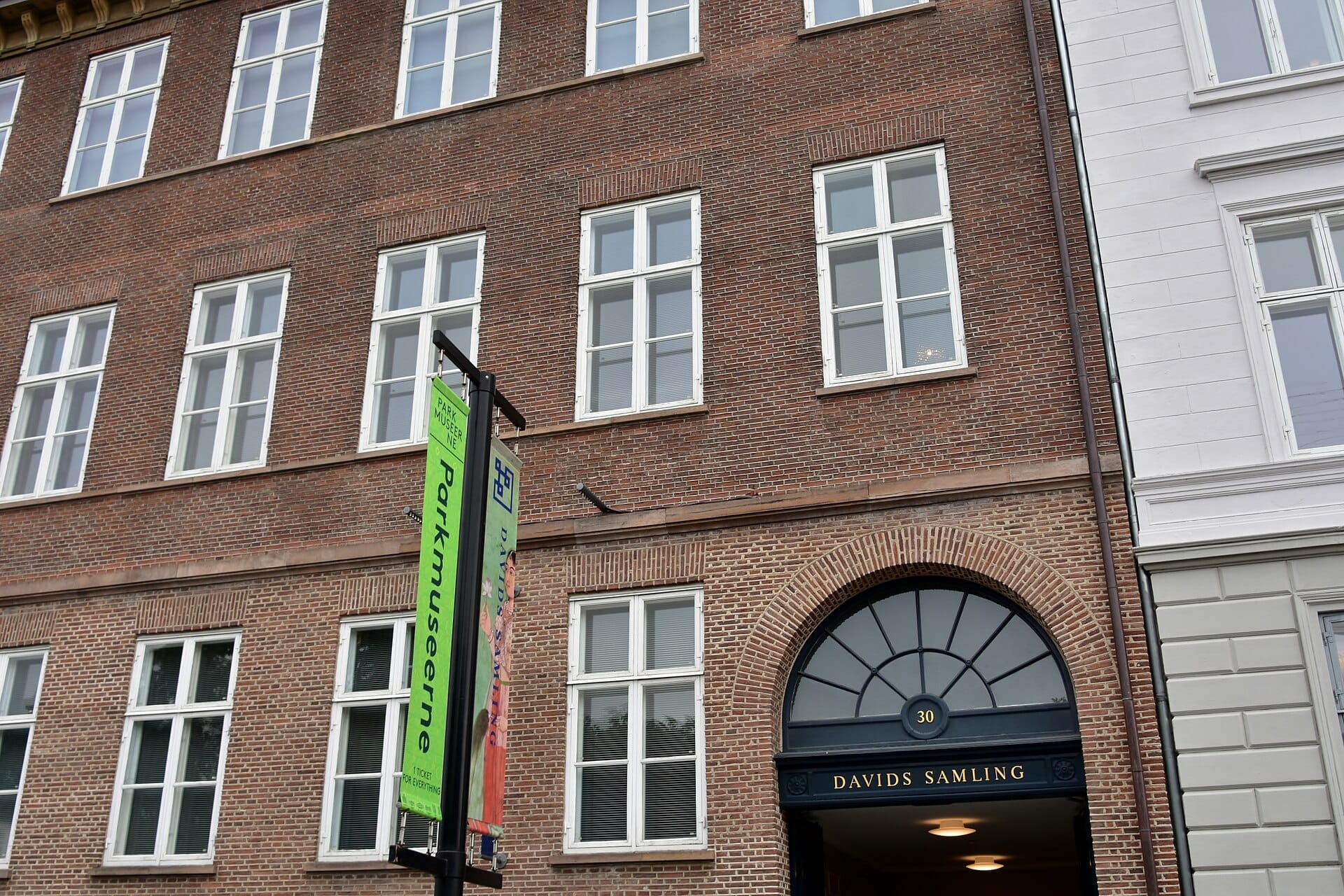
- Kronprinsessegade 30, Indre By, Copenhagen. Adjacent to the King's Garden and Rosenborg Castle.
- Getting There
- Nørreport Station (S-train, Metro) is a short walk. Marmorkirken and Kongens Nytorv Metro stations are also within walking distance.
- Time Needed
- 1.5 to 2.5 hours for a thorough visit. 45 minutes if you focus on Islamic art only.
- Cost
- Free for all visitors, year-round.
- Best for
- Islamic art, decorative arts, unhurried museum visits, rainy-day culture, solo travelers.
- Official website
- www.davidmus.dk/?culture=en-us
What the David Collection Actually Is
The David Collection (Davids Samling in Danish) is a free public museum in central Copenhagen that most visitors walk straight past on their way to Rosenborg Castle. That is a genuine loss. Founded around the private collection of the Danish lawyer and collector Christian Ludvig David, the museum occupies the elegant townhouse where David actually lived, with an adjoining property added in 1986 to accommodate the growing collection. The building itself, on the quiet residential street of Kronprinsessegade, gives the visit a particular atmosphere: you are browsing one of Europe's finest Islamic art collections in what feels like a private home, not a purpose-built institution.
The collection divides into three distinct areas. The Islamic art holdings are the most internationally significant, covering applied arts, manuscripts, textiles, ceramics, metalwork, and jewelry from across the Islamic world, roughly spanning the 7th to the 19th century. Alongside this sits a curated selection of European 18th-century decorative arts, including French furniture, porcelain, and silverware. The third wing addresses Danish early modern art from the same period. Together they reflect the personal taste of a single, exceptionally discerning collector rather than the broad institutional logic of a national museum.
💡 Local tip
Free entry makes this one of the most accessible quality museums in Copenhagen. If you have the Copenhagen Card, you do not need it here — but the card covers many other paid attractions worth combining into the same day.
The Islamic Art Collection: Why It Matters
Few visitors arrive expecting depth, and that is precisely what makes the Islamic art floors memorable. The collection covers work from the Umayyad and Abbasid caliphates through Mughal India, Safavid Persia, and Ottoman Turkey. Individual objects range from a 9th-century gold earring to elaborately illuminated Quranic manuscripts, jade cups, silk textiles, inlaid brass vessels, and painted miniatures of exceptional precision. The range alone spans roughly 1,200 years and stretches geographically from Spain to Central Asia.
Display cases are well-lit and uncrowded. Labels are clear and available in English. You can stand close to a 12th-century ceramic bowl without a barrier or a queue. That kind of unmediated access to genuinely old, genuinely beautiful objects is rare in major European cities. For travelers with any interest in Islamic history, art history, or decorative arts, this collection justifies a dedicated visit rather than a passing half-hour.
For broader context on the quality of Copenhagen's museum scene, the best museums in Copenhagen guide places Davids Samling alongside the city's major institutions, despite its smaller footprint.
Tickets & tours
Hand-picked options from our booking partner. Prices are indicative; availability and final rates are confirmed when you complete your booking.
1-hour boat harbour tour in Copenhagen
From 26 €Instant confirmationFree cancellationSmall group 3-hour walking tour in Copenhagen
From 45 €Instant confirmationFree cancellationCopenhagen to Malmo one-day tour
From 56 €Instant confirmationFree cancellationFull-day tour to Forest Tower and Forgotten Giants from Copenhagen
From 110 €Instant confirmationFree cancellation
European and Danish Collections: A Different Rhythm
The European 18th-century rooms feel like stepping into a different museum entirely. French Rococo furniture, Meissen and Sèvres porcelain, gilded objects, and finely worked silverware fill rooms that were themselves once domestic spaces. The effect is more intimate than a conventional decorative arts gallery, though visitors primarily drawn by the Islamic holdings sometimes move through these rooms quickly.
The Danish early modern section occupies upper floors and documents the period from roughly the late 18th century onward with paintings, furniture, and applied arts. It provides useful context for understanding the aesthetic culture of Copenhagen's prosperous merchant class during the period when David's building was first constructed. These floors tend to be quieter even by the museum's already-quiet standards.
What a Visit Actually Feels Like
The museum is housed across multiple floors of a historic townhouse, which means stairs at every turn. The building is explicitly described as not easily accessible to people with limited mobility, and that is worth taking seriously before you visit. The stairwells are narrow and original to the building's residential design. There is no lift access equivalent to what a purpose-built museum would provide.
Rooms are modestly sized, which works in the visitor's favor. You never feel overwhelmed by scale. At quieter times, particularly on Tuesday, Thursday, Friday, and Saturday mornings, you may find yourself almost alone in a room containing objects that would headline a major institution elsewhere. On Wednesday evenings, the museum stays open until 21:00, and the experience shifts again: the building takes on a different quality in artificial light, and visitor numbers drop further after 17:00.
Sound is almost entirely absent. There is no recorded audio tour looping in adjacent rooms, no school group noise echoing off stone floors. The building absorbs visitors rather than projecting them. The smell is what you might expect of a well-maintained historic house: faint wood, a trace of humidity in the older sections. In short, the David Collection rewards the kind of attention that a packed major museum makes difficult.
⚠️ What to skip
The museum is closed on Mondays and on December 23, 24, 25, and 31. If you plan a visit around a holiday period, check the official site for any additional closures.
Opening Hours and Getting There
The David Collection is open Tuesday and Thursday through Sunday from 10:00 to 17:00. On Wednesdays it stays open until 21:00. It is closed on Mondays. The address is Kronprinsessegade 30, 1306 København K. When entering through the gate, the museum entrance is the first door on the left.
Nørreport Station is the most practical transit option, served by both the S-train network and the Metro. From Nørreport, the museum is a short walk across the King's Garden. Alternatively, the Metro stop at Marmorkirken (the Marble Church) deposits you slightly closer to the building's address, depending on the route you walk. Kongens Nytorv Metro station is also within reasonable walking distance if you are arriving from the Nyhavn end of the city centre. Paid parking is available in the surrounding streets for those arriving by car.
The museum sits directly alongside the King's Garden, Copenhagen's oldest royal garden, making the two an easy pairing on the same visit. Rosenborg Castle is immediately adjacent and offers a natural continuation of the day if you want to extend your time in this corner of Indre By.
Photography, Practicalities, and Honest Caveats
Photography for personal use is generally permitted in the permanent collection without flash. The natural light in the upper-floor Danish rooms is excellent during morning hours. Cases containing metalwork and ceramics photograph well without glare if you angle slightly to avoid reflections from the glass. No tripods.
The museum has a small shop near the entrance. There is no in-house café, so if you plan a longer visit, eat beforehand or plan to step out to one of the nearby spots along Gothersgade or around Nørreport. A cloakroom is available for bags and coats.
One honest caveat: if you are not already interested in Islamic applied arts, decorative arts, or art history, this museum may not convert you in the way that a more theatrical or narrative-driven institution might. The collection is object-focused and relatively text-light. It rewards visitors who are already curious rather than those who need to be convinced. For that audience, it is exceptional. For travelers primarily seeking a visual experience or interactive elements, other Copenhagen museums may suit better.
Visitors with an interest in architecture and design alongside art history might also consider pairing a David Collection visit with the nearby Designmuseum Danmark, which covers Danish and international design history and is a short walk from the same neighborhood.
ℹ️ Good to know
The Wednesday late opening until 21:00 is ideal for travelers whose daytime schedule fills up with other attractions. Evening visits are consistently quieter than weekend afternoons.
Combining the David Collection With a Broader Itinerary
The museum's location in Indre By places it at the center of Copenhagen's most concentrated cluster of attractions. A well-structured morning could begin at Davids Samling, continue through the King's Garden to Rosenborg Castle, and then move toward Torvehallerne for lunch, the covered market at Nørreport that represents some of the city's best food hall eating. For a full-day framework across this part of the city, the Copenhagen walking tour guide includes this neighborhood in a logical sequence.
Because entry is free, the David Collection sits comfortably within a budget-conscious itinerary without requiring any trade-off decisions. It also makes sense as a rainy-morning option that will not feel like a compromise: the quality of the collection is genuinely high, and the calm atmosphere is more pleasant in poor weather than standing at an outdoor viewpoint would be.
Insider Tips
- The Wednesday evening opening until 21:00 is the single least-crowded time to visit. Weekend afternoons bring the highest foot traffic, still modest by any major museum standard.
- Enter through the gate on Kronprinsessegade and take the first door on the left. The entrance is easy to miss if you walk past the gate without reading the signage.
- Allow time for the Islamic art floors specifically, and do not rush through them to reach the European rooms. The depth of the Islamic collection is what separates this from a standard decorative arts museum.
- There is no café inside. The outdoor seating around the King's Garden nearby is a practical spot to pause between this museum and Rosenborg Castle if the weather holds.
- Labels and explanatory text are available in English throughout the permanent collection. No audio guide is needed for a confident independent visit.
Who Is The David Collection For?
- Travelers with a specific interest in Islamic art history and applied arts
- Visitors who prefer quiet, unhurried museum experiences over large institutional crowds
- Budget travelers: free entry makes this a zero-cost quality experience
- Rainy-day or bad-weather visitors looking for a calm indoor alternative
- Art history students or anyone researching decorative arts across cultures
Nearby Attractions
Other things to see while in Indre By (Old Town):
- Amalienborg Palace
Amalienborg is the official home of the Danish royal family and one of Copenhagen's most architecturally coherent ensembles. Four near-identical Rococo palaces frame a grand octagonal square, with the Amalienborg Museum open to visitors inside Christian VIII's Palace. The daily changing of the guard at noon is a punctual, unhurried ceremony worth timing your visit around.
- The Black Diamond
The Black Diamond is the modern extension of the Royal Danish Library, clad in polished black granite and angled toward the harbour on Slotsholmen. Entry is free, the atrium is genuinely impressive, and the building rewards visitors who take time to understand what they are looking at.
- Botanical Garden of the University of Copenhagen
Tucked behind Nørreport Station in the heart of the city, the Copenhagen University Botanical Garden is a 10-hectare green sanctuary with a Victorian glasshouse complex, a tranquil lake, and around 8,000 plant species. Entry to the grounds is free, making it one of the most rewarding stops in central Copenhagen for any pace of traveler.
- Christiansborg Palace
Christiansborg Palace sits on the Slotsholmen islet in central Copenhagen, serving simultaneously as the home of the Danish Parliament, the Supreme Court, the Prime Minister's Office, and the Royal Reception Rooms. It is widely described as uniquely housing all three branches of Denmark’s national government under one roof, and its 106-metre tower offers one of the best free panoramic views in the city.