Cathedral Church of Saint John the Divine: A Gothic Masterwork in Morningside Heights
Rising above Morningside Heights at near Harlem, the Cathedral Church of Saint John the Divine is one of New York City's most extraordinary architectural spaces. Construction began in 1892 and continues to this day, making every visit a glimpse into a living, unfinished monument. At 601 feet long with a nave vaulting 124 feet overhead, the scale alone justifies the trip.
Quick Facts
- Location
- 1047 Amsterdam Avenue, Morningside Heights, NY 10025 (at W 112th Street)
- Getting There
- Cathedral Parkway–110th St subway station (approx. 6-minute walk)
- Time Needed
- 1 to 2 hours for self-guided visit; longer for guided tours or special events
- Cost
- Admission from $15 USD; verify current pricing at stjohndivine.org
- Best for
- Architecture lovers, history and culture seekers, quiet reflection, photography
- Official website
- www.stjohndivine.org
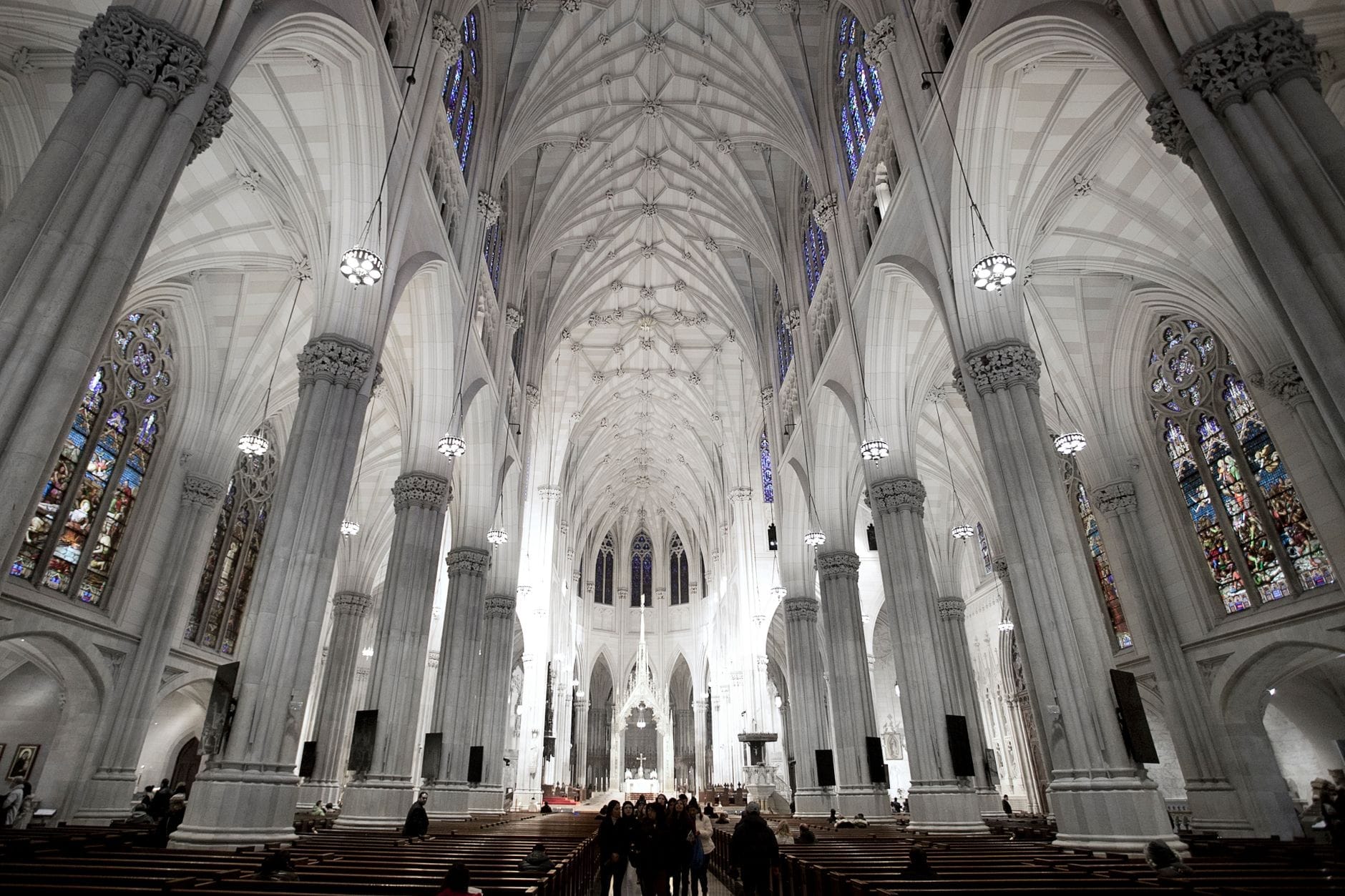
What You're Actually Looking At
The Cathedral Church of Saint John the Divine is not just large. It is a different category of large. At 601 feet from the main entrance to the apse, and with a nave that arches 124 feet above the stone floor, the interior dwarfs nearly every other church in the Western Hemisphere. Standing at the center of the nave, the walls seem to lean inward slightly with height, the way the sky does on a clear day. The stone is gray and rough in places, smooth and carved in others. Sound behaves strangely here: footsteps echo cleanly, but voices dissolve before they reach the ceiling.
Officially designated the Cathedral Church of Saint John the Divine, and landmarked under the full title 'Cathedral Church of Saint John the Divine and the Cathedral Close,' this is the seat of the Episcopal Diocese of New York. It is an active place of worship and a cultural institution simultaneously, which gives it a character unlike any purely ceremonial building. On a given weekday morning you might find a prayer group near one of the side chapels, a school group clustered at the crossing, and a solo visitor photographing the rose window in near-silence, all within fifty feet of each other.
💡 Local tip
Timed entry tickets are strongly encouraged. Without one, you risk being turned away during busy periods. Book in advance at stjohndivine.org, especially on weekends.
A Building Still Becoming Itself
Construction at Saint John the Divine began in 1892, which means the building has been under construction for well over a century. The original Romanesque-Byzantine design was later revised in favor of Gothic Revival, and the work has proceeded in stages ever since, interrupted by funding shortfalls, fires, and the pressures of the 20th century. A major fire in 2001 damaged the north transept area and required years of restoration. As of now, the two western towers remain unfinished, giving the façade an asymmetry that is not a flaw so much as an honest record of how long ambitious things take.
This ongoing construction is part of what makes the cathedral worth understanding before you arrive. You are not visiting a completed object. You are visiting a project that spans generations, in the Gothic tradition of European cathedrals that took 200 or 300 years to build. The stonecutters' yard on the cathedral grounds once trained local apprentices in medieval stone-carving techniques, a program that ran for decades. Evidence of that work is visible in finished sections alongside raw stone waiting to be placed.
For a broader look at New York City's remarkable architectural legacy, the New York City architecture guide puts Saint John the Divine in context alongside other landmarks across the boroughs.
Tickets & tours
Hand-picked options from our booking partner. Prices are indicative; availability and final rates are confirmed when you complete your booking.
St. Patrick's Cathedral skip-the-line tickets audio tour and Rockefeller Center walking tour
From 32 €Instant confirmationFree cancellationNYC Combo: Statue of Liberty Cruise, St Patrick's Cathedral and Dave and Buster's
From 113 €Instant confirmationFree cancellationNYC Combo: The Edge Observation Deck, St Patrick's Cathedral and Dave & Buster's
From 113 €Instant confirmationFree cancellationSt. Patrick's Cathedral behind the scenes VIP official guided tour
From 120 €Instant confirmationFree cancellation
The Interior: What to Focus On
The Great Rose Window above the main entrance is the first thing that pulls focus when you step inside and turn back toward the west. At 40 feet in diameter, it is among the largest stained glass rose windows in the United States, composed of more than 10,000 pieces of glass. In the late morning, when sunlight comes from the west-facing facade, the light through it is subdued. The window performs best in late afternoon, when low western sun sends colored light across the floor of the nave in elongated panels.
The seven chapels radiating from the apse at the east end are worth walking through one by one. Each chapel represents a different ethnic or national community served by the cathedral over its history, and the stonework, decorative programs, and furnishings vary noticeably between them. The Bay of the Poets, on the north side of the nave, contains memorial stones honoring literary figures including Emily Dickinson, William Blake, and Geoffrey Chaucer. It is easy to miss if you stick to the main aisle.
The Baptismal Font near the entrance is carved from a single piece of stone and is itself a significant object, though it tends to be passed quickly by visitors moving toward the nave. Take a moment with it. The carved scenes around the base repay close attention.
ℹ️ Good to know
Accessibility note: Wheelchair access is available via the 113th Street ramp. Interior ramps provide access to the chapels. Be aware that the bathrooms are not currently wheelchair accessible.
How the Cathedral Changes Through the Day
Weekday mornings before noon are the quietest window. The cathedral opens Monday through Saturday at 9:30am, and in the first hour or so you may have large sections of the nave almost to yourself. The light at this time enters from the south clerestory windows and throws long shadows across the floor. The smell of old stone is most pronounced when the space is cool and still, before crowds and movement change the air.
By midday on weekends, tour groups and general visitors fill the nave and the noise level rises considerably. The crossing under the dome becomes a hub of movement. Photography becomes harder because people are constantly in frame. If you arrive at this time, consider moving into the side chapels, which tend to stay quieter even when the main space is busy.
Sunday visiting hours begin at noon, after the morning services conclude. The cathedral closes to sightseers at 5:00pm daily. If you are visiting in winter, the late afternoon light disappears quickly and the interior dims fast after 3:30pm. Bring a camera that handles low light, or plan your photography visit for a bright spring or summer afternoon.
The Cathedral Close and the Surrounding Area
The Cathedral Close, the grounds surrounding the main building, includes the Biblical Garden, a small planted space along the south side that contains species mentioned in the Bible. In spring, it is fragrant and quiet, a genuinely restful spot that most visitors walk past without noticing. The close also contains several auxiliary buildings, including the Cathedral School and administrative structures, giving the whole compound the character of a small ecclesiastical campus.
The cathedral sits at the northern boundary of Morningside Heights, within easy reach of Morningside ParkHarlem, one of New York City's most historically significant neighborhoods. The walk north along Amsterdam Avenue or Morningside Avenue takes you into the heart of the neighborhood within ten minutes.
If you are making a day of the Upper West Side and Morningside Heights area, the American Museum of Natural History is about a 15-minute walk south, and Central Park begins just a few blocks away at 110th Street.
Special Events and Performances
Saint John the Divine is known for large-scale performances and unconventional programming that reflects its role as a civic as well as religious space. The annual New Year's Eve concert, the Feast of Saint Francis service with the Blessing of the Animals (which draws dogs, cats, and occasionally larger creatures down the central aisle), and Handel's Messiah performances have all become recurring events with significant followings. The acoustics in the nave, while complex, suit choral and orchestral music in a way that few secular venues can match.
The cathedral also hosts art installations, some of a scale only possible in a space of these dimensions. Artists have suspended large works from the nave vaulting and placed installations throughout the side chapels. Check the events calendar at stjohndivine.org before your visit, because attending during an active installation or performance series changes the experience considerably.
⚠️ What to skip
The cathedral is an active place of worship. Services occur regularly, and sightseeing access to parts of the building may be restricted during them. Check the schedule on the official website before planning your visit around specific interior access.
Who This Attraction Is Not Right For
If you are primarily interested in historical completeness, be aware that large sections of the building remain unfinished and will continue to be. The experience is not the polished, all-explained museum visit that some travelers expect. There is no comprehensive audio guide covering every corner, and the building rewards curiosity and independent exploration over structured tours. Travelers who find religious spaces uncomfortable, or who are looking for a quick check-box landmark, may find the atmosphere does not repay the admission cost.
For travelers focused on art institutions rather than architectural spaces, the best museums in New York City guide covers options across the city that may be a better fit.
Insider Tips
- The Triforium Gallery, an elevated walkway above the nave, is sometimes accessible on guided tours. It offers a perspective on the stained glass and roof structure that is completely different from the floor level, and it is the kind of detail that most self-guided visitors never see. Ask about tour availability when you book your ticket.
- The peacocks. There are peacocks on the Cathedral Close grounds. They are a long-standing institution and occasionally wander into visitor sightlines near the south garden. This is not widely advertised but is entirely real.
- For photography, position yourself at the rear of the nave, near the baptismal font, and shoot toward the altar with a wide lens in the late afternoon. The converging lines of the columns and the warm light from the south windows create a composition that captures the scale better than any shot taken from the crossing.
- The Cathedral Gift Shop carries unusual items including books on Gothic architecture and cathedral stonework that are not widely available elsewhere in the city. Worth a browse even if you are not a typical gift shop visitor.
- If you are visiting during a performance or liturgical event, the ambient sound inside the nave is worth experiencing even if you are not there specifically for music. The reverberation time in the space is exceptionally long, and even spoken liturgy sounds architecturally transformed.
Who Is Cathedral Church of St. John the Divine For?
- Architecture and art history enthusiasts who want to understand Gothic construction at full scale
- Travelers seeking a quiet, contemplative space away from Midtown crowds
- Photography visitors focused on interior scale, light, and detail
- Culture-focused travelers pairing the cathedral with a Harlem neighborhood walk
- Families with older children interested in history, religion, or urban landmarks
Nearby Attractions
Other things to see while in Harlem:
- Apollo Theater
The Apollo Theater at 253 West 125th Street has shaped American music for over 90 years, launching careers from Ella Fitzgerald to James Brown. While the historic theater is undergoing a multi-year renovation, the free gallery and active programming make it worth the trip to Harlem.
- El Museo del Barrio
Founded in East Harlem in 1969, El Museo del Barrio stands as the United States' leading museum dedicated to Latino, Caribbean, and Latin American art and culture. Positioned at the northern tip of Fifth Avenue's Museum Mile, it offers a distinct and often underappreciated counterpoint to the larger institutions that dominate the strip.
- Fort Tryon Park
Fort Tryon Park is a 67-acre public park in Upper Manhattan, designed by the Olmsted Brothers and gifted to New York City by John D. Rockefeller Jr. in 1931. It sits on one of the borough's highest natural ridges, offering sweeping views of the Hudson River, eight miles of winding paths through wooded slopes, and the landmark Met Cloisters museum. Entry to the park is free.
- High Bridge
High Bridge is New York City's oldest standing bridge, a 1,450-foot pedestrian and bicycle span connecting Washington Heights in Manhattan to the Highbridge neighborhood in The Bronx. Free to cross daily, it offers river views, genuine history, and a calm that most of the city simply does not offer.