El Museo del Barrio: New York's Latin American Cultural Anchor on Museum Mile
Founded in East Harlem in 1969, El Museo del Barrio stands as the United States' leading museum dedicated to Latino, Caribbean, and Latin American art and culture. Positioned at the northern tip of Fifth Avenue's Museum Mile, it offers a distinct and often underappreciated counterpoint to the larger institutions that dominate the strip.
Quick Facts
- Location
- 1230 Fifth Avenue, East Harlem, Manhattan, NY 10029
- Getting There
- Subway lines 4, 5, 6 to 103rd St; M1, M2, M3, M4 bus lines along Fifth Avenue
- Time Needed
- 1.5 to 2.5 hours for a focused visit; longer if attending programming or events
- Cost
- Admission fees apply; check the official website for current pricing and free-admission days
- Best for
- Art lovers, history seekers, anyone interested in Latino and Caribbean cultural heritage
- Official website
- www.elmuseo.org
What El Museo del Barrio Actually Is
El Museo del Barrio is the premier institution in the United States dedicated to the art and culture of Puerto Ricans, Latin Americans, and the broader Latino diaspora. That distinction matters. While other major New York City museums may include Latin American works within larger global collections, this is the only institution on Museum Mile that places that heritage at the absolute center of its mission.
The museum was founded in 1969 by Puerto Rican educator and artist Raphael Montañez Ortiz, along with community activists and parents in East Harlem, known locally as El Barrio. Its origins were explicitly grassroots: the museum started in a public school classroom, born from a conviction that Spanish-speaking communities deserved cultural representation in a city whose major institutions largely ignored them. By 1977, the museum had moved to its current Fifth Avenue address, a grand Beaux-Arts building that had previously served other institutional purposes, giving the collection a permanent and prominent home.
Sitting at the northern end of Museum Mile, El Museo occupies a position that is both geographic and symbolic. It is the last institution on the Mile as you walk north from the Met, just above the Museum of the City of New York. Foot traffic thins out here compared to the more famous addresses further south, which means the experience inside tends to be quieter and more contemplative than the crowds at the Met or the Guggenheim.
The Collection: Pre-Columbian to Contemporary
The permanent collection spans roughly 8,000 objects, covering a remarkable range of periods and media. Pre-Columbian artifacts sit alongside twentieth-century printmaking, photography, video installation, and sculpture. Santos de palo, the carved wooden devotional figures brought from Puerto Rico and other Caribbean islands, are among the collection's most distinctive holdings. These hand-carved saints carry centuries of religious and folk tradition and represent a category of object you are unlikely to encounter with this depth anywhere else in New York.
The museum's rotating exhibitions have historically engaged with questions of identity, migration, colonialism, and diaspora, themes that resonate far beyond the Latin American context and connect to ongoing conversations in contemporary art globally. Past exhibitions have addressed the Taíno indigenous peoples of the Caribbean, the visual culture of New York's Puerto Rican community in the mid-twentieth century, and the work of individual artists who have shaped Latin American modernism.
Photography and works on paper are particular strengths. The museum has built a significant archive documenting life in El Barrio and the broader Latino New York experience, and when that material surfaces in exhibitions, it tends to be both historically rich and visually arresting.
💡 Local tip
Before visiting, check the museum's official website for the current exhibition schedule. The balance between permanent collection galleries and temporary shows shifts regularly, and some major exhibitions require separate planning around their run dates.
Tickets & tours
Hand-picked options from our booking partner. Prices are indicative; availability and final rates are confirmed when you complete your booking.
4-day Niagara Falls, Philadelphia and Amish Country tour from NYC
From 743 €Instant confirmationFree cancellationPhiladelphia and Princeton University Tour from New York City
From 127 €Instant confirmationFree cancellationPhiladelphia and Amish Countryside day tour from NYC
From 160 €Instant confirmationFree cancellation2-day Washington, D.C., Philadelphia and Amish Country tour from NYC
From 349 €Instant confirmationFree cancellation
The Experience at Different Times of Day
Weekday mornings are the quietest time to visit. Gallery attendants tend to be more available for conversation, and the main exhibition spaces feel genuinely spacious. The building's high ceilings and large windows admit natural light that changes the quality of the galleries as the day progresses, particularly in rooms facing Fifth Avenue.
Weekend afternoons bring a different atmosphere. Families from the surrounding East Harlem neighborhood sometimes make up a notable portion of visitors, particularly when the museum runs programming tied to its community education mission. The lobby area can become lively, and there is an audible shift in the ambient noise level, from the hushed tones of a typical museum to something closer to an engaged community space. Neither version is better; they are simply different registers of the same institution.
The museum occasionally holds evening events, including concerts, talks, and cultural celebrations, particularly around major Latin American and Caribbean holidays. These events can transform the space entirely, filling the ground floor with music, food vendors, and crowds that reflect the neighborhood's population in a way that ordinary visiting hours do not.
The Neighborhood Context: El Barrio and Upper Fifth Avenue
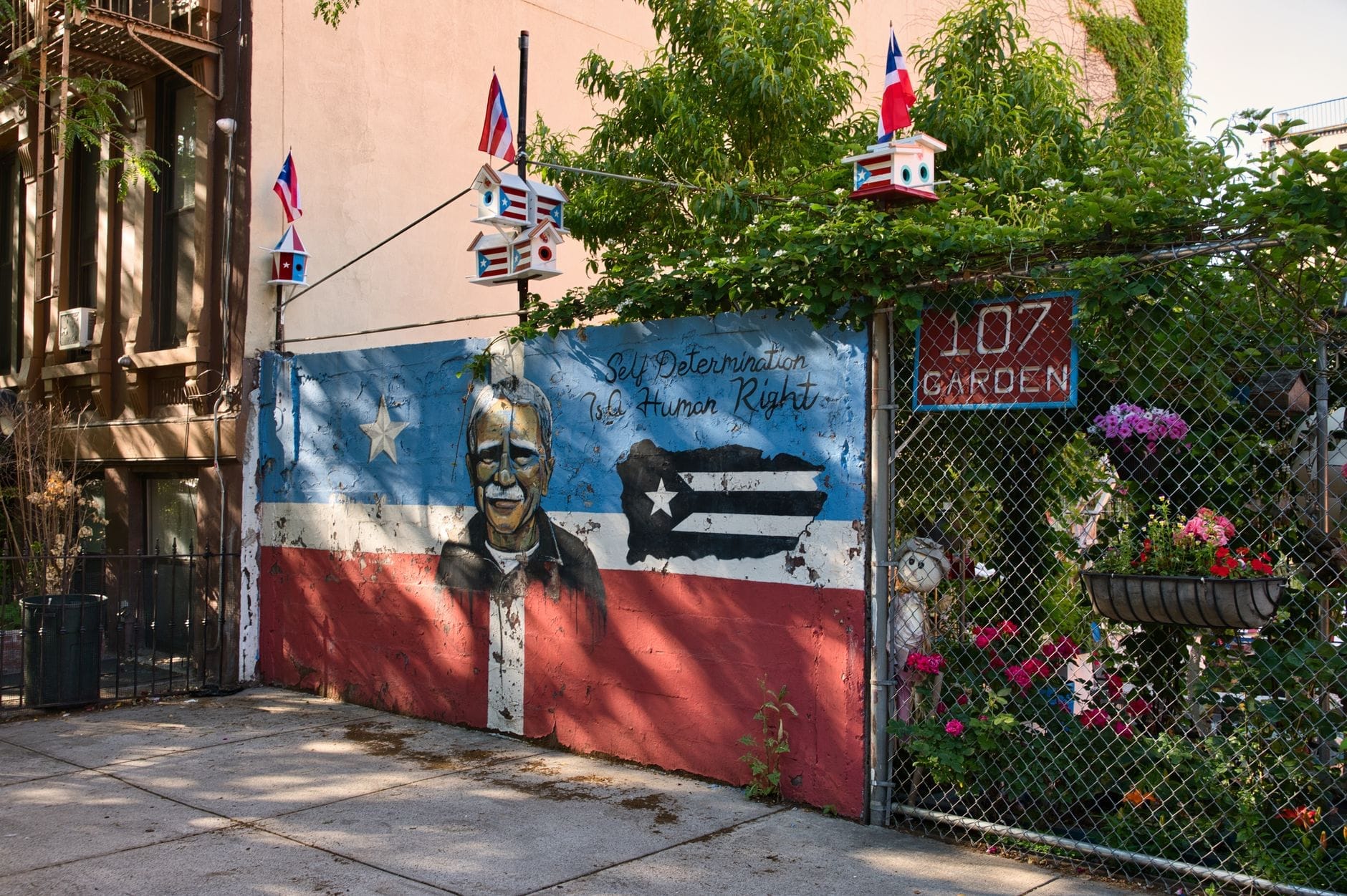
East Harlem, known as El Barrio, is one of the largest Puerto Rican communities in the United States and has been a center of Latino cultural life in New York since the mid-twentieth century. The museum is not just located in this neighborhood; it grew out of it. Walking to El Museo from the 103rd Street subway station takes you past bodegas, botanicas, and street murals that reflect the same cultural currents the collection documents inside. For context on the broader Harlem neighborhood, including the museum's surroundings, the area rewards exploration beyond a single institution.
The stretch of Fifth Avenue between 103rd and 105th Streets offers a view across Central Park that few visitors stop to appreciate. The park's northern end, much less trafficked than the southern sections, is visible from the museum's immediate vicinity. On clear days, the light over the tree canopy makes for an unexpectedly beautiful backdrop to what is already a landmark-dense streetscape.
A short walk south takes you to the Museum of the City of New York, which occupies the building immediately adjacent and shares a similar civic character. Combining both in a single afternoon is practical and complementary: the Museum of the City covers New York's history broadly, while El Museo fills in a specific and vital chapter that the former cannot give the same depth.
Practical Walkthrough: Getting There and Moving Through the Museum
The most straightforward transit approach is the 6 train to 103rd Street, which deposits you directly at the edge of East Harlem, a four-block walk north and east to the museum's Fifth Avenue entrance. The 4 and 5 trains stop at 86th Street, requiring a longer walk or a bus connection up Fifth Avenue. The M1, M2, M3, and M4 buses all run along Madison Avenue or Fifth Avenue and stop within a block of the entrance, making them a convenient option if you are already on the Upper East Side.
The museum's entrance is directly on Fifth Avenue. The lobby is compact by New York standards, with coat check, a small shop, and ticketing all within a short distance of the front door. Gallery layout is generally intuitive, with the permanent collection and temporary exhibitions occupying separate but connected floors. Signage is bilingual throughout, in both English and Spanish, which feels appropriate rather than performative given the institution's history.
ℹ️ Good to know
Admission prices and free-entry days change periodically. Confirm current fees on the official website at elmuseo.org before your visit. Some New York City cultural passes may include El Museo del Barrio; check your pass documentation if applicable.
Photography policies vary by exhibition, particularly in galleries showing contemporary works where artist or gallery restrictions may apply. Check posted signage at each gallery entrance rather than assuming blanket permission or restriction.
Honest Assessment: Who Will Get the Most from This Visit
El Museo del Barrio rewards visitors who come with some curiosity about Latin American and Caribbean history, not just those already familiar with the subject. The collection and programming are genuinely educational in a substantive way, and the museum's explicit community mission gives it a clarity of purpose that some larger institutions lack. If you are working through New York's major art collections with the help of a broader museum itinerary, El Museo belongs on that list as a complement to, not a substitute for, the encyclopedic collections elsewhere on the Mile.
Visitors looking for a blockbuster-scale experience with massive crowd energy and internationally famous individual artworks may find the scale here modest. The museum is not small, but it is not trying to be the Met. Its power is in depth and specificity rather than breadth. That is worth understanding before you arrive.
Those with limited mobility should confirm current accessibility arrangements directly with the museum before visiting, as the Fifth Avenue building's older structure may affect certain access configurations. The museum has made accessibility a stated priority, but the specifics are worth verifying in advance.
⚠️ What to skip
If you are visiting primarily for a specific temporary exhibition, confirm it is still running before you travel. The museum's exhibition schedule turns over regularly, and not all shows have long runs.
Combining El Museo with the Rest of Museum Mile
Museum Mile runs from 82nd Street to 105th Street along Fifth Avenue, encompassing institutions from the Metropolitan Museum of Art at the southern end to El Museo del Barrio at the northern tip. A dedicated museum day in this corridor is one of the most culturally dense half-days available anywhere in New York. If your interest leans toward design and decorative arts, the Cooper Hewitt Smithsonian Design Museum sits a few blocks south at 91st Street. For early twentieth-century European masters in an intimate mansion setting, the Neue Galerie at 86th Street is exceptional.
Walking the full Mile from the Met north to El Museo takes about 25 minutes at a relaxed pace, longer if you stop to look into the park. Central Park's northern sections, including the Harlem Meer and the Conservatory Garden, are directly accessible from Fifth Avenue in this stretch. For a full overview of what the surrounding area offers, the NYC art and culture guide covers the broader landscape well.
Insider Tips
- The museum's gift shop carries books, prints, and objects that reflect genuine curation rather than generic souvenir merchandise. It is worth a separate look even if you have limited time in the galleries.
- If you visit during the Three Kings Day (Día de Reyes) celebrations in early January, El Museo hosts one of New York's most authentic observances of the holiday, with a parade and community events rooted in Puerto Rican and Latino tradition.
- The stretch of Fifth Avenue directly in front of the museum faces Central Park, and the view across to the tree line is particularly striking in early November when the foliage peaks at this latitude.
- Bilingual labels throughout the galleries mean Spanish speakers can engage directly with the material in their own language, without any information being lost in translation. This is not universal even in museums with Latino collections elsewhere.
- Museum Mile hosts an annual free outdoor festival in June when participating Fifth Avenue institutions open their doors at no charge. Arriving at El Museo early in the evening during this event lets you explore before the crowds from nearby institutions spill northward.
Who Is El Museo del Barrio For?
- Travelers with an interest in Latin American, Caribbean, or Puerto Rican history and visual culture
- Art lovers seeking a focused, unhurried museum experience away from the crowds of the Met or MoMA
- Visitors exploring Harlem and East Harlem who want cultural depth alongside neighborhood exploration
- Families looking for bilingual programming and community-rooted museum experiences
- Museum-mile walkers who want to complete the full cultural corridor from 82nd to 105th Street
Nearby Attractions
Other things to see while in Harlem:
- Apollo Theater
The Apollo Theater at 253 West 125th Street has shaped American music for over 90 years, launching careers from Ella Fitzgerald to James Brown. While the historic theater is undergoing a multi-year renovation, the free gallery and active programming make it worth the trip to Harlem.
- Cathedral Church of St. John the Divine
Rising above Morningside Heights at near Harlem, the Cathedral Church of Saint John the Divine is one of New York City's most extraordinary architectural spaces. Construction began in 1892 and continues to this day, making every visit a glimpse into a living, unfinished monument. At 601 feet long with a nave vaulting 124 feet overhead, the scale alone justifies the trip.
- Fort Tryon Park
Fort Tryon Park is a 67-acre public park in Upper Manhattan, designed by the Olmsted Brothers and gifted to New York City by John D. Rockefeller Jr. in 1931. It sits on one of the borough's highest natural ridges, offering sweeping views of the Hudson River, eight miles of winding paths through wooded slopes, and the landmark Met Cloisters museum. Entry to the park is free.
- High Bridge
High Bridge is New York City's oldest standing bridge, a 1,450-foot pedestrian and bicycle span connecting Washington Heights in Manhattan to the Highbridge neighborhood in The Bronx. Free to cross daily, it offers river views, genuine history, and a calm that most of the city simply does not offer.