Museum of the City of New York: What to Know Before You Go
The Museum of the City of New York (MCNY) sits on Fifth Avenue at 103rd Street, across from Central Park and at the edge of East Harlem. With roughly 750,000 objects spanning four centuries of city history, it rewards curious visitors who want more than landmark photos. This guide covers what to expect inside, how to time your visit, and who will get the most out of it.
Quick Facts
- Location
- 1220 Fifth Avenue at 103rd Street, Manhattan
- Getting There
- 6 train to 103rd St; M1/M2/M3/M4/M106 bus to 104th St
- Time Needed
- 1.5 to 3 hours depending on pace
- Cost
- Adults $23, Seniors $18, Students $14, Under 18 free; NYC residents pay-what-you-can; free admission Wednesdays (ID required)
- Best for
- History enthusiasts, New York fans, architecture lovers, families, curious first-time visitors
- Official website
- www.mcny.org
What the Museum of the City of New York Actually Is
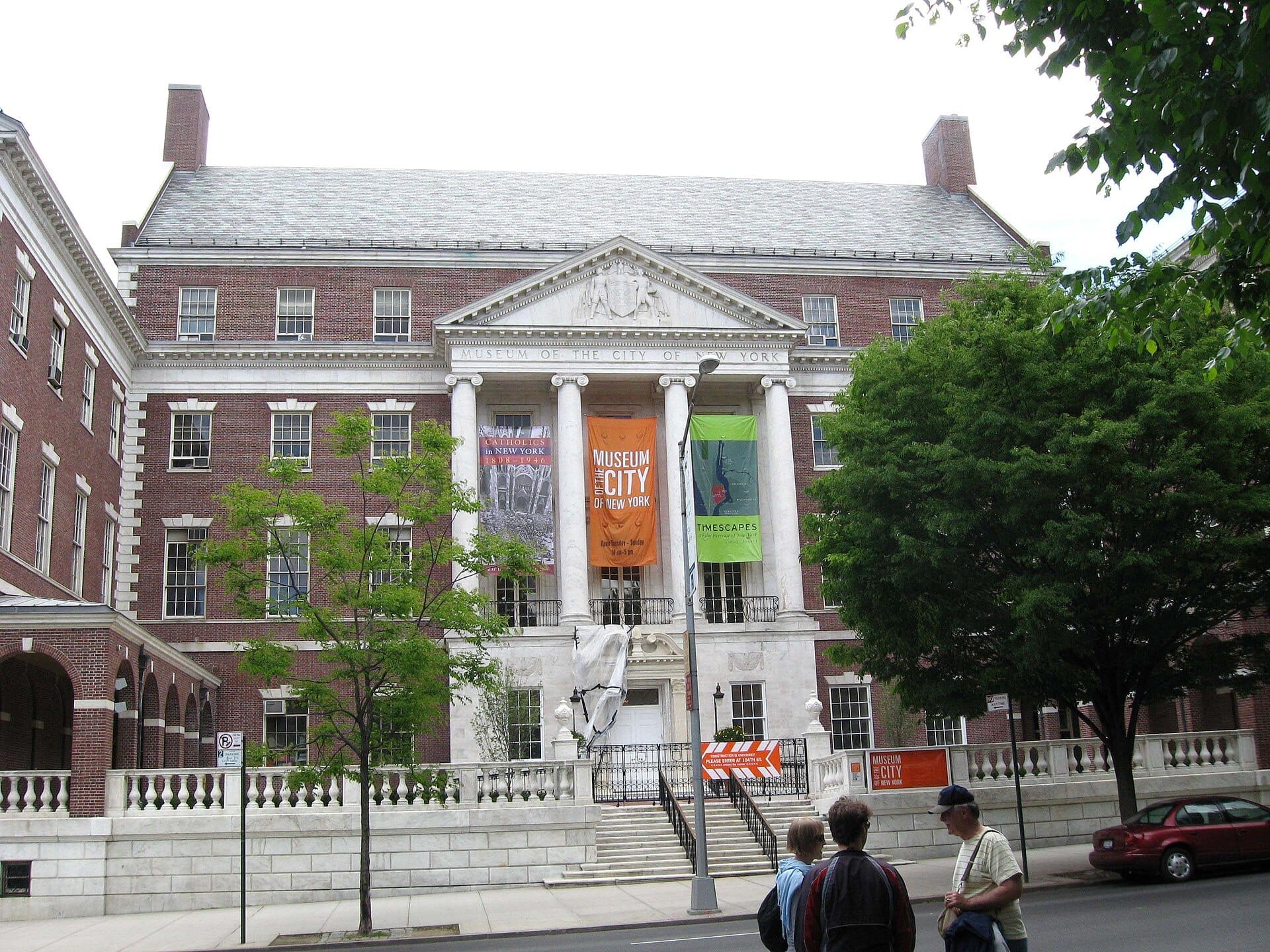
The Museum of the City of New York, known widely as MCNY, is one of the few institutions in the city dedicated entirely to New York's own story. Founded in 1923 by Henry Collins Brown, it began life in Gracie Mansion on the Upper East Side before moving to its current home, a purpose-built Georgian Colonial-Revival building on Fifth Avenue at 103rd Street. That address places it at the northern end of Museum Mile, just where the manicured edge of Central Park gives way to the energy of East Harlem.
The collection spans roughly 750,000 objects: prints, photographs, paintings, decorative arts, costumes, theatrical memorabilia, toys, and sculptures. Not all of it is on view at once. What you encounter on any given visit is a rotating selection of permanent collection highlights combined with temporary exhibitions, which range from deep dives into single neighborhoods to broader explorations of immigration, design, or political history.
💡 Local tip
Check the MCNY website before visiting to see which temporary exhibitions are currently open. The temporary shows often define the experience as much as the permanent galleries do.
The Building and Its Setting
The Fifth Avenue facade is formal and restrained: Corinthian pilasters, a central portico, pale Indiana limestone that catches afternoon light cleanly. Designed by Joseph H. Freedlander and completed in 1932, the building was conceived to look permanent and serious, a counterweight to the encyclopedic ambitions of the collection inside. It reads as a quieter neighbor to the larger institutions further south on Museum Mile, which works in its favor.
Across the street is Central Park, and the view from the front steps on a clear morning, with the park trees in full color in October or bare and geometric in February, is worth a moment before you go inside. If you are combining this visit with a walk through the park's northern reaches, note that the northern end of Central Park is far less trafficked than the Sheep Meadow and Bethesda Terrace areas to the south. The combination makes for a genuinely unhurried half-day.
The accessible entrance is on 104th Street. Elevators connect the floors internally. The lobby is calm even when the museum has reasonable crowds, partly because the building's footprint and layout distribute visitors across multiple gallery levels without creating the crush you find at the Metropolitan Museum of Art on a Saturday afternoon.
Tickets & tours
Hand-picked options from our booking partner. Prices are indicative; availability and final rates are confirmed when you complete your booking.
Spirit of New York Dinner Cruise
From 161 €Instant confirmationFree cancellationNew York City Highlights bike tour
From 70 €Instant confirmationFree cancellationNew York Statue of Liberty and Ellis Island tour by ferry
From 55 €Instant confirmationNew York 9-11 Memorial Tickets and In-App Audio Tour
From 60 €Instant confirmation
What You Will See Inside
The anchor of the permanent collection is 'New York at Its Core,' a multi-gallery exhibition that traces the city from a Dutch colonial trading post in the 1600s through its emergence as a global metropolis. It is organized chronologically and walks you through the physical and social transformation of the city across four centuries. The exhibition uses maps, photographs, film footage, scale models, and original objects to give concrete texture to periods that can feel abstract. The 1939 World's Fair scale model of a future New York is a genuine conversation piece.
Photography collections are a particular strength here. The museum holds an extensive archive of documentary photographs from the 19th and 20th centuries, including works that capture the tenement life, industrial waterfront, and street scenes that have defined how people imagine old New York. Jacob Riis is one of the names you will encounter, but the depth goes well beyond any single photographer.
Temporary exhibitions tend to be topical and often feel more urgent than the permanent galleries. Past shows have examined gentrification, climate vulnerability, and the architectural history of specific boroughs. If you are the kind of traveler who wants to understand a city rather than just photograph it, pairing MCNY with a visit to the Tenement Museum on the Lower East Side gives you complementary perspectives: MCNY covers the city at the macro level, while the Tenement Museum grounds it in individual lives.
How the Experience Changes by Time of Day
Weekday mornings between 10am and noon are often the quietest window. School groups do visit, particularly on weekday mornings in the spring and fall, but the building absorbs them without much disruption. If you arrive at opening on a Tuesday or Thursday, you may have entire galleries nearly to yourself, which matters a great deal when you are trying to read wall text or study a detailed historical map.
Wednesday is the free admission day, which can draw larger crowds, especially in the afternoons. If you come on a Wednesday, arriving at 10am when the doors open keeps the experience manageable. Note that Wednesday free admission requires ID and is not available to groups of ten or more.
Weekend afternoons, particularly Saturdays between 1pm and 4pm, are the busiest periods overall. The museum stays open until 6pm on weekends, so arriving after 4pm on a Saturday gives you a calmer last two hours without the midday surge. Natural light in the upper-floor galleries shifts noticeably in late afternoon, which improves conditions for looking at paintings and prints.
ℹ️ Good to know
The museum is closed on Thanksgiving Day, Christmas Day, and New Year's Day. Verify hours around public holidays on the official website before visiting: mcny.org/visit
Getting There and Getting Around the Neighborhood
The most direct subway route is the 6 train to 103rd Street on the Lexington Avenue line, followed by a walk west along 103rd Street to Fifth Avenue. The walk itself is unremarkable but takes about five minutes at a normal pace. Alternatively, the 2 or 3 trains stop at 110th Street–Central Park North; from there, walk south to 103rd Street. That approach drops you slightly above the museum and lets you arrive along the park edge.
Multiple bus lines serve the door directly. The M1, M2, M3, and M4 buses serve the area near 104th Street. The M106 also serves the area. If you are coming from the Upper West Side or are already in the park, this is often the easiest option.
The neighborhood immediately surrounding the museum sits at the border of the Upper East Side and East Harlem, two areas with very different characters. If you plan to eat before or after your visit, Harlem is a short walk north and has a varied restaurant scene. The stretch of 116th Street in East Harlem, sometimes called El Barrio, offers options that reflect the neighborhood's Puerto Rican and Mexican communities.
Photography, Accessibility, and Practical Details
Photography for personal use is generally permitted in the permanent galleries; flash and tripods are typically not allowed. For temporary exhibitions, restrictions vary by show, so it is worth checking at the entrance desk before photographing. The galleries use a mix of track lighting and diffused natural light, with some rooms better lit than others. If you are photographing historical documents or maps on display, you will get cleaner results in the ground-floor and second-floor galleries, which tend to have more even illumination.
The ramp entrance at 104th Street provides step-free access. Internal elevators connect all gallery floors. The museum's shop and cafe areas are accessible from the main entrance level. Visitors with mobility considerations should note that the building, while fully accessible, is not new, and some gallery configurations involve narrower corridors in the older wings.
💡 Local tip
NYC residents get pay-what-you-can admission with a valid New York City ID.
Is It Worth Your Time? An Honest Assessment
MCNY is not trying to compete with the Metropolitan Museum of Art or MoMA for breadth or prestige. What it does well, it does consistently: it contextualizes New York City with depth and care, using objects and images that you will not find anywhere else. The collection is genuinely strong, particularly in photography and cartography, and the building itself is pleasant to spend time in.
Visitors who arrive expecting blockbuster art or interactive spectacle will be underwhelmed. This is a history museum in the traditional sense, with a strong curatorial voice and a clear institutional focus. For travelers on a tight schedule who have not yet seen the Metropolitan Museum of Art or MoMA, those institutions may offer more visual variety. But for anyone already familiar with the major collections, or for visitors with a specific interest in urban history and development, MCNY fills a gap that no other institution in the city covers as completely.
Travelers who find themselves emotionally invested in New York as a place, whether they grew up here, have visited multiple times, or simply find cities fascinating as systems, will likely leave feeling the visit was well spent. The museum asks a small thing of you: curiosity about the place you are standing in. If you bring that, it delivers.
Insider Tips
- Wednesday free admission (with ID) is a strong value, but arriving at 10am can help you avoid larger crowds.
- The 'New York at Its Core' exhibition has a scale model of a 1939 vision of New York's future that is genuinely arresting and is easy to miss if you move quickly through the gallery.
- The museum shop stocks a well-curated selection of New York-specific books, maps, and prints that are harder to find elsewhere. Even non-buyers will find it worth ten minutes.
- If you are visiting with children, ask at the front desk about any family guides or activity sheets available for the current exhibitions. The museum has programming aimed at younger visitors that is not always prominently advertised.
- The front steps facing Central Park make for a good stopping point between museum and park. Facing west around midday, the light on the park treeline is clean and worth photographing, especially in autumn.
Who Is Museum of the City of New York For?
- History and urban studies enthusiasts who want to understand New York beyond its landmarks
- Repeat visitors to NYC looking for an experience outside the standard circuit
- Families with older children interested in how cities develop and change
- Architecture and photography lovers drawn to the building's Georgian Revival design and the museum's documentary photography collections
- Budget-conscious travelers visiting on Wednesday or NYC residents using the pay-what-you-can policy
Nearby Attractions
Other things to see while in Upper East Side:
- Cooper Hewitt Smithsonian Design Museum
Housed inside the landmark Andrew Carnegie Mansion on Fifth Avenue, Cooper Hewitt, Smithsonian Design Museum is the only museum in the United States dedicated entirely to design. From its interactive pen technology to its walled garden, it rewards curiosity at a pace most major NYC museums cannot match.
- The Frick collection
The Frick Collection occupies a landmark Fifth Avenue mansion on the Upper East Side, housing one of the most concentrated displays of Old Master paintings and European decorative arts in the United States. With intimate galleries, a price-scaled admission structure, and a pay-what-you-wish Wednesday afternoon window, it rewards careful visitors far more than many larger institutions.
- Solomon R. Guggenheim Museum
The Solomon R. Guggenheim Museum is one of the world's most recognizable buildings and one of New York City's great cultural institutions. Frank Lloyd Wright's continuous spiral rotunda, completed in 1959, is as much the attraction as the art inside. This guide covers what to expect, when to go, and how to make the most of your visit.
- The Jewish Museum
Founded in 1904 and housed in a French Gothic mansion on Fifth Avenue, The Jewish Museum is the first institution of its kind in the United States. With rotating exhibitions, a permanent collection spanning 4,000 years, and free admission every Saturday, it rewards visitors who come curious and leave with more questions than they arrived with.