Uluwatu sits at the dramatic south-western tip of Bali's Bukit Peninsula, where limestone cliffs drop into the Indian Ocean and world-class surf breaks draw travelers from every corner of the globe. It's a place of genuine contrast: ancient sea temples, cliff-edge warungs, and a fast-growing accommodation scene that ranges from bare-bones surf hostels to some of Bali's most architecturally striking villas.
Uluwatu is Bali at its most elemental: sheer white cliffs, deep blue ocean, and an ancient sea temple that frames one of the island's great sunsets. It's far enough from Kuta to feel like a different world, yet close enough that the rest of Bali is still within reach.
Orientation
Uluwatu occupies the far southwestern corner of the Bukit Peninsula, the limestone plateau that hangs off the bottom of Bali's main landmass. The Bukit sits roughly 30 kilometers south of Denpasar, connected to the rest of the island by a single main road that crosses the narrow isthmus near Jimbaran. Once you cross that isthmus, the landscape changes immediately: the lush rice-field scenery of central Bali gives way to scrubby dry vegetation, pale rock, and a sky that seems wider and brighter than anywhere else on the island.
Uluwatu itself is not one concentrated village but a loose collection of clifftop areas strung along the southwestern edge of the Bukit. The main reference points are Pura Luhur Uluwatu, the sea temple that gives the area its name, and the surf breaks below: Uluwatu, Padang Padang, Bingin, Impossibles, and Balangan, each with its own small community of warungs, guesthouses, and surf shops clustered at the top of the cliffs or down the steep paths to the beach. Heading east along the peninsula's southern coast brings you toward Nusa Dua and its resort corridor; heading north on the Bukit's western side leads toward the fishing village and seafood strip of Jimbaran.
Travelers who know Bali will understand Uluwatu as the opposite pole to Canggu in the north: where Canggu is flat, green, and increasingly urbanized, Uluwatu is elevated, arid, and still surprisingly raw. Both attract a surf-oriented crowd, but the Bukit's relative isolation gives it a different tempo. For context on how Uluwatu fits into the broader island, the best months to visit Bali guide is worth reading before you plan your trip, since the dry season matters enormously here: the swell picks up, the cliffs look their sharpest, and the famous sunsets are at their most reliable from May through October.
Character & Atmosphere
Mornings in Uluwatu belong to the surfers. Well before 7am, motorcycles weave down the narrow lanes toward Padang Padang and Bingin, boards strapped to the side, as local warungs fire up gas burners for the first round of nasi goreng and black coffee. At the cliff edge, the sound is all wind and breaking waves, the light still golden and low, throwing long shadows across the limestone. It feels, briefly, like the kind of place that hasn't been touched by tourism, even though it very much has.
By mid-morning the Instagram contingent starts arriving at the well-known viewpoints, and by afternoon the roads through Pecatu and Ungasan, the two main inland settlements, carry a steady flow of scooters, taxis, and rental cars. The clifftop bars and beach clubs that have opened over the past decade, ranging from low-key to genuinely extravagant, do most of their business between 3pm and sunset, when the angle of light over the Indian Ocean is the kind of thing that makes people go speechless.
After dark, Uluwatu is quiet compared to Seminyak or Kuta. The beach clubs wind down, the cliff paths become difficult without a torch, and most people head back to their accommodations or to one of the few casual bars near the surf breaks. It's not a nightlife destination. That's either a drawback or a selling point, depending entirely on what you're looking for.
⚠️ What to skip
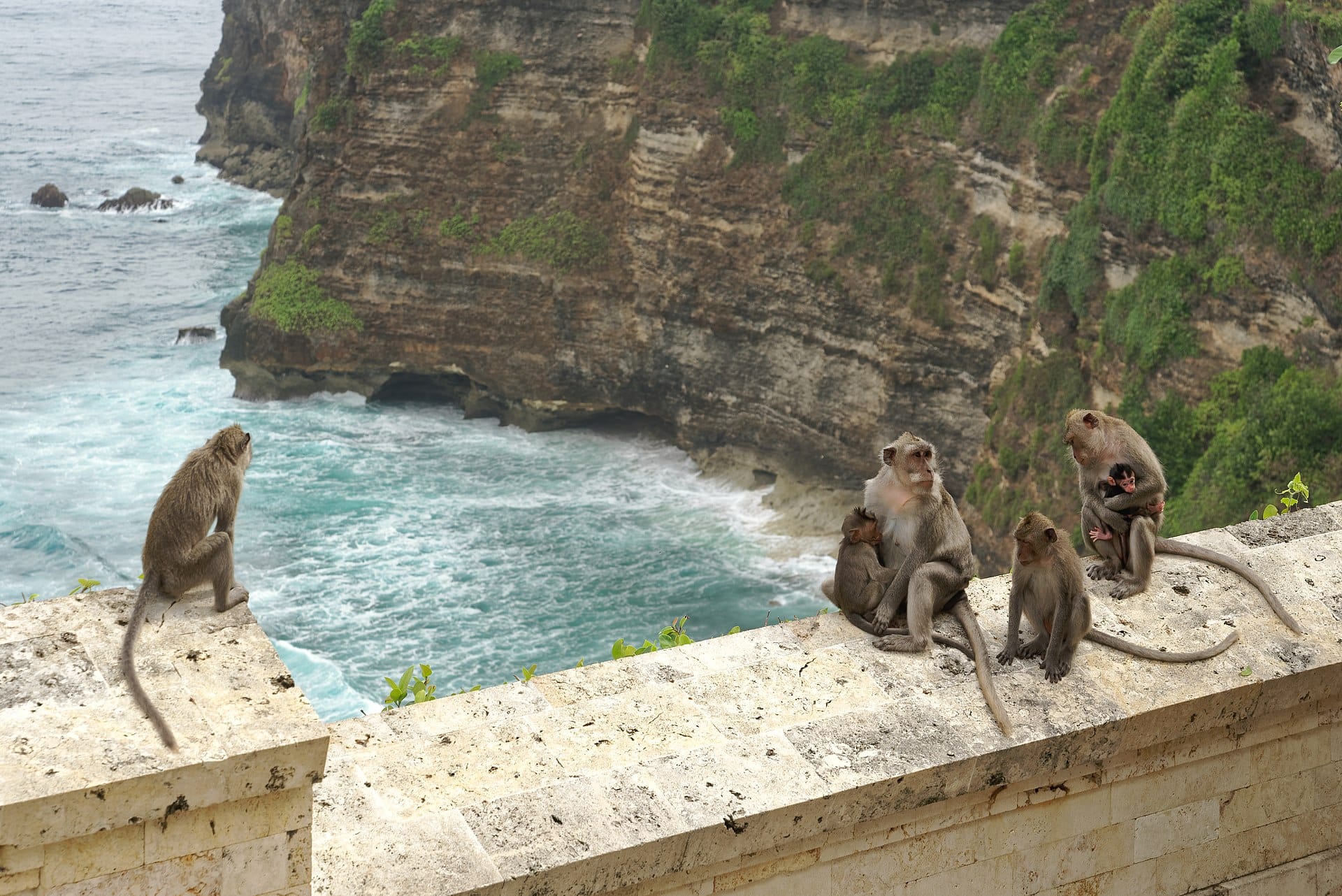
The monkeys around Pura Luhur Uluwatu are bold and opportunistic. They will grab sunglasses, hats, phones, and bags directly from your hands. Secure everything before entering the temple complex and take the warnings from the local guides seriously.
Uluwatu sits at an altitude that keeps it several degrees cooler and considerably windier than the lowlands, which is a genuine relief in the dry season. The flip side is that the roads are more exposed and the limestone cliffs can be slippery when wet. During the wet season, from roughly November through March, swell on the west-facing breaks can become dangerously powerful, and some of the cliff-side warung terraces close temporarily when storms roll in from the southwest.
What to See & Do
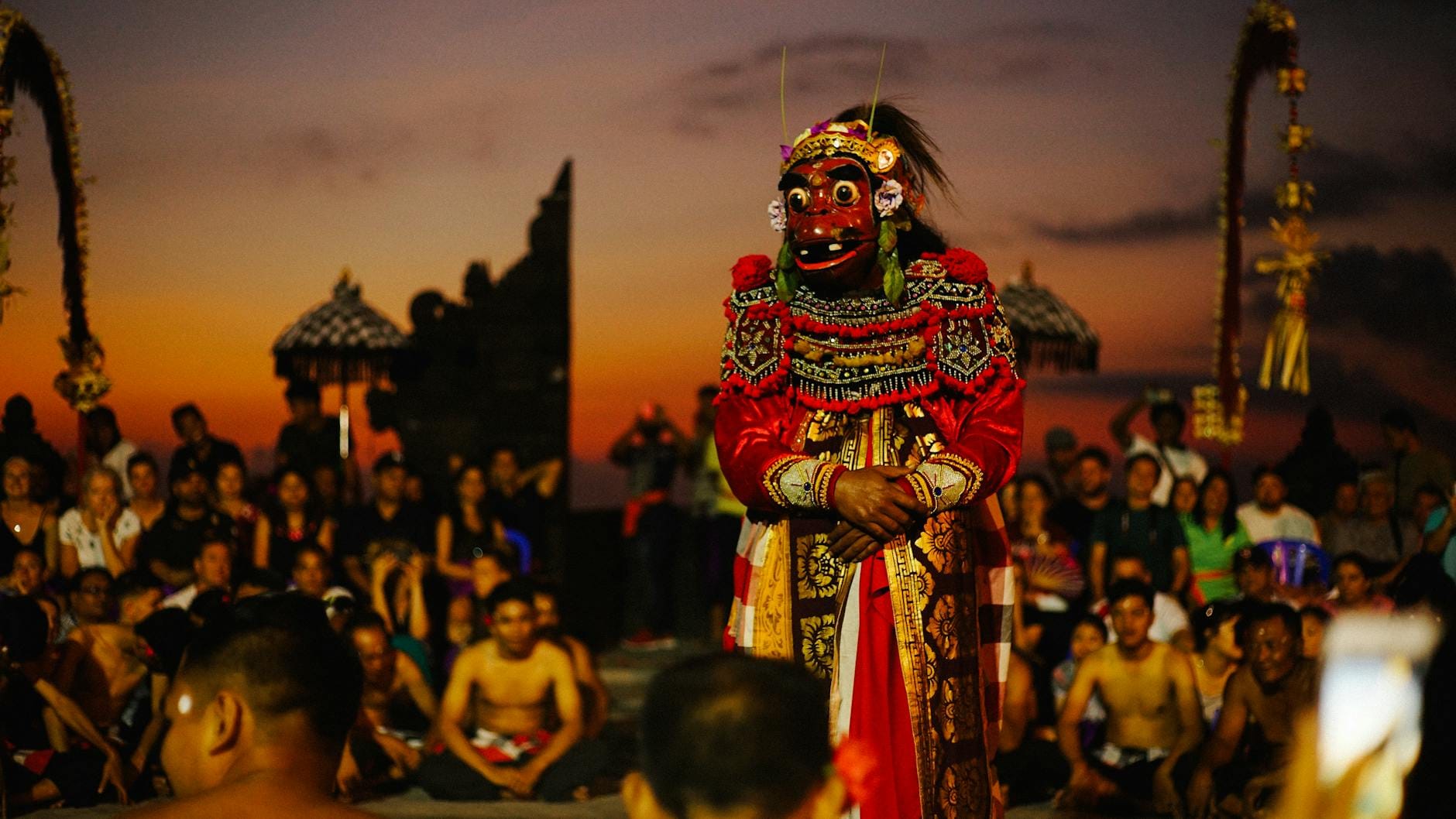
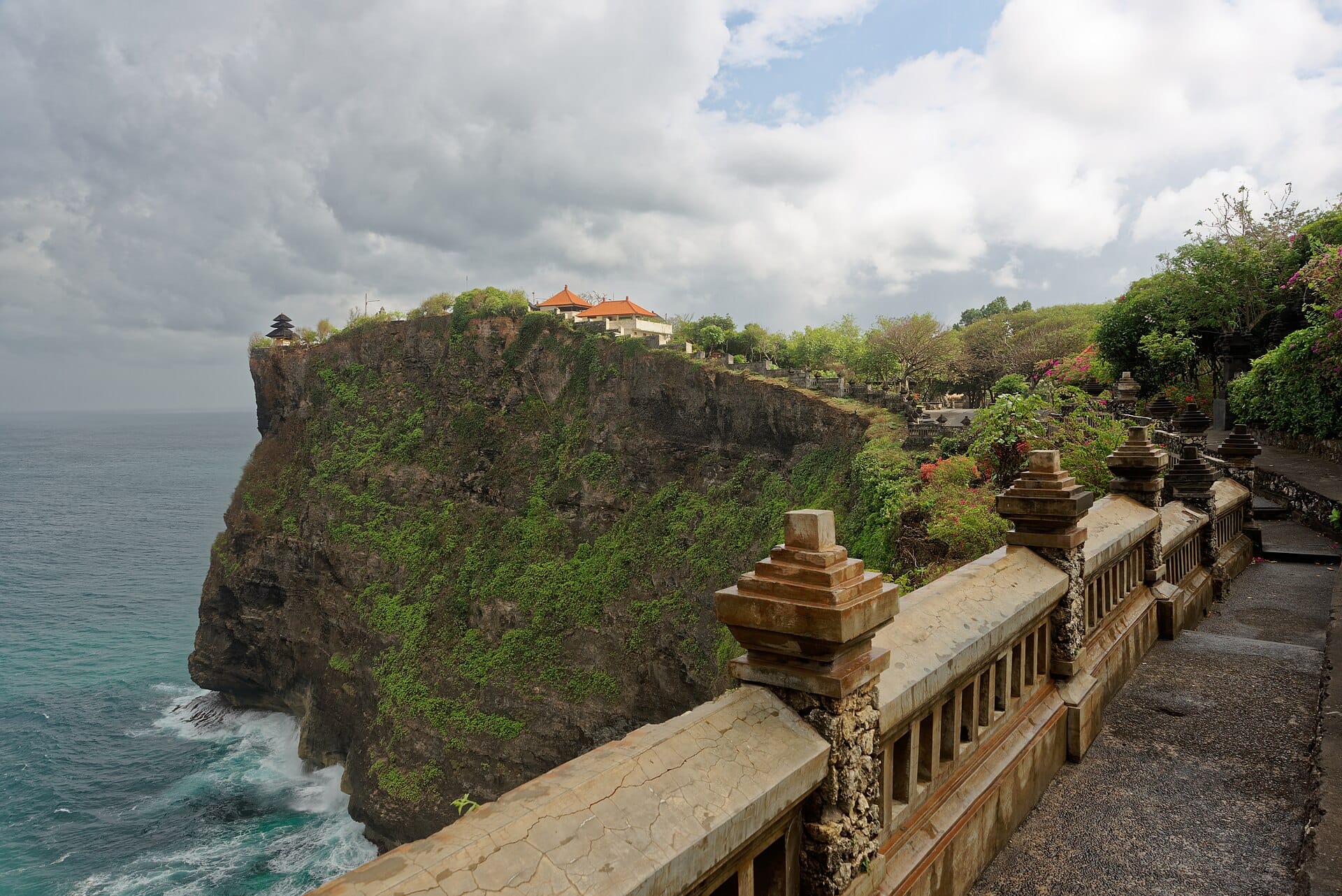
The reason most people come to Uluwatu for the first time, and the reason most of them come back, is the combination of Pura Luhur Uluwatu and its surrounding cliffs. The temple is one of Bali's six key directional temples and sits on a narrow promontory roughly 70 meters above the ocean. Visits are best timed for late afternoon, around 4 to 5pm, when the stone turns warm ochre in the fading light and the traditional Kecak fire dance performance takes place on a circular stone platform overlooking the sea. The dance, performed by a chorus of men chanting the 'cak' rhythm rather than using instruments, tells episodes from the Ramayana and is one of the more genuinely atmospheric cultural experiences available in Bali.
For surfers, the main draw is the Uluwatu surf break itself, a long left-hand reef break that works best at low to mid tide and handles swell from two to eight feet with reliability. Access is via a cave at the base of the cliffs, which is one of surfing's more dramatic entry points. Nearby Padang Padang, sometimes called 'Padang' locally to distinguish it from the larger beach, is a shorter, punchier left that has hosted the annual Rip Curl Cup when conditions are perfect. Bingin, a short drive north, offers a gentler approach and a beach that is genuinely beautiful even for non-surfers.
Pura Luhur Uluwatu: sea temple on the cliff edge, open daily, sarong required
Kecak fire dance at sunset: ticketed performance at the temple amphitheatre
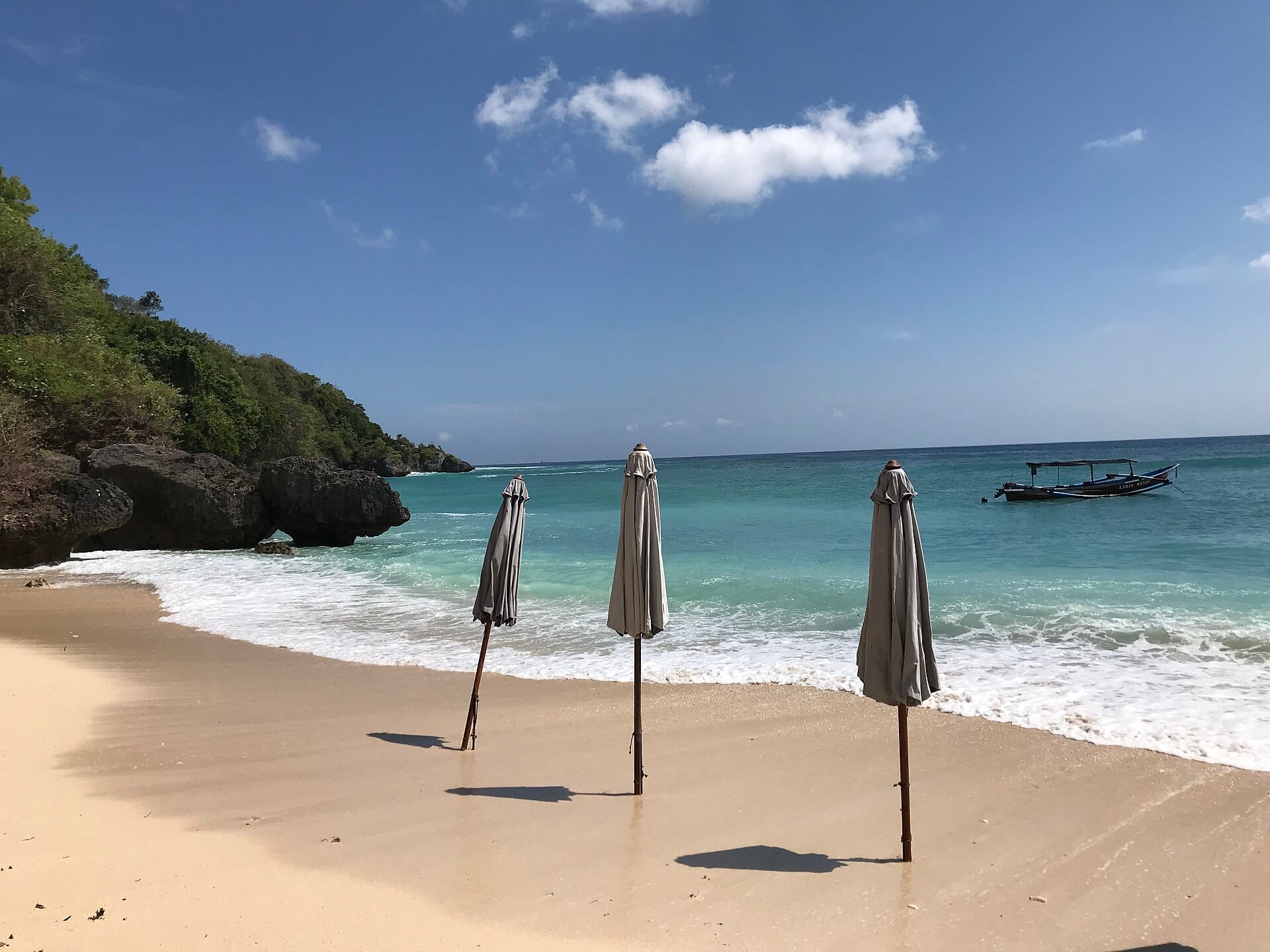
Padang Padang beach: small sandy cove accessible by steep stairs, popular for swimming when surf is small
Bingin beach: terraced cliff descent leading to a sheltered beach with good beginner surf
Balangan beach: wide black-sand fringe at the base of the cliffs, quieter and less developed
Sunset viewpoints along Jalan Labuansait: informal clifftop spots with unobstructed ocean views
Those based further north can use Uluwatu as a day trip from Seminyak or Kuta, though the drive of 45 to 60 minutes each way means you'll want to make a full afternoon of it rather than a quick stop.
Eating & Drinking
The food scene in Uluwatu is built around two formats: the cliff-edge warung, and the beach club. The warungs are the more honest option. Scattered along the roads above the surf breaks and tucked into the upper paths at Bingin, they serve Balinese standards: nasi campur (rice with small portions of various side dishes), mie goreng (fried noodles), grilled fish, and fresh coconuts for around 30,000 to 60,000 rupiah a dish. They're casual, sometimes have plastic chairs on uneven ground, and the views from some of them are extraordinary. This is where the local surf guides eat, which is always a reliable indicator.
The beach clubs operate at the other end of the scale. Several have established themselves along the Bukit's cliffs, offering infinity pools, cocktails, international food menus, and sunset viewing with a minimum spend or entry fee. Prices are significantly higher than the rest of Bali, often equivalent to what you'd pay in a European beach resort. The trade-off is access to genuinely stunning cliff-edge settings with full service. These spots are busiest on weekends when visitors come down from Seminyak and Canggu for the day.
💡 Local tip
For an affordable alternative to the beach clubs, pull up a plastic stool at any of the small warungs near the Uluwatu temple parking area around sunset. The view is free, the Bintang is cold, and the satay is made on a small charcoal grill a meter from your table.
The inland settlements of Pecatu and Ungasan have a growing number of cafes serving Western breakfast menus and specialty coffee, catering largely to the villa-renting crowd. These are more practical than scenic but useful if you're self-catering and need a solid flat white and some eggs. The nearest significant grocery shopping is at the supermarkets back toward Jimbaran or in the retail strip near Nusa Dua.
Jimbaran, a short drive north of the Bukit isthmus, is worth considering for a seafood dinner: the beach restaurants there grill fresh fish and prawns on coconut-husk fires and seat diners on the sand at low wooden tables. It's one of Bali's more distinctive eating experiences. More context on the area is in the Jimbaran neighborhood guide.
Getting There & Around
Uluwatu has no public transit worth relying on. The practical options are: renting a scooter, hiring a private driver for the day, or using a ride-hailing app such as Grab or Gojek. From Seminyak or Canggu, expect 45 to 60 minutes by scooter depending on traffic, which can be heavy around the Kuta and Jimbaran corridors. From Ngurah Rai International Airport, Uluwatu is roughly 30 to 40 minutes by car, making it a viable first or last night destination if you have an afternoon flight.
Within Uluwatu itself, a scooter is close to essential. The main surf beaches are spread over several kilometers of clifftop road, and the paths down to the beaches are often too steep and narrow for cars. Parking near the temple and at Padang Padang can get chaotic in the late afternoon, so arriving early or after dark and walking back later is a better strategy during peak season.
ℹ️ Good to know
Grab and Gojek work reliably in Uluwatu for trips to and from the main beaches and the temple, but drivers sometimes charge a premium for the return trip up the hill. Confirm the fare before you get in, especially late at night when options are limited.
For day-trippers, hiring a driver for a full day (typically 500,000 to 700,000 rupiah) gives you the flexibility to combine Uluwatu with a stop at Jimbaran for dinner on the way back, without the stress of navigating unfamiliar cliff roads after sunset. If you're staying in Uluwatu itself, a rented scooter at around 70,000 to 100,000 rupiah per day is the most cost-effective way to move between the breaks.
Where to Stay
Accommodation in Uluwatu has expanded rapidly since around 2015 and now covers a wide spectrum. At the affordable end, surf guesthouses near the Uluwatu and Bingin breaks offer basic rooms, strong wi-fi, and proximity to the water for around USD 20 to 40 per night. These are aimed squarely at surfers who plan to be in the water at dawn and don't need much beyond a clean bed and a place to rinse their board.
The mid-range and luxury segments are dominated by private villas, many of them perched on the clifftops above the breaks with private pools and unobstructed ocean views. The Pecatu and Ungasan areas have a concentration of these, often bookable through the standard villa rental platforms. Some of the design is genuinely impressive, taking advantage of the limestone topography with multi-level structures and outdoor living spaces that blur the line between inside and outside.
Uluwatu suits independent travelers, surfers, couples looking for seclusion, and anyone who prioritizes natural scenery over urban convenience. It's less suited to first-time Bali visitors who want easy access to shopping, nightlife, and a wide variety of restaurants. For that experience, Seminyak or Canggu are better bases. Families with young children might find Nusa Dua more practical, with its calmer waters and flat resort infrastructure.
One consideration worth flagging: Uluwatu's roads can be tricky after dark, especially on the unmaintained lanes near the cliff edges. If you're staying somewhere remote on the Bukit and planning an evening at the temple or a beach club, factor in how you'll get back. Walking along unlit cliff roads at night is not advisable, and scooter accidents on the Bukit are unfortunately common among visitors who underestimate the road conditions.
Is Uluwatu Right for You?
Uluwatu is one of Bali's most geographically distinctive areas, and for the right traveler it's the best part of the island. It rewards those who slow down, spend a few days, and work out the rhythms of the cliff roads and tidal surf schedule. For a broader picture of where Uluwatu sits in the context of the whole island, the Ubud neighborhood guide and Kuta guide offer useful contrast, showing how different Bali's various zones can feel from one another.
TL;DR
Uluwatu is Bali's premier surf and clifftop destination, anchored by the ancient Pura Luhur Uluwatu sea temple and world-class reef breaks at Uluwatu, Padang Padang, and Bingin.
Best for: surfers, couples seeking seclusion, architecture and design enthusiasts, sunset chasers, and travelers who have already done the standard Bali circuit.
Not ideal for: first-time Bali visitors wanting nightlife and shopping convenience, families with very young children, or anyone without access to a scooter or private driver.
The dry season (May to October) is the optimal time to visit: reliable surf, spectacular sunsets, and manageable road conditions on the cliff paths.
Plan at least two full days to cover the main beaches, attend the Kecak dance at sunset, and get a proper feel for the Bukit's unique pace and landscape.
Bali's weather, crowds, and costs vary dramatically throughout the year. This guide breaks down every month so you can choose the right time based on your priorities, not just the travel brochure version.
From ancient sea temples and volcano sunrise treks to hidden beaches and Nusa Penida's dramatic cliffs, this guide covers 20 of the best things to do in Bali with a deep dive on each, honest opinions and planning advice.
Choosing where to stay in Bali can make or break your trip. From the surf-soaked lanes of Canggu to the rice-field serenity of Ubud and the polished resorts of Nusa Dua, this guide cuts through the noise and matches every travel style to the right neighborhood.