Kuta is the beating commercial heart of Bali's tourist coast, where surf schools line the sand, budget guesthouses crowd every lane, and the party starts before sunset and runs well past midnight. It rewards travelers who embrace its energy and frustrates those expecting something quieter.
Kuta is where most travelers first touch down in Bali, and where opinions split almost immediately. The beach is genuinely impressive, the sunsets are among the best on the island, and the sheer density of food, nightlife, and surf makes it easy to fill days without planning. But it is also loud, heavily commercialized, and built almost entirely around the foreign visitor economy.
Orientation
Kuta sits on Bali's southwestern coast, roughly four kilometers south of Ngurah Rai International Airport. The neighborhood runs along a long arc of west-facing beach and is bordered to the north by Legian, which blends into it without any obvious boundary, and to the south by Tuban, the quieter hotel strip closest to the airport. Inland, Kuta connects to Denpasar, Bali's administrative capital, via Jalan Raya Kuta, the main arterial road that feeds traffic into the area.
The neighborhood's core is organized around two parallel streets: Jalan Legian, which carries the bulk of the traffic, shops, and restaurants, and the Poppies Lanes, a pair of narrower pedestrian-friendly alleys that cut between the beach and Jalan Legian. Poppies Gang I and Poppies Gang II are where most budget accommodation clusters and where the street-level character of Kuta is most concentrated. The beach itself runs continuously for several kilometers, accessed via multiple gang (alleyways) that cut west from Jalan Pantai Kuta.
Kuta's position makes it the logical staging point for the wider south Bali region. Seminyak is a fifteen-minute drive north up the coast, Jimbaran and its famous seafood warungs are about twenty minutes south, and Ubud in the interior is reachable in an hour or more depending on traffic. Travelers who want to explore the island often use Kuta as a base of convenience rather than a destination in itself.
ℹ️ Good to know
Kuta, Legian, and Seminyak are often treated as one continuous strip, but each has a distinct character. Kuta is the loudest and most affordable. Legian is slightly calmer with a mix of families and younger travelers. Seminyak skews upscale and is noticeably quieter after midnight.
Character & Atmosphere
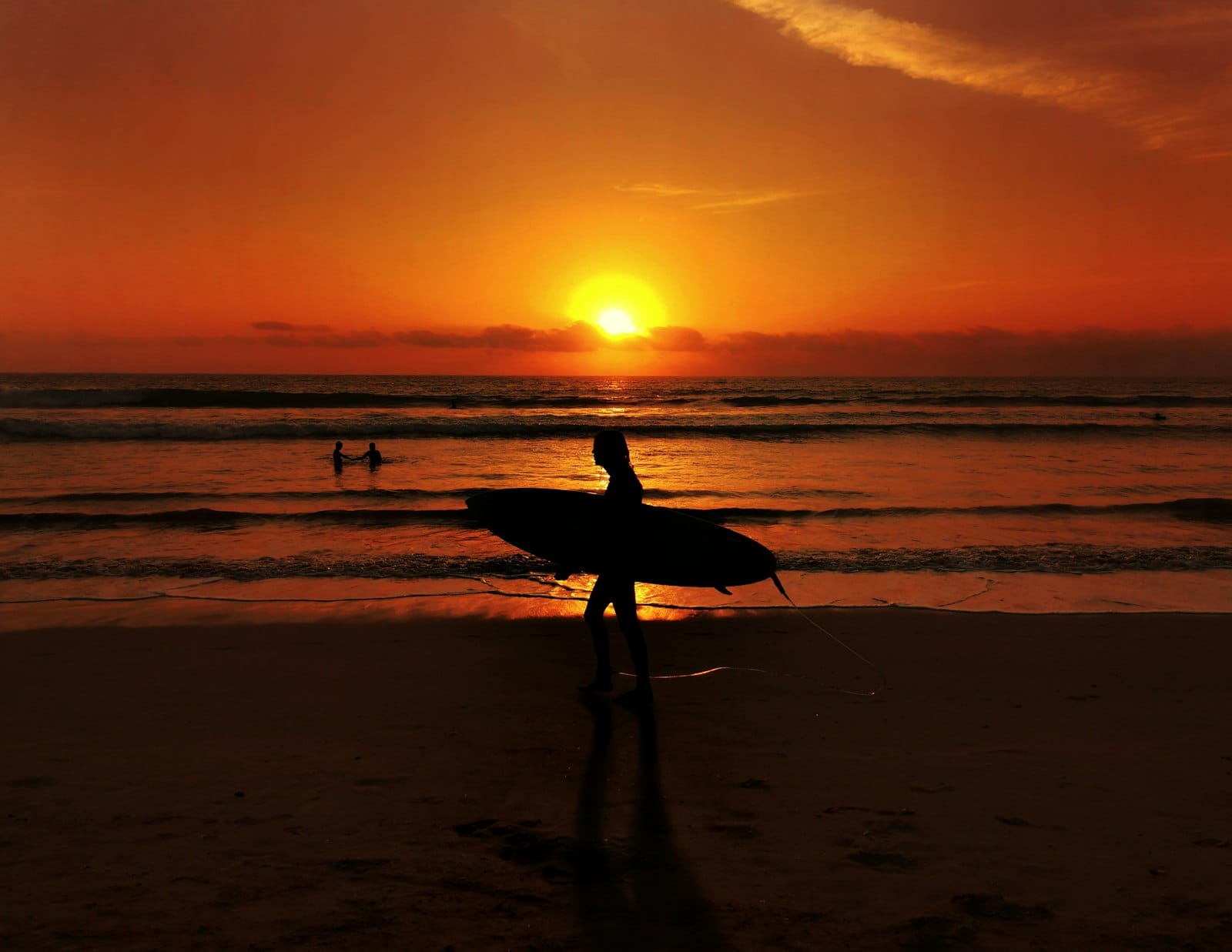
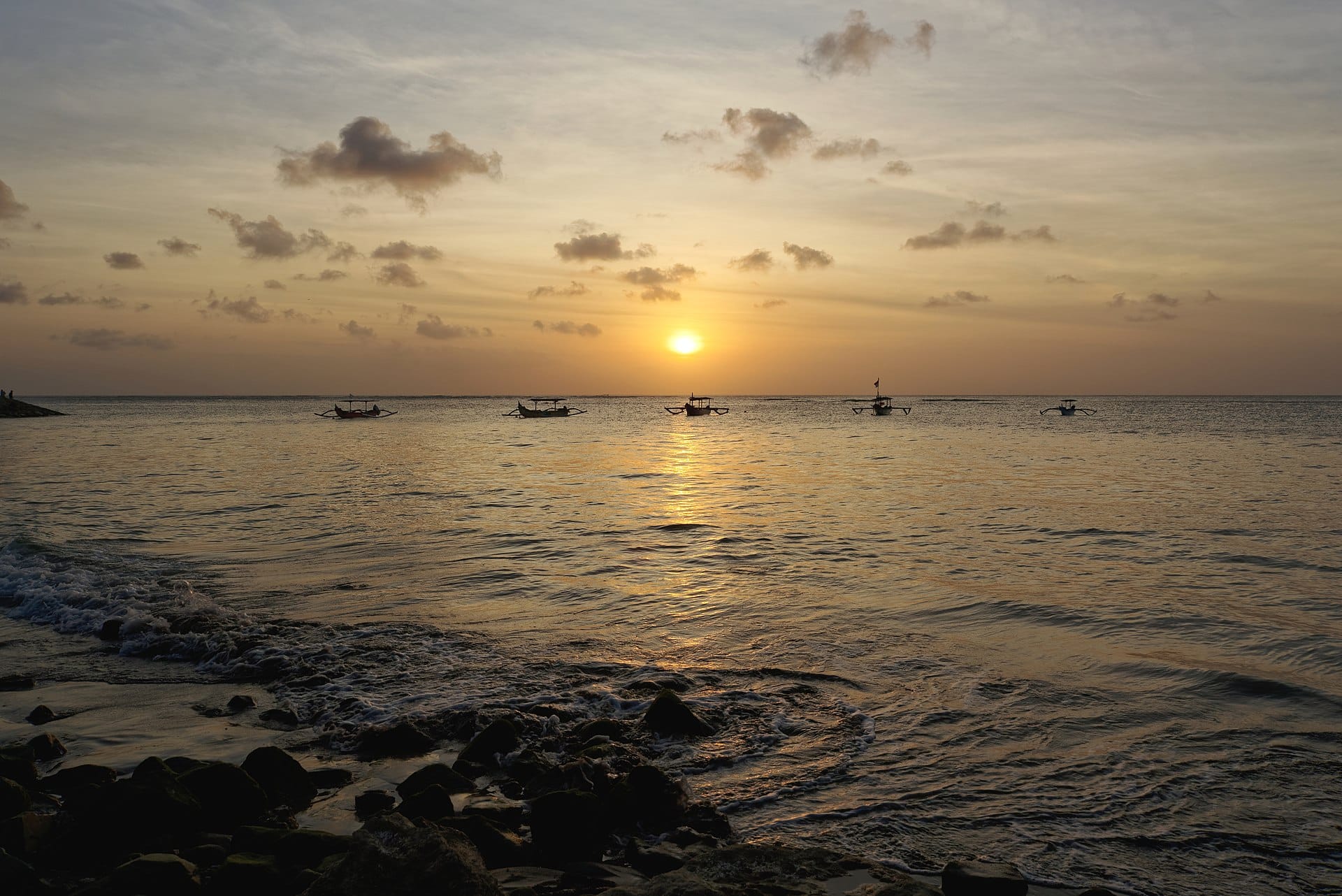
In the early morning, Kuta shows a different face. The beach at dawn belongs to surfers paddling out through the break, local vendors setting up food carts, and the occasional runner moving along the wet sand before the crowds arrive. The light at this hour is flat and golden, the vendors quiet, and the ocean genuinely beautiful. Kuta Beach faces due west, which means the sunsets are the main attraction: by 5:30pm in the dry season, the beach fills with people, warung staff drag chairs to the water's edge, and the sky turns vivid orange behind the surfers still out in the water.
By mid-morning, the character shifts. The main streets fill with taxi drivers, tour touts, and shop owners calling out to passing pedestrians. Jalan Legian becomes gridlocked with motorbikes and tourist shuttles. Inside the Poppies Lanes, the pace is slightly slower, but the hawker pressure is still present. This is not an area where you walk without being approached, and travelers who find that dynamic draining should factor it into their decision to stay here.
After dark, Kuta transforms again. The strip along Jalan Legian and around Beachwalk Shopping Center fills with travelers in groups, the bars turn up the music, and the club district around Jalan Double Six becomes the main draw for the late-night crowd. The energy is genuinely social and low-cost by international standards, which is why Kuta draws a young, budget-conscious demographic from Australia, Europe, and increasingly East Asia. It is a good place to meet other travelers; it is not a good place to find solitude.
What to See & Do
The beach is the primary reason Kuta exists as a tourist destination. Kuta Beach is wide, long, and has consistent surf that is forgiving enough for beginners. Dozens of surf schools operate directly on the sand, offering two-hour lessons that include board rental and a spotter. The southern end of the beach near Kuta Square is the most crowded; moving north toward Legian Beach thins the crowd and improves the surfing conditions slightly. The beach is free to access and the surf rental economy means you can be in the water within minutes of arriving.
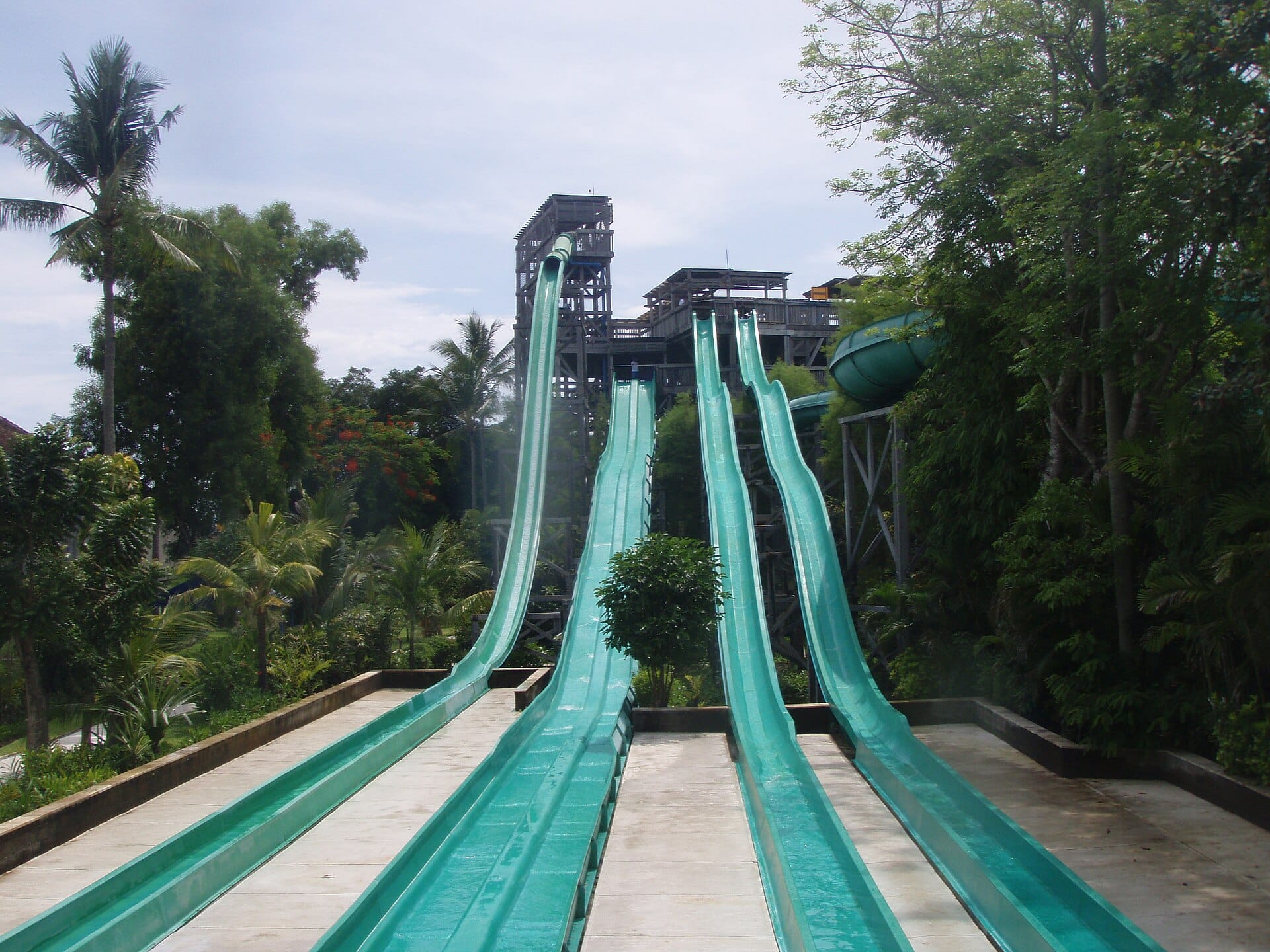
Beyond the beach, the neighborhood's main cultural site is the Bom Bali Memorial, a quiet stone monument on Jalan Legian marking the site of the 2002 bombings that killed 202 people. It is a sobering stop in an otherwise relentlessly commercial streetscape, and worth a few minutes of reflection. Waterbom Bali water park, one of the largest in Asia, sits just south of the main strip near Tuban and draws families and larger groups. It requires a separate entry fee but is well-maintained and genuinely popular.
Shoppers will find Kuta Square, Beachwalk Shopping Center, and the street-level stores along Jalan Legian covering everything from surf brands and batik fabric to counterfeit goods and souvenir tat. Bargaining is standard practice in the market stalls and smaller shops; fixed-price retail is the norm in the malls. If you want to browse without pressure, Beachwalk is the easier option.
For travelers thinking beyond Kuta itself, Jimbaran to the south is a thirty-minute drive and offers a completely different experience: a calm bay beach, fishing villages, and seafood restaurants set directly on the sand at night. It makes an easy half-day from Kuta.
Surf lessons on Kuta Beach: multiple schools operate from early morning, lessons typically run 7am-9am or 9am-11am
Bom Bali Memorial on Jalan Legian: open at all hours, no entry fee
Waterbom Bali: near the airport end of the strip, ticketed entry, full day recommended
Beachwalk Shopping Center: air-conditioned, reliable brands, good food court
Sunset watching from the beach: best between 5:30pm and 6:30pm in the dry season (May to October)
Eating & Drinking
Kuta's food scene covers an enormous price range, from 20,000 rupiah nasi goreng at a warung on a back lane to international restaurant meals that would cost the same in any major city. The ground-level warungs tucked into the Poppies Lanes and the streets behind Jalan Legian are where local-style Indonesian food is most affordable and most consistent. Nasi campur (rice with a selection of side dishes), mie goreng (fried noodles), and sate are the staples, and portions are generous. These spots often close by 9pm.
For sit-down meals, the stretch of restaurants along Jalan Pantai Kuta and around Beachwalk Shopping Center offers almost every cuisine type, including Mexican, Japanese, Italian, and Australian-influenced cafes. These cater primarily to foreign visitors and price accordingly, but quality varies enormously; the busiest spots at lunch are usually the most reliable. Several spots specialize in fresh seafood, where you select the fish by weight before it is grilled and served with sambal and rice.
The drinking scene runs the full spectrum. During the day, beach clubs and surf-adjacent cafes serve cold Bintang beer and fresh fruit juices. After dark, the bars along Jalan Legian and the club strip near Sky Garden become the main draws. Sky Garden is Kuta's most well-known multi-floor club, with different music genres on each level and a free-entry policy that packs it out most nights. Cocktail prices are low by global standards. Alcohol is legal and widely available; there are no restrictions specific to Kuta.
⚠️ What to skip
Avoid drinking arak cocktails or spirits from unlicensed street vendors. Methanol poisoning from bootleg alcohol is a documented risk in Bali's tourist areas. Stick to sealed bottles or drinks from established venues.
Getting There & Around
Ngurah Rai International Airport is the closest airport in Bali to Kuta, approximately four kilometers south of the main beach area. The taxi journey from the airport arrivals hall to the center of Kuta takes between fifteen and forty minutes depending on time of day, with the airport access roads prone to heavy congestion in the late afternoon. Official metered taxis from the airport rank are the safest option. Unofficial drivers who approach in the terminal typically charge fixed (higher) rates and can be waved off.
Within Kuta, the most practical mode of transport is a motorbike taxi booked through the Gojek or Grab apps. These are significantly cheaper than conventional taxis, available within minutes, and can navigate the back lanes that cars cannot access. For longer trips to Seminyak, Canggu, or Ubud, renting a car with a driver for a half or full day is the most flexible option and widely available through hotels and local agencies.
Kuta is well-connected to Canggu to the north, which has become Bali's preferred base for longer-stay travelers and digital nomads. The drive takes twenty to forty minutes depending on traffic, and the contrast in character between the two areas is significant.
Walking is viable within the Poppies Lanes and the immediate beach area, but Jalan Legian is not pedestrian-friendly: the footpaths are narrow, frequently blocked by parked bikes, and the traffic is unpredictable. For anything more than a short stroll, using a ride-hailing app saves both time and energy.
💡 Local tip
Set your Gojek or Grab pickup point at least half a block from any major intersection or hotel entrance. Drivers on the apps cannot legally stop directly in front of certain venues, and meeting them slightly off the main road is faster and avoids confusion.
Where to Stay
Kuta offers the widest range of accommodation prices in south Bali, from basic guesthouses in the Poppies Lanes charging under $20 USD per night to mid-range resort hotels near the beach with pools and breakfast included for $60 to $100 per night. The highest concentration of budget accommodation is in the area between Poppies Gang I and Poppies Gang II, where family-run losmen (small guesthouses) and simple hotels are within three to five minutes' walk of the beach.
Travelers who want a pool but not a premium price should look at hotels along Jalan Benesari and the smaller streets south of Poppies Gang II, where mid-range properties with good facilities are slightly removed from the loudest bar strips. Staying on or directly adjacent to Jalan Legian gives convenience but comes with road noise until at least 2am on weekends.
Kuta is suited to first-time Bali visitors, surfers, and those on tighter budgets. Travelers wanting a quieter, more design-conscious experience typically move north to Seminyak or further to Canggu, while those seeking culture and cooler temperatures head inland to Ubud
ℹ️ Good to know
Kuta is most crowded during the Australian summer school holidays (late December to mid-January) and during peak European summer (July to August). If visiting during these windows, book accommodation at least six to eight weeks in advance. Prices rise sharply and the beach becomes extremely crowded. For timing advice across the island, see the guide on the best months to visit Bali.
For broader trip planning, the guide on the best months to visit Bali covers seasonal weather patterns, surf conditions by month, and how crowd levels shift across the dry and wet seasons. If you're mapping activities across the island, the things to do in Bali guide is a useful companion.
Is Kuta Right for You?
Kuta is the right choice for a specific kind of traveler. If you want affordable accommodation close to the airport, reliable surf, an easy social scene, and don't mind noise and crowds as part of the deal, it delivers on all of those things efficiently. It is a poor fit for travelers seeking a calm introduction to Balinese culture, those who are easily worn down by street vendor pressure, or anyone who prioritizes sleep. The neighborhood's commercial density means culture is not the main offering here.
That said, dismissing Kuta entirely is a mistake. The beach is real, the sunsets are exceptional, the surf is consistent, and the sheer availability of transport links makes it a practical base for day trips across the island. Many experienced Bali visitors use it for one or two nights on arrival or departure, taking advantage of the airport proximity without committing to a longer stay.
TL;DR
Kuta is Bali's most commercialized beach neighborhood: high convenience, high crowd density, affordable prices
Best for: first-time visitors, surfers, budget travelers, those who want easy access to Ngurah Rai Airport
Not ideal for: travelers seeking quiet, cultural immersion, or design-conscious accommodation
The beach and sunsets are genuinely worth experiencing; the shopping and nightlife are Bali's most accessible
Use it as a base for day trips to Jimbaran, Seminyak, Canggu, or Ubud rather than expecting it to be a destination in itself
Bali's weather, crowds, and costs vary dramatically throughout the year. This guide breaks down every month so you can choose the right time based on your priorities, not just the travel brochure version.
From ancient sea temples and volcano sunrise treks to hidden beaches and Nusa Penida's dramatic cliffs, this guide covers 20 of the best things to do in Bali with a deep dive on each, honest opinions and planning advice.
Choosing where to stay in Bali can make or break your trip. From the surf-soaked lanes of Canggu to the rice-field serenity of Ubud and the polished resorts of Nusa Dua, this guide cuts through the noise and matches every travel style to the right neighborhood.