Padang Padang Beach: Uluwatu's Iconic Cove, Honestly Reviewed
Padang Padang Beach is a compact, cliff-framed cove on Bali's Bukit Peninsula with a surf reputation that reaches well beyond Indonesia. Accessible through a narrow rock passage, it rewards visitors with turquoise water and striking scenery — but it gets crowded, and knowing when to arrive makes a significant difference.
Quick Facts
- Location
- Jl. Labuan Sait, Pecatu, Uluwatu, Kuta sub-district, Badung
- Getting There
- No direct public transit; best reached by scooter or private car
- Time Needed
- 1.5 to 3 hours
- Cost
- Small admission fee collected at the cave entrance (approx. IDR 15,000–20,000 per person)
- Best for
- Surfers, cliff scenery, photography, and beach seekers who prefer a smaller-scale cove
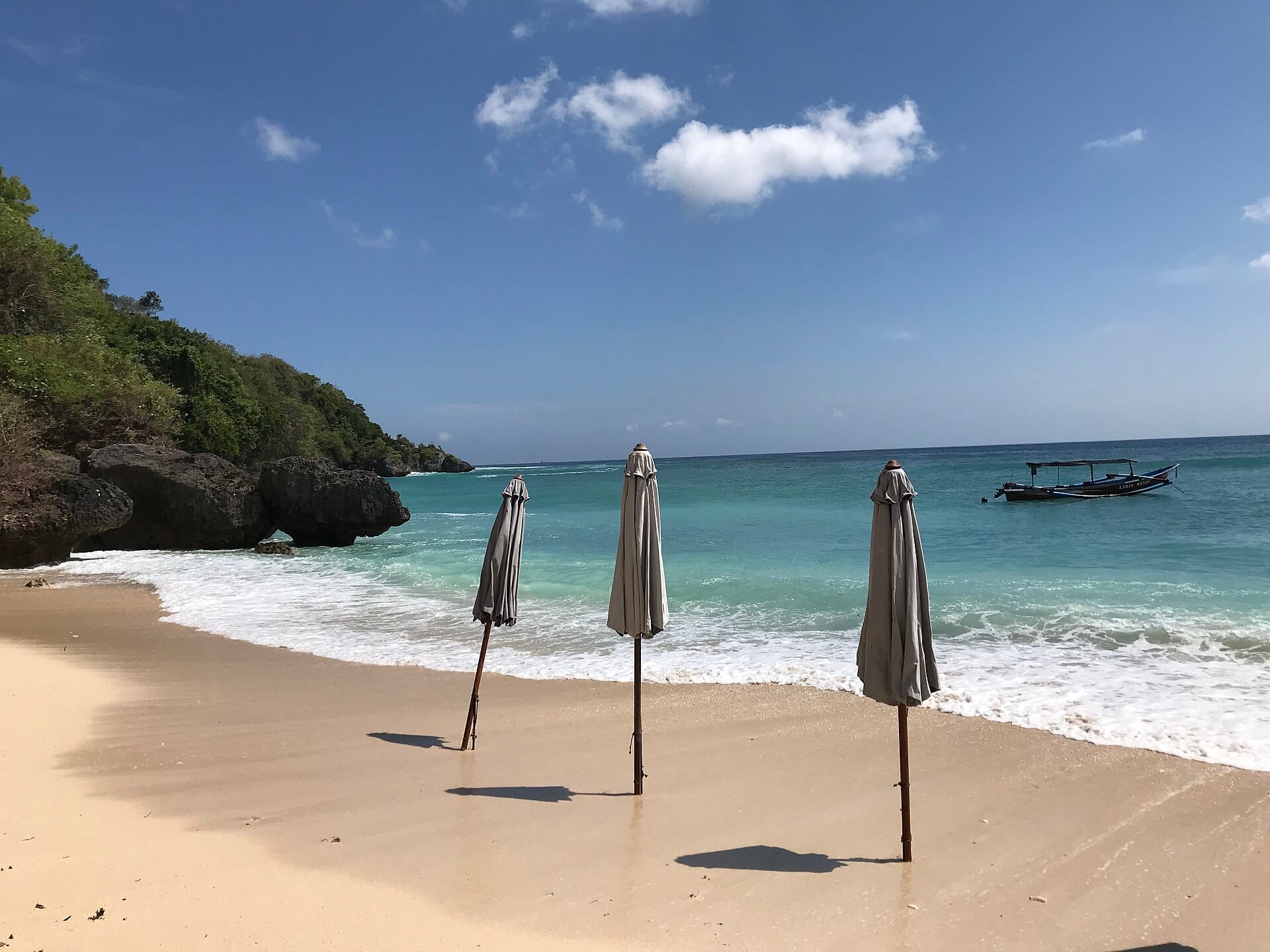
First Impressions: The Cave Entrance and the Cove Below
The first thing that separates Padang Padang Beach from every other beach on the Bukit Peninsula is the entry. You don't walk down a standard beach access ramp. You squeeze through a narrow cleft in the limestone cliff, descending a steep flight of stone steps through the rock, and then the beach opens up below you. It's a genuine threshold moment: one second you're on a sun-blasted road lined with warungs and surf shops, the next you're inside a cool, shadowed passage with the sound of breaking waves pulling you forward.
Padang Padang Beach sits at the bottom of high limestone cliffs that frame the cove on three sides. The beach itself is short, roughly 100 meters of pale-golden sand at its widest, and that compactness is both its charm and its main limitation. At low tide, the sand expands noticeably, and swimming becomes more practical. At high tide, the water comes close to the cliff base on the northern end, shrinking available space considerably.
💡 Local tip
Check tide tables before you go. Low tide (typically early morning) gives you the most beach space and the safest swimming conditions. Tide apps like Tide Alert or a quick Google search for 'Padang Padang tide times' will do the job.
Surf Culture and Why This Beach Has a Serious Reputation
Among surfers, Padang Padang needs no introduction. The left-hand reef break here is widely considered one of the finest in Asia. It breaks over a shallow coral reef a short distance offshore, producing fast, hollow barrels that demand real experience. This is not a beginner wave. On the right swell, it can hold waves well overhead, and the reef below offers little forgiveness for misjudged positioning.
The Rip Curl Cup, one of the world's most closely watched invitation-only surf competitions, has been held at Padang Padang for years, only running when the surf meets a strict size threshold. That kind of selectivity tells you something about the quality of the break. The competition draws top-tier professional surfers and turns the clifftop into a makeshift grandstand packed with spectators.
For non-surfers, watching the lineup from the rocks at the southern end of the beach or from the clifftops accessible near the entrance is one of the more compelling free activities in the area. The wave's shape, the timing of each set, and the surfers' positioning provide genuinely absorbing viewing. If you want the full context of surf culture on the Bukit Peninsula, it pairs well with a visit to Uluwatu's broader coastal stretch, which hosts several other well-known breaks within a short distance.
Tickets & tours
Live prices and dates from our booking partner. If you book, we may earn a commission at no extra cost to you.
What the Beach Actually Looks and Feels Like
The limestone cliffs that surround Padang Padang are what make it photogenic. They're rough-textured, pale grey-white, and pocked with small caves and overhangs that provide patches of shade throughout the day. A scattering of small trees clings to cracks in the rock face, adding just enough green to break the monochrome. At the base of the cliffs, the sand is fine and clean, though vendors set up sun loungers and umbrellas that cover a meaningful portion of the available space by mid-morning.
The water is a deep, shifting turquoise. On calm days at low tide, you can wade out to waist depth and see the coral beneath clearly. The current is manageable for confident swimmers in those conditions, but the reef means you shouldn't underestimate the ocean here, especially when swell picks up. There are no lifeguards stationed at Padang Padang, so self-assessment is essential.
⚠️ What to skip
No lifeguards are present. Reef shoes are worth packing if you plan to wade, as the coral entry can be sharp. Avoid swimming when surf is running at height.
Crowd Patterns and When to Actually Arrive
Padang Padang became significantly more famous after appearing in the 2010 film Eat Pray Love, and that visibility has never really faded. On peak-season weekends, particularly between June and August, the beach can feel genuinely packed. The narrow entrance creates a bottleneck effect, and the limited sand means that by 10am, finding space to spread a towel without being close to neighboring groups requires patience and luck.
Arriving before 8am changes the experience substantially. The crowds are thin, the light is soft and angled rather than flat overhead, and the cave entrance feels more like a discovery than a queue. Late afternoon, from around 4pm onward, is the second-best window. The sun moves behind the cliff line on the western side, casting the beach into pleasant shade and dropping the temperature noticeably. The golden hour here is genuinely good for photography: warm light catches the cliff faces and the water takes on a deeper color.
Weekday visits during shoulder season, particularly April to May or September to October, offer the best balance of good weather and manageable visitor numbers. For context on how the months compare across the island, the guide to the best months to visit Bali breaks down seasonal patterns in detail.
Practical Walkthrough: Getting There and Navigating the Site
There is no public bus service to Padang Padang. The realistic options are renting a scooter, hiring a private driver for the day, or booking a ride via Grab (Bali's functional ride-hailing app). Scooter rental from Kuta or Canggu is straightforward, and the ride through the Bukit Peninsula is genuinely scenic, passing through dry scrub land with occasional sea views. Parking is available in a small lot near the beach entrance, and attendants collect a parking fee for both motorbikes and cars.
The entry fee is paid at the cave mouth, where an attendant sits in a small booth. The descent through the cave requires ducking slightly and navigating steep steps, so anyone with limited mobility should be aware that this part is not accessible. The steps continue down to the sand level, and the total descent from road to beach is roughly 15 to 20 meters of stone staircase.
Warung stalls near the entrance sell cold drinks, basic Indonesian food, and fruit. There's no formal restaurant on the beach itself, so bring water and snacks for longer stays. Padang Padang fits naturally into a day trip that also includes Pura Luhur Uluwatu and the Kecak Fire Dance at sunset, both less than 15 minutes away by scooter.
Photography Notes and Honest Limitations
Padang Padang photographs beautifully under the right conditions. The cave entrance framing a triangle of blue sky and sea is one of the most reproduced images in Bali travel photography, and it earns that status. Early morning, when the light enters the cave mouth at an angle, gives the stone walls a warm glow that midday light completely flattens. The clifftop to the south of the entrance provides elevated views over the cove that are worth the short scramble.
The honest limitation is that on a busy day, getting a clean shot of the cave entrance without other tourists in frame requires either very early arrival or careful patience. The beach itself is small enough that avoiding crowd evidence in wide shots is difficult from 9am to 4pm in high season. Drone photography is subject to Indonesian aviation regulations; check current rules before flying, as restrictions in Bali have tightened in recent years.
ℹ️ Good to know
The cave entrance photo works best when the sun is still low and eastern light filters in from above. Aim for arrival between 7am and 8:30am for the best conditions, particularly between May and August when the sun rises earlier and at a more favorable angle.
Who This Beach Is For, and Who It Isn't
Padang Padang suits travelers who want scenery with substance: the surf culture, the cliff formations, and the contained scale of the cove give it a personality that larger, more open beaches like those around Kuta or Seminyak don't quite replicate.
Families with young children should think carefully. The cave descent is manageable, but the lack of lifeguards, the reef, and the limited shade on the sand make it less comfortable for extended family sessions compared to calmer, more sheltered beaches. Travelers who prioritize long stretches of open beach for running, ball games, or extended swimming will likely find the cove too small and the water too reef-dominated for that kind of use.
For surf watchers, photographers, and anyone who wants a beach that feels architecturally distinct from the standard Bali coastline, Padang Padang delivers consistently. Just arrive early, bring water, and check the tides.
Insider Tips
- The rocks on the southern end of the beach, accessible by a short scramble at low tide, give you an elevated view directly into the surf break. It's where the more experienced surf watchers position themselves and it's quieter than the main sand area.
- If you're combining Padang Padang with Uluwatu temple for a sunset visit, do the beach first in the morning and the temple in the late afternoon. Reversing that order means hitting the beach in peak heat and peak crowds.
- The warung closest to the cave entrance typically has the fastest cold drink service and reasonable coconut prices. The stalls further up the road tend to be slightly cheaper for bottled water.
- Small orange-and-white temple shrines dot the cliff face above the beach. Locals consider the site spiritually significant, and modest behavior near these structures is appreciated, particularly during Balinese religious calendar events.
- If the swell is large and the surf is firing, the beach can feel quite loud and the water churns brown with sand near the shore. On those days, swimming is off the table but the wave-watching from the rocks is exceptional.
Who Is Padang Padang Beach For?
- Surfers and surf enthusiasts who want to watch or ride one of Bali's premier reef breaks
- Photographers seeking dramatic cliff and cave scenery, especially in early morning light
- Travelers combining a Bukit Peninsula loop with Uluwatu temple and the Kecak Dance
- Couples looking for a scenic, compact beach with character rather than long open shoreline
- Experienced swimmers comfortable with reef environments and variable ocean conditions
Nearby Attractions
Other things to see while in Uluwatu:
- Pura Luhur Uluwatu
Pura Luhur Uluwatu sits on a sheer limestone cliff 70 meters above the Indian Ocean on Bali's Bukit Peninsula. One of the island's six directional temples, it combines genuine spiritual weight with some of the most cinematic coastal scenery in Southeast Asia. The Kecak fire dance performed at sunset here is among Bali's most compelling cultural experiences.
- Kecak Fire Dance
Every evening at Uluwatu Temple, dozens of bare-chested men chant in hypnotic unison as the Ramayana epic unfolds against a backdrop of cliffs and open ocean. The Kecak Fire Dance is one of Bali's most photographed events, and when conditions align, it genuinely earns that reputation.
Planning a trip? Discover personalized activities with the Nomado app.