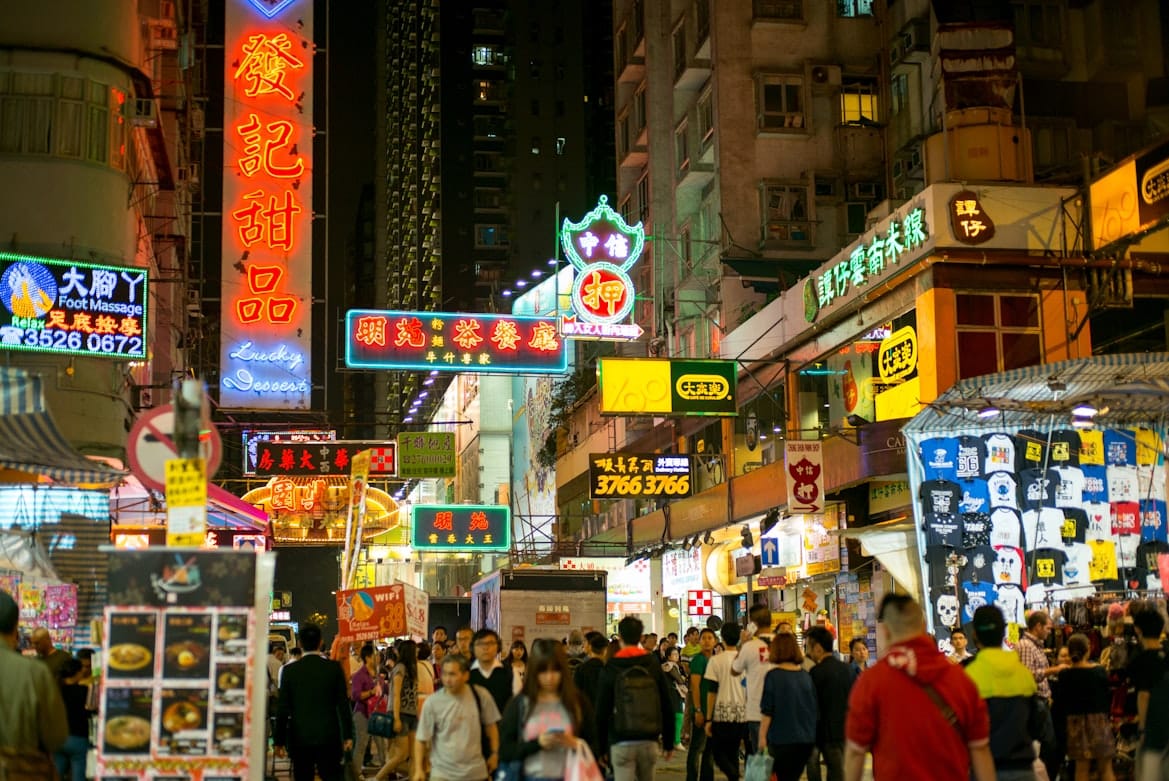
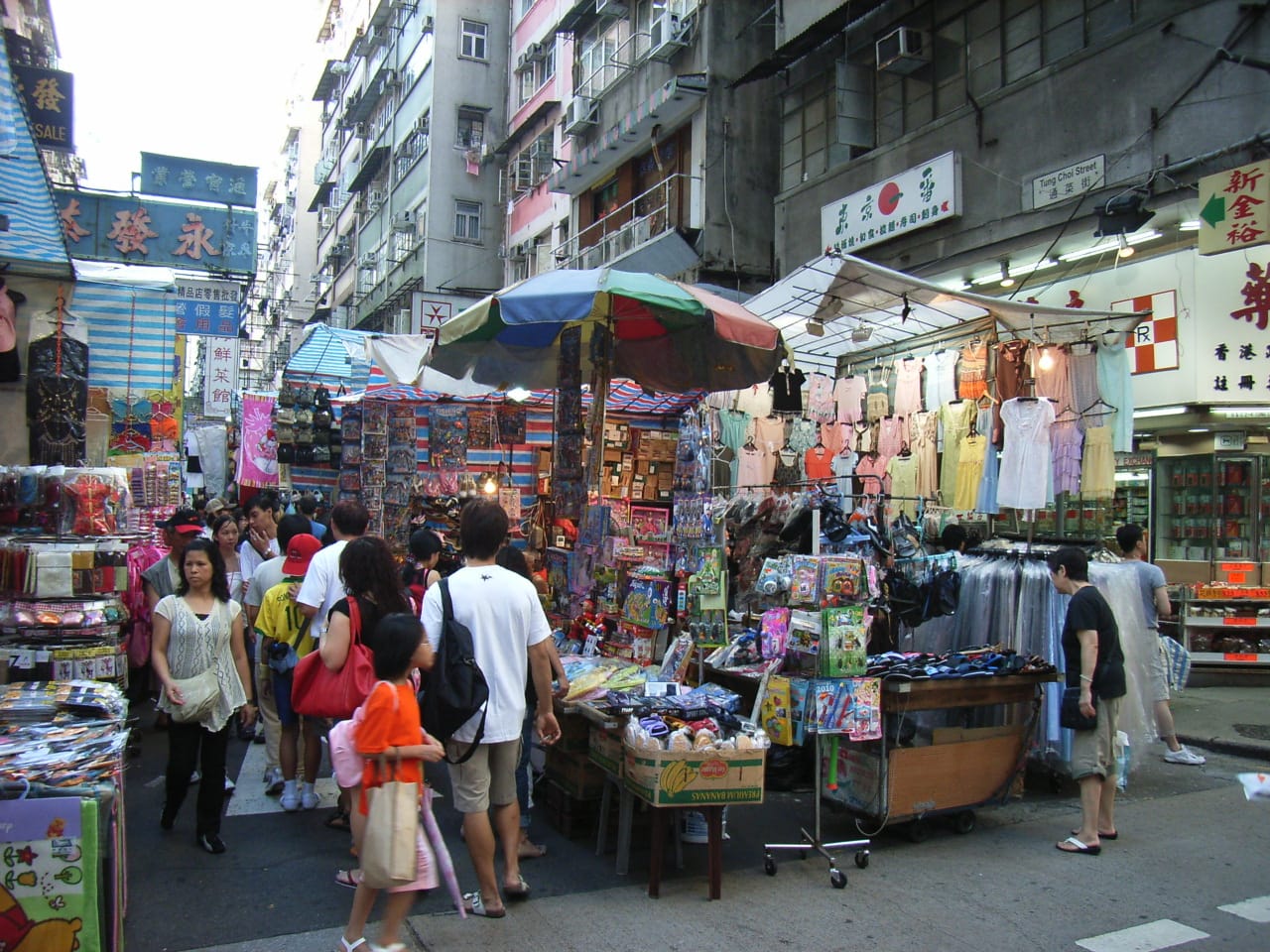
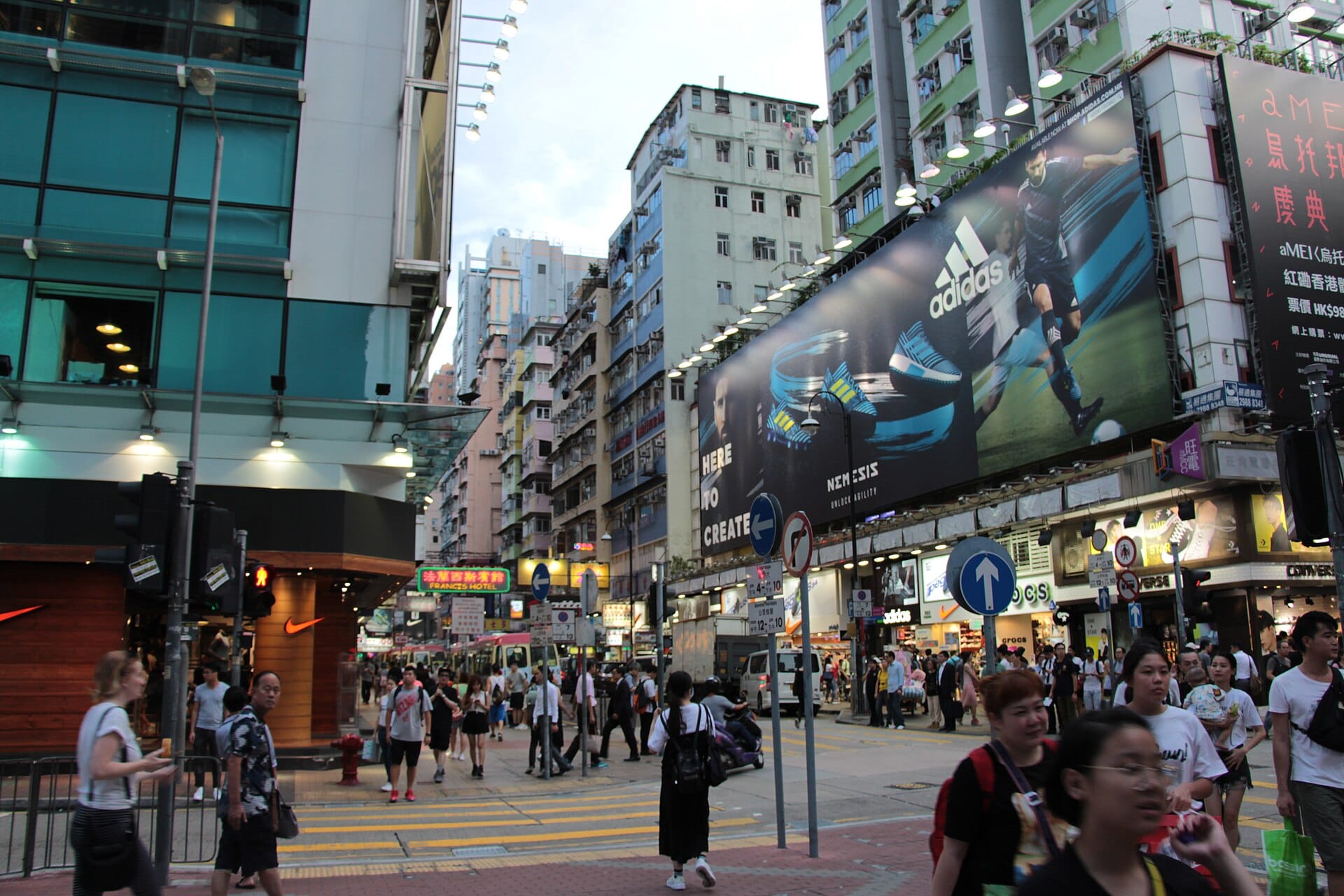
Mong Kok is intense, crowded, and unapologetically local. Staying here means being immersed in markets, street food, and everyday Hong Kong life. It's not the quietest option, but it's one of the most authentic.
Mong Kok assaults your senses within 30 seconds of surfacing from the MTR. Exit B3 onto Argyle Street and you're immediately navigating sidewalks packed shoulder-to-shoulder, dodging hanging roasted meats outside restaurants, inhaling mixed scents of stinky tofu and barbecued squid, hearing Cantonese shouted from every direction. This is Hong Kong at maximum density: 130,000 people per square kilometer, one of Earth's most crowded neighborhoods.
Where Central polishes and TST photographs well, Mong Kok just exists: unapologetically local, perpetually loud, completely indifferent to tourism. Ladies' Market stretches a kilometer selling knock-off goods. Goldfish Market lines an entire street with aquarium shops. Flower Market blooms 24 hours. Temple Street Night Market fires up at dusk. Street food vendors operate until 2 AM. This is working-class Hong Kong compressed into neon-lit chaos.
Stay here and you're embedded in real Hong Kong life. Hotels cost HK$400-700 vs Central's HK$900-1,300. Food runs HK$35-60 per meal instead of HK$80-150. You'll share elevators with residents carrying groceries, not tourists checking Instagram. The trade-off? Mong Kok is loud, crowded, and overwhelming. If you need calm, look elsewhere.
TL;DR
Mong Kok is one of the world's densest neighborhoods: 130,000 people per square kilometer. Street markets, local life, and authenticity at maximum concentration.
Located in northern Kowloon, served by three MTR lines: Tsuen Wan and Kwun Tong (Mong Kok). East Rail (Mong Kok East). 15 minutes to Tsim Sha Tsui, 25 to Central via MTR.
Famous for specialized markets: Ladies' Market (clothing/souvenirs), Goldfish Market (aquariums), Flower Market (plants 24/7), Temple Street Night Market (food/fortune tellers).
Best for budget travelers, culture seekers, and those who want authentic Hong Kong. Skip if you need quiet, personal space, or tourist infrastructure.
What Mong Kok Actually Feels Like
Mong Kok's defining characteristic is density without apology. Buildings rise 40-50 stories, residential towers stacked so close that neighbors can shake hands across alleys. Ground-level shops span 2-3 meters wide, yet somehow fit entire businesses: phone repair, herbal medicine, egg waffle stands, clothing racks extending onto sidewalks.
The street grid runs north-south (Nathan Road as spine) intersected by east-west arteries (Argyle, Dundas, Mong Kok Road, Shantung Street). Each intersection pulses with activity: pedestrian crossings crowd 50+ people waiting for lights, buses idle in three-layer traffic, hawkers sell roasted chestnuts from carts, and neon signs flicker in Cantonese advertising everything from hotpot to foot massage.
Langham Place (14-story mall on Argyle Street) towers as Mong Kok's most modern element: escalators spiraling up through atrium, international brands, air conditioning. Step outside and you're back in the 1980s: tiled shophouses, handwritten signs, and businesses operating the way they have for 40 years.
💡 Local tip
Mong Kok MTR has multiple stations serving different areas: Mong Kok on Tsuen Wan Line (Nathan Road), Mong Kok East on East Rail Line (eastern district), and Prince Edward (northern edge). Know which one you need: they're 10+ minutes apart on foot.
What to See and Do in Mong Kok
Mong Kok's attractions are markets and street life, not monuments or museums. Ladies' Market (Tung Choi Street from Argyle to Dundas) runs 1km selling clothing, accessories, souvenirs, knock-off goods. Haggling is expected: start at 50% of asking price. Open 3 PM-midnight daily, but best after 6 PM when crowds peak. For broader Hong Kong sightseeing, see our things to do in Hong Kong guide.
Goldfish Market (Tung Choi Street north of Prince Edward Road) lines an entire block with aquarium shops selling goldfish, tropical fish, koi, and aquatic plants. Hong Kong tradition considers goldfish lucky (the Cantonese words sound like 'abundant gold'). Even if you're not buying, the street is visually surreal: plastic bags of fish hanging floor-to-ceiling in every shop.
Flower Market (Flower Market Road, parallel to Tung Choi Street) operates 24 hours selling orchids, roses, lotus, and potted plants. Wholesale operations run 4-8 AM when florists stock up. Tourists should visit 10 AM-6 PM when retail shops open and atmosphere is less frantic. Chinese New Year (late January/February) transforms the market into absolute chaos: locals queue 2 hours to buy kumquat trees and peach blossoms.
Temple Street Night Market (10-minute walk south toward Jordan) fires up around 6 PM. Food stalls serve seafood, clay pot rice, and stir-fry at outdoor tables. Fortune tellers set up chairs along Reclamation Street. Souvenir vendors hawk jade, fans, and Chairman Mao watches. This is less polished than Ladies' Market: more authentic, slightly sketchy lighting, better food.
Sneaker Street (Fa Yuen Street between Argyle and Mong Kok Road) clusters 50+ shoe shops selling Nike, Adidas, New Balance, and knock-offs. Prices beat mall retail by 20-30%. Stock rotates fast. Serious sneakerheads visit weekly to catch new arrivals.
ℹ️ Good to know
Bird Garden (Yuen Po Street, near Prince Edward MTR) is a tranquil courtyard where elderly men bring caged songbirds for socialization. Shops sell ornate cages, bird food, and crickets. Free to wander, fascinating cultural insight into traditional Hong Kong hobbies.
Mong Kok at Different Times of Day
Early morning (6-9 AM): Wet markets open first: Fa Yuen Street Market and Mong Kok Market sell vegetables, seafood, meat. Residents shop before work. Cha chaan tengs serve breakfast crowds. This is working Mong Kok, pre-tourist arrival. Streets are busy but navigable.
Midday (10 AM-3 PM): Ladies' Market stalls finish setting up. Shops open. Sidewalks crowd but haven't peaked. This is the best window for exploring without maximum density. Lunch (noon-2 PM) fills restaurants: go at 11:30 AM or after 2:30 PM.
Evening (4-11 PM): Peak energy. Markets operate at maximum capacity. Ladies' Market sees heaviest crowds 7-9 PM. Street food vendors activate. Temple Street Night Market hits full swing by 8 PM. Sidewalks become challenging to navigate: walk defensively, expect physical contact.
Late night (11 PM-2 AM): Markets wind down. Some dai pai dong (street food stalls) stay open. Karaoke bars and massage parlors operate. The neighborhood quiets but never sleeps: 24-hour restaurants, late buses, and shift workers heading home maintain activity.
⚠️ What to skip
Mong Kok sidewalks are narrow (2-3 meters) with high foot traffic. If you use a wheelchair, walker, or have claustrophobia triggers, this neighborhood will stress you. Central or TST offer wider walkways and better accessibility.
Where to Eat and Drink in Mong Kok
Mong Kok's food scene focuses on cheap, fast, and local. Tim Ho Wan on Fuk Wing Street (Sham Shui Po border, 15-minute walk) earned a Michelin star for dim sum priced like street food: BBQ pork buns HK$18 for 3, shrimp dumplings HK$28. Arrive before 10:30 AM or after 2 PM to avoid 45-minute queues.
Mido Café (Temple Street, technically Yau Ma Tei but adjacent) is a retro cha chaan teng operating since 1950s. Checkered floor, booth seating, milk tea in thick cups. Pineapple buns, French toast, macaroni soup cost HK$30-45. No English menu but staff are patient.
Street food clusters on Sai Yeung Choi Street South and around Ladies' Market: egg waffles (HK$18), curry fishballs (HK$12 for 8), stinky tofu (HK$15), grilled squid (HK$25). Quality varies wildly: look for stalls with local crowds, not tourist lines.
For sit-down meals: Mak Man Kee (Parkes Street) serves wonton noodles that locals defend: springy noodles, plump shrimp wontons, clear broth. HK$45 per bowl. Sister Restaurant (Cordova Street) does clay pot rice with Chinese sausage and preserved meat, cooked over charcoal. HK$55, arrive before 7 PM or they run out.
Is Mong Kok Safe at Night?
Yes, but with context. Mong Kok is statistically safe: violent crime is rare, police patrol regularly, and millions of people transit through daily without incident. Women walking alone report few concerns. That said, the neighborhood's density and chaos can feel unsafe even when it isn't. Narrow alleys, pushy vendors, and aggressive foot traffic create stress, not actual danger.
Petty theft (pickpocketing) is slightly higher here than Central or TST due to crowd density. Keep valuables secured. Scams targeting tourists are common: overpriced electronics, fake jade, rigged carnival games. Use common sense, and if something feels wrong, walk away.
Who Should Stay in Mong Kok
Mong Kok suits budget travelers, culture seekers, and those who want to see real Hong Kong life. Hotels here cost 40-50% less than Central while maintaining decent quality and MTR access. For comprehensive accommodation advice, see our where to stay in Hong Kong guide.
Travel on a budget. Hotels run HK$400-700 for clean, basic rooms with private bathrooms. Food costs HK$35-60 per meal. You'll save HK$300-500 daily vs staying in Central.
Want authentic Hong Kong experience. Mong Kok doesn't perform for tourists: it just operates. You'll see real neighborhood life, not curated experiences.
Enjoy markets and street food. Ladies' Market, Temple Street, Goldfish Market, and countless food stalls provide daily entertainment without museum tickets.
Appreciate cultural density. If you find energy in crowds and urban chaos, Mong Kok delivers. This is Hong Kong's most Hong Kong neighborhood.
Are staying longer than 3-4 days. Short trips benefit from Central's efficiency. Longer stays can absorb Mong Kok's slower logistics (crossing to Hong Kong Island, navigating crowds).
Who Should Probably Stay Elsewhere
Mong Kok isn't ideal for everyone. Skip this neighborhood if you:
Need quiet and personal space. Mong Kok is perpetually loud and crowded. If sensory overload stresses you, choose quieter neighborhoods.
Have mobility limitations. Narrow sidewalks, steep stairs in many buildings, and dense crowds make wheelchair or walker navigation difficult.
Want tourist infrastructure. English signage is limited, hotel staff may not speak English fluently, and Western amenities (coffee chains, international food) are scarce.
Are visiting Hong Kong for 2 days or less. Mong Kok's charms require time to appreciate. Short trips benefit from Central or TST's tourist-friendly efficiency.
Prioritize Hong Kong Island sightseeing. Mong Kok is on Kowloon side: you'll spend 30-40 minutes daily crossing to Hong Kong Island. Central is a more efficient base.
Transport and Practical Realities
Mong Kok MTR (Tsuen Wan Line) serves Nathan Road's core. Trains to Tsim Sha Tsui (3 stops, 6 minutes), Jordan (2 stops, 4 minutes), and Central via transfer at Admiralty (20 minutes total). Mong Kok East MTR (East Rail Line, 10-minute walk east) connects to Hung Hom, Sha Tin, and mainland China border. Prince Edward MTR (Tsuen Wan Line, one stop north) serves northern Mong Kok and Flower Market area.
Buses connect to everywhere: Airport A21 (HK$33, stops along Nathan Road), Hong Kong Island routes via cross-harbor tunnels, New Territories express buses. Bus stops cluster on Nathan Road every 200 meters. Download Citymapper for real-time tracking.
Minibuses (16-seater vans, green or red) run fixed routes through Mong Kok. Green minibuses have set stops and fares. Red minibuses operate more flexibly (wave them down, announce destination, pay driver). Useful for short hops but confusing for tourists: stick to MTR and buses.
Taxis are cheap (flag fall HK$27) but finding empty ones during rush hour (8-9 AM, 6-7 PM) is challenging. Nathan Road has official taxi stands, but sidewalk hailing works better. Always insist on meter: flat-rate offers are scams.
💡 Local tip
Langham Place mall (Argyle Street) has free WiFi, clean restrooms (basement and 4th floor), and ATMs accepting international cards. Useful rest stop when exploring Mong Kok markets.
Local Tips You Won't Find Elsewhere
Ladies' Market haggling protocol: Vendor quotes HK$100, you counter HK$50, settle around HK$60-70. If they won't budge, walk away: they'll often chase you down with better price.
Temple Street Night Market seafood stalls cook what you select from ice bins. Point at items, they'll quote price. Clarify cost before cooking to avoid bill surprises. HK$150-250 feeds two people well.
Sham Shui Po (one MTR stop northwest) is even cheaper than Mong Kok: fabric markets, electronics shops, and the best street food in Kowloon. Worth a half-day side trip.
Mong Kok Computer Centre (Nelson Street) sells electronics, phone accessories, and computer parts at wholesale prices. Better deals than Nathan Road tourist shops, but zero English support.
How Mong Kok Compares to Nearby Neighborhoods
Comparing Kowloon options? Check out Tsim Sha Tsui for waterfront views and more hotels, Central for Hong Kong Island business district, or Causeway Bay for shopping on Hong Kong Island.
Tsim Sha Tsui (15 minutes south via MTR): More tourist infrastructure, better English signage, harbor views. Hotels cost HK$200-400 more per night. Trade authenticity for convenience.
Sham Shui Po (one stop northwest): Even more local, even cheaper. Fabric markets, electronics wholesale, zero tourists. Best for hardcore budget travelers who want maximum authenticity.
Yau Ma Tei (Jordan, two stops south): Middle ground between Mong Kok chaos and TST polish. Temple Street Night Market, cheaper hotels than TST, slightly calmer streets than Mong Kok.
ℹ️ Good to know
Mong Kok vs Central: budget travelers choose Mong Kok (half the cost, authentic experience). Business travelers and first-timers choose Central (efficiency, English support). Most Hong Kong locals would stay in Mong Kok given the choice: it's real.
The definitive guide to choosing where to stay in Hong Kong: from harbor views in Tsim Sha Tsui to local life in Sham Shui Po, and why the MTR line matters more than the view.