Ladies' Market Mong Kok: Bargaining on Tung Choi Street
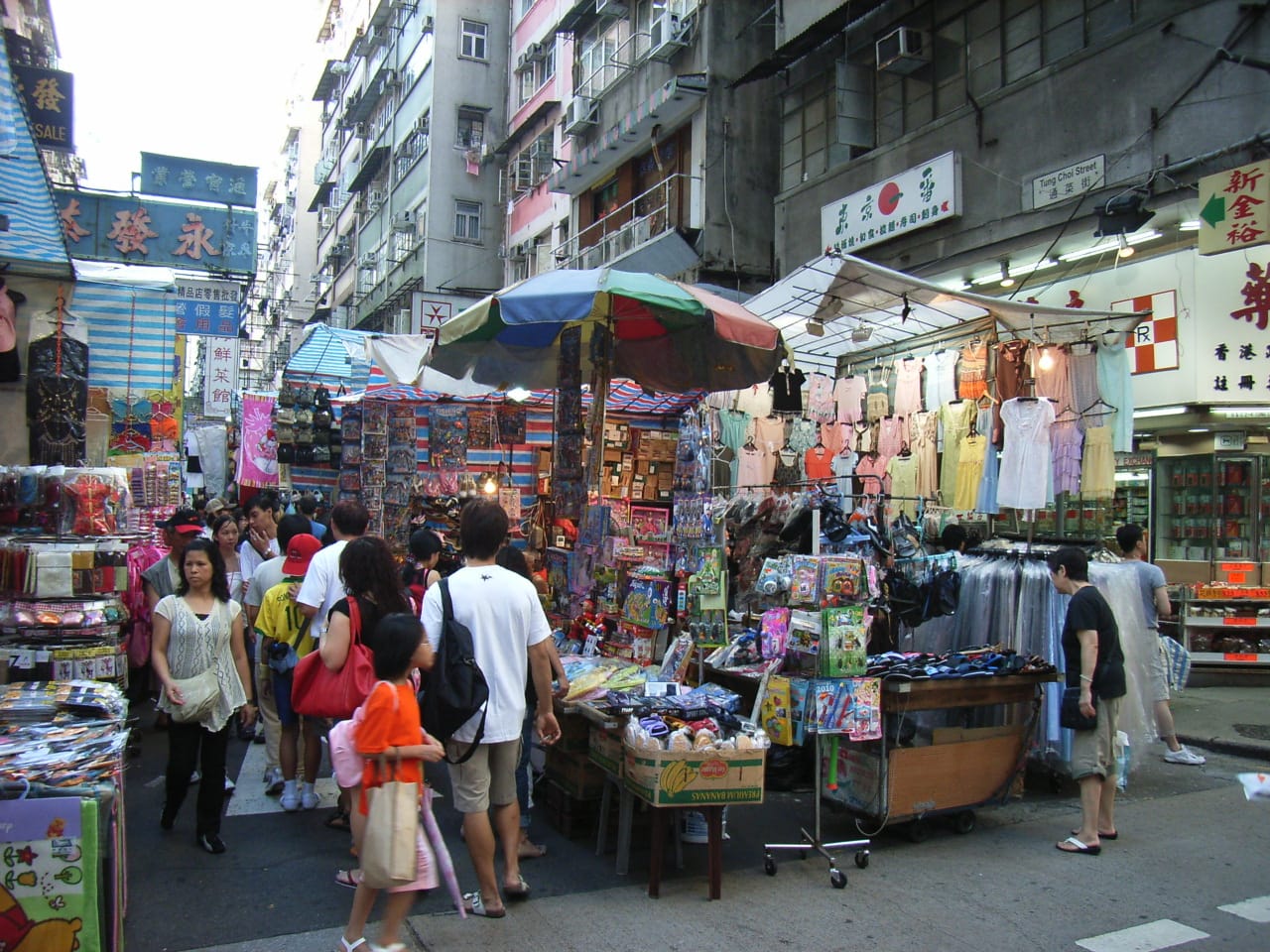
Ladies' Market runs along Tung Choi Street in Mong Kok where hundreds of stalls sell clothing, accessories, souvenirs, and knockoffs under red-and-blue striped awnings. Bargaining is expected, quality varies widely, and the atmosphere delivers Hong Kong's crowded street commerce energy more than the products themselves.
Quick Facts
- Location
- Tung Choi Street (Argyle to Dundas), Mong Kok
- Location
- Mong Kok MTR (Exit D3), 3-min walk
- Time Needed
- 1-2 hours for browsing and haggling
- Cost
- Free entry; items HK$20-300 after bargaining
- Best for
- Souvenir hunting, bargaining practice, crowds
Quick Snapshot
Ladies' Market runs along Tung Choi Street in Mong Kok where hundreds of stalls sell clothing, accessories, souvenirs, and knockoffs under red-and-blue striped awnings. Bargaining is expected, quality varies widely, and the atmosphere delivers Hong Kong's crowded street commerce energy more than the products themselves.
The market stretches roughly one kilometer between Argyle Street (north) and Dundas Street (south). Stalls open around noon and run until 11 PM daily. Peak crowds hit between 6 PM and 9 PM when locals finish work. Weekdays see lighter traffic than weekends.
Budget 60 to 90 minutes for a full walk-through with browsing. Entry is free. Expect to pay HK$20 to HK$80 for small souvenirs after bargaining, HK$100 to HK$200 for clothing. Starting prices are inflated 50% to 100% above what vendors will actually accept.
Ladies' Market works if you want the experience of Hong Kong street commerce: noise, crowds, vendor banter, and the haggling ritual. The products themselves are mostly generic imports you'll find across Asia. For quality shopping, head to malls. For authentic local markets selling food and daily goods, visit 's wet markets instead.
What Does Ladies' Market Actually Sell?
Clothing dominates: t-shirts, dresses, jeans, leggings, underwear, socks. Sizing skews small by Western standards. Quality ranges from flimsy to acceptable. Some stalls hang branded knockoffs (Adidas, Nike, Gucci logos), others sell generic designs. Inspect stitching and fabric before buying. Many items won't survive multiple washes.
Accessories and trinkets: phone cases, wallets, bags, watches, jewelry, sunglasses. Most are cheap imports. Watches don't keep accurate time. Leather goods are usually synthetic. Sunglasses scratch easily. These work as throwaway souvenirs, not lasting purchases.
Hong Kong-themed souvenirs: fridge magnets, keychains, postcards, chopsticks, tea sets, paper lanterns. These cluster near Dundas Street where tourist foot traffic is highest. Prices start around HK$50 to HK$80 but drop to HK$20 to HK$40 after negotiation, especially for multiple items.
Electronics and gadgets: charging cables, headphones, portable speakers, phone accessories. Quality is suspect. Cables fray quickly. Speakers sound tinny. Buy these at dedicated electronics shops like Fortress or Broadway if you need reliability.
Despite the name, the market doesn't exclusively target women. Men's clothing, sports jerseys, and unisex items appear throughout. The "Ladies'" label is historical, dating from when the street primarily sold women's garments in the 1970s and 1980s.
Tickets & tours
Live prices and dates from our booking partner. If you book, we may earn a commission at no extra cost to you.
Hong Kong audio guide with TravelMate app
From 8 €Instant confirmationHong Kong Tour with Peak Tram, harbour cruise and dim sum dinner
From 85 €Instant confirmationFree cancellationHong Kong night tour with Peak Tram and Symphony of Lights
From 63 €Instant confirmationFree cancellationLantau Cable Car and Big Buddha Guided Tour with Lunch in Hong Kong
From 85 €Instant confirmationFree cancellation
How Does Bargaining Work at Ladies' Market?
Vendors expect negotiation. Starting prices are marked up specifically to allow for haggling. If you pay the first quoted price, you're overpaying. Standard approach: vendor quotes a price, you counter with 40% to 50% of that amount, then meet somewhere in the middle through back-and-forth.
Example: vendor says HK$150 for a t-shirt. You offer HK$60. They drop to HK$120. You say HK$80. They counter HK$100. You settle at HK$80 to HK$90. This dance is expected and part of the experience. Don't feel rude pushing back on prices.
Multiple items give leverage. Buying three t-shirts instead of one lets you negotiate bulk discounts. Ask for "best price for three" and the per-item cost drops significantly. Some vendors offer "buy two, get one free" deals without prompting.
Walk away if the price doesn't meet your target. Vendors often call you back with a lower offer. This tactic works especially well when stalls aren't busy. During slow periods, vendors prefer making a smaller sale over no sale.
Small bills help close deals. If you offer HK$80 for an item and the vendor wants HK$100, pulling out exact change in small bills sometimes convinces them to accept your offer rather than make change. Some vendors genuinely lack change for large notes, others use "no change" as a bargaining position.
When Should You Visit Ladies' Market?
Weekday afternoons between 1 PM and 4 PM offer the best balance: most stalls are fully set up, crowds are manageable, and vendors have time to engage in negotiation. Mornings before noon see fewer open stalls and vendors still arranging inventory.
Avoid weekday evenings between 6 PM and 9 PM when locals flood the market after work. The street becomes shoulder-to-shoulder, making browsing difficult and increasing pickpocket risk. Vendors are busier and less willing to spend time negotiating.
Weekends stay crowded all day, especially Saturdays. Sunday afternoons see slightly lighter traffic as some Hong Kong families prioritize other activities. If your schedule forces a weekend visit, arrive around 11 AM or noon when stalls are opening but crowds haven't peaked.
Late evenings after 9 PM bring thinner crowds and potentially better deals as vendors try to move inventory before midnight closing. However, some stalls start packing up early if business is slow, reducing selection.
Weather matters. Summer heat and humidity make midday browsing uncomfortable. The stalls offer minimal shade. Rain doesn't close the market but turns walkways slippery and umbrellas create obstacles. Vendors cover goods with plastic but the atmosphere becomes chaotic.
How Do You Get to Ladies' Market?
Mong Kok MTR Station (Exit D3) on the Tsuen Wan Line or Kwun Tong Line puts you three minutes away on foot. Exit onto Nelson Street and walk east toward Tung Choi Street. The market entrance at Argyle Street appears on your right. Signs in English and Chinese point toward "Ladies' Market."
From Tsim Sha Tsui, take the Tsuen Wan Line northbound three stops to Mong Kok. The ride takes about five minutes. From Central or Hong Kong Island, transfer at Prince Edward or Admiralty depending on your starting line.
Multiple bus routes stop near the market: 1, 2, 6, 9, 13D, 16, 18, and others along Nathan Road or Argyle Street. Check Google Maps or Citymapper for specific routes from your location. Buses are slower than MTR due to Kowloon traffic.
Walking from Prince Edward MTR takes about 10 minutes south along Nathan Road, then east on Argyle Street to Tung Choi Street. This route lets you see surrounding Mong Kok neighborhood character before hitting the market.
Common Mistakes and How to Avoid Them
- Expecting high quality or unique products. Ladies' Market sells mass-produced imports, not artisan crafts or boutique items. Quality is low to medium. If you want unique Hong Kong products, visit PMQ or local designer shops instead.
- Paying the first quoted price. Vendors inflate initial prices by 50% to 100%. Always negotiate. Aim for 40% to 60% off the starting quote. Walking away often brings the vendor down further.
- Carrying large bags or valuables. Crowded conditions attract pickpockets. Bring minimal cash, keep your phone secure, and leave expensive jewelry at your hotel. Use a crossbody bag that stays in front of you.
- Buying electronics or items requiring reliability. Cables, chargers, and headphones sold here fail quickly. Quality control is nonexistent. Buy electronics from authorized retailers if you need them to last.
- Visiting during evening rush hours. The market becomes uncomfortably packed between 6 PM and 9 PM on weekdays, and most of the day on weekends. Weekday afternoons offer better browsing space.
How Does Ladies' Market Fit Into a Mong Kok Route?
Ladies' Market works as part of a broader Mong Kok market circuit. Start at the Goldfish Market on Tung Choi Street north of Argyle Street (10-minute walk from Ladies' Market's northern entrance), then walk south through Ladies' Market toward Dundas Street. Continue to Fa Yuen Street's sneaker stalls two blocks east. Finish at the Flower Market on Flower Market Road. This loop covers roughly 2 kilometers and takes 2 to 3 hours with browsing. For context, see area overview.
Alternatively, combine Ladies' Market with dinner in Mong Kok. Browse the market between 3 PM and 5 PM, then eat at one of the neighborhood's dai pai dongs (open-air food stalls) or Cantonese restaurants along Sai Yeung Choi Street. Many spots open around 6 PM for dinner service.
Temple Street Night Market in Yau Ma Tei sits 15 minutes south via MTR (one stop from Mong Kok to Jordan Station). Temple Street operates evenings only, so you could visit Ladies' Market in the afternoon, break for dinner, then continue to Temple Street after dark. Both markets offer similar products but Temple Street includes fortune tellers and opera singers for added atmosphere.
Who Should Visit Ladies' Market?
First-time Hong Kong visitors wanting to experience street market culture will find value here despite the tourist focus. The energy, density, and haggling ritual represent a slice of Hong Kong's commercial character, even if authenticity has eroded over decades.
Budget travelers hunting for cheap souvenirs, t-shirts, or throwaway accessories can find acceptable deals after bargaining. The selection is wide and prices drop significantly if you negotiate properly.
Photographers interested in street scenes, vendor portraits, or urban density will find angles here. The colorful awnings, packed stalls, and human activity create visual interest. Visit during golden hour (late afternoon) for better light.
Travelers who enjoy the bargaining process as a cultural exchange will appreciate the vendor interactions. Haggling here is low-stakes practice for markets elsewhere in Asia.
Who Should Skip This?
Quality-focused shoppers seeking well-made goods should avoid Ladies' Market. Products are cheap in price and construction. Stitching fails, colors fade, and materials tear. If you value durability, shop at Hong Kong's malls or boutiques.
Travelers uncomfortable with crowds or aggressive selling should skip this. The market is loud, packed, and vendors call out to passersby constantly. Personal space disappears during busy hours.
If you've visited similar markets elsewhere in Asia (Bangkok's Chatuchak, Taipei's night markets, Hanoi's Old Quarter), Ladies' Market offers little novelty. The products and experience are nearly identical. Prioritize Hong Kong-specific attractions instead.
Families with young children may find the density and lack of stroller space challenging. The market is navigable on foot but difficult with prams or tired kids. Mong Kok's shopping malls offer more family-friendly browsing with air conditioning and facilities.
Insider Tips
- Counter initial prices with 40% to 50% of what vendors quote. Starting prices are inflated specifically to allow negotiation room.
- Buy multiple items from one vendor to unlock bulk discounts. Three t-shirts cost less per piece than one, and vendors offer deals without prompting.
- Visit weekday afternoons (1 PM to 4 PM) when crowds are thinner and vendors have more time to negotiate properly.
- Bring small bills (HK$20, HK$50, HK$100). Some vendors claim "no change" for large notes as a bargaining tactic to avoid lowering prices.
- Walk away if you don't get your target price. Vendors often call you back with better offers, especially during slow periods.
Who Is Ladies' Market For?
- Bargaining practice
- Cheap souvenirs
- Street market atmosphere
- Photography of urban density
- First-time Hong Kong visitors
Nearby Attractions
Other things to see while in Mong Kok:
- Sneaker Street
Sneaker Street runs along Fa Yuen Street in Mong Kok where roughly 50 shops sell athletic footwear in a three-block stretch. Most stock is previous seasons' Nike, Adidas, and Asics at modest discounts. Fakes exist but are less common than reputation suggests. The street is dense, narrow, and functional rather than atmospheric.
Planning a trip? Discover personalized activities with the Nomado app.