Temple Street Night Market: Hong Kong's After-Dark Street Experience
Temple Street Night Market in Yau Ma Tei and Jordan transforms each evening into a sprawling open-air market of food stalls, fortune tellers, cheap goods, and impromptu Cantonese opera. It's chaotic, sensory, and one of the most genuine night-out experiences left in Hong Kong.
Quick Facts
- Location
- Temple Street, Yau Ma Tei / Jordan, Kowloon
- Getting There
- Jordan MTR Station (Exit A) or Yau Ma Tei MTR Station (Exit C)
- Time Needed
- 1.5 to 3 hours, depending on how long you linger over food
- Cost
- Free to enter; budget HK$80–200 for food and small purchases
- Best for
- Night owls, street food lovers, culture seekers, bargain hunters
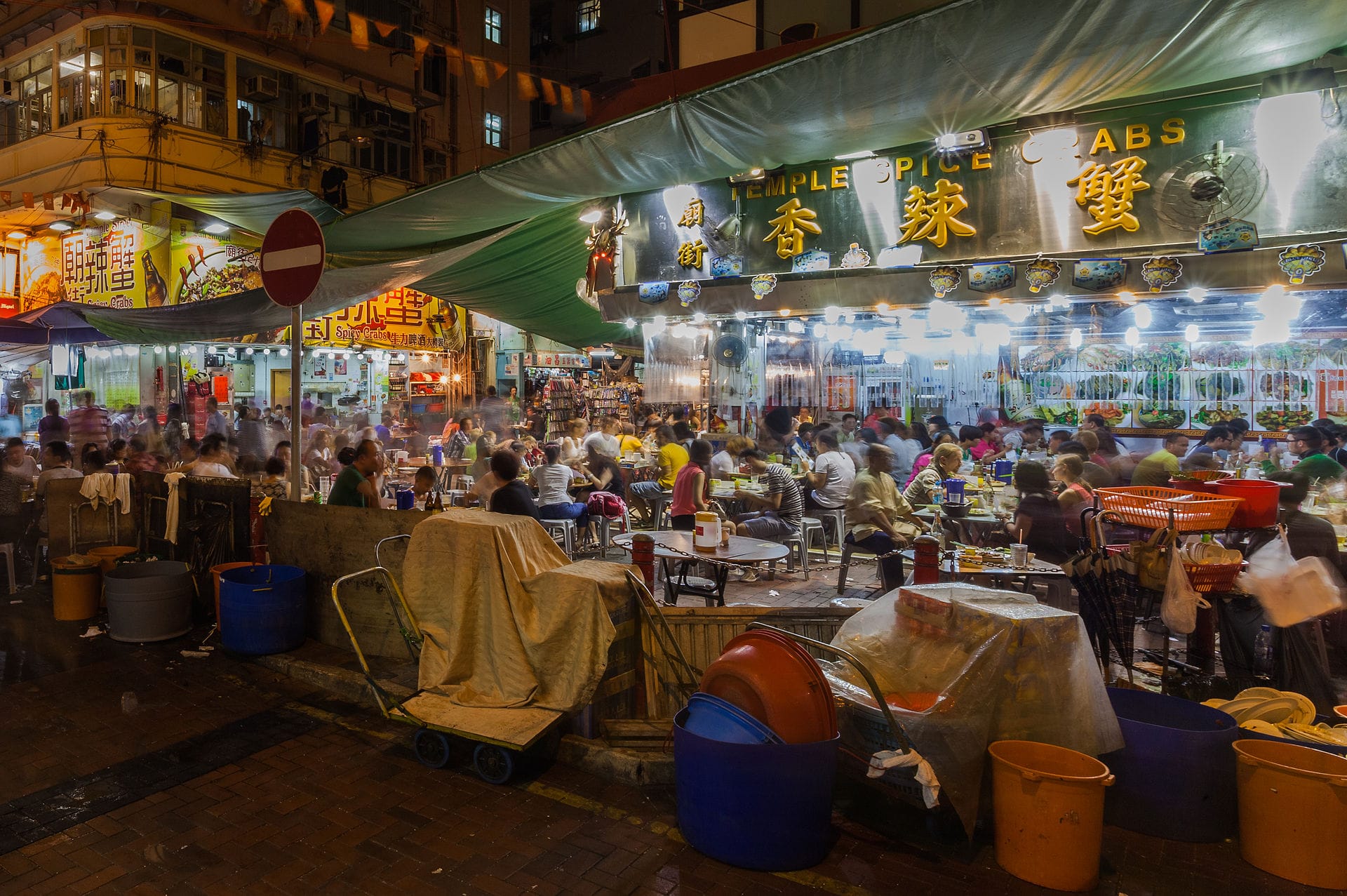
What Temple Street Actually Is
Temple Street Night Market is an over 1 km open-air street market that runs along Temple Street from Jordan Road north into Yau Ma Tei. It operates almost exclusively after dark, and that timing is not incidental. The market earned its name from the Tin Hau Temple that sits mid-street (We also covered a different Tin Hau Temple — the one in Causeway Bay — in this guide), physically dividing the market into two distinct zones. By day, Temple Street is an unremarkable Kowloon road. By evening, it becomes something else entirely.
Stalls begin setting up around 4:00 PM, but the market does not reach full density until after 7:00 PM. The southern section near Jordan Road is dominated by cooked food stalls and seafood restaurants spilling onto the pavement. The northern section closer to Kansu Street shifts toward cheap merchandise: phone accessories, watches, printed T-shirts, jade ornaments, and counterfeit-adjacent souvenirs. Between them, sheltered by the temple forecourt, are the fortune tellers.
💡 Local tip
Arrive after 8:00 PM for peak atmosphere. Stalls are fully set up, the fortune tellers are active, and if you're lucky, a Cantonese opera troupe will be performing near the temple. Before 6:30 PM, the market feels half-assembled and the food stalls aren't yet in full swing.
The Sensory Experience: What You'll Actually Encounter
Walking Temple Street at night is a full sensory assault, and not always in a polished way. The smell arrives first: charcoal smoke from clay pot stalls, the funk of fermenting tofu from a dai pai dong tucked under a building, and somewhere beneath that, the salt and diesel of nearby Kowloon streets. The lighting is a patchwork of bare fluorescent tubes strung overhead, orange sodium streetlamps, and the glow of mobile phone screens from the stall operators scrolling between customers.
The sounds are layered. Vendors call out prices in Cantonese. Somewhere up the street, a portable speaker blasts a Canto-pop ballad. Then, if the night is right, you hear something that stops you: the high, reedy wail of a Chinese erhu, accompanied by the percussive crack of clappers. That is Cantonese opera, performed informally in the open air near the Tin Hau Temple. Small groups of performers gather without formal staging, with audiences sitting on plastic stools or standing in loose semicircles. This is not a ticketed show. It is a tradition that has persisted here for decades.
The crowds are dense by 9:00 PM but move slowly. Locals use Temple Street as a functional shortcut, so you get a mix of tourists, retirees shopping for everyday goods, and young people eating late. The pace rewards patience. Pushing through quickly means missing the details: a stall selling only pocket-sized Cantonese dictionaries, a woman having her palm read by a man with a laminated sign listing consultation prices in three languages.
Tickets & tours
Hand-picked options from our booking partner. Prices are indicative; availability and final rates are confirmed when you complete your booking.
Hong Kong night tour with Peak Tram and Symphony of Lights
From 63 €Instant confirmationFree cancellationHong Kong audio guide with TravelMate app
From 8 €Instant confirmationHong Kong Tour with Peak Tram, harbour cruise and dim sum dinner
From 85 €Instant confirmationFree cancellationLantau Cable Car and Big Buddha Guided Tour with Lunch in Hong Kong
From 85 €Instant confirmationFree cancellation
The Fortune Tellers: A Cultural Institution
The fortune tellers clustered near the Tin Hau Temple are not a tourist gimmick, at least not entirely. Fortune telling has deep roots in Cantonese culture, and Temple Street's practitioners have been here for generations. You will find palm readers, face readers, bird-operated fortune tellers (a caged bird picks a card), and practitioners of zi wei dou shu, a system of Chinese astrology based on birth date and time.
Prices are negotiated upfront and typically start around HK$100 to HK$200 for a basic reading. Most practitioners have translation cards or a basic command of English, though sessions with an English-speaking interpreter cost more. Whether or not you believe in any of it, sitting across from a fortune teller at a folding table on a Hong Kong street at 9:00 PM is one of those experiences that is hard to replicate elsewhere.
ℹ️ Good to know
The Tin Hau Temple at the centre of the market is dedicated to the sea goddess Tin Hau, patron of sailors and fishermen. It dates to the 1870s and is still an active place of worship. Remove hats before entering and be respectful of worshippers, especially in the evenings when incense offerings are common.
Food at Temple Street: What to Eat and Where to Focus
The southern end of the market, near Jordan MTR, is where you want to be for food. The most compelling option is the cluster of open-air seafood restaurants that line both sides of the street here. Tanks of live prawns, crabs, clams, and mantis shrimp sit at the front of each stall, and you point at what you want before it is cooked to order. Prices are chalked on boards and are genuinely reasonable by Hong Kong standards, though tourists are sometimes quoted higher than locals. Checking the board before sitting down is always wise.
Beyond seafood, look for clay pot rice (bou zai fan), wonton noodle soup served from carts, and stinky tofu if you are feeling adventurous. The smell of the tofu is genuinely confronting. The taste, once you get past it, is fermented and sharp in a way that is unlike anything else. It is a legitimate Hong Kong street food experience, not a tourist performance.
Temple Street sits within walking distance of several other Kowloon food and shopping destinations. The Ladies' Market on Tung Choi Street is about 15 minutes north on foot, and combining the two in one evening is very manageable.
Shopping the Stalls: What's Worth It and What Isn't
The merchandise at Temple Street is neither artisanal nor high quality, and that is fine. This is a budget market, and it functions best as one. Phone cases, charging cables, small LED gadgets, novelty lighters, and replica watches are the bread and butter. Jade and stone ornaments are also common, but unless you have real knowledge of jade quality, buying here is a gamble. Decorative pieces are safer than anything marketed as investment-grade stone.
Bargaining is accepted and expected on most merchandise stalls, though the initial prices are rarely as inflated as markets in some other Asian cities. A counter-offer of 60 to 70 percent of the asking price is usually the starting point for negotiation. Cash is the norm. Stalls rarely accept credit cards, and not all have payment QR codes. Bring small HK$ notes.
⚠️ What to skip
Counterfeit goods are visible at Temple Street. Purchasing fake branded items is technically illegal in Hong Kong, and customs enforcement exists. The risk to a tourist is low, but be aware of what you are buying if you are carrying items home.
Getting There and Practical Logistics
The most convenient MTR station is Jordan Station (Exit A), which puts you at the southern food-focused end of the market. Yau Ma Tei MTR Station (Exit C) deposits you at the northern end near the merchandise stalls. Both exits are clean, well-lit, and a short walk from the market. Taxis from Tsim Sha Tsui take roughly five minutes and cost around HK$20 to HK$30. Bus routes along Nathan Road also pass close to both ends.
If you are building a full Kowloon evening, the Tsim Sha Tsui Promenade and the Avenue of Stars make a logical first stop before heading north to Temple Street. The harbour light show runs at 8:00 PM and you can be at Temple Street by 8:30 PM in time for peak market hours.
The market operates roughly from 4:00 PM to midnight, with most stalls active between 7:00 PM and 11:00 PM. There is no official closing time and activity tapers gradually rather than shutting down at once. Rain reduces stall density significantly. A light drizzle is manageable under the overhead canopies near the food stalls, but heavy rain sends the merchandise vendors packing early. Check the forecast before committing to a late evening visit.
For a broader picture of what to do in Kowloon and beyond, the Hong Kong attractions guide covers how Temple Street fits into a longer trip itinerary.
Who Will Love It, Who Should Reconsider
Temple Street Night Market rewards people who are comfortable with sensory density, slow wandering, and the lack of a clear script. If your travel style involves checking off sights efficiently, this market will frustrate you. There is no single landmark to photograph and leave. The point is the accumulation: the food, the noise, the fortune tellers, the opera snatches, the people-watching.
Travelers with mobility limitations should be aware that the pavement is uneven in places, stall tables extend into the walkway, and the crowd density at peak hours makes wheelchair navigation genuinely difficult. Families with young children can manage the early evening hours (before 8:30 PM) without issue, but after 9:00 PM the crowds are tighter and the pace less family-friendly.
Insider Tips
- The Cantonese opera performances near the Tin Hau Temple are informal and have no set schedule. They tend to happen on weekday evenings when regulars gather. Weekend crowds can drown out the performances. Tuesday through Thursday evenings between 8:00 PM and 10:00 PM are your best window.
- The seafood restaurants at the southern end quote prices per 100 grams for live seafood. Confirm the weight before cooking, not after. A single large crab can add HK$150 to your bill without warning if you don't clarify.
- The alleyways branching off Temple Street to the east, particularly near Public Square Street, have older-style dai pai dong stalls that are cheaper and less tourist-facing than the main strip. Worth the short detour.
- If you want a fortune reading, ask to see the price list before sitting down. Reputable practitioners will have one. Anyone who names a price only after the reading has concluded is a scam.
- The stretch of Temple Street north of the Tin Hau Temple closes earlier than the southern food section. If you want both food and browsing in the same visit, start at the northern merchandise stalls around 7:30 PM and work south toward the seafood restaurants for a late dinner around 9:00 PM.
Who Is Temple Street Night Market For?
- Street food seekers wanting an authentic, unpolished Kowloon eating experience
- Culture-focused travelers interested in living Cantonese traditions like opera and fortune telling
- Night owls looking for atmosphere after most other attractions have closed
- Budget travelers who want to browse and bargain without spending much
- Photographers drawn to low-light street scenes, neon, and character-filled faces