Symphony of Lights: Hong Kong's Nightly Victoria Harbour Light Show
Every night at 8pm, Symphony of Lights turns Victoria Harbour into a coordinated display of lasers, searchlights, and LED facades across more than 40 skyscrapers on both sides of the harbour. It's free, it's brief, and knowing exactly where to stand makes all the difference.
Quick Facts
- Location
- Victoria Harbour, Tsim Sha Tsui Waterfront (Kowloon side)
- Getting There
- Tsim Sha Tsui MTR (Exit E); or arrive by Star Ferry from Central
- Time Needed
- 20-40 minutes for the show; allow extra for travel and position-finding
- Cost
- Free to watch from the promenade
- Best for
- First-time visitors, evening strollers, photographers
2026 update
A Symphony of Lights is still listed as running nightly at Victoria Harbour, but Hong Kong has announced plans to replace the long-running show later in 2026 with new light-festival-style experiences across different locations. Check official announcements before planning your evening.
What the Show Actually Is
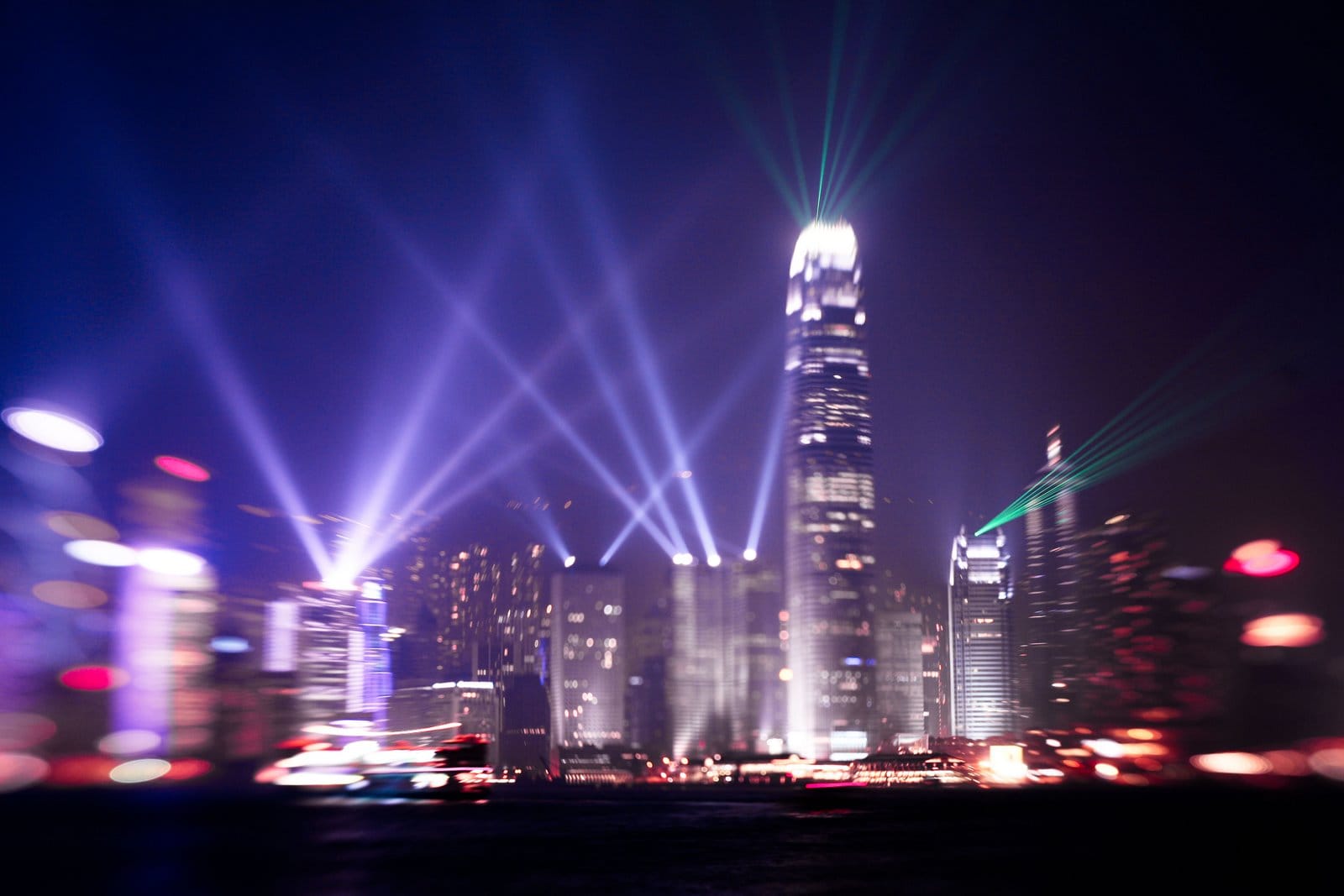
Symphony of Lights is a free, nightly multimedia show that runs every evening at 8:00pm and lasts approximately 13 minutes. Recognised by Guinness World Records as the world's largest permanent light and sound show, it synchronises LED lighting, lasers, searchlights, and coloured floodlights across 44 skyscrapers lining both the Hong Kong Island and Kowloon sides of Victoria Harbour. The buildings involved include the ICC tower in West Kowloon, the IFC towers in Central, and iconic structures like the Bank of China Tower and CITIC Tower.
The show runs in five thematic movements: Awakening, Energy, Heritage, Partnership, and Celebration. Each movement shifts the colour palette and rhythm of the lights, building toward a finale of sweeping laser beams that cut across the harbour surface. An accompanying narration and music soundtrack are broadcast on select FM frequencies, though most viewers on the promenade experience the visual component only, in open air and often with background city noise.
ℹ️ Good to know
The show runs every night at 8:00pm sharp, weather permitting. It is automatically cancelled during Typhoon Signal No. 3 or above, or during heavy rain warnings. Check the Hong Kong Observatory forecast before you go.
Where to Watch: Choosing Your Spot
The Tsim Sha Tsui Promenade (also called the Avenue of Stars promenade) along the Kowloon waterfront is the single best unobstructed vantage point. Standing here, you face Hong Kong Island directly, with the full skyline spread wide across your field of vision. The promenade is broad and flat, fully accessible, and free to walk. Arrive by 7:30pm at the latest on weekends and public holidays, because the rail along the water fills up fast. Midweek, 7:45pm is usually sufficient to find a good railing spot.
The Hong Kong Island side, specifically the Central Harbourfront near IFC Mall, offers an alternative view looking toward Kowloon, which can produce interesting compositions with the ICC tower as the focal point. However, the sightlines are narrower and the crowd dynamics less predictable. Most first-time visitors correctly default to the Kowloon promenade.
Rooftop bars and hotel restaurants on both sides of the harbour charge a premium for the same view. The experience is undeniably more comfortable with a cocktail in hand, but the lights read equally well from sea level. Budget-conscious visitors lose nothing by staying on the promenade.
💡 Local tip
Arrive via the Star Ferry from Central for around HK$5 (upper deck). The crossing itself offers a harbour-level preview of the skyline before the show, and you disembark steps from the promenade.
Tickets & tours
Live prices and dates from our booking partner. If you book, we may earn a commission at no extra cost to you.
Hong Kong night tour with Peak Tram and Symphony of Lights
From 63 €Instant confirmationFree cancellationHong Kong audio guide with TravelMate app
From 8 €Instant confirmationHong Kong Tour with Peak Tram, harbour cruise and dim sum dinner
From 85 €Instant confirmationFree cancellationLantau Cable Car and Big Buddha Guided Tour with Lunch in Hong Kong
From 85 €Instant confirmationFree cancellation
The Experience at Ground Level
By 7:40pm on a clear weeknight, the promenade has a noticeably different energy than an hour earlier. Joggers thin out. Tour groups consolidate near the curved sections facing the harbour. Couples and solo visitors claim spots along the railing. The air off the water carries a salt-and-diesel note from the ferry crossings, and the ambient city hum from Nathan Road a few blocks north blends with the chatter of a dozen languages.
At exactly 8:00pm, the towers on Hong Kong Island begin to pulse. The effect in person is more architectural than theatrical. These are office and residential buildings fitted with LED rigs, not dedicated performance structures. The lasers are the visual highlight, cutting long green and blue beams across the dark harbour surface. The colour shifts on the skyscraper facades are visible but subtle from street level, especially on hazy nights when the buildings sit behind a layer of warm pollution haze.
The 13-minute runtime passes quickly. The show ends without a sharp finale, more of a gradual dimming. First-time viewers occasionally wait, expecting something more. It is worth setting realistic expectations: this is a civic light installation across real working buildings, not a theme park pyrotechnics show. The scale is impressive; the drama is understated.
⚠️ What to skip
Hazy or overcast nights significantly reduce the impact of the laser beams and wash out building colours. Autumn (October to December) offers the clearest skies in Hong Kong, making it the best season for the sharpest views.
Photography: What Works and What Doesn't
Long-exposure shots from a tripod are the most effective approach. A 10 to 25 second exposure at f/8 to f/11 will capture the laser trails and city reflection on the harbour water simultaneously. The curved sections of the promenade near the middle of the Avenue of Stars allow you to include the foreground walkway lighting as a leading line. Handheld smartphone photography produces flat, noisy images that rarely capture the laser movement.
The best position for a wide panorama is roughly at the midpoint of the Tsim Sha Tsui Promenade, between the Hong Kong Cultural Centre and the Clock Tower. From here, the skyline from Western District to Wan Chai spreads nearly 180 degrees. For a tighter composition focused on the laser convergence point above the harbour, shift slightly east toward the Avenue of Stars section.
Photographers who want crowd-free foreground shots should arrive at 7:00pm, set up their tripod position early, and stay put. The crowds behind you during the show are irrelevant as long as your frame is locked on the horizon.
Historical Context and Cultural Significance
Symphony of Lights launched in 2004, part of a broader effort by the Hong Kong Tourism Board to create a signature nightly event that would distinguish the harbour from competing Asian destinations. The Guinness World Record designation as the largest permanent light and sound show was awarded at launch and has been associated with the event since. Participation from buildings is voluntary, coordinated through the Tourism Board, and the roster of participating towers has expanded over the years as new developments like the ICC were completed.
The show frames Victoria Harbour as a living civic space rather than simply a working waterway. That framing matters in Hong Kong, where the harbour has been subject to ongoing land reclamation debates since the 1990s. The promenade itself, a product of earlier reclamation, now hosts one of the city's most frequented evening public spaces. If you want context on how the neighbourhood around the show fits into the broader city, the Tsim Sha Tsui area guide covers the district's layered identity in detail.
Getting There and Practical Logistics
From Tsim Sha Tsui MTR station, take Exit E and walk south along Salisbury Road for about 8 minutes until you reach the waterfront. The route passes the Peninsula Hotel and the Hong Kong Cultural Centre. Alternatively, the Star Ferry from Central Pier 7 deposits you directly at the Kowloon Star Ferry Pier, a 3-minute walk from the promenade. The ferry option is worth the extra few minutes of planning.
The promenade is fully wheelchair accessible along its main path. The railing sections closest to the Clock Tower have the least crowd pressure and tend to offer clearer passage for those who need it. Restrooms are available inside the Hong Kong Cultural Centre, a short walk from the waterfront.
After the show, Tsim Sha Tsui has no shortage of places to continue the evening. The Avenue of Stars runs along the same waterfront promenade and is worth a slow walk before or after the show. For dinner options and a livelier street scene, Knutsford Terrace is a 10-minute walk north and has a concentration of restaurants and bars.
Who Will Enjoy This and Who Might Not
First-time visitors to Hong Kong almost universally add Symphony of Lights to their itinerary, and for good reason: it costs nothing, it anchors an evening around the harbour, and the skyline context it provides is genuinely useful for orienting yourself in the city. Families with children who can stay up until 8pm typically enjoy the spectacle, and the flat, wide promenade is easy to navigate with strollers.
Repeat visitors and travellers who have seen comparable shows elsewhere (Singapore's Garden Rhapsody at Gardens by the Bay, for example) may find the 13-minute runtime and the relatively understated building-light effect underwhelming. If your primary interest is photography, the pre-show golden-hour skyline and the harbour reflections at dusk are arguably more photogenic than the show itself. In that case, arriving at 7:00pm rewards you with two hours of excellent light rather than 13 minutes of it.
If you are trying to build an efficient itinerary, the show pairs cleanly with earlier activity at Hong Kong Museum of History in the afternoon, or a harbour crossing on the Star Ferry just before 8pm. For broader itinerary ideas, the things to do in Hong Kong guide covers how to sequence major attractions across a short trip.
Insider Tips
- The FM radio broadcast of the narration and music is listed on the official HKTB website. Bringing a small radio or tuning your phone via an FM app adds a layer most promenade viewers miss entirely.
- The curved section of the promenade near the Clock Tower gives a slight elevation above the lower railing area and has slightly less crowd compression than the central Avenue of Stars stretch.
- Monday to Thursday shows draw noticeably smaller crowds than Friday through Sunday. If your schedule is flexible, a Tuesday or Wednesday visit gives you railing space without the weekend scrum.
- The lasers are most visible in the first 5 minutes and final 2 minutes of the show. If you need to leave early, stay through the first movement at minimum.
- The night ferry back to Central immediately after the show puts you on the water with a last look at the lit skyline from water level. It is a strong ending to the evening and avoids the MTR post-show crowd surge.
Who Is Symphony of Lights For?
- First-time visitors to Hong Kong wanting the full harbour skyline experience
- Photographers with tripods seeking long-exposure cityscape shots
- Families looking for a free, accessible evening activity
- Travellers planning a Star Ferry crossing who want to time it around the show
- Anyone building an evening itinerary around Tsim Sha Tsui
Nearby Attractions
Other things to see while in Tsim Sha Tsui:
- Avenue of Stars
Avenue of Stars runs 440 meters along the Tsim Sha Tsui waterfront where handprints and plaques honor Hong Kong film stars. Reopened in 2019 after renovations, the promenade features Bruce Lee and other cinema icons embedded in the walkway. It's a brief photo stop combined with harbor views, not a standalone destination.
- Tsim Sha Tsui Promenade
Tsim Sha Tsui Promenade delivers Hong Kong's most accessible harbor views: 1.4 kilometers of waterfront where you'll watch ferries slice through Victoria Harbour while towers pulse with light. Free to walk, best at sunset, and the city's central viewing spot for the nightly Symphony of Lights.
- Kowloon Park
Kowloon Park occupies 13 hectares between Nathan Road and Canton Road where locals swim laps in public pools, watch flamingos at the aviary, and practice tai chi on shaded lawns. Built on former British army barracks land, the park mixes sports facilities with ornamental gardens. It's functional urban green space, not scenic parkland.
- Hong Kong Museum of History
Hong Kong Museum of History traces the territory's development from prehistoric geology through British handover in eight chronological galleries. Well-designed dioramas and artifacts make Hong Kong's complex history accessible.
- Knutsford Terrace
A pedestrian hillside packed with bars and restaurants just off Tsim Sha Tsui MTR. Quieter than Lan Kwai Fong, lively after dark, and easy for casual drinks.
- Chungking Mansions
Chungking Mansions fills a 17-story block on Nathan Road where budget guesthouses, currency exchanges, mobile phone dealers, and South Asian restaurants occupy five interconnected towers. Built in 1961, it's become Hong Kong's densest multicultural hub and a base for African and South Asian traders. The ground floor is chaotic, the elevators are slow, and the atmosphere is uniquely intense.
- Harbour City
Harbour City stretches 700 meters along the Tsim Sha Tsui waterfront where four interconnected zones contain 450+ shops spanning luxury brands, mid-range fashion, electronics, and dining. Built incrementally since the 1960s, this is Hong Kong's largest shopping mall by area. Navigation is complex, crowds are constant, but retail variety is unmatched.
- Ocean Terminal
Ocean Terminal sits at the far end of Harbour City where cruise ships dock and a rooftop deck offers free 270-degree harbor views. The shopping floors below sell mid-range to luxury brands. Most visitors come for the deck or because they're boarding a ship, not for the retail.
Planning a trip? Discover personalized activities with the Nomado app.