Star Ferry: Hong Kong's Most Iconic Harbour Crossing
For less than the price of a coffee, the Star Ferry carries you across Victoria Harbour on a route that has run continuously since 1888. The views of Hong Kong Island's skyline from the Kowloon side are among the most photographed in Asia, but the ferry itself, with its wooden benches and swinging chains, is worth the trip on its own terms.
Quick Facts
- Location
- Central Pier 7, Hong Kong Island (also Tsim Sha Tsui Pier, Kowloon)
- Getting There
- Hong Kong Station (MTR) or Central Ferry Piers (5-min walk); Tsim Sha Tsui MTR on the Kowloon side
- Time Needed
- 8-minute crossing; allow 30-45 minutes for the full round-trip experience
- Cost
- From HK$3.70 (weekday lower deck) to HK$5.70 (weekend upper deck); Octopus Card accepted
- Best for
- Skyline views, sunset photography, first-time visitors, budget travellers
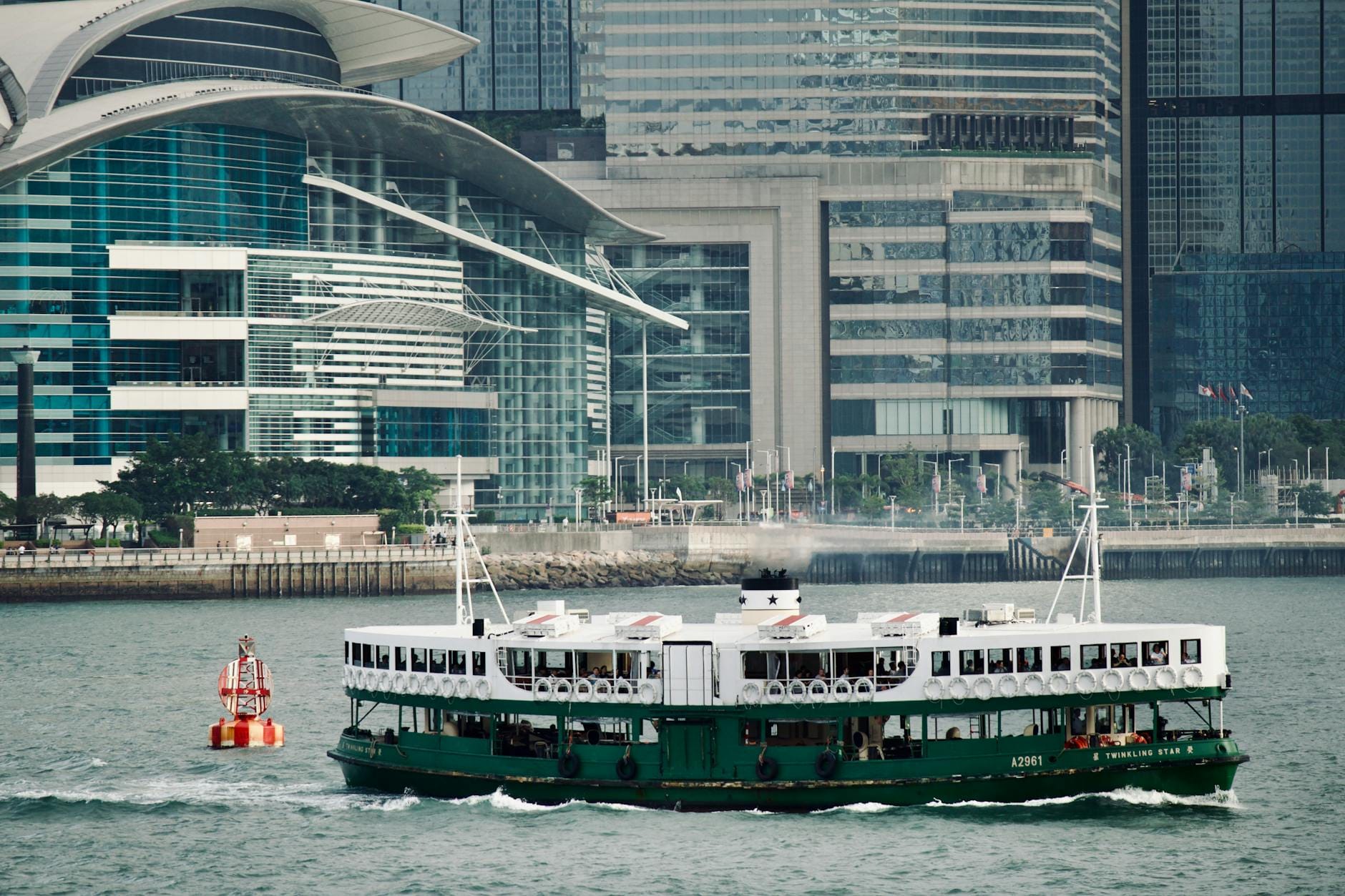
What the Star Ferry Actually Is
The Star Ferry is a public ferry service that crosses Victoria Harbour between Central on Hong Kong Island and Tsim Sha Tsui in Kowloon. The main route covers roughly 700 metres of open water and takes about eight minutes. The company operates a fleet of double-decked vessels, each named after a star: Morning Star, Night Star, Celestial Star, and so on. The fleet has changed over the decades, but the basic design, low-slung, green and white, with open sides and wooden benches, has remained recognisable since the early twentieth century.
The service has operated since 1888, making it older than the MTR by nearly a century. At peak, it was the primary way to cross the harbour. The Cross-Harbour Tunnel opened in 1972 and the MTR followed in 1979, but the Star Ferry survived because it offers something neither can replicate: you travel across the water, not under it, with the full skyline unfolding around you.
💡 Local tip
Pay with an Octopus Card to skip the coin machine queues entirely. Upper deck on the Kowloon-bound crossing gives you an unobstructed view of Hong Kong Island's skyline from the bow.
The Crossing: What It Feels and Sounds Like
There is a specific sensory rhythm to the Star Ferry crossing that regular commuters have long stopped noticing but first-time riders almost always remark on. The chains at the entry gangway clank as they are lowered. The engine produces a low, diesel rumble that you feel through the bench slats more than you hear it. The harbour breeze carries the faintly briny smell of the South China Sea mixed with diesel from passing cargo vessels. In the middle of the crossing, with water on all sides and towers on both shores, Hong Kong feels genuinely large in a way that the MTR underground does not allow.
The upper deck is the right choice for views. Seats are wooden slatted benches with reversible backrests, and the outer rows along the railings fill first. The lower deck is enclosed and cheaper, but the view is partially obstructed by the hull structure. For the Central-to-Tsim Sha Tsui direction, position yourself on the starboard (right) side for the Kowloon skyline approach. For the return crossing, the port (left) side gives you the full sweep of the Hong Kong Island waterfront.
Tickets & tours
Live prices and dates from our booking partner. If you book, we may earn a commission at no extra cost to you.
Hong Kong audio guide with TravelMate app
From 8 €Instant confirmationHong Kong Tour with Peak Tram, harbour cruise and dim sum dinner
From 85 €Instant confirmationFree cancellationHong Kong night tour with Peak Tram and Symphony of Lights
From 63 €Instant confirmationFree cancellationLantau Cable Car and Big Buddha Guided Tour with Lunch in Hong Kong
From 85 €Instant confirmationFree cancellation
Time of Day: How the Experience Changes
Morning crossings between roughly 7:30am and 9:00am carry genuine commuters: office workers reading phones, delivery staff with trolleys, older residents heading to Kowloon for dim sum. The pace feels local and unhurried despite the crowds. The light at this hour is soft and even, good for photography without harsh shadows.
Midday crossings are often the most crowded with tourists. The light is strong and flat, and the heat on the upper deck can be significant in summer months, June through September. Bring water if you are doing multiple crossings.
Sunset is the most photogenic window, typically between 6:00pm and 7:30pm depending on season. The skyline lights begin to activate before full dark, creating a gradient where illuminated towers contrast with a still-blue sky. The crowd at this hour is a mix of tourists and after-work commuters. Arrive at the pier 10-15 minutes early to secure a good rail-side seat. The night crossing, after 8:00pm, gives you the full Symphony of Lights backdrop: the coordinated LED display runs nightly at 8:00pm across the harbour-facing facades of major towers on both shores.
ℹ️ Good to know
The Symphony of Lights show runs nightly at 8:00pm. Timing a crossing to depart at 7:55pm puts you on the water exactly as it begins, with views from both directions.
Historical and Cultural Context
The Star Ferry Company was founded by Dorabjee Naorojee Mithaiwala, a Parsi merchant, and began operations in 1888. It was acquired by Jardine Matheson in 1898 and eventually became the Hongkong and Yaumati Ferry Company before reverting to independent management. For much of the twentieth century, the ferry piers were central landmarks: the old Edinburgh Place pier on the Central waterfront was demolished in 2006 during land reclamation work, prompting one of Hong Kong's more notable heritage preservation protests.
The current Central Pier 7 opened in 2006 as part of the broader reclamation-driven redevelopment of the waterfront. Its green clock tower is a deliberate nod to the colonial aesthetic of the original terminal, though critics have noted that the reclaimed land pushed the pier further from the city centre than the original, adding walking distance and removing the seamless connection between the ferry and street level that the old pier had.
The 1966-67 Star Ferry riots are a notable chapter in Hong Kong history. A proposed fare increase of five cents triggered two nights of civil unrest that are now understood as an early expression of a distinct Hong Kong identity, separate from both British colonial authority and mainland China. For a deeper sense of the social history surrounding the harbour, the Hong Kong Museum of History in Tsim Sha Tsui covers this period in detail.
Practical Walkthrough: Boarding and Navigation
From the MTR Hong Kong Station, follow signs for Central Ferry Piers and walk along the waterfront promenade. Pier 7 is marked clearly and the walk takes about seven minutes. The pier has two turnstile lanes: one for Octopus Card, one for cash. Cash requires exact change or the coin machine near the entrance. Ferries depart roughly every 6-12 minutes during peak hours, less frequently late at night.
On the Kowloon side, the Tsim Sha Tsui Star Ferry Pier sits at the western end of the Tsim Sha Tsui waterfront. From here, the Avenue of Stars promenade runs east along the waterfront, making the ferry a natural starting point for a waterfront walk.
The pier on the Kowloon side connects directly to the Tsim Sha Tsui Promenade and the Avenue of Stars, which makes a round-trip ferry crossing combined with a waterfront walk a natural two-hour itinerary requiring no additional transport.
⚠️ What to skip
The last ferry departs around 11:30pm. Check the current schedule at the pier or the Star Ferry official website before planning a late-night crossing.
Photography Tips
The Star Ferry crossing is one of the few places in Hong Kong where you can photograph the full Central skyline from water level with nothing obstructing the foreground. For the classic shot of the IFC towers and surrounding towers, position yourself on the upper deck bow section on a Tsim Sha Tsui-bound crossing. The towers are tightest and most dramatic from about halfway through the crossing.
For a complementary elevated view of the same skyline, Victoria Peak gives the top-down perspective that the ferry cannot. Combining both on the same day gives you the harbour from two entirely different angles. If you want to understand how the Central district fits together spatially before taking the ferry, a walk through Central first makes the geography much clearer.
In rough weather, spray can reach the upper deck on the open harbour stretch. A light jacket and a lens cloth are practical additions in winter months or during typhoon-adjacent weather. Ferries suspend service when Typhoon Signal No. 3 or above is hoisted.
Accessibility and Who Should Skip This
The Star Ferry is reasonably accessible. There are ramps at both piers for wheelchair users, and staff assist with boarding. The gangway does move with the tide, so the angle varies, but it is generally manageable. The lower deck has wider seating spacing.
If you are prone to motion sickness, the crossing is short enough that it is rarely an issue, but in high winds the vessel does rock noticeably on the open section of the harbour. Travellers who have already crossed Victoria Harbour multiple times, or who are pressed for time and simply need to get from Central to Tsim Sha Tsui, will find the MTR faster and more predictable. The ferry is not the efficient choice; it is the scenic one. If you are not interested in the views or the experience of being on the water, there is no practical reason to choose it over the MTR.
Insider Tips
- The lower deck is cheaper and often less crowded at peak tourist hours. For commuters it is fine; for views, it is not worth the saving.
- If you are doing the crossing specifically for the Symphony of Lights show (8:00pm nightly), depart Tsim Sha Tsui at 7:55pm rather than Central. The Kowloon-to-Central direction gives you the Hong Kong Island skyline with the full light display facing you.
- The pier area between Piers 3 and 8 on the Central waterfront has seating facing the harbour, and the view from the pier promenade at sunset rivals the view from the ferry itself, at no cost.
- Octopus Card users can board immediately at the turnstile. Cash users need to use the coin machine and there are often queues during peak hours. Keeping HK$5 in coins is the fallback if you do not have an Octopus Card.
- The Tsim Sha Tsui pier has a small café-style waiting area. Arriving 10 minutes before departure and watching the vessel dock is itself part of the experience: the crew manually catches and secures the mooring lines by hand, exactly as they have for over a century.
Who Is Star Ferry For?
- First-time visitors to Hong Kong wanting the harbour crossing experience
- Photographers targeting skyline shots at water level, especially around sunset
- Budget travellers seeking a genuine Hong Kong experience for under HK$6
- Families with children who enjoy short boat rides without the complexity of a harbour cruise
- Anyone combining a Central waterfront walk with the Tsim Sha Tsui promenade and Avenue of Stars
Nearby Attractions
Other things to see while in Central:
- Hong Kong Park
Hong Kong Park covers eight hectares on the Mid-Levels slope where waterfalls, a walk-through aviary, and terraced gardens occupy former British military barracks. The Edward Youde Aviary houses 90 bird species, Flagstaff House Museum displays Chinese tea ware, and elevated walkways provide skyline views filtered through greenery.
- IFC Mall
IFC Mall occupies four floors beneath the International Finance Centre towers in Central where 200+ shops sell luxury brands, electronics, and international fashion. Connected directly to Hong Kong Station and the Airport Express, the mall serves business travelers and Hong Kong's upper-income shoppers. Architecture is modern and air-conditioned, atmosphere is polished and expensive.
- Peak Tram
Peak Tram rises to 396 meters above sea level from Central to Victoria Peak via a funicular railway operating since 1888. The steep gradient creates dramatic views as the tram ascends through Mid-Levels. However, queues often exceed 90 minutes at peak times, and buses offer faster, cheaper alternatives with comparable scenery.
- Mid-levels Escalator
The Central-Mid-Levels Escalator is a 800-metre covered moving walkway system that climbs from Central up through SoHo and the Mid-Levels. It doubles as a commuter lifeline and an accidental sightseeing route through some of Hong Kong's most characterful streets.
- Victoria Peak
At 552 metres above sea level, Victoria Peak offers one of the most recognisable urban skylines on earth. But the experience varies enormously depending on when you go, how you get there, and how far you walk once you're at the top.
Planning a trip? Discover personalized activities with the Nomado app.