Hong Kong Museum of History: Multifaceted Hong Kong
Hong Kong Museum of History traces the territory's development from prehistoric geology through British handover in eight chronological galleries. Well-designed dioramas and artifacts make Hong Kong's complex history accessible.
Quick Facts
- Location
- 100 Chatham Road South, Tsim Sha Tsui
- Getting There
- Tsim Sha Tsui MTR (Exit B2), 10-min walk
- Time Needed
- 2-3 hours
- Cost
- Free admission
- Best for
- Hong Kong history context, rainy days, culture seekers
Quick Snapshot
Hong Kong Museum of History traces the territory's development from prehistoric geology through British handover in eight chronological galleries. Well-designed dioramas and artifacts make Hong Kong's complex history accessible.
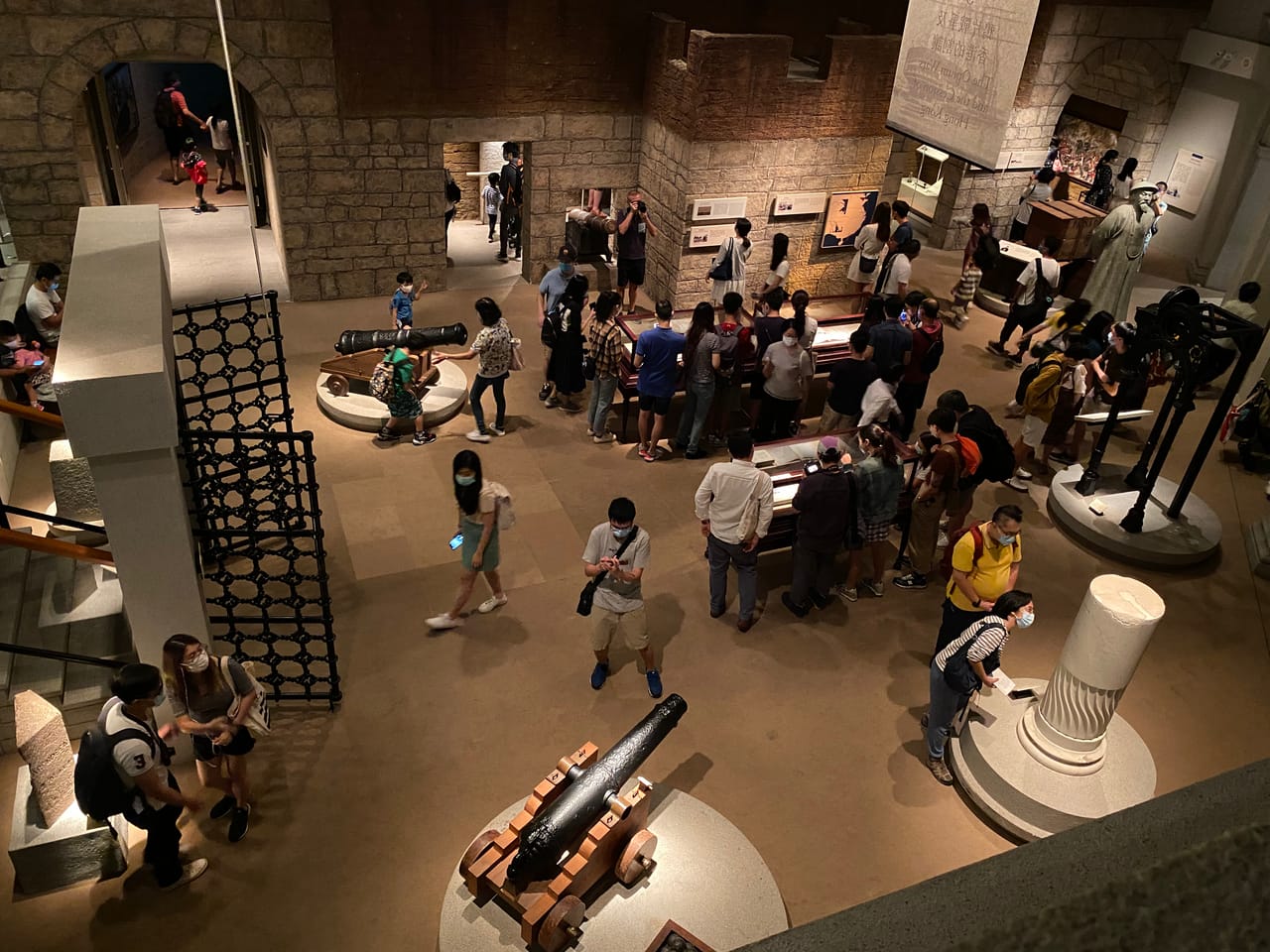
The museum occupies a purpose-built structure next to Kowloon Park. Galleries progress chronologically across two floors: prehistoric environment, early inhabitants, Chinese dynasties, British colonization, Japanese occupation, postwar growth, and the handover. Life-size reconstructions include a traditional Hakka village, colonial-era Hong Kong streets, and a 1960s tea restaurant. Audio guides and English signage support non-Cantonese speakers.
Budget two to three hours to walk all galleries at moderate pace with time to read key displays. Entry is free. Hours: Monday, Wednesday–Sunday 10 AM–6 PM (Thu/Fri until 9 PM, weekends/public holidays until 7 PM), closed Tuesdays. Access from Tsim Sha Tsui MTR (Exit B2) takes ten minutes on foot via Chatham Road South.
Hong Kong Museum of History works if you want structured context about Hong Kong's development before or during your visit. The chronological approach clarifies how fishing villages became a global financial center. For rainy days or culture-focused travelers, this is 's best museum option. For broader Hong Kong understanding, see .
What Does Hong Kong Story Cover?
The exhibition begins with Hong Kong's geological formation and prehistoric environment. Displays explain how tectonic activity shaped the harbor, sea level changes created the territory's geography, and early humans arrived during the Neolithic period. This section is brief but establishes physical context.
Folk culture galleries recreate traditional village life. A full-scale Hakka dwelling shows architecture, farming tools, and domestic arrangements. Fishing village displays feature boat construction, net-making, and maritime deities. These reconstructions visualize pre-colonial Hong Kong society often obscured by modern development.
The Opium Wars and British colonization section explains how Hong Kong became a British territory in 1842. Maps trace territorial expansions (Kowloon 1860, New Territories 1898). Artifacts include early colonial documents, photographs of Victoria City, and objects illustrating the treaty port economy.
Japanese occupation (1941-1945) receives detailed treatment. Displays document military control, civilian hardship, currency devaluation, and resistance activities. Personal accounts and period photographs convey wartime conditions without sensationalism.
Postwar transformation galleries show Hong Kong's evolution into a manufacturing hub and later financial center. A reconstructed 1960s street scene includes a cha chaan teng (tea restaurant), tailor shop, and cinema facade. This section visualizes the rapid modernization that defined the territory's late 20th century.
The handover section covers negotiations leading to the 1997 return to Chinese sovereignty. Exhibits explain the Basic Law, one country two systems framework, and ceremony details. Treatment is factual and politically neutral, focusing on process over interpretation.
Tickets & tours
Live prices and dates from our booking partner. If you book, we may earn a commission at no extra cost to you.
Hong Kong audio guide with TravelMate app
From 8 €Instant confirmationHong Kong Tour with Peak Tram, harbour cruise and dim sum dinner
From 85 €Instant confirmationFree cancellationHong Kong night tour with Peak Tram and Symphony of Lights
From 63 €Instant confirmationFree cancellationLantau Cable Car and Big Buddha Guided Tour with Lunch in Hong Kong
From 85 €Instant confirmationFree cancellation
What Works Well in This Museum?
The life-size reconstructions bring abstract history into physical form. Walking through the Hakka village or 1960s street creates spatial understanding beyond text descriptions. These dioramas photograph well and engage visitors who struggle with dense historical narratives.
Chronological structure prevents confusion. Each gallery advances the timeline clearly, making Hong Kong's layered history digestible. You don't need extensive background knowledge to follow the progression.
English signage and audio guides support international visitors. Major displays have bilingual descriptions (Chinese and English). The audio guide provides additional context without overwhelming detail.
Free admission removes financial barriers. Many visitors express surprise that such a comprehensive museum charges nothing, making it accessible regardless of budget.
What Are the Museum's Limitations?
The former permanent exhibition ended at 1997 handover. Post-1997 developments receive minimal coverage, creating a sense of incomplete narrative for visitors interested in contemporary Hong Kong. At the time of writing, it's still closed for renovation since late 2020
Political sensitivity shapes certain displays. The handover section and colonial period treatment reflect careful positioning, avoiding contentious interpretations. This neutrality serves broad audiences but may frustrate visitors seeking critical analysis.
Crowds on weekends and holidays can make galleries feel cramped. Popular reconstructions (tea restaurant, village scenes) attract photography clusters that slow movement and obscure displays.
The museum's architecture is functional but uninspired. Unlike many world-class history museums, the building itself doesn't contribute aesthetic or symbolic value beyond efficient gallery space.
When Should You Visit Hong Kong Museum of History?
Weekday mornings between 10 AM and noon offer the quietest experience. Galleries are nearly empty, you can photograph reconstructions without crowds, and reading displays requires no jockeying for position.
Weekday afternoons between 2 PM and 5 PM see moderate traffic but remain manageable. School groups occasionally visit during these hours, particularly spring and fall.
Avoid weekends and public holidays if you dislike crowds. Families and tourists pack galleries, particularly the folk culture and 1960s street reconstructions. Movement slows, photography becomes difficult, and audio guide listening requires tuning out ambient noise.
The museum is closed Tuesdays. Plan accordingly if you're scheduling a Tsim Sha Tsui culture day.
How Do You Get to Hong Kong Museum of History?
Tsim Sha Tsui MTR Station (Exit B2) serves the museum. Exit onto Chatham Road South, walk north toward Kowloon Park, and the museum appears on your right after about ten minutes. Signage marks the route.
East Tsim Sha Tsui MTR Station (Exit P2) offers an alternative. Walk west on Mody Road, turn north on Chatham Road South. Distance is similar to Tsim Sha Tsui Station.
Multiple bus routes serve Chatham Road South: 5, 5C, 8, 26, 28, 35A, and others. Check route maps for connections from various Hong Kong districts.
The museum sits adjacent to Kowloon Park. Combine both in a single outing: museum in the morning, park walk for fresh air, then continue with Tsim Sha Tsui activities.
Common Mistakes and How to Avoid Them
- Rushing through in under 90 minutes. The museum rewards careful attention. Budget at least two hours to read key displays and absorb the chronological narrative without feeling rushed.
- Skipping the audio guide. The free audio guide adds valuable context beyond wall text. It's well-produced and enhances understanding significantly.
- Visiting on Tuesdays. The museum is closed Tuesdays. Many visitors arrive unprepared and find locked doors. Double-check hours before planning your visit.
- Neglecting the folk culture reconstructions. The Hakka village and fishing displays visualize traditional life that helps contextualize modern Hong Kong. Don't skip these in favor of only colonial-era sections.
How Does the Museum Fit Into a Tsim Sha Tsui Day?
The museum works well as a morning anchor. Visit from 10 AM to 12:30 PM, walk through Kowloon Park for 30 minutes, then have lunch in Tsim Sha Tsui before continuing with shopping or waterfront activities.
Alternatively, save the museum for rainy afternoons. If weather disrupts outdoor plans, the museum provides two to three hours of climate-controlled cultural content in central Tsim Sha Tsui.
For culture-focused itineraries, pair with the Hong Kong Museum of Art (near the waterfront) or Hong Kong Science Museum (five minutes away). Budget a full day for multiple Tsim Sha Tsui museums.
Who Should Visit Hong Kong Museum of History?
First-time Hong Kong visitors benefit enormously from the museum's comprehensive historical context. Understanding the colonial period, handover, and cultural evolution enhances every subsequent activity in the city.
History enthusiasts interested in colonial Asia, British Empire, or modern Chinese history find substantial material covering Hong Kong's unique position between Chinese and British spheres.
Families with children aged 8+ appreciate the visual reconstructions and interactive elements. The folk village and street scenes engage kids more effectively than text-heavy history museums.
Travelers seeking rainy-day activities in Tsim Sha Tsui can spend a comfortable afternoon exploring galleries without weather exposure.
Who Should Skip This?
Visitors with extremely limited Hong Kong time (half-day or one day) should prioritize experiential activities like Victoria Peak, Star Ferry, and waterfront walks over museums.
Travelers indifferent to history or museums won't find the displays engaging enough to justify two to three hours indoors. Hong Kong offers abundant outdoor and experiential alternatives.
Visitors seeking critical analysis of Hong Kong's political evolution may find the exhibition's neutral positioning unsatisfying. The museum avoids controversial interpretations.
Insider Tips
- Visit weekday mornings (10 AM-noon) for nearly empty galleries and unobstructed photography of the folk village and 1960s street reconstructions.
- Use the free audio guide for added context beyond wall text. It's well-produced and significantly enhances understanding of key exhibits.
- Budget 2-3 hours minimum. Rushing through in 90 minutes means missing important displays and losing the chronological narrative flow.
- Combine with Kowloon Park next door. Visit the museum, then walk the park for fresh air before continuing your Tsim Sha Tsui day.
- The museum is closed Tuesdays. Many visitors arrive unprepared and find locked doors, so check hours before planning.
Who Is Hong Kong Museum of History For?
- Hong Kong history context
- First-time visitors
- Rainy-day activities
- Families with older children
- History enthusiasts
Nearby Attractions
Other things to see while in Tsim Sha Tsui:
- Avenue of Stars
Avenue of Stars runs 440 meters along the Tsim Sha Tsui waterfront where handprints and plaques honor Hong Kong film stars. Reopened in 2019 after renovations, the promenade features Bruce Lee and other cinema icons embedded in the walkway. It's a brief photo stop combined with harbor views, not a standalone destination.
- Chungking Mansions
Chungking Mansions fills a 17-story block on Nathan Road where budget guesthouses, currency exchanges, mobile phone dealers, and South Asian restaurants occupy five interconnected towers. Built in 1961, it's become Hong Kong's densest multicultural hub and a base for African and South Asian traders. The ground floor is chaotic, the elevators are slow, and the atmosphere is uniquely intense.
- Harbour City
Harbour City stretches 700 meters along the Tsim Sha Tsui waterfront where four interconnected zones contain 450+ shops spanning luxury brands, mid-range fashion, electronics, and dining. Built incrementally since the 1960s, this is Hong Kong's largest shopping mall by area. Navigation is complex, crowds are constant, but retail variety is unmatched.
- Knutsford Terrace
A pedestrian hillside packed with bars and restaurants just off Tsim Sha Tsui MTR. Quieter than Lan Kwai Fong, lively after dark, and easy for casual drinks.
Planning a trip? Discover personalized activities with the Nomado app.