Chungking Mansions: Budget Guesthouses & Global Trade Hub
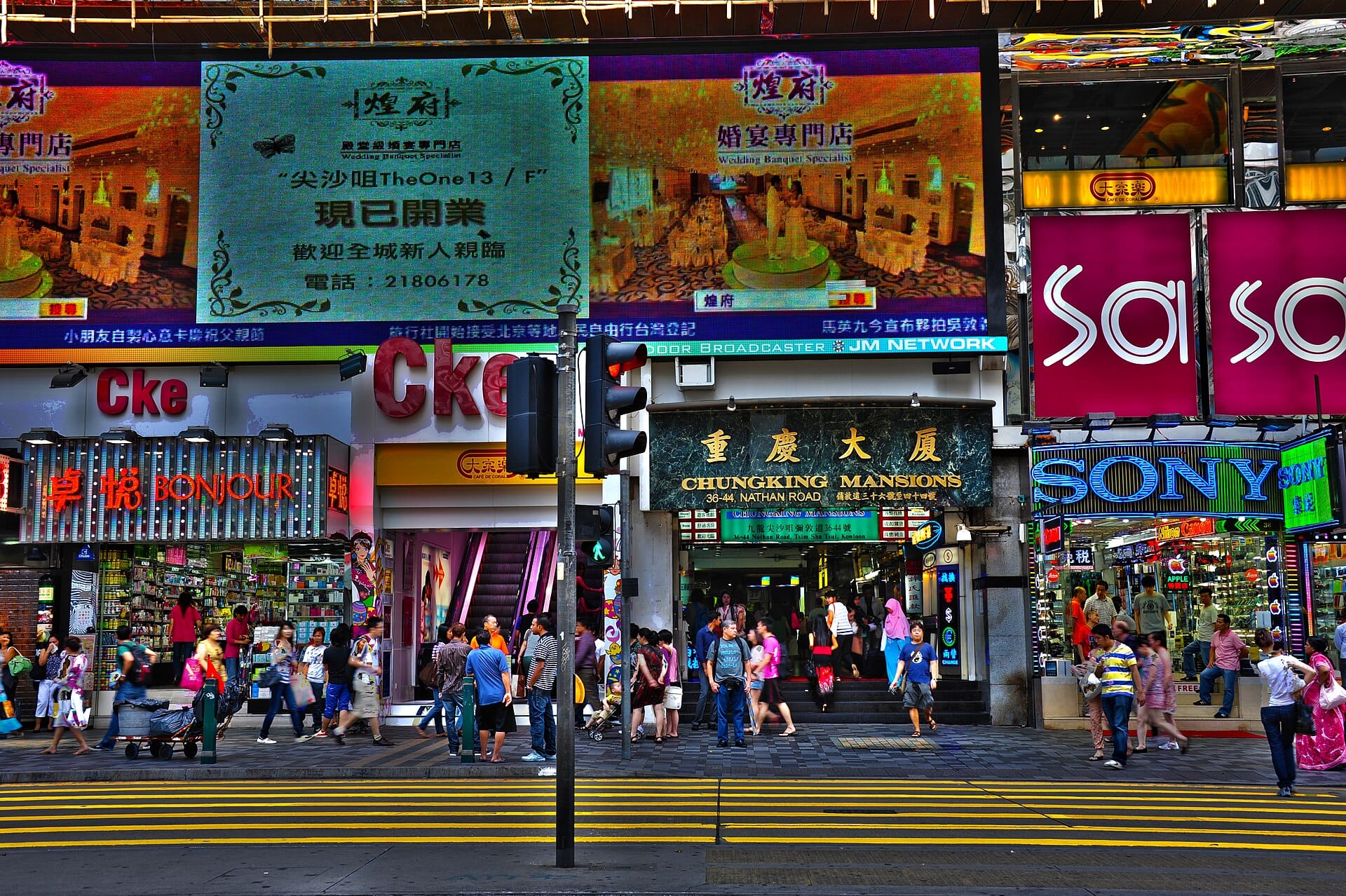
Chungking Mansions fills a 17-story block on Nathan Road where budget guesthouses, currency exchanges, mobile phone dealers, and South Asian restaurants occupy five interconnected towers. Built in 1961, it's become Hong Kong's densest multicultural hub and a base for African and South Asian traders. The ground floor is chaotic, the elevators are slow, and the atmosphere is uniquely intense.
Quick Facts
- Location
- 36-44 Nathan Road, Tsim Sha Tsui
- Getting There
- Tsim Sha Tsui MTR (Exit D2), 2-min walk
- Time Needed
- 30-60 minutes for walk-through
- Cost
- Free to enter (shops/restaurants vary)
- Best for
- Budget travelers, urban anthropology, curry
Quick Snapshot
Chungking Mansions fills a 17-story block on Nathan Road where budget guesthouses, currency exchanges, mobile phone dealers, and South Asian restaurants occupy five interconnected towers. Built in 1961, it's become Hong Kong's densest multicultural hub and a base for African and South Asian traders. The ground floor is chaotic, the elevators are slow, and the atmosphere is uniquely intense.
The building houses around 90 guesthouses across upper floors, ground-floor restaurants serving Indian, Pakistani, and Nepalese food, and shops dealing in electronics, tailoring, and money exchange. Five blocks (A through E) share two narrow elevator banks serving floors 1 through 16. Security guards check IDs at elevator entrances after 11 PM.
Budget 30 to 60 minutes if you're walking through to experience the atmosphere or eat. Staying overnight costs HK$150 (shared) to HK$300–400 (private) depending on guesthouse quality and room size. The building sits two minutes from Tsim Sha Tsui MTR (Exit D2) on Nathan Road between Salisbury and Mody roads.
Chungking Mansions works if you're on a tight budget and comfortable with basic accommodations in a dense, multicultural environment. It's also worth a ground-floor walk-through for the sheer intensity of the scene. If you want conventional Hong Kong tourist experiences, stick to nearby attractions instead. This isn't a sight you admire from outside—you either engage with it directly or skip it entirely.
What's the Atmosphere Actually Like?
Ground floor: narrow corridors lined with currency exchanges, mobile phone repair stalls, tailor shops, and restaurant entrances. Hawkers approach offering guesthouse rooms, SIM cards, or custom suits. The density is high, the ceiling is low, and the sensory load is significant. Fluorescent lighting, curry smells, multiple languages (Urdu, Hindi, Punjabi, English, Cantonese, French, Arabic), and constant movement.
The elevator areas funnel foot traffic into two narrow banks serving all five blocks. Queues form during busy hours. Security guards manage flow and check visitors heading upstairs after dark. The elevators themselves are small, slow, and stop at every other floor. You walk stairs to reach odd or even floors depending on which elevator you catch.
Upper floors: long corridors with guesthouse doors marked by handwritten signs or printed cards. Some floors feel maintained, others show wear. Lighting varies by section. You'll encounter residents moving between rooms, guesthouse staff, and other travelers navigating the maze-like layout.
The building's reputation for grit and chaos is partially accurate and partially outdated. Security upgrades in the 2000s reduced crime significantly. CCTV covers common areas. Police patrol regularly. The atmosphere feels hectic and crowded but not particularly dangerous during daylight hours.
Tickets & tours
Live prices and dates from our booking partner. If you book, we may earn a commission at no extra cost to you.
Hong Kong audio guide with TravelMate app
From 8 €Instant confirmationHong Kong Tour with Peak Tram, harbour cruise and dim sum dinner
From 85 €Instant confirmationFree cancellationHong Kong night tour with Peak Tram and Symphony of Lights
From 63 €Instant confirmationFree cancellationLantau Cable Car and Big Buddha Guided Tour with Lunch in Hong Kong
From 85 €Instant confirmationFree cancellation
Why Do People Actually Come Here?
Budget accommodation drives most overnight stays. Guesthouses offer Hong Kong's cheapest beds in a central location steps from the MTR and ferry piers. Rooms range from windowless cubes with shared bathrooms (HK$150-250) to slightly larger private rooms with en-suite facilities (HK$300-400). Standards vary dramatically even within the same floor.
The restaurant scene attracts South Asian expats and travelers seeking authentic curry, biryani, and tandoori dishes. Several ground-floor restaurants have operated for decades. Prices run HK$50 to HK$100 for a full meal. Quality is generally solid, though service is functional rather than polished.
African traders use Chungking Mansions as a base for sourcing electronics, textiles, and consumer goods to ship home. The building hosts an informal trade network connecting Hong Kong manufacturers with African markets. This commercial function brings a constant flow of business travelers speaking French, Swahili, and various African languages.
Anthropologists, photographers, and curious travelers visit to witness Hong Kong's most concentrated example of globalization at street level. Journalist Gordon Mathews wrote an ethnography documenting the building's role as a low-end globalization hub. His work drew academic and tourist attention to the complex.
Is Chungking Mansions Safe?
Security measures installed after 2000 have significantly improved safety. CCTV cameras cover ground-floor corridors and elevator areas. Fire safety upgrades added sprinklers and improved emergency exits. Police maintain a visible presence, especially evenings and weekends.
Petty scams occur: hawkers overpromising guesthouse quality, tailors pushing unnecessary upgrades, currency exchanges offering poor rates. Use common sense. Book guesthouses in advance through verified platforms rather than following touts. Check currency rates on your phone before exchanging money. Decline pushy sales pitches.
Violent crime is rare. The building's density and constant foot traffic deter serious incidents. Women traveling solo generally report feeling safe, though the aggressive selling can be uncomfortable. Late-night elevator access requires ID checks, which adds a security layer but slows entry.
Fire risk remains a concern due to the building's age and density. Sprinkler systems and exits exist but navigating narrow corridors during an emergency would be challenging. Guesthouses above the 10th floor take longer to evacuate.
When Should You Visit Chungking Mansions?
Daytime between 10 AM and 6 PM offers the fullest experience. Shops and restaurants operate, traders conduct business, and the ground floor buzzes with activity. Elevators queue but keep moving.
Lunch hours (noon to 2 PM) pack the restaurants with office workers and expats from nearby areas. This is prime time for authentic South Asian food but expect waits for tables.
Evenings after 6 PM see fewer traders but more tourists and residents. The atmosphere shifts slightly as commercial activity slows. Restaurants remain busy through dinner service.
After 11 PM, security tightens. ID checks at elevators slow access, and ground-floor shops close. The building doesn't shut down but feels quieter and more residential. Visit earlier unless you're staying overnight.
Weekdays show heavier commercial traffic than weekends. Saturday sees more tourists walking through. Sunday is comparatively quiet as many businesses reduce hours.
How Do You Get to Chungking Mansions?
Tsim Sha Tsui MTR Station (Exit D2) on the Tsuen Wan Line puts you two minutes away on foot. Exit onto Nathan Road and walk south. The building sits on the east side of Nathan Road at numbers 36-44, between Salisbury Road and Mody Road. Look for the large vertical sign reading "Chungking Mansions."
From the Star Ferry Pier, walk north along Nathan Road for about 10 minutes. The route is flat and straightforward. Chungking Mansions appears on your left.
Multiple bus routes stop on Nathan Road: 1, 1A, 2, 6, 7, 9, and others. Alight at stops near the intersection with Mody Road or Carnarvon Road. The building is visible from the bus stop.
If you're walking from TST's waterfront attractions (Avenue of Stars, promenade), head inland from Salisbury Road to Nathan Road and walk north one block.
Common Mistakes and How to Avoid Them
- Following touts to unlicensed guesthouses. Ground-floor hawkers earn commissions by directing travelers to specific guesthouses, not always the best or safest. Book accommodations online before arriving and walk directly to your confirmed room.
- Exchanging large amounts of money at ground-floor shops. Currency exchange rates inside Chungking Mansions are often worse than banks or dedicated exchange counters elsewhere in TST. Exchange only what you need immediately or use ATMs.
- Expecting standard hotel services. Guesthouses here are budget operations. Rooms are tiny, walls are thin, and amenities are minimal. Don't compare to even budget chain hotels. This is hostel-level accommodation at backpacker prices.
- Visiting solely for the "dangerous" reputation. Chungking Mansions' gritty reputation is partly media myth. Security improvements have made it relatively safe. Don't visit expecting dramatic danger—you'll find a crowded, chaotic building with tight corridors and persistent salespeople.
- Bringing large luggage without researching your guesthouse's floor. Elevators are small and slow. If your guesthouse sits on the 15th floor, hauling a big suitcase through crowds and narrow corridors becomes exhausting. Pack light or book lower floors.
How Does Chungking Mansions Fit Into a Tsim Sha Tsui Visit?
Chungking Mansions works as a brief detour during a broader Tsim Sha Tsui walk. Start at the Star Ferry, walk the to Avenue of Stars, then head inland to Nathan Road. Walk through Chungking Mansions' ground floor, grab lunch at one of the curry houses, then continue north to browse Nathan Road's shops or visit Kowloon Park.
For budget travelers staying overnight, Chungking Mansions serves as a base for TST exploration. Drop bags in your guesthouse, then spend the day visiting nearby attractions. Return for a cheap curry dinner before heading out for evening harbor views.
Documentary photographers or travelers interested in globalization studies could spend several hours observing the commercial exchanges, restaurant culture, and trader networks. Bring a camera and respectfully ask permission before photographing individuals.
Who Should Visit Chungking Mansions?
Budget travelers seeking Hong Kong's cheapest central accommodations will find value here despite the basic conditions. The location is unbeatable for the price, and overnight stays offer the full Chungking experience.
Food enthusiasts interested in authentic South Asian cuisine should visit for lunch or dinner. The restaurants serve some of Hong Kong's best Indian, Pakistani, and Nepalese food outside dedicated ethnic neighborhoods.
Travelers curious about globalization, informal economies, and multicultural Hong Kong will find Chungking Mansions fascinating. The building functions as a living case study in low-budget international trade.
Photographers and documentary makers often visit for the visual intensity and human diversity. The ground-floor corridors and commercial activity provide rich subject matter.
Who Should Skip This?
Travelers uncomfortable with crowded, chaotic environments should avoid Chungking Mansions. The ground floor can feel overwhelming, especially for visitors sensitive to sensory overload or tight spaces.
If you're seeking conventional Hong Kong tourist experiences or picturesque sights, Chungking Mansions offers nothing. Visit Victoria Peak, Star Ferry, or Temple Street Night Market instead. Those deliver more recognizable Hong Kong experiences.
Travelers expecting boutique budget hotels or design hostels will be disappointed. Chungking Mansions guesthouses are bare-bones operations focused on price over comfort or aesthetics. Book a proper hotel if those factors matter.
Families with young children may find the atmosphere too intense and the accommodations unsuitable. The narrow corridors, slow elevators, and constant activity don't accommodate strollers or tired kids easily.
Insider Tips
- Book guesthouses online before arriving. Ground-floor touts earn commissions and may misrepresent room quality or location within the building.
- Eat lunch at ground-floor curry houses between noon and 2 PM when local South Asian expats fill the tables—that's the best quality indicator.
- Elevators stop at every other floor. Know whether your guesthouse is on an odd or even floor before queuing for the wrong elevator bank.
- Exchange money at TST bank branches or dedicated exchange counters, not Chungking Mansions shops. Rates inside the building are consistently worse.
- Visit during daytime (10 AM to 6 PM) if you're just walking through. After 11 PM, security requires ID checks to access upper floors, slowing entry.
Who Is Chungking Mansions For?
- Rock-bottom budget accommodations
- Authentic South Asian food
- Urban anthropology
- Documentary photography
- Globalization studies
Nearby Attractions
Other things to see while in Tsim Sha Tsui:
- Avenue of Stars
Avenue of Stars runs 440 meters along the Tsim Sha Tsui waterfront where handprints and plaques honor Hong Kong film stars. Reopened in 2019 after renovations, the promenade features Bruce Lee and other cinema icons embedded in the walkway. It's a brief photo stop combined with harbor views, not a standalone destination.
- Harbour City
Harbour City stretches 700 meters along the Tsim Sha Tsui waterfront where four interconnected zones contain 450+ shops spanning luxury brands, mid-range fashion, electronics, and dining. Built incrementally since the 1960s, this is Hong Kong's largest shopping mall by area. Navigation is complex, crowds are constant, but retail variety is unmatched.
- Hong Kong Museum of History
Hong Kong Museum of History traces the territory's development from prehistoric geology through British handover in eight chronological galleries. Well-designed dioramas and artifacts make Hong Kong's complex history accessible.
- Knutsford Terrace
A pedestrian hillside packed with bars and restaurants just off Tsim Sha Tsui MTR. Quieter than Lan Kwai Fong, lively after dark, and easy for casual drinks.
Planning a trip? Discover personalized activities with the Nomado app.